Blog

  • This Strange, Un-Medicated Life

    When I first approached our family doctor in the mid-90s with “depression”, he put me on Prozac.

    I had recently been kicked out of a band I started with a college friend only to be followed up with my girlfriend (at the time) breaking up with me.

    Hell yes, I was depressed.

    And Prozac definitely changed things. Just not for the better.

    When I started to feel worse despite the medication, I was instructed to double the dosage. Perhaps the first prescribed amount wasn’t strong enough.

    And for whatever benefits doubling the dosage should have had, it also led to my first true feeling of wanting to commit suicide.

    Which, of course, led to my first hospitalization. This was 1996.

    The hospital set me up with my first psychiatrist. They ran their tests and determined that I was manic depressive with a borderline personality disorder. Medication was then prescribed: an antidepressant and a mood stabilizer.

    And those medications did something,  just not with the intended effect. They kept me in this relative fog. I was no longer feeling the same type of depression as before. I was no longer feeling anything, really. I was completely indifferent. I had no particular highs and no particular lows.

    That is of course until my next episode.

    I was hospitalized three times that summer. This was in between my sophomore and junior year of college. My diagnosis became my tagline. People would ask how I was and “manic depressive with a borderline personality disorder” was how I would describe myself…like it was all I had of an identity.

    I tried to go back to college that fall and resume normal living away from the doctor who had been treating me and my folks. I was set up with another psychiatrist close to school who added another medication to the list I was on.

    My father happened to strike up conversation with a pharmacist around this time. Although my Dad was a lifelong Goodyear employee (through all of my life, that is) his degree was actually in psychology. Something about my diagnosis wasn’t sitting right with him.

    During this conversation, my Dad started to list off the medications and dosages I was taking at the time. At one point, the pharmacist interrupted him and said: “I’m surprised your son is even alive. He’s at a toxic level of medication.”

    That was all Dad needed to hear. He came down to school and removed me from that doctor’s care so he could put me in with someone else. It’s my understanding that he reported this person to the board to have their license removed. I am not sure what the outcome was of that.

    Nevertheless, I was back in with another psychiatrist in short order. More tests were taken, more medication changed and prescribed. At this point, we tallied all the medications in less than a year to 13 or 14 different ones.

    I had not improved.

    In fact, I had become so flustered with my own progress despite the medications, that I made my transition into street drugs.

    It was that combination that forced me to finally drop out of college and return home. I just couldn’t function.

    Two months later, I was back in the hospital.

    It was at this time that I was introduced to another psychiatrist. He looked at my charts, ran more tests, and informed my father: “Your son isn’t manic depressive. And he doesn’t need medication. He just needs someone to talk to.”

    Little by little, he weaned me off of everything. I stayed up with my sessions and was able to understand slightly more about my lack of coping mechanisms to deal with life as it came to me. My psychiatrist didn’t approve of my increasing appetite for street drugs but I think he realized I wasn’t going to stop taking them either.

    I thought the time off would help me and in 1998 I attempted to go back to school.

    I didn’t last one semester before I was back in the hospital again. This time, I was on a floor with patients who had mental disorders and substance abuse problems.

    I stayed there for two weeks and had to drop out of school again.

    Amy Winehouse had a famous line “They tried to make me go to rehab, I said ‘No, no, no.”

    Well, I went to rehab. And I was not ready to quit.

    Quitting would take another 8 years.

    Fortunately, I got enrolled back in school to get my associate’s degree first then onto my bachelor’s after I cleaned up and dropped the street drugs. I finished college in 2008 (three time’s a charm.)

    I have not been on medication for nearly 20 years.

    I look at my life now and there is a small part of me that says “Wow, look at all I survived.”

    Maybe there is some truth to that statement. I’m certainly not a “better” person because I got off of medication. I am a very different person though.

    My non-medical advice, taking only my personal account into consideration, is that sometimes you need more than one opinion on your current set of challenges.

    Sometimes, the medication does NOT work.

    And sometimes, the medication is what keeps you even keeled.

    It keeps you functioning.

    It keeps you alive. (I like this outcome.)

    Several years after the fact, my mother met that psychiatrist face-to-face for the first time. When she put two and two together, she introduced herself: “I’m Winnie Leenaarts. You saved my son’s life.”

    Being off of medication may have afforded me some slight luxuries, namely more lucidity. But being off of drugs AND medication opened my eyes up to more that was happening inside my head.

    I tell people, somewhat half in jest, that I have some un-diagnosed OCD and ADD issues I probably need to sort out.

    There is the part of me that recognizes these things and can have a laugh about them and the part of me that asks “Would I function better as a human being if I got a proper diagnosis and was on the right medication for them?”

    I don’t believe I am above seeing another professional to get those things considered.

    But if you’re reading this and you’re not happy with your mental status, please know (if you don’t already) that it affects every area of your life. You may really believe that diet and exercise can sort out problems A, B and C in your life. However, your mind can have a great deal of sway in those outcomes.

    Get a second opinion, get a third, get a fourth. Get whatever the hell it takes to be satisfied that you’re in the right hands with the right plan. If you have to be on medication temporarily or permanently, THIS IS OKAY.

    Just remember all that my Dad had to go through to get a light at the end of the tunnel to shine for me. I saw several psychiatrists (5 in one year), endured several medications (13-14 in less than a year) and survived several (5) hospitalizations just to see an end in sight.

    Much of my problems that came afterwards were solely self-inflicted.

    You deserve better.

    There’s so much life left to live.

    “We Make Great People Greater”

    1050


  • Revolutionary You! #181-BONUS-Dan John: “40 Years With A Whistle”

    I very nearly let too much time elapse since Dan John had debuted on the show back at Episode 100. He has just released yet another in a long line of excellent books, this one called “40 Years With A Whistle.” I had some points in the book that I wanted to talk to him about and we even got to touch on some more personal subjects that the book didn’t go into as great of detail on. It is always an honor to share time with Dan and I can assure you he will be on again in the future. To order your copy of his new one, please go to http://www.otpbooks.com/product/40_years_with_a_whistle To sign up for his weekly newsletter, please go to http://www.danjohn.net and click on the tab for Wandering Weights. To learn more about your host, visit http://www.jasonleenaarts.com and http://www.revfittherapy.com You can also like our Facebook page at http://www.facebook.com/revolutionaryou Download, subscribe, share with your friends and please take a moment to leave us an iTunes review.

    iTunes OR Stitcher OR iHeartRadio

    5C18AB1A-39A1-4626-81A3-2538D6E45BD0

  • Revolutionary You! #180-Adam Willis: The Journey Of The Empowered Body

    Adam Willis is both personal/online trainer with Lean Body Performance and podcast host of The Empowered Body Podcast and I’m honored to share the time with him this week. In this episode, we talk about the obstacles he helps his clients work through to overcome and how his own training has evolved now that he is a new father. There is a lot of great insight from a coach who has a great understanding of how to make life and fitness fit together. To learn more about Adam’s work, please subscribe to The Empowered Body podcast on your listening app of choice and follow him on Instagram at www.instagram.com/_adamwillis To learn more about your host, check out www.jasonleenaarts.com and www.revfittherapy.com You can also like our Facebook page at www.facebook.com/revolutionaryou Download, subscribe, share with your friends and please take a moment to leave us an iTunes review.

    iTunes OR Stitcher OR iHeartRadio

    B453D7A8-4C4F-44D7-A333-1B3749E3A43A

  • Still Hiding Your Bad Grades?

    Throughout my entire life, my father was a Goodyear employee right up until he passed in 2011. As a result of his time there, we moved around a lot (on average every 3 years until I graduated in 1994.)

    And maybe as a by-product of having to get settled in somewhere, make new friends, adjust to a given state/country and then move again, I think I struggled to find how to fit in and find my way.

    As part of that struggle, even going back to elementary school, I started hiding my bad grades from my parents.

    I told this story to my clients recently as well.

    I just wasn’t all that interested in doing great in school. Sure, there were some subjects I had a knack for but, by and large, the motivation to excel was rarely there.

    I coupled that with the fear of disappointing my parents which I never wanted to do.

    Frequently,  I would find myself midway through a given semester and looking at C’s, D’s and the occasional F in class.

    Mid-term reports would be handed out and I learned how to forge my parent’s signatures so they wouldn’t have to see how bad things were at the time.

    If they asked (and they usually did) how things were going, I would always tell them the highlights. God forbid my parents find out the truth of the matter.

    And it bought me some time over the rest of the semester to pull my grades back up and try to pull some miracle out of my ass by time they got the official report card.

    A story my mother will still tell to this day is that she remembers sitting in a parent-teacher conference and being told: “Jason knows exactly what to do. But I can look in his eyes when giving out an assignment and know that he’s not going to do it.”

    This might explain why I would never be a successful poker player…

    And while I would love to believe that most of my clients were better students than I was and never resorted to this type of behavior, I see a similar thing happen with their respective weight loss challenges.

    Rarely will a client tell me how they’re “failing” or only getting C’s, D’s and F’s on their diet.

    Admitting that things aren’t ideal is hard. It’s not common to find the person who openly and candidly says: I can’t make the pieces fit right now.

    As the coach, it’s these moments that I need to hear the most…exactly when they’re happening.

    What many clients forget is that their training time is such a small part of their lives. At best, maybe it’s an hour of a given day. Which means there are 23 more hours to either screw things up in grand fashion or keep grinding away at those fundamentals to lock in better skills, better habits.

    I shouldn’t be melodramatic about this though. It’s difficult (not impossible) to undo good progress in just one day.

    What we (as coaches) see, is that the one bad day can turn into several and then weeks and then the client wonders why progress can’t be found.

    Had my parents been more aware of my struggles, I could have had a tutor. I could have had better grades and felt more self worth within the school system by applying myself and reaping the rewards. I was smart enough to get by but honestly…who the hell just wants to get by?

    If you’re a client of mine, this is just a kind reminder to show me the “bad grades” too. Those are the ones I really need to see. It’s great that you show me the “good grades” of coming in and acing your workout.

    What about all the other “classes” you’re taking? You know, those LIFE classes?

    And if you’re not a client of mine but a casual reader, think about your own grades: The ones you brag about and the ones you hide.

    Which ones will get you closer to where you want to be?

    “We Make Great People Greater”

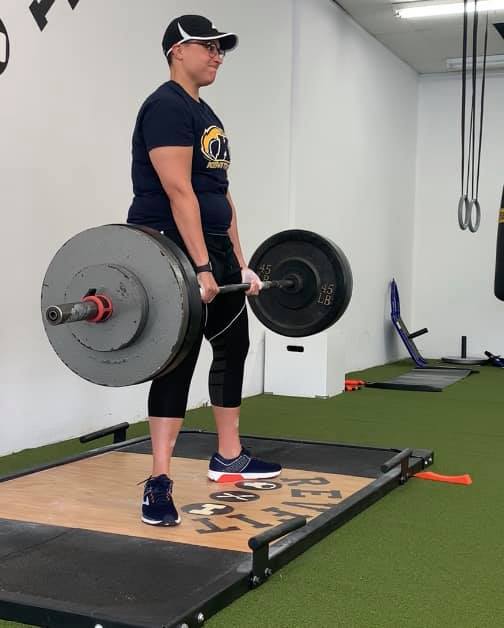
    (Here’s Coach Sebastian, warming up the deadlift platform for the other lifters. He’s too young to hide his grades from us…for now.)

    IMG_1614.jpg


  • Revolutionary You! #179-Erin Riffle: Just Show Up

    It has literally been years since I’ve turned an episode into a client spotlight and those who are currently part of the RevFit family already know the force that is Erin Riffle. Without stealing too much of her thunder, Erin has seen some pretty amazing things happen for her since she started here. Tune in to hear the details. To learn more about your host, check out www.jasonleenaarts.com and www.revfittherapy.com You can also like our Facebook page at www.facebook.com/revolutionaryou Download, subscribe, share with your friends and please take a moment to leave us an iTunes review.

    iTunes OR Stitcher OR iHeartRadio

    6A1077EE-0DF5-44AD-9441-88406EBA999B

  • What Should I Weigh?

    It’s a question I receive during consultations so frequently that I couldn’t deny writing something more elaborate about it.

    Before I delve into my take on this question, one of the best responses I’ve heard to this is by Dr. Yoni Freedhoff. His response:

    “…Whatever weight a person reaches living the healthiest life that they can honestly enjoy. Because truly there will become a point where a person cannot happily eat less and a point where a person cannot happily exercise more and their weight is what I’d refer to as their best weight.”

    It’s really hard to find any disagreement with this statement.

    When a potential client sits down with me and we begin to discuss where weight is currently versus where they would like it to be, that variance can be large.

    This, in and of itself, isn’t necessarily a bad thing. If there is considerable weight to lose, then the numbers are what they are.

    …until they’re not.

    Suppose Susan (not a real client) got married at 26 years of age, she is now 48. In the last 22 years she has had two kids, both of whom are either out of or on their way out of college and focusing on their career trajectories. Susan herself has settled into the routine of a fairly sedentary job and lifestyle. As time has passed, her eating habits have become more lax and her weight has steadily crept up.

    She has embarked on several trendy diets over those last 22 years (especially the years after her first child was born) and nevertheless has reached a weight that she can no longer tolerate. Susan has now decided it’s time to take back control over her health and get this weight off once and for all.

    The line of questioning might go something like this:

    Me: May I ask, roughly or accurately, do you know what your current weight is?

    Susan: Last time I checked, I was around 220.

    Me: Thank you, and do you know where you would like to be?

    Susan: Hmm…I think I’d really like to be 150.

    Me: When was the last time you were at 150?

    Susan: (laughs) Oh geez, maybe my junior year of high school when I was playing softball!

    So, we’re looking at a 70lb journey with a woman who is likely in or near peri-menopause/menopause and has had two children since she was last at her proposed weight goal.

    Is this weight goal possible? Sure.

    Is it realistic? I really don’t know.

    You see, what Susan may or may not be cognizant of is that her body has gone through a tremendous amount of change since that junior year of high school. Marriage happened, two kids happened, stress in all manifestations happened.

    And so, if we play the whole calories in vs calories out game (which is the overly simplified version of how the ‘magic’ happens), Susan will lose weight.

    If she is patient, continues to be mindful of her eating habits, trains responsibly, etc. she may very well get to her mind’s eye weight of 150.

    But at what cost?

    What will Susan have to sacrifice and compromise to lose 70lbs as she is inching closer to 50 years of age?

    Well, for starters, it will affect much of her personal and professional life.

    Her husband may or may not also be looking to lose weight and while he claims to be supportive, he has different motivations, goals, needs, etc.

    Her co-workers may also ebb and flow with weight loss and weight gain. They all mingle together to talk about the next round of trendy diets to come across the newstands, social media, Dr. Oz, and late-night infomercials.

    So, when Susan tries yet again to lose weight, she’ll have to determine which boats she is most willing to rock.

    And let’s assume that Susan is really (no, really) ready to get serious and lose the weight this time.

    If we take an industry standard weight loss timeline of 1-2lbs per week of loss, it could take Susan anywhere from 8-16 months to reach her goal weight. If we throw in every possible holiday, hiccup, work social, etc. into the mix, it could even double the timeline.

    There’s a strange thing that can happen with weight loss that I wish more people considered before they started:

    Sometimes the weight a client used to be no longer wears well on their bodies.

    And while that arbitrary dream number that they tell themselves they must achieve sounds nice in conversation, it just isn’t a good place to be mentally or physically.

    I’ve watched clients become so driven on the end goal (whether it be a goal weight of “X” or total pounds lost of “Y”) that they lose sight of other, more important markers like:

    -How has my social life changed?

    -How is my sleep?

    -How are my energy levels?

    -Can I “live” this way?

    Not to mention, other things can change and not always for the better. The face may show more signs of creases/wrinkling. The cheeks can become more gaunt. The elasticity of the skin can be so much more dramatic that cosmetic surgery is the next elective in line after the weight goal is attained.

    I should be fair in saying that none of these changes are inherently bad. A healthier body is a healthier body. But if we lead back to Dr. Yoni’s statement, are you living your happiest life?

    The actual process of weight loss: eating in a deficit and training consistently is not easy and it can frequently be “not fun.” Once you’ve accepted that given amount of discomfort and displeasure to reach a healthier weight, you may have to ask yourself: Is my original goal the best goal for me now?

    For Susan, she could get to 150 and look and feel like a million bucks. That is one reality.

    And another, perhaps a more likely reality, is that maybe she gets to 170-180 and tells herself “You know what? I’m not at my goal but I feel pretty damn good. I like how I fit in my clothes, I like the luxuries I can now afford myself with food and even though I’m probably never going to see 150 again, I’m proud of myself for what I’ve accomplished.”

    The journey is yours to succeed with. The outcome is yours to be satisfied with.

    The numbers…well, let’s just say, they never tell the “whole picture.”

    So, what should you weigh?

    Ask your happiest self.

    “We Make Great People Greater.”

    (This is Heather, down 26lbs, healthier and happier than when she started and her journey is still going.)

    53399081_2314866741859181_4731457207315464192_n


  • Revolutionary You! #178-Jay Ashman: Reinvent Yourself

    Jay Ashman of Ashman Strength and Kansas City Barbell joins me this week for his debut on the show. Jay is one of the most open and candid people I know in the fitness industry and one of the things that has drawn me to him, is his transparency about his past and how he changed his life through those experiences. We cover a lot in this episode and, as I have tried to routinely do, we delve into some controversial topics. To learn more about Jay’s work, please visit http://www.kcbarbell.com and http://www.ashmanstrength.com To learn more about your host, check out http://www.jasonleenaarts.com and http://www.revfittherapy.com You can also like our Facebook page at http://www.facebook.com/revolutionaryou Download, subscribe, share with your friends and please take a moment to leave us an iTunes review.

    iTunes OR Stitcher OR iHeartRadio

  • The Last Song He Heard

    I grew up in a rock ‘n’ roll household. My father played bass and guitar throughout his adolescence and into adulthood. My mother was a singer.

    Through my father I learned to appreciate classic rock and 70’s folk music, through my mother I learned to love Top 40 pop/rock and some of the 80s hair metal that was so prevalent on MTV back then.

    And when you grow up like that, it’s easy to understand how the classics like The Beatles, The Stones, Bowie, and Clapton could all be heard throughout my life.

    If there was a common thread, I would say The Beatles probably won the lot. I recall when Paul McCartney was touring in the early 2000’s, I went on two separate occasions to see him. Once with my Mom (and Jackson’s mom who was my girlfriend at the time) and once with my Dad.

    This tour fell shortly after the death of George Harrison (who coincidentally died on my birthday in 2001.)

    During that show, Paul sang tributes to Lennon and Harrison. There was hardly a dry eye in the arena. My mother cried. My father cried. And I think the shared sentiment between them was that since they missed hearing the Beatles in their heyday live in concert, a show like this was a good as it would get.

    In the late 90s, a band very much inspired by the Beatles became a huge sensation in the U.S. with their hit Wonderwall. That band (in case you don’t already know) was Oasis.

    I turned my Dad onto Oasis and I had a feeling he would really like them. I wasn’t wrong. Dad loved the spin that the Gallagher brothers put on a very Lennon-inspired modern take of The Beatles. Some critics couldn’t look past the similarities. But I have been an Oasis fan ever since and Dad loved everything of theirs I ever played for him.

    When Oasis split in 2009, I was disappointed but not completely surprised. The Gallagher brothers were known to have a volatile relationship and it finally hit it’s peak.

    Liam (the lead singer) took the majority of Oasis with him and formed a group called Beady Eye. Noel, the primary songwriter of Oasis, struck out with another band he called Noel Gallagher’s High Flying Birds. It didn’t take long before each group started to put out their own material.

    Not surprisingly, Beady Eye sounded nearly identical to Oasis save for some less than spectacular lyrics and something of a one-dimensional approach to their music.

    Their second single from the album was a song called “The Roller.” It was released in February of 2011.

    On February 16th, 2011, my father was admitted into the hospital. He was in the last stages of his short battle with bone marrow cancer (multiple myeloma.)

    He would spend (almost to the day) one month in the hospital until the doctors released him to come home. We knew our time was running out.

    When Dad got home and was settled into bed, I was talking with him and I asked him if he remembered Oasis. He said he did and I told him about the splintering of the group. I asked him if he had any interest in hearing Beady Eye’s new song. I climbed into the bed with him and fired it up.

    If you’ve never heard the song before, it kicks in with a piano, a guitar and Liam’s voice. The first line begins:

    “You didn’t know what to say, but I’ll come at you today…”

    And my father started crying.

    “Dad, are you okay?”

    And my father’s words to me were:

    “It’s like a dream. When the music and the words come together, it makes my pain go away.”

    I’ve never seen music touch him as much as that song did then.

    On Wednesday, March 23 2011, I came home from work and played him the song again. He was having trouble opening his eyes but he could hear perfectly fine.

    His voice had faded to a whisper.

    He nodded his head and smiled as he listened to the song from beginning to end.

    My Dad passed away about 2 hours later.

    Like my mother, there are certain bands and certain songs I have difficulty listening to after all these years since he passed. When I hear them, I only see my Dad. It’s not necessarily a bad thing as I believe I think of him multiple times a day anyway.

    I can tell you, it’s really hard to listen to the Beatles without my Dad around.

    But this song, “The Roller“, it still punches me right in my gut when I hear it.

    It was the last song my father heard before he left this world.

    I miss him. I loved him.

    As our family spends the next several days remembering who my father was to us as this anniversary rolls around for yet another year, I have a favor to ask of those of you reading this today.

    If you knew my Dad, play a song that reminds you of him. If you want to play “The Roller“, you can. But it probably won’t have the same effect on you as it did for he and I.

    And if you didn’t get the chance to meet Dad when he was still here with us, I apologize. You would have loved him.

    In that case, play a song that reminds you of the gift we have of life.

    My Dad loved that gift and he shared it with everyone.

    It would be my hope that you cherish that gift not just today but for the remainder of the time you are here in this world as well.

  • Revolutionary You! #177-BONUS-Stephanie Lee: Write For Impact

    To credit any one person for the growth my writing has seen over the last year or so, it would undoubtedly be Stephanie Lee. Rather than hoard her expertise to myself (and those who have also hired her services) I had to bring her on the show so more people could connect with her as well. Stephanie is firing up the next round of her already successful class, “Write For Impact.” This is a time-sensitive link so make sure you act soon! Listeners can find out more through the special link http://www.stephanielee.me/hello-revfit-radio To learn more about Stephanie, visit her website at http://www.stephanielee.me and connect with her on Twitter at http://www.twitter.com/superlee7 To learn more about your host, visit http://www.jasonleenaarts.com and http://www.revfittherapy.com You can also like our Facebook page at http://www.facebook.com/revolutionaryou Download, subscribe, share with your friends and please take a moment to leave us an iTunes review.

    iTunes OR Stitcher OR iHeartRadio

  • Revolutionary You! #176-Leslie Ann Quillen: Food Empowerment and Metabolic Flexibility

    I can’t believe it’s been since way back at Episode 59 that Fat Loss Foodies’ Leslie Ann Quillen was last with me! We had a great conversation back then and she returns this week to give updates on all the great things she has been doing with FLF since then. In this episode, we also chat about taking our power back over the food we eat and some strategies for metabolic flexibility in dieting. To learn more about Leslie’s work, check out http://www.fatlossfoodies.com and follow them on Instagram at http://www.instagram.com/fatloss_foodies To learn more about your host, visit http://www.jasonleenaarts.com and http://www.revfittherapy.com You can also like our Facebook page at http://www.facebook.com/revolutionaryou Download, subscribe, share with your friends and please take a moment to leave us an iTunes review. 

    iTunes OR Stitcher OR iHeartRadio