Blog

  • My Terrible, Awful, Worthless Body (and What In The Hell I Decided To Do About It.)

    My body hates me.

    I remember when I first got certified as a personal trainer (circa 2007), I tore my rotator cuff. Here I was, barely two months with my certification and I couldn’t even do my normal workouts.

    Instead, I spent about six months alternating between physical therapy and some prescription painkillers until the recovery was finished.

    Fast forward twelve years and due to the nature of my work here, I am constantly moving, demoing exercises, twisting, turning, squatting, lifting, OH AND I also have to fit in my own training.

    So, I am pretty much always fighting some type of injury/soreness/vulnerability/you name it and it pisses me off.

    There is a certain individual who says “The Hell With It” and just powers through the pain. (That normally doesn’t end well.)

    There is the other individual who is probably more hyper-sensitive to these things and would rather stay home and mope about it. (That sounds pretty awful also.)

    I can’t really afford to be either one of those people.

    You see, I HAVE to be able to do my job. And I also HAVE to find a way to train my body effectively.

    Which means, in the grand scheme of things, some priorities may have to show some slack.

    It may mean that some exercises are temporarily or permanently out of the mix.

    It may mean that I have to modify the range of motion to perform an exercise so that I can execute it in a pain-free manner.

    When I quit expecting perfection from myself, I gave myself new benchmarks that could ebb and flow based on how I feel.

    If my elbow starts bothering me, I change my grip on certain exercises or I remove them temporarily and focus on other less painful variations.

    If my knee starts barking at me, I take a break on lower body work for a few days.

    When my back (the area that has suffered the most trauma) is really flared up, I know what to remove until it’s settled down again.

    I am NEVER without ways to make progress no matter what is bothering me.

    Part of this mindset, this arguably more effective mindset, is the ability to not expect perfection from your body.

    My client, June, was recently on a skiing trip. A freak accident occurred and she tore her ACL and MCL. Even when she was on crutches and laid up with the injury, she texted me and asked “Are there things I can do for my upper body? Because there’s NO WAY I’m going to stop working out!”

    That was music to my ears. Despite what could have been a huge detriment to her training progress, June knew there was another way to keep progress going.

    I went through a similar thing with Ken a couple of years ago when he was taking a leisurely run outside of his home and broke his foot. We found a way to work around it.

    But what does this mean for you?

    Your body will sometimes behave when you ask it to.

    Other times, your body will do whatever it damn well pleases despite your not so subtle urges otherwise (ask a dieter how they feel about this!)

    Maybe you’re one of the fortunate ones who never or rarely has to deal with an injury in the gym (I envy you, by the way.)

    Maybe what you’re dealing with has less to do with what the gym does to you and more to do with your conversations in the mirror.

    Do you agonizingly flap your “batwings?”

    Are crunches and planks the solution to whittle away at your “muffin top?”

    Can any amount of push-ups and bench presses get rid of your “moobs?”

    The answer to those questions is typically NOT what people want to hear.

    It generally involves some combination of caloric restriction and depending on how your body has changed with the ups-and-downs of weight plus giving birth to children, menopause, etc. you may actually be looking into cosmetic surgery as well.

    I would LOVE to tell you that diet and exercise fix everything but that would be dishonest.

    Diet and exercise fix a lot but they don’t fix it all.

    If you’re anything like me and you feel that aggravating urge to berate your terrible, awful, worthless body (which in reality is none of those things) having a more open dialogue with yourself helps.

    If your challenges with your health go beyond a given injury or vulnerability, ask yourself “What within your power can you change?”

    If you have “batwings”, how can you continue to modify your eating plan and training plan to focus on overall fat loss (for the physique) and stronger, leaner arms? Are you willing to get cosmetic work for the things that diet and exercise cannot directly change?

    Often, we misplace our frustrations with ourselves to the things we cannot change on our own but continue to live in misery with. Or we recognize something is within our control and just opt out and do nothing.

    Ultimately, we determine our own misery and frustration with our bodies. If “comparison is the thief of joy”, why are we constantly comparing instead of working on the one thing in this world we actually can change?

    Ourselves.

    So, what I decided to do with my terrible, awful, worthless body was work on it bit by bit. Every day, one fraction of a step closer to something I can be satisfied with.

    That journey ends when our lives do which means that every day is a chance to progress. The alternative leads to nowhere (or rather, nowhere appealing.)

    Which road are you taking?

    “We Make Great People Greater”

  • Revolutionary You! #175-Dani Singer: It’s All A Mindset Game

    Dani Singer is the owner of Fit2Go, an in-home personal training service. In this episode, we cover the importance of what happens outside of the training sessions to make sure clients get the best results possible. Dani breaks down why it’s crucial to focus on small, sustainable habits especially when the lives of our clients already have so much that can stand in the way of their progress. To learn more about the PAUL method that Dani references, check out www.fit2gopt.com/be-paul and check out www.fit2gopt.com to learn more about Dani himself and the great work he’s doing. For more on your host, visit www.jasonleenaarts.com and www.revfittherapy.com You can also like our Facebook page at www.facebook.com/revolutionaryou Download, subscribe, share with your friends and please take a moment to leave us an iTunes review.

    iTunes OR Stitcher OR iHeartRadio

  • Remove The Things That Mask The Pain

    My client (let’s call her Jane) has been struggling to make it in to the studio for her sessions. To her credit, she works a lot of hours, owns a business and generally has a high amount of stress.

    Her struggle beyond this is a general sense of lethargy, the “blues” and just wanting to curl up under the covers and vanish.

    Rinse and repeat the next day and the next.

    And I asked her a couple of very pointed questions that I prefaced with “This is coming from a place of love.”

    “How old are you?”

    “53.”

    “Do you think 53 years is long enough to suffer?”

    “Yes, I do.”

    “Good…can you stop suffering?”

    Somewhat out of context, you may wonder what I meant.

    For many of my clients, they don’t know how to step out of the circle of suffering. That circle looks something like this:

    -Wake up feeling poorly rested and rush to work.

    -Skip breakfast or eat something of poor quality.

    -Feel sluggish until the next meal time which either gets skipped due to work load or is replaced by a meal too large in calories or too poor in quality (often both.)

    -Stumble through the rest of the work day, dehydrated (due to lack of water intake), stressed, tired and ready to go home.

    -Get home, thoroughly exhausted, eat a dinner similar to lunch (too large in calories/too poor in quality), curl up on the couch, watch TV, snack some more, go to bed.

    Repeat, repeat, repeat.

    And Jane’s concern is easy to understand: I’m too tired and too depressed to do anything different. I don’t have the energy to do anything productive or beneficial for myself.

    Here’s the first victory: Jane is admitting the problem.

    Now, can she remove the things that mask the pain?

    When you’re in the circle of suffering, it’s hard to see the light at the end of the tunnel. There is no light. There’s just the endless rehash of the same destructive patterns.

    We eat poor quality because it’s a temporary relief to the stress and the pain of life. Blood sugar typically rises and then sufficiently plummets leading us back to more poor quality food or more caffeine (often both) and the circle continues.

    For Jane, the suggestion was simple to make: remove those poor foods. They’re not gone forever, they’re gone for now because they’re winning the battle and she is not. It’s times like these for people like Jane who need to step away from the foods that cover up pain and don’t give her the space to focus on her problems.

    I’m not standing in a glass house throwing stones either. For me, 10 years of not knowing how to cope with my own problems led to drugs. I didn’t associate self-medicating with food until my father was diagnosed with cancer and had only a few months left to live. Then, food became the coping mechanism. I had to find a way to mask the pain of knowing he’d be gone.

    When we can step outside of the “circle” we can troubleshoot:

    Why am I eating this? Because I’m stressed and I want comfort.

    What happens when I eat this? I temporarily fill the void so that I don’t have to think about my stress.

    How do I feel when I eat this? Momentarily fulfilled, then guilty, then sad. I berate myself for my decisions, throw the day out the window and repeat the behavior because I already feel like a failure so if I’m going to fail, I’m going to fail BIG.

    And I told Jane “You may need to remove these foods for right now. They are not serving you. They are your master. It needs to be the other way around. When you do this, you will slowly regain control of your circumstances.”

    I will give credit to the fact that several of my clients suffer from clinical depression. They are on medication for this. Sometimes, it is the right medication and sometimes it needs to be changed.

    *For those clients, please see your doctor to get things on the right track.*

    Beyond the symptoms of the clinically depressed, the same concepts apply. If you drink alcohol to cope with your emotions, you are consuming a downer which compounds your problems. If this sounds like you, alcohol may need to temporarily be off the grid until you are through the current struggle.

    If you are taking anti-depressants AND consuming alcohol, it can become something of a double-whammy. The alcohol decreases the effectiveness of the antidepressant.

    Talk to your spouse/your family/your significant other. Explain the depths of the problem. Not just a glossy “I need to lose weight” statement either.

    I mean “Hey, I need to talk to you. I have a problem that is burying me right now and I can’t conquer it without you.”

    If my wife, for instance, said those words to me I’d be all in. I’m not going to watch her suffer. Not when I have the capacity to help.

    If you cannot break your own circle of suffering, you will have to enlist the help of others. This may include those you are intimate with as well as a qualified therapist who has experience working with individuals suffering from some level of disordered eating.

    This does not make you a defective person. You are perfect. Your coping mechanisms are not.

    At some point, the foods that you lost control over may have a kinder place in your life. The reintroduction of those foods is different for everyone.

    For now, rather than mask the pain: face the pain. It is temporary.

    There is a better (stronger, healthier) you on the other side.

    But first, remove the things that mask the pain.

    Below is Courtney, down 22lbs and currently solving the food problem of what can belong and what needs to be on the backburner…for now.

    “We Make Great People Greater”
  • Revolutionary You! #174-Gillian Goerzen: “The Elephant In The Gym”

    I have the great pleasure of welcoming Gillian Goerzen to the show this week. She is a fellow trainer and author of the book “The Elephant In The Gym” (now available to order on Amazon.) In this episode, we not only discuss the origin of the book but the importance of self-compassion and the power of your internal dialogue with respect to your health and your goals. To learn more about Gillian’s work, please visit www.superyou.ca or contact her directly at gillian@superyou.ca To learn more about your host, visit www.jasonleenaarts.com and www.revfittherapy.com You can also like our Facebook page at www.facebook.com/revolutionaryou Download, subscribe, share with your friends and please take a moment to leave us an iTunes review.

    iTunes OR Stitcher OR iHeartRadio

  • I Forgive You…But Most Importantly, I Forgive Myself

    “I forgive you.”

    I said those words to the man who sexually abused me some 13 years after the incident occurred. It gave me a sense of closure to an event I was successfully able to stuff back into my mind for the majority of those 13 years.

    But not without consequence.

    Blacking out trauma in my life of this nature only reinforced the negative outcomes that came from it. I no longer trusted people who I should have been able to count on.

    As a result, I spent decades of my life lying to basically everyone I knew: family, friends, girlfriends, etc.

    When I was faced with the conundrum of “do right” vs. “do wrong”, I would often resort to doing the wrong thing and hoping I wouldn’t get caught.

    If I did wrong around my friends, I could normally get away with it.

    I wasn’t as lucky with my parents.

    All the same, being caught didn’t stop the behavior, it just forced me further into the rut.

    And I carried this beyond the day I confronted my abuser.

    In fact, the year that I found him and reminded him of what he did to me was the year of four of my five hospitalizations for suicide attempts/suicidal ideations and the beginning of my ten year journey with illegal street drug addiction.

    Apparently, there is more to forgiveness than just saying the words.

    After I closed that door on my abuser, it would take ten more years and hundreds/thousands of mistakes to forgive the other person in the conversation.

    Me.

    I had to forgive myself for the cross I chose to bear.

    I had to forgive myself for the sins I chose to commit.

    I had to forgive myself to break free from any further guilt.

    I didn’t choose to be abused.

    I chose to not be touched and my abuser wouldn’t let that lie.

    My “salvation”, if you will, came from not wanting to suffer any longer by my own hand, my own decisions.

    It took all those drugs, all those failed relationships, lost jobs, and a failed marriage to say: I can’t fucking live like this anymore.

    Starting this business in 2009 was my first step towards a clean slate.

    Meeting Marissa was the next step.

    Admitting to Marissa what my past had been up to that point was another small step.

    Holding my son, Jackson, (from my first marriage) when he was just a baby and promising him, I would be a better man.

    I would be a better father.

    And as I have seen daily with RevFit, I see that what my clients struggle with goes beyond weight loss.

    It goes beyond broken relationships with food.

    It falls closer to that parallel of forgiveness.

    Like me, many of my clients have to choose to forgive someone: a negligent or abusive parent/friend/spouse, or they’re mending the wounds from a painful divorce or a broken relationship.

    Like me, those same clients have the other person to forgive as well: themselves.

    Like me, my clients carry crosses they shouldn’t have to be burdened with anymore and no amount of food can fix that problem (no matter how deep that hole goes.)

    Because once you go through 12-steps programs (like I ventured through) and you sit and cry to therapists who either can fix the problem, not fix the problem or give you medications to give you a similar outcome, there’s still that one person you have to face.

    That damn person you see every time you look in the mirror.

    And I didn’t want to hate that person anymore.

    Neither should you.

    Forgive whoever it is you need to forgive in your life for whatever wrong they did to you.

    That moment is gone.

    And, when the time is right (hopefully sooner than later), forgive yourself. Chances are, you’ve been carrying this load longer than you needed to and you’ve done more damage to yourself in the interim because you didn’t take the time to care about you.

    That time can start Now.

    “We Make Great People Greater”
  • Revolutionary You! #173-Matt Gary-Winning The Moment

    Legendary powerlifter, coach and owner of Supreme Sports Performance & Training, Matt Gary debuts on the show this week. Matt was at our facility last year to help myself, my trainers and a stable of other great coaches become certified as powerlifting coaches and he was exceptional. I had to bring him on the show to get his take on why the mentality we bring to what we do helps us achieve success. This doesn’t just affect powerlifters but anyone who needs to get a better grasp on mindset strategies. There are so many great things for you to learn in this episode, I can’t wait for you to hear for yourself. To learn more about Matt’s work, check out www.supremesportspt.com and on Instagram at www.instagram.com/mlgary72 To learn more about your host, check out www.jasonleenaarts.com and www.revfittherapy.com You can also like our Facebook page at www.facebook.com/revolutionaryou Download, subscribe, share with your friends and please take a moment to leave us an iTunes review. 

    iTunes OR Stitcher OR iHeartRadio

  • You Have A Gift To “Give”

    Around four years ago, I was passing through a Starbucks drive-thru. It was November, typically a time of year where charitable people give more of their time and money due to the natural pull of a holiday like Thanksgiving.

    A car pulled up behind me as I was paying for my coffee and I told the barista I wanted to pay for them as well.

    I repeated this behavior for the better part of the holiday season because it felt like a good thing to do. Besides, in most cases, we’re talking about $3-4 to put a smile on a stranger’s face. It seemed like a no-brainer.

    Several months later, I was buying less from Starbucks because I was making more coffee at home and bringing a mug with me to work.

    I started looking for other ways to give a small kindness to someone unexpectedly.

    It transitioned into an sporadic meal I’d buy for someone at a restaurant. Typically, someone I would see eating by themselves. I wanted no fanfare. It was more important (and special) for me to be anonymous.

    Even today, if I donate to someone or something, I prefer that only the donor know. Beyond what I’m writing as I craft this article, really only my wife has known of me doing these things.

    A quote I came across at some point seemed to define the intention:
    “I learned to give not because I have much, but because I know exactly how it feels to have nothing.” -Anonymous

    And while I’ve never been in-the-gutter poor, I’ve known what it’s like to have the deck stacked against me, living paycheck to paycheck and wondering how I would pay a bill to get by.

    Thankfully, those days seem further and further in my rearview.

    Mostly, I wanted to do these things because I know what it’s been like to be on the receiving end of a random act of kindness. It’s one of those feelings that you carry with you for days, if not longer.

    Can anyone have too much happiness?

    Maybe there is truth to a karmic effect of our behavior: the more good we do, the more good we receive. That’s my anecdotal belief at least.

    And it’s why I randomly wanted to write this article in the middle of February instead of November or December when it might be more seasonally appropriate.

    There is never a wrong time to give. There is no amount too small. And even if you only have a couple of dollars to toss someone’s way for a cup of coffee, it starts your day on a high note.

    Several weeks ago, Marissa, Sebastian and I were at a favorite restaurant of ours having breakfast. We were under no financial strain to go there. A gentleman was sitting behind us eating breakfast by himself. Marissa and Sebastian stepped away from the table temporarily as the man was finishing his meal. In a kind British accent, he said “I have these vouchers for a free breakfast. I’d like to give these to you.”

    I was understandably stunned. I don’t perform random acts of kindness while simultaneously holding my other hand out waiting for reciprocation.

    The gift is to give. So, I honor that.

    Nevertheless, I haven’t stopped thinking about the gesture ever since. It is part of what inspired this post.

    Many times we get lost in our own relative chaos and busyness that we forget to do something small for someone unexpectedly.

    It’s my hope that you’ll find more opportune times to do so as well.

    And if you haven’t the financial means to do so, perhaps you have some volunteer time to offer in places of need for an extra hand or an extra shoulder to lean on.

    Or maybe you’re in an emotional funk and you take this opportunity to step outside of your own mind for a few moments and feel the joy of doing something selflessly for others.

    I wish I could quantify for you all the good that giving can do.

    Instead, I’ll use this post as a way to inspire you to give a little bit more than you’re used to at intervals and times more frequently than you’re used to and see how it benefits your life (and someone else’s) as a result.

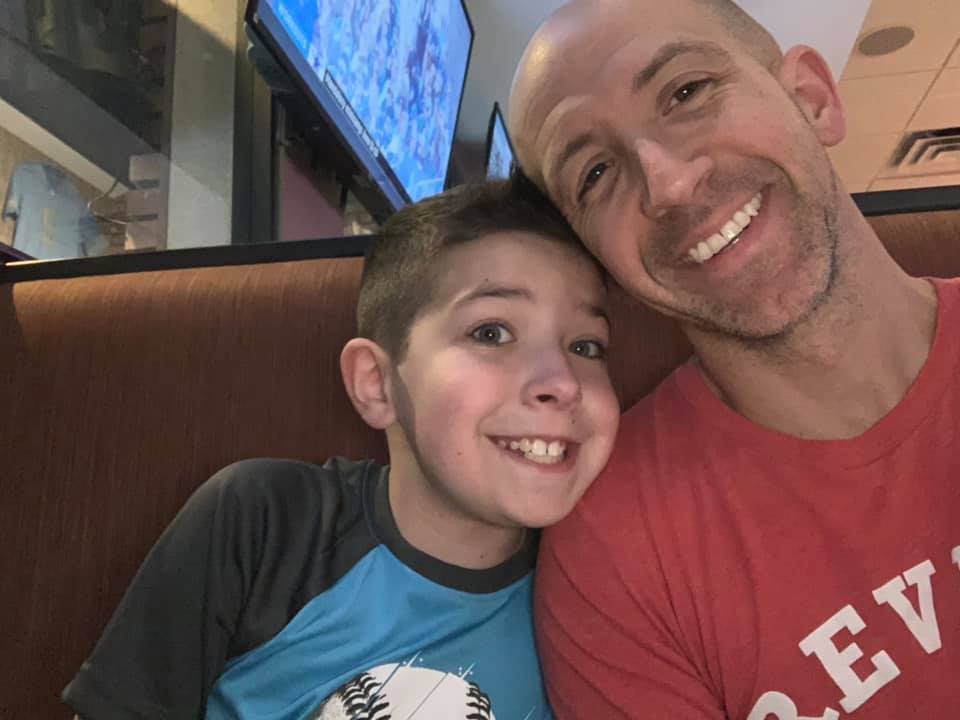
    Below is Jackson last week at Valentine’s exercising his own demonstration of giving for the holiday.

    “We Make Great People Greater”
  • Revolutionary You! #172-Heather Robertson: The Case For Weight And Dietary Maintenance

    She was in my Top 5 most downloaded shows of 2018 and Heather Robertson of Half Size Me returns this week for another great episode. We troubleshoot some common themes in weight loss and also discuss the importance of understanding and embracing the concepts of periodic weight and dietary maintenance. To learn more about Heather’s work, visit www.halfsizeme.com To learn more about your host, check out www.jasonleenaarts.com and www.revfittherapy.com You can also like our Facebook page at www.facebook.com/revolutionaryou Download, subscribe, share with your friends and please take a moment to leave us an iTunes review. 

    iTunes OR Stitcher OR iHeartRadio

  • How To Train When You Just Don’t Like Exercise

    I have a confession.

    I have owned my personal training facility for nearly ten years.

    I have been lifting weights in some capacity for nearly twenty years.

    And at no point can I confidently tell you that I have loved exercise.

    “But Jason…How can I expect you to inspire me to improve myself if you don’t even enjoy exercise??!!??”

    I know it seems counter to a lot of what you hear from our industry.

    You might hear things like: “Find what you love to do!”, “Fall in love with the process!”, “Wait til you try CrossFit!” (okay, that’s kind of snarky…I digress.)

    I won’t tell you those statements don’t have merit. They do. And I believe for a certain individual, those philosophies can be helpful reminders.

    For me, exercise has never been about loving what I do or falling in love with a process. Exercise has always been something I’ve considered a non-negotiable.

    For frame of reference, I started lifting weights when I was 23. I had no sincere athletic background and no one to show me the ropes. What I learned was from magazines (at the time.)

    I was thinner than I am today (shocker, I know) and I was three years into my ten year addiction to drugs. Exercise was just a way to get me feeling and looking better because I was not psychologically ready to give up drugs.

    Throughout the last twenty years of lifting, I have found portions of my training that I do enjoy. I like seeing weights go up over time. I like adding an extra rep or an extra set when I have a regimented program.

    And, by and large, I like what I see when I step out of the shower.

    Mind you, I don’t LOVE what I see…but that’s another conversation entirely.

    I treat exercise the way I treat things like: brushing my teeth, doing the dishes, and doing laundry. It HAS to be done. There is no out. And just like those tasks, I don’t approach them with any level of resentment. Just like exercise, they are non-negotiable.

    And in the years that RevFit has been open, I’ve come across more and more clients who, like me, really don’t LOVE exercise. But they do like how we approach it, so they stick with us, follow the plans we make and get to see the results despite not being married to the gym.

    So, if this has resonated with you thus far, here’s a list of eight things you’ll want to consider to keep training in your life even if you’re a recalcitrant athlete like me.

    1. Show Up. I know it seems a foregone conclusion but you have to make a commitment to show up for yourself. No one else is going to lift the weights for you so you can’t look good by osmosis. I will say there is a fair amount of truth to the statement “But you’ll feel so much better AFTER you workout!” I find this occurs more often than not. Even my clients who drag in after a long day’s work or after not having a great night’s sleep generally feel better and more accomplished once they show up and put the work in.
    2. Never Use Exercise For Punishment. Did you have more slices of pizza than you intended to? No problem! Since you’re likely not going to “un-eat” those slices, don’t chain yourself to the treadmill in efforts to burn off those extra calories. I don’t know a soul who benefited psychologically from that approach. Treat exercise as the buddy who puts his arm around you and says “You’ll do better at the next meal, let’s just get some reps in at the gym and call it a day.” No guilt, no shame, no drama.
    3. Embrace The Exercises You Hate The Least. If you’re with us, we keep a dialogue going of what our clients like to keep in or subtract out from their training regimen. Sure, there may be some beneficial exercises that not everyone falls in love with but if you know it’s only a small percentage of your training and training time, it’s easy to overcome the mental barrier of having to do it. Even the clients of mine who proclaim to dislike exercise the most, can tell me their favorite things to do with us and the exercises they look forward to each week.
    4. Find Data Points That Feed Your Motivation. I am one of the least competitive people I know. So the thought of competing against others is usually a turn off for me. However, when I started posting up the Top 5 best lifters in our studio across the big lifts (Traplift/Deadlift, Squat and Bench Press) it sparked a lot of great conversation. Now, there isn’t a week that goes by where one of my clients doesn’t talk to me about where they are on the board OR what it will take for them to get there. So many people thrive on competition! For instance, if you’re someone who is only going to the gym for weight loss, having a scale in your life can be a love/hate relationship (despite it giving you feedback about what’s happening with your diet.) I find that many of our weight loss clients find a new kind of peace and motivation in seeing how strong they can get. It then fosters a different behavioral pattern: If I eat well, I lift well so if I can focus on both, the scale weight drops too! WIN-WIN-WIN.
    5. Be Forgiving Of Imperfection. It happens to all of us. Some days you have great workouts, some days you have awful ones. Some days you have limitless energy and some days you just want to stay in bed. This is normal! Referring back to point number 1, the best thing you can do is just “Show Up.” However, there will be times when you have a legitimate reason not to: like being sick or having a family emergency. If you’re sick, my advice is to rest up, hydrate and eat to the best of your ability. If you have to miss your training session for any other reason, use that time away for a short at-home workout (squats and push-ups work just fine) or take the ample time for recovery or meal prep. When you can treat missed sessions as quality time to focus on another area of your health, it’s still a victory. And believe me, the more we focus on our victories, the better the mental and physical outcome.
    6. Learn To Work Around The Pain, Not Through It. It’s probably going to happen at some point in your days of lifting weights: an injury. Granted, some are sustained in the gym and some outside of the gym. Either way, you would be best served to learn how to train around the pain source instead of fighting your way valiantly through it. It can be easy to give up on yourself if you have a nagging lower back, wonky shoulder or a knee injury. Look to your training session and determine what can be done that doesn’t utilize or at least minimizes the use of that area of your body. This keeps the needle of progress moving forward until the aggravated area can recover.
    7. Find Your People. Weight Watchers (WW) has support groups, those in 12-step recovery programs do as well. There’s a reason. We thrive with a like-minded community. My clients have access to an online community with each other so we can talk about our struggles and ways we overcome them. They are my people and I am theirs. We are in it together. When you know you have other people in the same boat heading to the same destination, it makes the “journey of health and wellness” much easier to endure.
    8. Own Your Time. What’s the one obstacle I hear about keeping people from exercise? Not enough time. That’s why most of our workouts can be done in 30-40 minutes. There is no magic number of exercises, sets or reps that HAVE to be done if you’re just trying to make improvements for your health. Granted, if you are training for an event, there are systems in place to keep you from spinning your wheels but the smartest thing I ever did for my business was get my clients in and out in a shorter time frame so they could get back to their busy lives and know that the training portion was solved. Contrary to old advice, you don’t need to train for an hour to get a great workout and there are even highly effective workouts you can do in twenty minutes if that’s all the time you have.

    Below is Laura. This will be her fifth year training with me. At no point in that time has she come into her workouts doing cartwheels and somersaults and telling me how much she loves to exercise. That aside, like me, she realizes that having it in her life is a non-negotiable. She has every reason in the world to not show up. She wakes up every day at 3am to get ready for work, works at least 12 hours a day and is on her feet from bell-to-bell. That’s a prime recipe for someone who could easily just say “I don’t want to exercise!” However, she knows what life was like when she weighed something she could not live with and she refuses to go back to that place. It’s also some added motivation that she’s getting married this summer so we’re fully committed to giving her an awesome body for her special day. She’s down 22 pounds as of the writing of this article. Can I get a “Hell Yeah!” for Laura?

    “We Make Great People Greater”
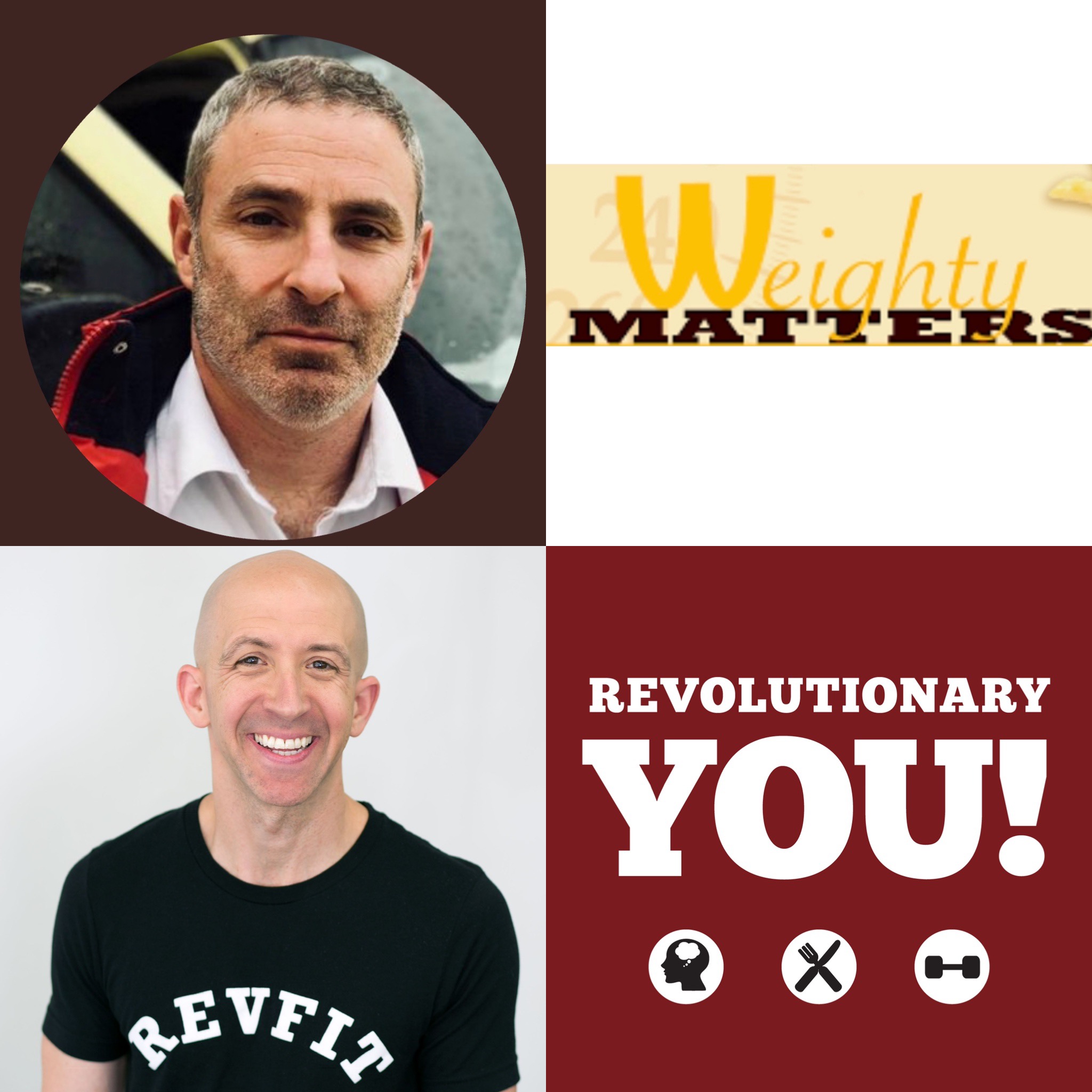
  • Revolutionary You! #171-Greg Nuckols: Considerations For The Strength Training Female

    After hearing Greg Nuckols excellent presentation at The Fitness Summit in 2018, I knew I had to finally get him on the show. Greg is the head of Stronger By Science and also oversees the monthly research review MASS with Eric Helms and Mike Zourdos. In this episode we cover a wide array of topics related to general population women in strength training. There’s a little bit of science, a little bit of ranting and a ton of great information! To learn more about Greg’s work, check out www.strongerbyscience.com and to subscribe to MASS, check out www.strongerbyscience.com/mass To connect with Greg directly, check out www.facebook.com/gregory.nuckols and on Instagram at www.instagram.com/gregnuckols To learn more about your host, visit www.jasonleenaarts.com and www.revfittherapy.com You can also like our Facebook page at www.facebook.com/revolutionaryou Download, subscribe, share with your friends and please take a moment to leave us an iTunes review. 

    iTunes OR Stitcher OR iHeartRadio