I’m covering more pandemic-inspired content with the debut on this show of Dr. Emilia Thompson. She is a nutrition consultant and university lecturer. In this episode, we talk about how the current global crisis of COVID-19 is affecting our clients and their behaviors with food. Dr. Emilia discusses what could be negotiable and non-negotiable at times like these and how mindfulness plays into our dietary choices. Download, subscribe, share with your friends and please take a moment to leave us an iTunes review.
It’s going to be difficult for me to write about much else except the way the Coronavirus has been affecting not only me, but my clients, for as long as it’s currently going on.
If you’ve been struggling, as many of my clients have, to gain some footing and some momentum while we have all been dealing with quarantines and business closures to varying degrees, I hear you. It’s been a struggle.
My own motivation has ebbed and flowed throughout all of this as well.
I want to give some thoughts into things that may help you because they’ve either been helpful for me or for my clients who need to feel as if they’re still in the driver’s seat as much as possible.
-Schedule your training. Pre-COVID, anyone who cared about their fitness likely had some degree of scheduling in place. Take for example, one of my newer clients, David. David would train with me every Tuesday and Thursday around 4pm. When the closures came into effect, he kept the same schedule. He knew that if he could keep that element of his life consistent, he could make the transition back when our studio reopened. While this may be easier for some than others, especially for parents of young children, see if there are any days and times that you can consistently show up for yourself. One day a week is better than none. Two days is better than that. Do the best you can (maybe the second best mantra I’ll provide you in this article).
–Fine tune your diet. I offer this with a caveat. You don’t necessarily need to use this time as a way to lose weight. If you feel that you reasonably can do so, great! If not, look at simple ways to make your eating habits healthier even if all you do is maintain weight at this time. Focus on simple recipes that take very little time to make. Try Googling “Quick Healthy Dinner Ideas” as a place to start. Right now, fancy can take a backseat to easy and practical. The great thing about this is that these are skills you learn now and you’ll have recipes you can file away for future reference. This should make it easier to transition into your lifestyle once the chaos has settled down.
–Really celebrate your non-scale victories. This is a big one, especially if you don’t feel confident focusing on fat loss right now. Look at other places where you can stage a win. I have clients who are teaching themselves new coping strategies or picking up old ones that are still purposeful. I have one client spending more time playing guitar, another is taking the time to bake with her children, many of my clients are going out for hikes so they can enjoy the nicer weather but still keep safe distances from others. Me? I’m spending more time reading and on continuing education. Not every good thing you’re doing has to be related to weight. However, there are so many things you can do that don’t require eating. If you’re struggling with frequent, unnecessary trips to the pantry and fridge, look for other things that make you feel good OR don’t exactly stimulate your appetite. Celebrate these things. They matter. And they will still matter when we all start to resume our previous “normal”.
–Make movement count. When I mentioned scheduling your training above, there’s another consideration to make. Break the thought process that you have to train for 60, 30 or even 20 minutes. Sure, in a perfect world, one of those time periods would be great. However, we’re not living in a perfect world right now. It is anything but. That doesn’t mean that you can’t have purposeful movement. Take something as simple as 1-3 exercises and do enough reps that you feel you did something good for yourself. That could be 3 sets of 15 bodyweight squats or it could be 1 set of push-ups to failure. Your benchmark for what feels good is all that matters. I wrote something about this when I referenced the “minimum effective dose”
–Just try. Now, more so than any other time that I’ve had this business (almost 11 years), motivation is not at an all-time high. Not for me and not for many of the amazing people we service. It’s okay to not be tremendously motivated right now. As a complement to the tip mentioned just above, the most important thing you can do is “something”. My own training has been less than spectacular over the last few weeks but I still manage to get some kind of work in every day. It’s nothing to brag over and I won’t be breaking any records any time soon. For me, for my mental state and for a sense of accomplishment, every day has to have something over nothing. For you, maybe now is not the time to make aggressive strides with your health but if you focus on the next pound down and replicating the effort it took to get there, you’ll make marginal steps of progress that seem attainable and practical. That’s a good place to be. However, you won’t get there if you don’t try.
Just try.
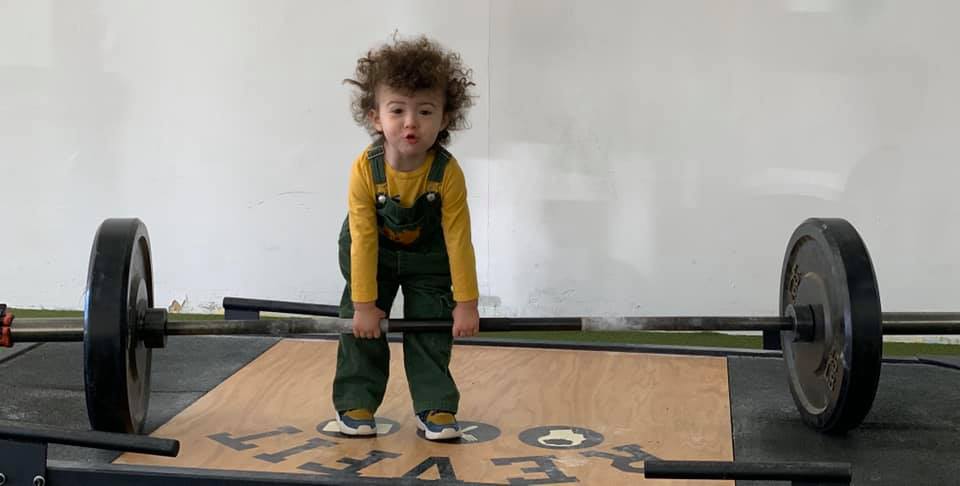
Below is Sebastian, who for the last 2 years has been getting plenty of time around the barbell because it makes for good pictures. Normally, he just wants to roll the bar around and walk away. On this picture, he actually wrapped his hands around that barbell and attempted to move that 135 pounds off the platform. He grunted (when this picture was taken) and said “That’s heavy!” You’re right little man, it is. You’re not ready for it yet. But you tried and someday you’ll get there.
This week, I welcome Maui Athletics own: Beth and Dr. Allan Bacon. In this episode, we talk not only about how to form healthy habits but how to understand the dynamics of how it affects our relationships and how to do it when we’re not in the easiest environments. Download, subscribe, share with your friends and please take a moment to leave us an iTunes review.
To learn more about the great work Beth and Allan are doing:
There’s an adage in the small business community: evolve or die.
And as the world around us responds, reacts and navigates the efforts of international requests on the Coronavirus pandemic, every small business owner I know is learning the painful process of evolving or dying.
There are twelve businesses in the plaza where RevFit is located. Due to Ohio government demands, half of them have temporarily closed down (us included). Two of the businesses are restaurants and have had to suffer the effect of only being able to offer take out service instead of allowing patrons to come and sit down.
The plaza itself looks like a graveyard.
We’re fortunate that we can transition our clients to an online training platform in the interim. It hasn’t been easy but it has been absolutely worth it. Historically, my online training business has only been about 10% of my revenue stream. Now, it’s 100%, at least until the government gives us permission to re-open our doors.
It helps that our clients have been tremendously understanding. Since nearly every single industry has been affected, everyone is suffering in some way. Our clients, like us, are hoping this is all a short-term situation and we’re all trying our best to maneuver this new terrain together.
As a result, it’s forced me to focus more on our client check-ins and personalized workouts that clients can do at home with the equipment (or lack thereof) that they have on hand.
In addition, I’ve been uploading daily workouts to send them just for some extra variety to add into the mix should they desire to do so.
We’re all just trying to keep some sense of normal in each other’s lives because any other options are basically limited.
I found that, while phone calls were helpful, FaceTime and Zoom were much better. I miss my clients faces. I like being able to see their expressions: to watch them when they smile or laugh or actually see their tears when they need to cry.
And yes, at times like these, people are crying.
The good thing, is that many of our clients are retaining their sense of humor and ability to be lighthearted despite what’s happening. We all know that no matter what occurs, it’s short-term. We’ll learn more about each other and we’ll have a better appreciation for what happens in this client/trainer relationship once “normal” business resumes again.
The first week after the studio closed many of my clients were in a complete state of disarray. Despite knowing that we had a plan to move forward, the change was so disruptive to their schedules that many had to pause their workouts from home and diets got a little out of control.
By the end of the second week, most of my clients were in a greater place of acceptance and I saw better dietary adherence and more consistency with the at-home workouts.
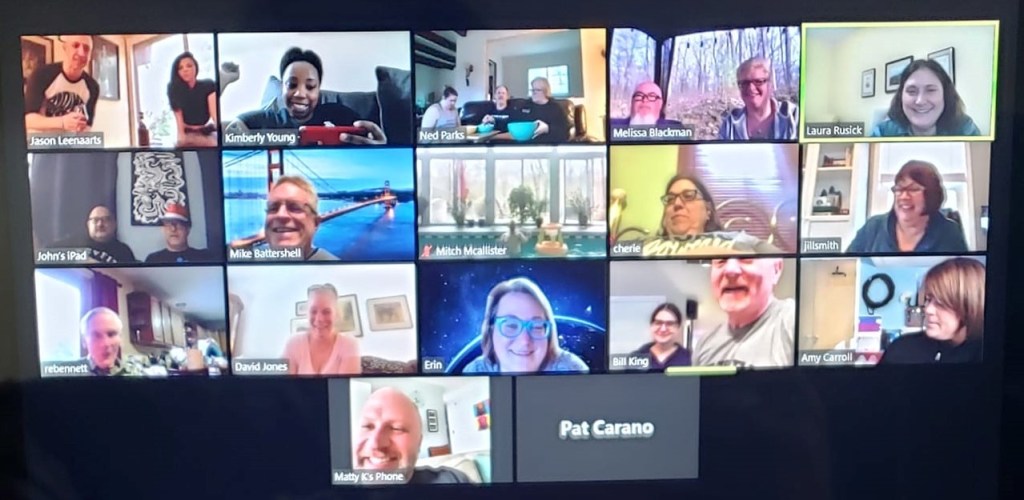
I took the tip from some others I saw trying it and decided to roll out the option for a Virtual Happy Hour over this past weekend. I know many of my clients like to have a drink and since we’re all practicing our social distancing skills, I set up a Zoom meeting to make a toast to health, safety and a community together (distanced at least six feet apart).
It was my first time trying to host a virtual event like that and while there were certainly some logistics to work out with regard to muting and crossover conversations, it was still great to see the attendees outside of the gym setting. It also allowed clients who don’t normally train together to make connections beyond the gym floor.
Like so many of my fellow trainers and gym owners, the “normal” we had before the pandemic began looks very different now and we are all still trying to find our footing to deliver some type of quality service to our clients.
I can say that nothing about the transition has gone quite as expected but that’s not necessarily a bad thing. As my clients are learning the limitations of scheduling regardless of whether or not they can work from home, the entire landscape has shifted.
We’re looking beyond now, collectively, to what the next several weeks will feel like since it will continue to mirror some degree of what the last two weeks have been.
Below, you’ll find a picture of most of the attendees from our Virtual Happy Hour. We will very likely do more of these to help get through what we’re all experiencing.
I should probably take this time to reiterate what others before me have likely said in a better way: let’s find a way to take care of each other now. It will happen through communication, candor, and an overabundance of patience.
Come to think of it, we need those same things whether we train in person or we train in a virtual environment. The basics haven’t changed, the format (for the moment) has.
Coach and author, Steph Gaudreau, joins me this week on the show. We talk about some of the concepts from her book, “The Core 4” and some lessons from intuitive eating. In addition, Steph and I discuss not only how we prioritize our health goals but the costs and benefits of doing so within the framework of our lives. Download, subscribe, share with your friends and please take a moment to leave us an iTunes review.
To learn more about Steph’s work and to purchase “The Core 4”:
Do you hop on daily (sometimes several times a day) to check and see the fluctuations that can happen during your waking hours or do you hide it, taking days and even weeks away before stepping on to see what the “verdict” is?
I have clients that do both and everything in between.
Myself? I weigh once or twice a week. Sometimes more if I’m doing something crafty with my diet but that doesn’t happen too often.
Depending on which coach you follow (and there are many great ones out there), some will say to weigh yourself daily if you’re trying to lose fat.
Some lean towards once a week, others opt for every other week.
I’ve even seen some coaches encourage their clients to throw the scale out and focus on how the body feels, how clothes fit, and maybe some tape measurements since they can unveil composition changes that the scale might not pick up on.
I say, weigh as often as you can psychologically handle that allows you to make progress but still correct your course if things aren’t heading the direction you want.
A little over a year ago, I highlighted the game my father played when I helped him lose weight. I always loved his philosophy for daily weigh-ins. You can read about that HERE.
Beyond your frequency of weighing, there’s another area to consider and that’s the lengths you’ll go to get the scale number to drop.
For those who are new to my writing, I’m not a fan of aggressive diet deficits. I think they can be helpful for certain individuals but in many cases, I’d prefer a doctor is involved especially if the caloric intake is extremely low just to make sure nothing funny is happening with the thyroid, the hormones, or just general recovery.
However, I do find that some clients get seduced by the number. There’s something about instant gratification that gets people doing all sorts of wacky things with their diets just to keep that number scaling down.
-Drastically reducing/eliminating carbohydrates (including fruits and vegetables)
-Drastically reducing/eliminating sodium
-Drinking at least a gallon of water a day
-Drastically increasing fiber/taking laxatives
-Embarking on 24+ hour fasting protocols
Now, before I get the wrath of those who utilize any of these tactics, I’d say they can all be used effectively depending on the individual. Also, if a lower number on the scale is all that matters and you don’t care whether you’re losing fat or muscle, then maybe more extreme measures are your cup of tea.
I like a more methodical approach to dieting because I find that people learn more about themselves, their habits/routines, and gain better insight into how they want to live their lives after they reach their desired weight.
The other problem I encounter, is that many people who diet with no regard for macronutrient breakdowns or a strategic strength training plan, end up losing more muscle mass than they ever bargained for.
This isn’t just about aesthetics either. The less muscle you have, comparatively speaking, the less metabolically active you’ll be when you reach your desired weight and that will have an effect on your maintenance calories.
You’ll also find a decrease in NEAT (non-exercise activity thermogenesis) levels which can contribute to less movement throughout the day. I wrote more about that HERE.
In addition, you may find your recovery from your workouts to be compromised, as well as sleep, libido and your levels of strength (assuming you’re strength training).
I have to remind the “seduced” that the body will do all it can to find homeostasis and temporarily halt fat loss. This tends to happen even more when dieters take their given deficit and drive it more aggressively down.
It’s times like this when you may want to ask yourself: what’s the most important thing, a healthier body or a smaller body? Yes, you can have both if you’re patient and consistent.
So, this is a kind plea: treat your body better. If the scale has taken over in your weight loss plan, ask yourself how you can eat in a healthier way as opposed to being simply a smaller version of you.
In light of the current Corona virus pandemic, sticking with a more modest deficit could make a big difference with your immune system. A more aggressive diet creates a more stressful physical/mental environment for you, which in turn, can affect your body’s immune system.
In many ways, working methodically towards a healthier body can benefit you at a time like this. Just pay closer attention to how you’re approaching it:
-Eat minimally processed foods
-Aim for lean proteins in every meal
-Focus on fibrous fruits, vegetables and whole grains
-Feel challenged (not crushed) after workouts
-Maintain consistent and restful sleep habits
-Learn your body’s signals about when to push your training and when to pull back
Most importantly, stay healthy and stay safe. Fat loss may not be the most crucial priority in your life right now.
Lift The Bar’s Chris Burgess returns for this week’s bonus episode. He and his team have been working feverishly to prepare personal trainers across the globe to transition and ramp up their clients to train virtually as we deal with the pandemic. This is affecting the fitness industry on an international level and all trainers are experiencing this simultaneously. Lift The Bar has arguably the best resources to dive into so you can make the transition successfully as well. Download, subscribe, share with your friends and please take a moment to leave us an iTunes review.
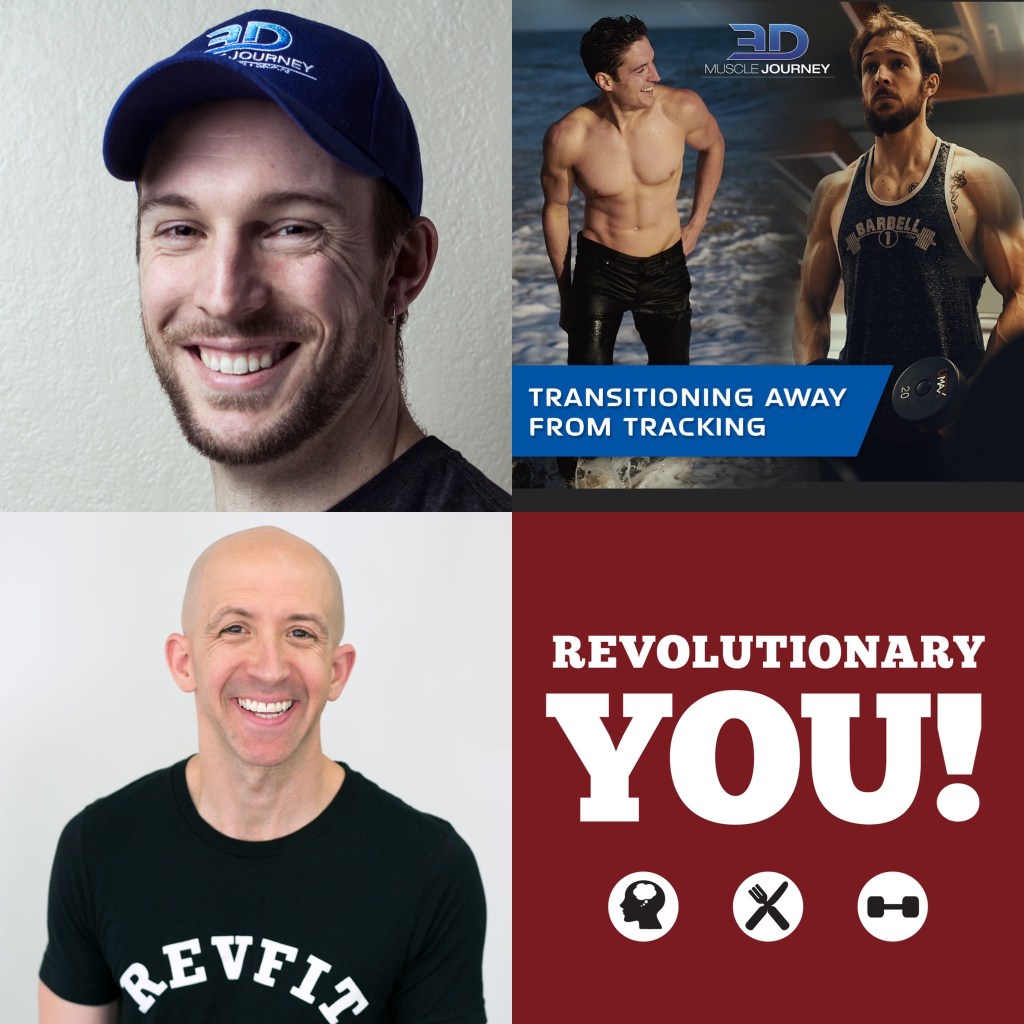
It amazes me even as I type it, but this week marks Eric Helms’ debut on my show. I can promise it won’t be the last. Eric and his 3DMJ team have recently released a new program called “Transitioning Away From Tracking”. It is excellent. In this episode, we not only talk about that program but understanding the nuance of when it’s appropriate to track calories and when it’s better to shift away as well as the psychological effects of either strategy. Download, subscribe, share with your friends and please take a moment to leave us an iTunes review.
To learn more about Eric’s work and to purchase this program:
Like many of you, I’ve found the last several days to be confusing, shocking, and fascinating to watch.
As a small business owner, I’ve been watching to see how similar businesses are acting/reacting to the chaos around them. Being a part of several organizations who cater to gyms and gym owners like myself, protocols and methods for keeping business moving along have been all the buzz since the weekend began.
I’m watching the response to local businesses, domestic businesses and the way that other countries are treating this. I’m watching to check the pulse of my friends and clients to see what they feel, how they feel and to get a gauge on what the potential next steps are.
I’m fortunate that I know a lot of small business owners and I know that each industry is being affected in different ways. Some service providers may not feel as much of a pinch from this. I think of services offered by plumbers, handymen and electricians.
I also consider businesses which thrive on weekend/weeknight traffic when they generate the most revenue: bars, restaurants, music venues, etc.
There are also the businesses who thrive on seasonal events and parties like florists and event centers. Think of all the weddings which are either being postponed or cancelled right now due to fear of too many people in too small of a place.
For us, at RevFit, due to the government intervention, our semi-private training is temporarily on hold. As a result, we are transitioning many of our clients to online coaching to make sure we are still taking care of their needs.
There has also been a glimmer of hope in that we may still be able to coach 1-on-1 and 1-on-2 sessions for those who simply have no better option to train and don’t have the equipment to get the job done at home.
Should the weather warm up sooner as opposed to later here in Ohio, we may opt for outdoor workouts so there is more chance for clients to spread out and still get in some training so they don’t feel they’re missing out on a typical training session.
The good news, for us, is that there are many options for continuing a relatively seamless flow of business. We’ll modify and adapt to the best of our ability because we know how much of a stress relief (no matter what is happening in life) exercise can be. At times like these, we need things we can count on to not only make us feel better but boost our immune systems too.
However, as a consumer, and someone who knows the value of small business, I would ask you to consider how the current events might affect businesses which operate on smaller profit margins and may not be able to weather the storm of potentially weeks of decreased revenue.
My mother owns a flower shop and many of her events have been cancelled. I made a post on Facebook this week reminding people who just need a pick-me-up to order some flowers to be delivered. It may not make up all of the difference from the downturn of events but it may reduce the financial impact this loss of events (postponed or cancelled) may cause.
I also asked friends to consider the impact of restaurants which already operate on small profit margins. Consider ordering take-out so they can keep kitchen staff on hand and not have to reduce as much staff or payroll hours.
For those who are trying to buy the groceries they need, consider shopping at smaller Mom & Pop stores who don’t have the deep(er) pockets of chain grocery stores. This could be an excellent time to learn how to make simple recipes at home that take care of the family’s needs for a handful of days.
I know there are things I’m missing. I know there are people and businesses I haven’t yet considered. Every one matters. Reach out to friends and family who may need to know they have another line of support. That could be something as simple as a phone call.
No matter what you do, stay close (not too close), show unity and show support. Some people need it now more than ever.
We’re in it together.
Below is our Saturday crew keeping relatively safe distance from each other (left to right) Bill K., Kelvin V., Shon C., Jean V., Anthony S., and Charlie H.
Life coach David Wood joins me for this week’s bonus episode. David and I talk about the conversations we need to have, not only with ourselves, but with our friends and loved ones to help get unstuck when we can’t seem to make the progress we want in life. David presents tips from his 4-Step Blueprint to help increase self-awareness and to start the sometimes tough conversations we need to have to see change occur. Download, subscribe, share with your friends and please take a moment to leave us an iTunes review.
To learn more about David’s work and to download his 4-Step Blueprint: