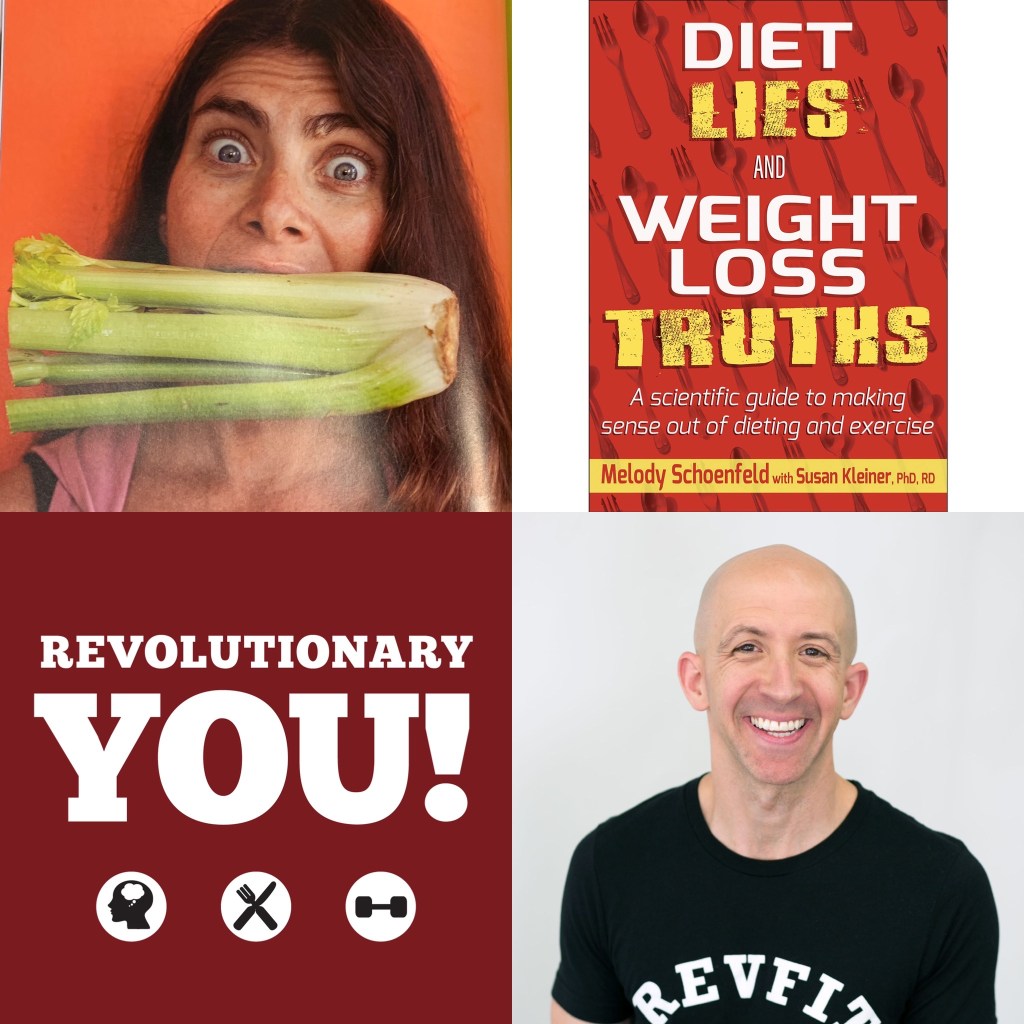
Melody Schoenfeld returns for her 4th appearance on the show this week. You can check out episodes 88, 163 and 205 to hear her former appearances. This time, we get to chat about her new book “Diet Lies and Weight Loss Truths” which she co-authored with another veteran of this show, registered dietitian, Susan Kleiner. If you’re looking for a great dive into the most popular diets out there and a very un-biased, evidence based look at what they do and don’t do, Melody did fantastic work here. She also looks into the other areas of successful dieting that tend to get overlooked like: psychological impact and goal setting. This is another HIGHLY recommended read.
To learn more about Melody’s work and to purchase your copy of “Diet Lies and Weight Loss Truths”:
Several years ago, I wrote a blog outlining some options to pick from when venturing into the conventional fast food drive-thru. I kept those options higher in protein and still calorie controlled for those wanting to have better choices and not feel like they derailed their weight loss efforts simply because they made a planned/unplanned detour into McDonald’s or some place similar.
However, due to changes in public taste, the need to add variation, and relative availability in light of the pandemic, many of those options may have changed since then.
As a refresher, if all you had access to was fast food options, you can still lose weight effectively assuming you are consistently in a caloric deficit.
Some people may snub their nose at the quality of fast food as opposed to a home cooked meal and they wouldn’t necessarily be wrong. However, this isn’t a discussion on quality, it’s on portion sizes/quantity.
Here’s the thing: no matter where you go in the domestic U.S., a Big Mac will always be the exact same amount of calories because they’re made in the exact same way, every.single.time.
Several years ago, my friend and fellow business owner, Kristie, asked me for some help with her weight loss goals. I knew that Kristie was a big fan of cheeseburgers and when I gave her a calorie estimate to shoot for, I asked her to consider how she wanted to include cheeseburgers into that diet.
Kristie, not unlike a lot of people, assumed that any weight loss plan would deny her the ability to have her favorite food. I reminded her that calories mattered more than food choice for weight loss efforts and she asked: I know that a Big Mac is about 500 calories. Are you telling me that I could have a Big Mac every day and as long as I make up the difference to get to my calorie goal, I’ll still lose weight?
“Yes”, I said “That’s exactly what I’m saying.”
To Kristie’s credit, she didn’t eat Big Macs every day but she had them several times a week. She also removed alcohol from her plan for a lengthy amount of time in efforts to keep her calories in line as well. Ever since then, we’ve always joked about her great weight loss success on the “Big Mac Diet”.
Of course, Kristie’s not alone. Internationally renowned coach, Jordan Syatt, ran the experiment on himself too. You can read about that HERE.
If we were arguing that Chipotle (for instance) is a healthier option than McDonald’s, the source of the food might be “better”, relatively speaking. The problem with places like Chipotle is that you are at the mercy of the person serving you. A “little” bit of sour cream means one thing to one server and something different to another server.
I was recently at a Chipotle near RevFit and I asked for a “little” bit of sour cream. My server, the nice gal that she was, dropped a loaded ladle full onto my steak bowl. Estimated calories in that ladle: somewhere between 300-400…IN SOUR CREAM!
I wasn’t the type to be nasty about it and ask them to make it over again but now that my bowl was drowning in sour cream, it definitely made caloric navigation a lot more difficult to do.
Places like Subway and Panera aren’t exponentially different either. While you do have the advantage of watching them prepare your food, you don’t have complete control over how added options like: dressing, cheese, guacamole and added oils can drastically derail what might otherwise be a decent option.
Of course, it does help that many of these chain restaurants post the calories for the foods they offer. It makes it easier for you, as the consumer, to make a more informed choice of what you’re going to order.
Where things tend to get dicey is when we cave in to options that send us further from our goals. In other words, maybe you weren’t planning on getting fries with that burger but as soon as the person taking your order asks if you want to add fries, that little voice goes off in your head says: Fries would be delicious! YES! Order the fries!
And even on the low end, you’re adding an easy 300 calories to your meal and often double that.
So, here are some loose guidelines to help control the calories at the drive-thru or fast food establishment. I’m including places like Chipotle and Subway even though they aren’t always considered in the same breath as McDonald’s and Burger King.
While you certainly don’t have to follow all of these, adhering to any combination of them can drastically reduce your total caloric intake in that meal.
–Skip The Side. Whether it’s chips at Chipotle or Subway, a baguette at Panera or fries at Wendy’s, your entree probably has enough calories in it to be sufficient for a portion size (and often well beyond that). If you want to stack the deck in your favor, opt out of the side offering.
–Grab a bottle of water. While diet drinks are often low or zero in calories, a bottle of water is going to not only guarantee a zero calorie option for you but you get the added bonus of better hydration, flushing excess sodium through your system and assisting with processing fiber and waste removal. I try not to over hype any one area of a diet but you’d be hard pressed to find anyone who won’t encourage an increase in water intake.
–Swap a veggie for a starch. A really easy way to cut back on calories without necessarily counting them is to swap out your starch option and toss in a veggie instead. Sub shops like Jimmy John’s let you wrap your sandwich in a leaf of lettuce and Chipotle can set your bowl over greens as opposed to rice. While salads can be a good option, if you’re not careful they can actually be higher in calories than a sandwich. I spoke in greater detail about that HERE.
–Watch the condiments. While I’m on the subject of salads, take any dressing on the side so that you can control the amount you’re consuming. I’ve seen hundreds of calories get added to a fairly innocuous offering of food in dressing/oils alone. It’s not just dressing though. For weight loss purposes, steer clear of mayonnaise, tartar sauce, and dressing. If you really want those condiments, get them on the side and use the smallest amount you can. Mustard and balsamic vinegar tend to be safer options from a calorie standpoint. Also, never discredit how added black pepper or oregano can spice up a dish without adding much in the way of calories either.
–Hold the cheese. Need a ridiculously easy way to cut back at least 100 calories from any food option? Remove the cheese. 100 calories is conservative though. I’ve seen Subway and Chipotle put well over that in their offerings simply because they don’t measure cheese. It just gets tossed on. Other high fat options that can get out of control are avocado/guacamole, sour cream (as mentioned above) and added nuts.
–Eat mindfully. One of the reasons it’s called “fast food” is that it’s not only fast to make but exceptionally fast to eat. I can inhale a burger in around 5 bites. Total time to consume? Probably less than 3 minutes. Does that sound mindful? Of course not! Take your time chewing the food, slow down your pace and actually try picking out the combination of flavors. Disclaimer: One health professional I know used this tip to actually turn his patient away from fast food dining. The slower pace of eating allowed his patient to realize that: Wow! This stuff doesn’t actually taste very good when I slow down my eating!
Ultimately, you are in control of this dining experience for yourself. By virtue alone, eating higher quality foods doesn’t necessarily equate to fat loss and eating fast food doesn’t mean you will gain weight. Some options are custom-designed to 1) make you eat more than you might normally 2) make you come back for more.
How you handle the convenience, the chance of impulsive options and the wide array of ways to play things in your favor is on you. These tips may just help along the way.
And for the record…I did eat this Big Mac (pictured below) and if I had to guess, this was probably the first time I’d eaten one in about 15 years. I do love a good burger but I’d be perfectly content if I didn’t have another Big Mac for another 15 years. I also got a small order of fries which I was not able to finish. Total calories had I eaten everything would have been around 750 calories. By comparison, I would have much rather eaten a burger from Five Guys but I would have paid a greater price (calorically speaking) to do so. A regular hamburger at Five Guys is approximately 700-800 calories and their small order of fries is over 500 calories.
So, if weight loss was my obstacle, what’s the better choice? I think you know the answer.
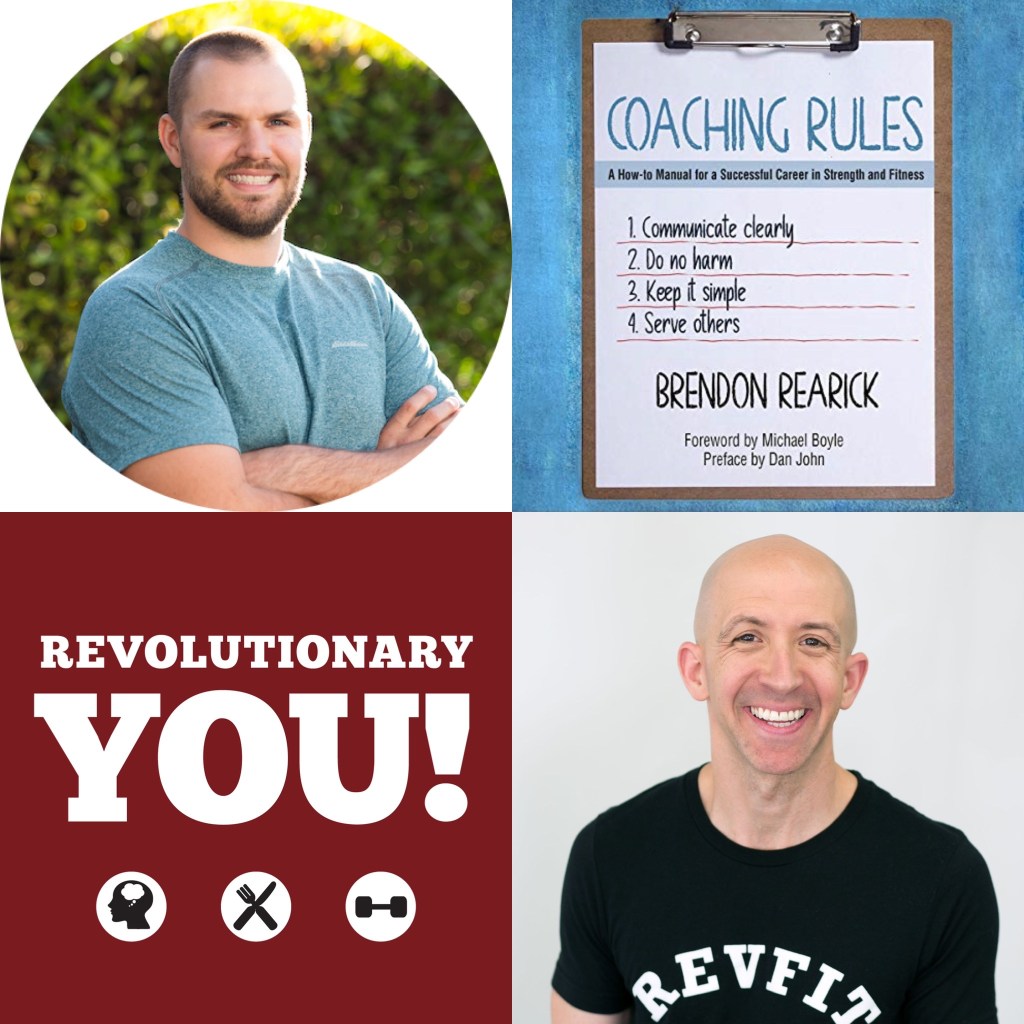
I am honored to welcome Coach Brendon Rearick to the show this week to chat about his brand new book “Coaching Rules”. We get to touch on his fascinating story in the industry to date and the origins of his book. On the cover, are 4 bullet points that Brendon tackles in greater depth within the book. We break down each point and why they matter to coaches regardless of how long you’ve been in the industry. I can’t thank Brendon enough for not only sharing his time but writing a great book as well.
To learn more about Brendon’s work and to purchase “Coaching Rules”
Each day, I’m inundated with emails and social media notifications of the things I enjoy. Namely: new books, new records and new types of bourbon.
Each new email into my inbox is a veritable Russian roulette in “what can I be tempted by now”?
Every time I hop on social media, it’s a crapshoot of which ad I will be enticed by since many of my online searches might revolve around books, records and bourbon. As a result, those algorithms know exactly what types of things might be of interest to me.
Each day, is a lesson in temptation. Do I buy the shiny new thing to add to an ever-growing collection?
I have “collected” things all my life: from comics to cassettes (yes, I’m THAT old) to CDs and so on and so on. Of course, there simply isn’t enough money to buy it all but that doesn’t stop me from caving in when I get that dopamine hit of “Buy Now” in whatever form it takes.
It’s more insidious than that, though.
Feeling that need to buy the shiny new thing may be due to a sense of scarcity. Are there limited quantities? That makes it more enticing for me. Marketers know this which is why they make use of limited editions and show notifications of “Only 3 left!!”
Buying something new may also come through a sense of entitlement. In other words, I earned/deserved that because I did “such-and-such thing” and this is how I show myself appreciation.
Or, sometimes I’m stressed out about something and retail therapy feels like the only (albeit hollow) solution.
Much of this plays into the notion of F.O.M.O. (a.k.a. Fear of Missing Out). In other words, if I don’t buy that thing now, what if I never get to own it, drink it or consume it?
And, like a lot of things in life, actually experiencing the “thing” is not quite as fulfilling as the reward of simply purchasing it.
When I was younger, this incessant need for the next material thing would supersede my priorities like paying my bills. As I’ve gotten older, that same impulsive behavior is there I just have to be very cognizant of it and remind myself (where possible) of where my priorities are in line with my desires.
There’s more to dive into on a later date about my tendency to succumb to those material temptations and the parallels with my weight loss clients.
For me, it’s those physical gifts that tempt me. For you, it may be food…
If you’re trying to lose weight, think about how scarcity affects you. Do you eat everything in front of you because you have a fear you won’t know when your next meal will be? This happens sometimes for clients of mine who may have experienced some degree of poverty in their childhood. However, these same clients are rarely ever experiencing true scarcity as adults. For those of us raised in the “Clean Plate Club”, perhaps it wasn’t about scarcity but the belief that we had to finish everything on our plate because that’s how our parents raised us.
Think about that sense of entitlement as well. I have clients who succumb to the ice cream, the chips, the treats and the snacks for no other reason than because they “had a hard day” and they “deserved it” or they bargain with themselves by saying “I skipped the fries with lunch so I earned the chocolate after dinner!”
And, sometimes stress is the main culprit for why my clients can’t stay consistent with an eating regimen. When things get tough (as they invariably do), the food plan is the first thing that goes to hell in a handbasket.
A breakdown in dialogue between coaches and clients highlighting these problems might go something like this:
Clients say: I need more willpower.
Coaches say: You need better habits.
One thing I continue to talk about with my clients is the notion of the food environment. If the tasty, easy-to-overeat foods are around, guess who’s going to dive into them when the world gets weird: You are.
By the way, were you living in the domestic U.S. last week when all that madness was happening at the capitol? How’s THAT for weird?
This is why it’s helpful to step back sometimes and ask yourself: How often am I tempted?
Are chips lying on the kitchen counter? That’s temptation.
Did your kid forget to finish his fries and nuggets on his plate? That’s temptation. (One nibble and a couple fries won’t hurt, right?)
Are there any candies leftover from the holiday season that probably should have been thrown away by now and keep lingering in hopes that your willpower will win the war? (Good-effing-luck with that!)
Y’all we are not even 2 weeks in 2021 and I can tell you with all confidence that the weirdness of 2020 isn’t over yet. Willpower, while nice in theory, won’t last. Just ask my bank account.
Shape your environment better. There is absolutely nothing wrong in admitting some things are not easy for you to control right now and if weight loss is your goal, food is the place to set your sights. Are you designed for success or just more temptation?
For myself, when I know that finances need to be on point, I have to push certain emails into my spam folder, unfollow certain pages on social media, and remind myself what the priorities are. I’m not much different than you, I just have different things to be impulsive about.
Temptation is EVERYWHERE.
How will you control it?
(Featured below L to R: Superdrag-Head Trip In Every Key, as great of a power pop album as one could ask to listen to; The Dutch House, a novel by Ann Patchett I just finished reading; and Blanton’s, a good bourbon with a reasonable pricepoint and an absolutely obnoxious secondary market price).
It’s been a long time since I’ve done a solo episode but due to some tech issues on my end, the show I had originally planned to release will be coming out next week instead. I give some more insight on that in today’s episode. I also take some liberties with my most recent blog of the same title to give you some thoughts on how to make 2021 a great year for you and your health.
I’m not sure about you but 2021 already feels different than 2020 to me.
Maybe I’ve just adjusted to the relative weirdness that we all had to face last year.
Like many of you, I did struggle with workout consistency (and that’s despite owning a gym as my playground), I did struggle with stress management, with sleep and with feeling like I just wasn’t doing enough for myself and my own goals.
However, I reminded myself that I needed just as much forgiveness and flexibility as I would ask my clients to give themselves. It was one hell of a year no matter who you are and what you went through.
So, before you attempt to race yourself to the finish line with another crash diet, another balls-to-the-wall HIIT class or 7 days a week of two-a-days to erase the guilt, shame and any other nasty taste 2020 left in your mouth: breathe, take a moment, and read on.
There are so many questions about what’s best for our health in light of a pandemic, I thought I’d make a short list of things to make your life easier as we begin the year.
1.) Be less aggressive. Fans of Jocko Wilink and David Goggins won’t like this and I know there is a time and place for faster-harder-more in a workout. If there wasn’t, high intensity training wouldn’t be as appealing as it is for some folks. However, if you’re not training for a sport/race/event, pulling back the intensity to get your year started might not be the worst idea in the world if you need some traction and a general sense of feeling better about yourself. Most of my clients are well past their glory years when it comes to what their “peak condition” was. Training a 50 year old body the same way you trained a 20 year old body is not exactly a recipe for success. There’s mileage on you for a reason. Respect it.
2.) Steer clear of food documentaries. I haven’t watched a food documentary in nearly a decade. I’m not about to start now. In fact, a great deal of the company I keep in the industry (folks far smarter than myself, mind you) aren’t much different. While documentaries have managed to find better financial backing, higher quality cinematography and more celebrity endorsements behind them, they are also not completely honest either. If you’re going to waste an hour or two of your life watching one just to have it push your emotional buttons and completely alter your diet landscape, do yourself a favor and look up the “debunks” and criticisms of the documentaries as well. I can assure you, you’ll find more holes than Swiss cheese in the arguments and learn to be more skeptical of the information you receive (not a bad attribute to have in general).
3.) Learn but execute. If you are going to spend the time, effort and energy learning about a diet that you think might work for you, make sure you actually DO the diet. All too often, people spend an inordinate amount of time learning about (insert bestselling diet plan here) and very little time actually following the process within. If you haven’t found a way to make a diet work for you (a.k.a. actually maintaining the results) within 90 days of learning about it, that’s a pretty good indicator that it’s not suitable for your lifestyle right now.
4.) Success leaves clues (and so does failure). Credit to Coach Dan John for the “success leaves clues” wisdom. Look back on last year and determine what went right for your health plan. Did you find a way to consistently exercise? Are you more comfortable making meals at home? Continue to nurture those things. In addition, look constructively at what went wrong as well. How can you improve that? If lockdowns and quarantines threw you off of your game, what can you work on to change that response now?
5.) Consider abstinence but question it as well. I hear a lot of people talk about things like “Dry January” for cutting out alcohol or “Veganuary” for experimenting with a vegan diet. While I certainly understand the allure of “cleaning up” certain parts of your diet, ask yourself where you expect to be at the end of the month. Does cutting out alcohol or animal products directly result in weight loss for you? If so, great! Maybe those changes were enough to demonstrate where attention needed to be placed in your diet. By the same token, are you going to spend that time learning why the things you’re excluding had the affect on you that they did or will you go right back to your pre-January behaviors in February after the challenge is over?
6.) Get strong. It’s hard to write anything about health improvement without asking you how you’re challenging your current level of strength. This is not the same as venturing into powerlifting. This is about pushing your body on those last 2-3 reps of an exercise. It’s about stimulation. It’s about progress. It’s about paying attention to your form and listening to how your body responds to resistance. And if you haven’t heard, life is about resistance. Scratch that, 2020 was a profound lesson in resistance (and your reaction to it).
7.) Have fun. Learning how to eat for your health goals is not exactly entertaining. It’s a skill. One worth learning if you want to reap the benefits. Exercise is not always enjoyable. Find the parts that are and look forward to them. Most importantly, be aware of the areas of your life that you feel are holding you back from better outcomes. Find enjoyment and curiosity in fleshing them out to change what you need. There’s no race to a finish when you’re learning how to respect your body. A cup of patience and two cups of consistency can get you a long way (refer back to Tip #1).
Coach Sebastian (and Dad) peace-ing out this week. Make this January a more exceptional one than last year’s.
I welcome Robert Linkul to the show for our final episode of 2020. Robert is the owner of Be Stronger Fitness and the creator of Training The Older Adult. In this episode, we touch on how the pandemic affected his brick-and-mortar business, how he has continued to improve the lives of his clients in light of those changes, and why his community has been continued to be successful. Robert also shares his thoughts on where the future of the industry may be heading and a call to action for other coaches who are uncertain where to direct their attention next.
Last week, I reflected back on the mostly professional recap of 2020.
This week, I needed to go mostly personal.
This year, more so than last, was a year of game-changing reflection for me. I not only had to look at my own behavior and lifestyle in the midst of a pandemic but in a certain type of personal crisis. I needed to dig deeper with my therapist, my wife, my clients, and that person I see when I look in the mirror.
Most of the discord in my life stemmed from one place and one place alone: feelings of self-worth.
Nearly every bad thing I’ve done or been inspired to do in my life came from whatever story I told myself about personal value in this world, what I contribute to those around me, and how the skeletons in my closet choose to come out and make their presence known.
Somewhat frustratingly, I’ve always had this uncanny knack of taking the successes in my life and finding some way of sabotaging them. God forbid, I just “be happy” and grateful for what I have because I know intimately what it’s like to be without.
Stepping outside of myself for a moment, I’ve seen some pretty incredible things happen this year. People who I saw who had little confidence in their own innate abilities to succeed became more confident, more proud, more capable. People who I know who lived with grudges, a lack of forgiveness and a general darkness in their hearts became more loving, more forgiving, more understanding.
2020 gave me a moment to step back, take the things around me in, and remind myself: look how far you’ve come. Don’t lose ground.
Despite the many successes (and there were many) in 2020, I found that every slight hint of failure would crush me. It wasn’t enough to celebrate the good, I had to agonize and carry on over the things that weren’t going as I’d want them to.
A couple of months ago, an online client/friend I have worked with on and off for many years decided to discontinue training with me. She was once a face-to-face client and then she and her wife moved out of state several years ago. I knew she had a lot going on in her life and I had to remind myself that she had “bigger fish to fry” by embarking on a journey with a therapist. While it was a letdown to not have her actively training with me, I felt that if she could get some quality work in with the therapist, we could possibly reconnect again sometime down the road.
So, it took me by surprise when I received a rather large package in the mail from her just before Christmas. She has developed a fantastic hobby of crafting custom handbags and I’ve watched her develop her skills over the years. In the box, she made a leather backpack for me. There inside the box was a handwritten letter that she has been kind enough to allow me to reprint here.
“Dearest Jason, This is my third rewrite. Not unlike the amount of tries at the perfect bag for you. I’ve wanted to create something for you for the longest time. My skills have grown to a point that I felt good about making something that would be worthy of you wearing. Worthy of you. Every hole has two stitches. For me, it represented every time you poured into me and I rose to meet you. It is not a perfect bag. Some stretches of stitching are flawless, then there are some areas where I may not have struck hard enough, off center or distracted. In the moment, I curse and want to kick myself. In the end, I work at the flaws and decide it had purpose. I mean, even if I made the same exact bag again, I would learn at different points. No one would have the exact same strike pattern on their version of the bag. Anyway, I’m rambling. I’m doing well in therapy. I’m doing well with mindful eating, back to tracking everything I eat and drink (Why do I stop that? It’s so effective-duh!) I work out every other day. I have full health clearance and I’m not sad as often. You’ve changed my life so much and every time we’ve reconnected, who I am now is part your doing-and that is a good thing. The love poured into this bag reflects that. It’s built to get worn and scuffed up over the years, so I’m hopeful you’ll wear it as much as your cowboy boots. I love you more than you’ll ever know.“
In a year marked with a lot of feelings of “worth”, it was a hard letter to read. Hard, because, I have to remember that the person I see in the mirror is not the same as others see. And, I hold myself to a mostly unreasonable standard that can be difficult to attain.
However, it reminded me of some simple truths:
-Progress looks different to everyone.
-If you think people aren’t listening and watching what you do, they are.
-Sometimes the most effective work to do is the least flashy and the hardest to be consistent with.
-Your life, despite how you feel about yourself, is of greater value than you know.
I said these words to my clients a couple of days ago and I’ll say them here. If you feel that you got a raw deal in 2020, remember that someone else had it worse in 2019. Someone altogether different may have it worse still in 2021.
We have no guarantee that 2021 will be markedly different or better than 2020.
We are still left with the scant few things we have control over in our lives: how we eat, how we treat our bodies, how we react to life as it comes to us and how we treat others. That’s it. Everything else is completely and utterly out of our control.
For me, I remind myself of value and self-worth. Do good, try and do better each day, forgive, forgive, forgive.
And to G, who made me the bag. The bag is amazing, thank you. But the letter…you’ll never know what that letter meant to me. This time, I rise to meet you.
Signing off for 2020: Be strong…be healthy…be kind.
This week, I welcome the debut of coach Nick Zimmerman to the show. In this episode, we talk about what it was like for him to build his personal training clientele before the pandemic began. We also chat about how he transitioned his clients into the virtual platform and how they have thrived as a result. Nick talks about how authenticity and flexibility have helped him continue to work with his clients, how it works with his personality and his approaches for social media and client connections.
As I’ve done in the last few years by the end of December, I wrap up the highlights including my most read articles, most downloaded podcasts, my guest appearances on other podcasts and, of course, every book I consumed that year.
What can I say about this year that hasn’t been said (and said and said) by others far more eloquent than myself? True to the title of this post, there have been amazing things and catastrophically terrible things that have happened in 2020.
The good: RevFit not only survived the shutdowns we came out swinging. What began as a trend to have a banner year for this business since we opened in 2009 will actually finish as still a banner year, despite what happened with shutdowns in the spring. I’ve said it before, I’ll say it again: It’s because of our clients. At best, I opened a business that gave people the opportunity to not only be themselves but to do their damnedest at improving themselves. The rest of the “magic” is by our clients alone. They are the lifeblood of RevFit. Credit as well goes to my staff. In 2020, that would be Emily Blidy, David Cameron and Mike Roder. I could not have survived this year and every curveball it threw without them. Thank YOU.
Also on the good, my wife and I, after 11 years of being together turned a pivotal corner in our marriage. We spoke about it when she was a guest on my podcast a few months ago. I feel as if Marissa and I have gone from one difficult/traumatic circumstance to another for as long as we’ve been together. How you manage those problems is, I think, what makes or breaks a couple. It’s amazing what you “learn” about someone when you open your eyes/ears and listen and see. Marissa, I credit you: “A little different, a lot better” (Sorry folks, it’s an inside story…)
The bad: I saw a lot of great trainers and fitness facilities either close up shop or have to leave this industry. That is heartbreaking to me. I know how hard it is to survive in the fitness industry and some truly great coaches could not outlive the devastation of the pandemic and the shutdowns.
Also, due to the virus, I had to go through some very lengthy spans of time not seeing my son, Jackson. His mother and I, felt it was not in his best interest to open up anymore exposure than necessary to him, so while we have definitely had time with Jax this year, it has not been as much as we’re accustomed to and the holidays have not been the same without him. I know it’s all a blip on the radar but it’s tough, as a father, to not see your kids as often as you’d like. Someday (hopefully soon) this will pass and we can go back to “normal” but right now, his Mom and I agreed a little bit of distance might be best for the time being.
My wife also lost her grandmother this year. Not to COVID, mind you, but some other health issues that came up. This will be her first series of holidays to get through since her grandmother passed.
Lastly, something you’ll read about again in just a few, was the loss of one of our RevFit family members. Terry Waye passed away suddenly from a heart attack and I am still not quite processing that he is gone. It was, without question, the most devastating news I heard this year and I can only imagine the grief his wife and sons are experiencing.
On that note, let’s go for the lists:
My Top 5 Most Read Articles of 2020.
I should be thrilled when one of my articles completely shatters the reads and shares of others. On one hand, I am happy that the number 1 spot was so widely read but I had to lose someone I cared very much about to write it. I can’t even read it again myself. It’s too upsetting. However, it came from the heart and it came with his wife’s blessing. My post about Terry Waye took the top spot by a landslide.
I’m always terribly grateful to be invited as a guest on someone else’s podcast. It’s an honor to be considered when there are really some fantastic coaches out there to be picked and some folks give me a nod as well. Thank you to everyone who invited me on, and as always, I hope the content and discussion help someone out there.
I take books in via physical (handheld) consumption and through audiobooks. I have always read at a frantic pace and if COVID has any silver linings, it’s that I definitely got more reading in this year than normal. I also got into a series of books that led to a higher rate of consumption as well: the 33 1/3 series. This is a collection of books where an author selects an album in history and writes a full tome on it. The books average between 100-150pgs in length and I can normally conquer one in a day. Some of them are great, some are not. Because my mind works in strange ways, I started at the beginning of the series and have been working my way diligently through them. I read no more than 10 of them a month and by the end of this year, I will be roughly through half of the series. I normally hotlink the books with a place to purchase but I read so many that I just thought I’d list them this time. If you see something of interest, please check out your local bookseller or book website of choice and support the author by purchasing a copy for yourself.
1-A Razor’s Edge by W. Somerset Maugham
2-Simply Bourbon by Bob Davidson
3-He’s A Porn Addict…Now What? by Tony Overbay and Joshua Shea
4-Toddlers Are A**holes (It’s Not Your Fault) by Bunmi Laditan
5-Good And Mad by Rebecca Traister
6-Gods At War by Kyle Idleman
7-Radical Candor by Kim Scott
8-Incognito: The Secret Lives Of The Brain by David Eagleman
9-The Eating Instinct by Virginia Sole-Smith
10-The Drunken Botanist by Amy Stewart
11-Fanatic! by Henry Rollins
12-The Body Book by Cameron Diaz and Sandra Bark
13-Romantic Violence: Memoirs of an American Skinhead by Christian Picciolini
14-Deaf Republic by Ilya Kaminsky
15-The Silent Patient by Alex Michaelides
16-One Two Another by Tim Burgess
17-The Midnight Line by Lee Child
18-Habits Of A Champion by Dana Cavalea
19-On Bowie by Rob Sheffield
20-ACT Made Simple by Russ Harris
21-The Sun Also Rises by Ernest Hemingway
22-Gutless by Christian Finn
23-On Earth We’re Briefly Gorgeous by Ocean Vuong
24-Maybe You Should Talk To Someone by Lori Gottlieb
25-On Time: A Princely Life In Funk by Morris Day and David Ritz
26-Manage Your Day-To-Day by 99U
27-Herd: How To Change Mass Behaviour By Harnessing Our True Nature by Mark Earls
28-A Book Of Common Prayer by Joan Didion
29-More Fun In The New World: The Unmaking and Legacy of LA Punk by John Doe and Tom DeSavia
30-Horror Stories by Liz Phair
31-The Wealthy Fit Pro’s Guide To Getting Clients and Referrals by Jonathan Goodman and Mike Doehla
32-The Moral Animal by Robert Wright
33-The Core 4 by Steph Gaudreau
34-On Writing by Stephen King
35-The Confidence Gap by Russ Harris
36-The Female Brain by Louann Brizendine
37-Territorial Rights by Muriel Sparks
38-The Supermale by Alfred Jarry
39-A Liberated Mind by Steven C. Hayes
40-Go Ahead In The Rain: Notes To A Tribe Called Quest by Hanif Abdurraqib
41-The Fitness Chef by Graeme Tomlinson
42-The Intimacy Struggle by Janet G. Woititz
43-The Future Of Feeling by Kaitlin Ugolik Phillips
44-The Way Of Men by Jack Donovan
45-Diet Recovery 2 by Matt Stone
46-The Long Distance Leader by Kevin Eikenberry and Wayne Turmel
47-Stay Fanatic! Vol. 1 by Henry Rollins
48-Unplugged by Brian Mackenzie, Andy Galpin and Phil White
49-The Gynae Geek by Dr. Anita Mitra
50-Bad Blood by John Carreyou
51-The Club King by Peter Gatien
52-The Names Of The Dead by Kevin Wignall
53-Who Killed Mister Moonlight? Bauhaus, Black Magick and Benediction by David J. Haskins
54-The Art Of Gathering by Priya Parker
55-The Turn Of The Key by Ruth Ware
56-Things No One Will Tell Fat Girls by Jes Baker
57-The Beautiful Ones by Prince
58-Forties On Fire by Kathryn Kos
59-Talking To Girls About Duran Duran by Rob Sheffield
60-Ham On Rye by Charles Bukowski
61-Bourbon: The Rise, Fall, and Rebirth of an American Whiskey by Fred Minnick
62-The Jazz Ear: Conversations Over Music by Ben Ratliff
63-The Big Leap by Gay Hendricks
64-What You Did by Claire McGowan
65-Key Person Of Influence by Daniel Priestley
66-Hard Listening: The Greatest Rock Band Ever (Of Authors) Tells All by Various Authors
67-Lean & Strong by Josh Hillis
68-Palaces by Simon Jacobs
69-Bird By Bird by Anne Lamott
70-Eat Me: The Food And Philosophy Of Kenny Shopsin by Kenny Shopsin and Carolynn Carreno
71-Becoming A Supple Leopard by Kelly Starrett and Glen Cordoza
72-Fitness Hacks For Over 50 by K. Aleisha Fetters
73-The Boatman’s Daughter by Andy Davidson
74-My Dark Vanessa by Kate Elizabeth Russell
75-Hard To Handle: The Life and Death of The Black Crowes by Steve Gorman with Steven Hyden
76-The Beck Diet Solution by Judith S. Beck
77-Punk Rock: An Oral History by John Robb
78-The Handmaid’s Tale by Margaret Atwood
79-Raise High The Roof Beam, Carpenters and Seymour, An Introduction by J.D. Salinger
80-King Warrior Magician Lover by Robert Moore and Douglas Gillette
81-The Testaments by Margaret Atwood
82-33 1/3: Dusty In Memphis by Warren Zanes
83-33 1/3: Forever Changes by Andrew Hultkrans
84- 33 1/3: Pet Sounds by Jim Fusili
85-33 1/3: Harvest by Sam Inglis
86-The Brain That Changes Itself by Norman Doidge
87-33 1/3: The Kinks Are The Village Green Preservation Society by Andy Miller
88-33 1/3: Meat Is Murder by Joe Pernice
89-33 1/3: The Piper At The Gates Of Dawn by John Cavanagh
90-33 1/3: Abba Gold by Elisabeth Vincentelli
91-How To Be Ultra Spiritual by JP Sears
92-33 1/3: Electric Ladyland by John Perry
93-Hacking Whiskey by Aaron Goldfarb
94-Eat Their Lunch by Anthony Iannarino
95-33 1/3: Sign ‘O’ The Times by Michaelangelo Matos
96-Among The Thugs by Bill Buford
97-33 1/3: Unknown Pleasures by Chris Ott
98-Cured: The Tale Of Two Imaginary Boys by Lol Tolhurst
99-Give Yourself More by Georgie Fear and K. Aleisha Fetters
100-Chapter And Verse by Bernard Sumner
101-Clothes Clothes Clothes Music Music Music Boys Boys Boys by Viv Albertine
102-To Throw Away Unopened by Viv Albertine
103-33 1/3: The Velvet Underground and Nico by Joe Harvard
104- 33 1/3: Let It Be by Steve Matteo
105-Life, Animated by Ron Suskind
106- 33 1/3: Live At The Apollo by Douglas Wolk
107- Fair Warning by Michael Connelly
108- 33 1/3: Aqualung by Allan Moore
109-33 1/3: OK Computer by Dai Griffiths
110-The War For Kindness by Jamil Zaki
111-33 1/3: Let It Be by Colin Meloy
112-33 1/3: Led Zeppelin IV by Erik Davis
113-33 1/3: Exile On Main St. by Bill Janovitz
114-Set The Boy Free by Johnny Marr
115-Them: Why We Hate Each Other And How We Heal by Ben Sasse
116-The Bourbon Bible by Eric Zandona
117-Why Are All The Black Kids Sitting Together In The Cafeteria by Beverly Daniel Tatum
118-There There by Tommy Orange
119-Drunk by Ben Stearns
120-Everything Is Combustible by Richard Lloyd
121-Mindfulness & Acceptance for Treating Eating Disorders & Weight Concerns by Ann Haynos, Evan Forman, Meghan Butryn and Jason Lillis
122-The Undoing Project by Michael Lewis
123-Eat Less and Move More: My Journey by Paul G. Brodie
124-Shoe Dog by Phil Knight
125-The Dichotomy Of Leadership by Jocko Wilink and Leif Babin
126-Things In Jars by Jess Kidd
127-The Drop Edge Of Yonder by Rudolph Wurlitzer
128-The Road To Character by David Brooks
129-Rotten: No Irish, No Blacks, No Dogs by John Lydon
130- 33 1/3: Ramones by Nicholas Rombes
131- 33 1/3: Armed Forces by Franklin Bruno
132-Blue Moon by Lee Child
133- 33 1/3: Murmur by J. Niimi
134-Anger Is An Energy: My Life Uncensored by John Lydon
135- 33 1/3: Grace by Daphne A. Brooks
136- 33 1/3: Endtroducing… by Eliot Wilder
137- 33 1/3: Kick Out The Jams by Don McLeese
138- 33 1/3: Low by Hugo Wilcken
139-Playing Changes: Jazz For A New Century by Nate Chinen
140- 33 1/3: Born In The U.S.A. by Geoffrey Himes
141- 33 1/3: Music From Big Pink by John Niven
142- 33 1/3: In The Aeroplane Over The Sea by Kim Cooper
143-Educated: A Memoir by Tara Westover
144-The Memory Police by Yoko Ogawa
145-The Girl With The Louding Voice by Abi Dare
146-Glitter Up The Dark: How Pop Music Broke The Binary by Sasha Geffen
147-Little Weirds by Jenny Slate
148-Between The World And Me by Ta-Nehesi Coates
149-Manifesto For A Moral Revolution by Jacqueline Novogratz
150-Attempts by Dan John
151-Haints Stay by Colin Winnette
152-The Body: A Guide For Occupants by Bill Bryson
153- 33 1/3: Paul’s Boutique by Dan LeRoy
154- 33 1/3: Doolittle by Ben Sisario
155- 33 1/3: There’s A Riot Going On by Miles Marshall Lewis
156- 33 1/3: The Stone Roses by Alex Green
157- 33 1/3: In Utero by Gillian G. Gaar
158- 33 1/3: Highway 61 Revisited by Mark Polizzotti
159- 33 1/3: Loveless by Mike McGonigal
160- 33 1/3: The Who Sell Out by John Dougan
161- 33 1/3: Bee Thousand by Marc Woodworth
162- 33 1/3: Daydream Nation by Matthew Stearns
163-Friends And Strangers by J. Courtney Sullivan
164-The New Way To Eat and Get Slim by Donald G. Cooley
165-Blacktop Wasteland by S.A. Cosby
166-Violence Girl by Alice Bag
167-Fitness Science Explained by Michael Matthews & James Krieger
168-Menopocalypse by Amanda Thebe
169-Change Maker by John Berardi
170-Reasons To Stay Alive by Matt Haig
171-It Doesn’t Have To Be Crazy At Work by Jason Fried and David Heinemeier Hansson
172-Me And White Supremacy by Layla F. Saad
173-On Grand Strategy by John Lewis Gaddis
174- 33 1/3: Court And Spark by Sean Nelson
175- 33 1/3: Use Your Illusion I & II by Eric Weisbard
176-Consider This by Chuck Palahniuk
177- 33 1/3: Songs In The Key Of Life by Zeth Lundy
178- 33 1/3: The Notorious Byrd Brothers by Ric Menck
179- 33 1/3: Trout Mask Replica by Kevin Courrier
180-The Autobiography Of Malcolm X by Malcolm X
181- 33 1/3: Double Nickels On The Dime by Michael T. Fournier
182- 33 1/3: Aja by Don Breithaupt
183- 33 1/3: People’s Instinctive Travels And The Paths Of Rhythm by Shawn Taylor
184- 33 1/3: Rid Of Me by Kate Schatz
185- 33 1/3: Achtung Baby by Stephen Catanzarite
186-Compete Works, Selected Letters by Arthur Rimbaud
187-Slouching Towards Bethlehem by Joan Didion
188-Tools of Titans by Tim Ferris
189-Generation X by Douglas Coupland
190-A 2nd Helping Of Chicken Soup For The Soul by Jack Canfield and Mark Victor Hansen
191-Sporting Body, Sporting Mind by John Syer and Christopher Connolly
192-The Time Of The Assassins by Henry Miller
193-The Rapid Fat Loss Handbook by Lyle McDonald
194-What’s Right With You by Barry Duncan
195- 33 1/3: If You’re Feeling Sinister by Scott Plagenhoef
196- 33 1/3: Pink Moon by Amanda Petrusich
197- 33 1/3: Let’s Talk About Love by Carl Wilson
198- 33 1/3: Swordfishtrombones by David Smay
199- 33 1/3: 20 Jazz Funk Greats by Drew Daniel
200- 33 1/3: Horses by Philip Shaw
201- 33 1/3: Master Of Reality by John Darnielle
202-Sweat The Technique by Rakim
203- 33 1/3: Reign In Blood by D.X. Ferris
204- 33 1/3: Shoot Out The Lights by Hayden Childs
205- 33 1/3: Gentlemen by Bob Gendron
206-Hook Point by Brendan Kane
207-The Gallows Pole by Benjamin Myers
208-Voices Of Courage by Mike Domritz
209-The Ultimate Diet 2.0 by Lyle McDonald
210-Resistance by Tori Amos
211-Girl In A Band by Kim Gordon
212-Found Audio by N.J. Campbell
213-Pity The Reader by Kurt Vonnegut and Suzanne McConnell
214-The Deeper The Water The Uglier The Fish by Katya Apekina
215-The Un-Prescription For Autism by Dr. Janet Lintala
216-Leave The World Behind by Rumaan Alam
217-Love Goes To Buildings On Fire by Will Hermès
218- 33 1/3: Rum, Sodomy & The Lash by Jeffrey T. Roesgen
219- 33 1/3: The Gilded Palace Of Sin by Bob Proehl
220- 33 1/3: Pink Flag by Wilson Neate
221- 33 1/3: XO by Matthew LeMay
222- 33 1/3: Radio City by Bruce Eaton
223- 33 1/3: One Step Beyond by Terry Edwards
224-The Yellow House by Sarah M. Broom
225- 33 1/3: Illmatic by Matthew Gasteier
226- 33 1/3: Another Green World by Geeta Dayal
227- 33 1/3: Zaireeka by Mark Richardson
228- 33 1/3: 69 Love Songs by LD Beghtol
229-The Vine That Ate The South by J.D. Wilkes
230-Bluefishing by Steve Sims
231-Be Calm by Jill P. Weber
232-Remarkable Retail by Steve Dennis
233-Coaching Rules by Brendon Rearick
234-Iron John by Robert Bly
235-Last Exit To Brooklyn by Hubert Selby, Jr.
236-Remain In Love by Chris Frantz
237-Good Food, Bad Diet by Abby Langer
238-Yes Is The Answer. What Is The Question? by Cameron Mitchell
239-The Box Man by Kobo Abe
240-Childhood Disrupted by Donna Jackson Nakazawa
241-Who’s Your Gladys by Marilyn Suttle and Lori Jo Vest
242-What You Do Is Who You Are by Ben Horowitz
243- 33 1/3: Facing Future by Dan Kois
244-How To Have Impossible Conversations by Peter Boghossian and James Lindsay
245- 33 1/3: Wowee Zowee by Bryan Charles
246-Greenlights by Matthew McConaughey
247- 33 1/3: Highway To Hell by Joe Bonomo
248- 33 1/3: Spiderland by Scott Tennent
249- 33 1/3: Pretty Hate Machine by Daphne Carr
250- 33 1/3: Song Cycle by Richard Henderson
I’m capping this off with one of my favorite client pictures of the year. Don had just lost 50 pounds when we took this picture and it was a little bit emotional for each of us. Of course, it’s 2020 and sadly, we have to be mindful of who we hug these days. But this was a big deal to Don and myself. It will be nice when we (collectively) can get back to a day when you can hug each other without a hint of fear.
Take care of yourself, take care of others. In the meantime, I’m signing off on the 2020 recap with the words we live by around here…






 Jason Leenaarts