For Kelly

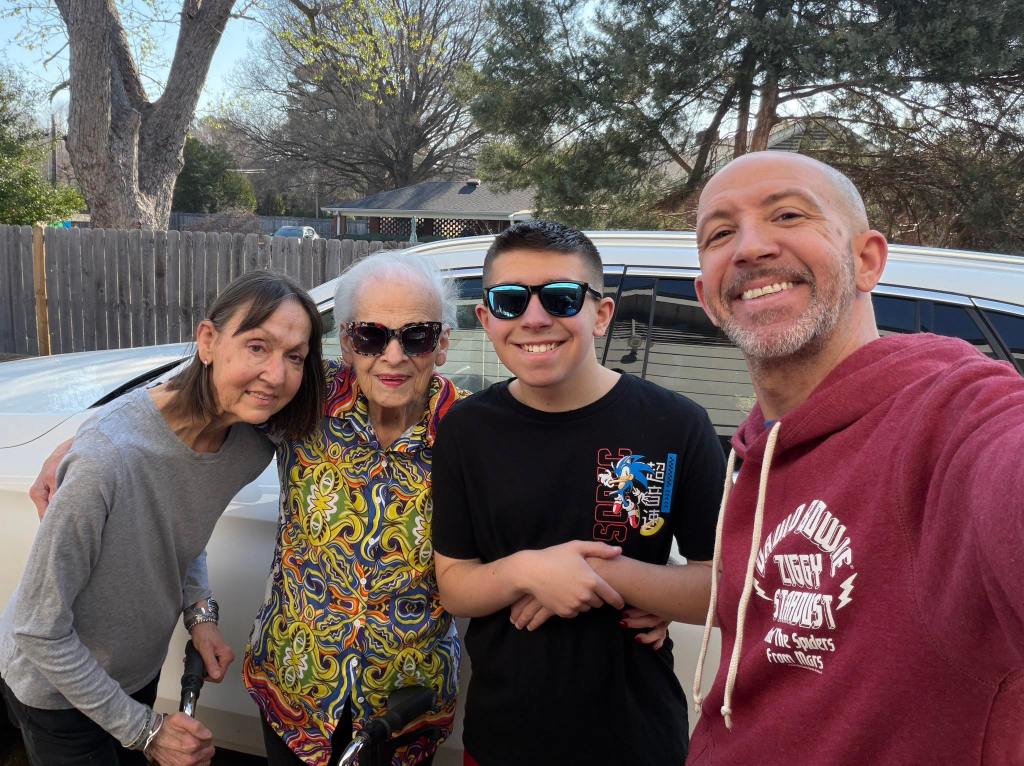
Last week, we lost one of our own…

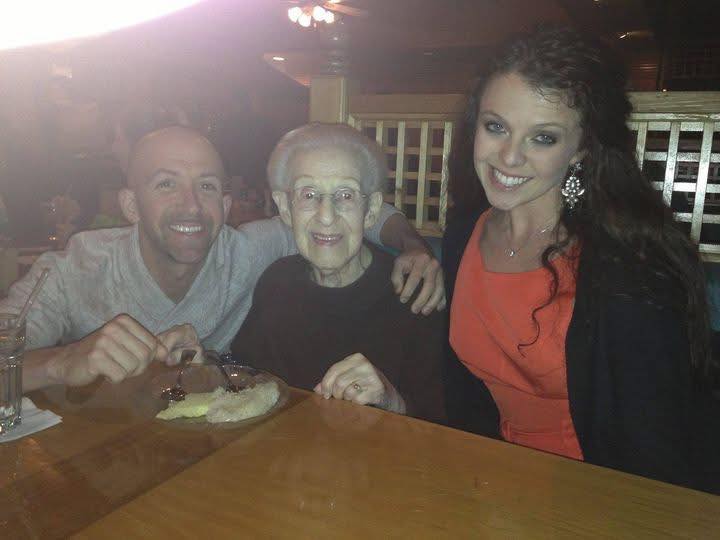
For the better part of ten years, Mike had been gently encouraging his wife, Kelly, to train with us.

Somewhere along the way, in those ten years, Kelly had been diagnosed with breast cancer and underwent a mastectomy to try and remove the cancer from her body.

The cancer went into remission, and in the year of COVID (2020), Kelly found time in her schedule to get started with us.

One of the things that I knew about Mike and Kelly was that they were high school sweethearts.

They got married, had two beautiful kids, successful careers, and by my observation, as loving a marriage as you could ask to see.

Many of my readers know that Mike has remained my longest-standing client. We’ve been working together for nearly 16 years.

During that time, Mike adopted a vegan lifestyle and remained that way for roughly a decade.

Kelly, in an effort to make mealtime easier for both of them, adopted many of the same meals as well but she did keep some animal proteins in the mix.

A funny story I’ll always remember her by:

At one point, when she was here, she and Mike were about to go and celebrate an occasion together, and Kelly made a rare crack about Mike’s diet and asked: “What do you get a vegan for a special occasion? A fancy carrot?”

I wasn’t used to hearing Kelly with that level of sarcasm, and, no disrespect to my vegan friends, I laughed hysterically.

The thing to tell you about Kelly, among many things, is that she was one of the kindest, sweetest people you’d ever likely meet, and never did I hear her utter an unkind word about anyone.

She could come in from a stressful day at work, the gym would be hopping and she would walk right in, smile on her face and ask: “Ok, where do I start?

A couple of years ago, the cancer returned and the initial prognosis was that she would have somewhere between sixteen and sixty months left.

They started treatments and she and Mike started working through their bucket list of trips to take and places to see with whatever time they had left to work with.

Kelly remained optimistic and strong about what she was faced with.

Mike and I had a good cry together in my office.

Late last year, Kelly was dealing with some chronic pain that she initially thought was unrelated to the cancer, and she decided to take a break from training.

About two months later, they discovered the cancer was spreading.

The better part of 2025 was spent with the family trying out different treatments, and Kelly not responding as favorably as they had hoped.

A few weeks ago, Mike gave me an update on her health and despite many ups-and-downs, it appeared the downs were more frequent, more severe.

I was fortunate to be invited to their home last Thursday to see Kelly, to give my love to her, to Mike, and their two kids, Rachel and Aaron.

She was awake, she was lucid, she was thankful I stopped by, and I told her we had a group of clients praying for their family.

She expressed her gratitude.

The rest of my visit, she rested, and Mike told me he wasn’t sure if they had three days or three weeks left.

Kelly passed around 5 a.m. the following morning.

I hate cancer.

I hate that I lost my father to it.

I hate that it exists, and I hate that Mike has lost his one true love to this horrible disease.

When I try to search for the silver lining, it’s the same thing many people say: at least she’s no longer in pain.

And it’s true, no one deserves to be in pain the way cancer sweeps in.

To Rachel and Aaron, I know what it’s like to lose a parent you love. I wish it on no one. I do hope you continue to carry the generosity of spirit and kindness that your mother brought to this world. She was one of a kind. I don’t say that lightly.

To Mike, there are no words I can tell you that will fill the void you live with. What I can tell you is that I love you, your RevFit family loves you, and we will continue to support you in this next chapter of your life.

To Kelly, thank you for several years of your hard work in the gym, for understanding what a strong body was capable of, for modeling a great marriage to all of us, for showering us with an undeniable smile and for being a part of the RevFit family.

As one of our clients reminded me, you were always a bright light when you came in.

We will miss you, keep shining.

The Path Of Personal Responsibility

There’s a musician who I’ve followed since the early 90s. His name is Roger and there’s a really good chance that if you’ve heard him, it was only because of some session work or live performances he’s done for other artists.

Post-COVID, Roger has been doing several video interviews which have been featured on different YouTube channels so that producers, fans or fellow artists could speak to him about his colorful career despite never being a major artist like what you’ll hear at the top of the charts.

This past weekend, I found another interview that piqued my curiosity and it started in a direction I wasn’t prepared for.

Rather than digging directly into his music, the host of the podcast asked Roger about his health struggles and how spirituality affected his life.

At first, I wasn’t sure I wanted to listen because that’s not what drew me to his music but what I found was that he and the host spent nearly an hour of an hour and a half podcast speaking only about those topics. It was only the last half hour where he actually spoke more candidly about his musical endeavors.

Roger started to tell a story about how he had been neglecting his health and, through a lack of personal fulfillment had not been taking care of himself.

Being based in California, Roger spoke about getting caught up with these “health guru rock stars”, people who had achieved almost celebrity status because of their sometimes extreme approaches to health and how enamored others were of these beliefs.

A self-proclaimed “all or nothing” personality, Roger found himself following a raw food vegan diet for about eight years in effort to take control over his health.

Initially, he found that certain areas of his life did improve but about four years in, he began developing other issues that didn’t have a clear explanation.

He mentioned that he went to no fewer than eight different doctors, from traditional MDs to more holistic practitioners and no one could solve the problem.

Roger finally found himself in the hands of a chiropractor who recognized that what he was suffering from was malnutrition and they worked together to shift him into a more balanced way of eating that his body would respond better to.

In the midst of this story, Roger made a few comments that I found rather fascinating. One was that he recognized that some people could thrive eating a raw food vegan diet, he simply wasn’t one of them. He also acknowledged that people could improve their health with more animal proteins or less and that he was only there to advocate for what worked for his health and not with the assumption that what works for him is what would work for anyone else.

He then went on to say (loosely edited): Personal responsibility is everything. You can ask as many people all the questions you want but no one can do the work for you…If you’re not happy with how your life looks today, there’s no one to blame but yourself.

There is, of course, nuance to that sentiment. You may not have full control over everything that happens to you but you have a great degree of control over your reactions and responses to what happens.

There are social determinants of health which can dictate what we have and what we have access to. These resources could be the deciding factor between how and when and what we improve in our lives but that doesn’t mean that all agency has been stripped from us.

But I will say, from the coach’s perspective, the more you can prioritize your health, the more control you have over staying on top of your bloodwork, your doctor’s appointments, your ability to manage time and stress, the better outcomes you stand to have.

It’s not a perfect process. It’s a frustrating one that stops, starts, stalls and plateaus. Every possible distraction and detour will tempt you with another direction steering you potentially further from a given pain or towards a given pleasure.

That’s what makes this whole self improvement thing so beautifully messy and equally fulfilling.

You manage the gaps, you take the wheel, you stop blaming others for your lot in life and you move heaven and hell to get where you need to be.

Not because it’s easy, because it’s necessary.

The path of personal responsibility is one we sometimes willingly and unwillingly travel.

If you need a coach, a doctor, a friend, or an ally, you find those people, you build that network, that village and you take the journey together.

You’ll value the positive outcomes a lot more when you can look at yourself in the mirror and tell yourself that you’re truly doing the best you can with what you have at every possible juncture.

Because who else will have your back if you don’t have your own?

(Photo courtesy of Katie Moum)

Even More About Gut Health

I was doing some continuing education over the past week and I had access to a conference put on by Monash University called GastroDiet2024.

When I got my Level 5 diploma in advanced nutrition from Mac-Nutrition Uni, graduates were given the opportunity to attend certain courses offered by Monash and I’ve continued to learn what I could about gut health, despite not being a registered dietitian.

The first course I took through them was regarding a Low FODMAP diet for the treatment of IBS. It was a great course and I wrote a bit about it last year on this site.

This remains an area of interest primarily because it’s become a greater topic of conversation with clients and because of how challenging it’s been for my wife since she started dealing with more gut health issues over the last handful of years.

It’s important to note that stress plays a considerable role in gut health, due to the way that the gut and brain communicate with each other. If the gut isn’t acting right, it affects our mental state and if our stress is through the roof, chances are it’s going to affect how our gut feels. These two will basically always be intertwined which is part of the reason why not every intervention to improve gut health is as easy to solve as: eat this, not that.

I do want to share a scattered list of thoughts from the GastroDiet2024 conference in efforts to shine a light on where current wisdom is regarding gut health for anyone struggling with digestive issues.

Please know that this information is not meant to replace medical advice and if there is something here of interest to you, please consult your doctor to see how/if the information applies to you.

When assessing a client for GI issues, many RDs/MDs will go through a series of screening assessments with the hope of understanding the bigger picture related to digestive concerns. These can include:

-Nutrition screening

-Past medical history (medications, drug history, allergies, family history)

-Celiac screening, stool samples, endoscopies, biopsies, bloodwork

-Dietary intake (trigger foods, eating patterns, disordered eating, food related quality of life)

-Social history (lifestyle, sleep habits, home life, work, cooking and shopping circumstances)

-Mental health (stress, anxiety, depression, mood, work/life balance)

Anything that may seem like a red flag in these screenings could shine a light on why someone is struggling to have a healthy gut, healthy bowel movements, etc.

Tools like the Bristol stool chart, which looks at consistency/form of bowel movements can be helpful as well as understanding other symptoms which may be occurring: bloating, flatulence, fatigue, constipation, diarrhea, headaches, acid reflux or rapid weight loss.

It’s also important to note how frequently someone may associate with not just the stress of eating a certain food but how they are affected if they feel they cannot go to public spaces without feeling the urge that they might have an accident and lose control over their bowels in a public setting. Here again, we’re seeing the correlation of stress when it comes to eating and digestive behaviors.

Because this course was designed primarily for dietitians, many of the professionals who were speaking were RDs themselves or gastroenterologists offering both clinical and practical knowledge for those in attendance.

It was remarked at one point in the course, that gastroenterologists, when tested on nutrition information had less than 40% correct responses when asked about how nutrition could benefit their patients. This leaned into the need for RDs and GIs to work together in efforts to improve the outcomes for their patients.

In many cases, RDs have the potential to initiate progress and reduction of symptoms with diet alone before medication/surgery are needed. It was found that many patients could go well over a year of screenings and assessments, being bounced around from one appointment to the next with no clear understanding of why they were experiencing what they were and having no real solution to their problems. As one might imagine, this is yet one more example of how stressful this could be.

Keep in mind that our digestive system is not just affected by what we eat but the medications we take, our emotional state and the health of our immune system. There is typically a positive association for those who are implementing exercise into their lifestyles. The Western Diet (as what is often referred to with how we eat in the domestic U.S.) is associated with higher sugar and higher fat foods which can be detrimental to the gut microbiome. As more of the Western Diet shifts east across the globe, we are seeing a rise in obesity with the correlating illnesses such as Type II diabetes, colorectal cancer and hypertension.

Because excess adipose tissue (fat) in the body contributes to a higher amount of inflammation in the body, this inflammation is also present in the gut. This is a scenario where some degree of fat loss may be encouraged to improve gut health overall.

Transitioning to a diet that is more plant forward: whole grains, nuts, seeds, fruits and vegetables (where tolerated) can be a first step towards a healthier gut. Exclusions would need to be made for any known allergies or intolerances.

This does not mean that everyone needs to be vegan. A plant-forward diet can still have a significant amount of animal proteins but many people, especially in the U.S., are low in fiber intake. A low fiber intake has a strong correlation to gut disorders such as irritable bowel syndrome, Crohn’s disease, and inflammatory bowel disease.

It’s been found that diets like the Mediterranean diet, high fiber diets and plant-based diets are more positively associated with improved gut health while ketogenic, carnivore and Western diets carry more risk to the gut microbiome due to lack of fiber and fiber diversity. At a bare minimum, 24g of fiber through a range of sources is suggested.

Also of note is that artificial sweeteners may have a negative effect on a healthy gut. If you’re someone who consumes a significant amount of products containing these sweeteners, a reduction in them could improve symptoms.

Unfortunately, there is no one-size-fits-all probiotic that can improve gut health. Should you hear or read of a probiotic that improves symptoms, it’s important to recognize which strain of bacteria and at what dosage has been shown to help. While probiotics won’t necessarily make your symptoms worse, you could be spending money unnecessarily without any improvements to your health. If you can tolerate them, fermented foods might be a reasonable addition to the diet to get probiotics into the body. Consider foods like yogurt, kefir, kombucha, kimchi or sauerkraut and understand that they may be helpful and they may not. Each person is different.

For individuals struggling with IBS, a low FODMAP approach has been shown to be beneficial in reducing symptoms or severity of symptoms. That being said, there are more aggressive and more modest approaches and a qualified RD can help navigate when it’s appropriate to be more or less strict with the protocol. Unfortunately, there can be an overlap between individuals struggling with IBS who also have disordered eating practices and may be suffering from malnutrition.

For those interested in experimenting with low FODMAP, Monash does have an app that guides you through how to implement elimination and reintroduction of foods. Because there are so many foods which are potentially triggering for symptoms, consulting with an RD to keep the diet as balanced as possible is advised and supplementation may be needed to improve micronutrient deficiencies.

Another helpful tool is in having more balanced meals throughout the day. Meal skipping can be counterproductive to those who struggle with gut health. Scheduling breakfast, lunch and dinner with one to two snacks may be appropriate in managing symptoms assuming that any necessary food exclusions are also being implemented. Coincidentally, this same type of meal scheduling can be helpful for those struggling with disordered eating practices.

Unfortunately, there was not a lot of discussion in the modules about how the menopause transition can influence these symptoms for many women. I think this is an area that needs more attention because many women can go through the first 4-5 decades of their lives with no major digestive issues but can develop symptoms during the transition due to the fluctuating decline of estrogens.

If there’s any other takeaway I’d like you to have from this, it’s to be more proactive with documenting any changes you notice. The Monash app referenced above can be helpful as it guides you through the elimination and reintroduction process to see if certain foods need to be removed permanently or can be tolerated in small amounts.

Be your biggest advocate. Document all you can and make sure you surround yourself with a care team that can help you as you continue to improve your health, up to and including how your digestive system is functioning.

(Photo courtesy of Julien Tromeur)

Stand By Me

I’m going to geek out on music this week.

I’ll make sure to tie my thoughts back to health and life by time I get to the end.

On July 4th, in Cardiff, Oasis began the first day of their reunion tour.

I have loved that band since 1995 when I first heard the song, Wonderwall.

That song in particular came from their sophomore album, (What’s The Story) Morning Glory?

While many Oasis fans will tell you their debut album, Definitely Maybe, was their best, the sophomore album was my gateway and it will probably always inch out to be my favorite over the debut.

I would go on to see them live for the Morning Glory tour when they played a high school auditorium for their Cleveland stop.

After that tour, I had the fortune of seeing them live three more times:

-When they toured for Be Here Now and played in Akron

-For the Tour Of Brotherly Love supporting their album Standing On The Shoulders Of Giants in Cuyahoga Falls featuring two other famous “brother” bands: The Black Crowes and Spacehog

-And my final show to see them was in Nashville at the Ryman Auditorium for the Don’t Believe The Truth tour.

They broke up three years later in the middle of a tour for their last album, Dig Out Your Soul.

For me, Oasis was MY Beatles.

While they never saw the popularity in the U.S. that they did in the U.K., their unapologetic love for the Fab Four plus enough doses of The Rolling Stones, The Kinks and even a little bit of Sex Pistols, they were this larger than life presence who commanded the stage every time they played.

Fortunately, the brothers would continue to make music: Noel with his side project, Noel Gallagher’s High Flying Birds and Liam with his side project Beady Eye which would disband after two albums and launch his solo career.

Much like I did with Oasis, I had the opportunity to see Noel live on four separate occasions and he was amazing every time.

I did not have the opportunity to see Liam perform live outside of his time with Oasis but there is one memory from his side projects I’ll never forget.

When Beady Eye released their first album, my father was dying from cancer. Their song The Roller was the last song my father heard before he left this world. Dad loved Oasis as well and I can’t think of a better way for him to say goodbye to this life than with a song he enjoyed.

After Oasis split, there were always rumblings about the brothers reuniting but the acrimony between the two was thick enough to slice with a knife.

Much like the Fogerty brothers from Creedence Clearwater Revival, so much time had passed with the two brothers barely saying a kind word to or about each other, that it seemed they would never be able to bridge the gap and pull the band back together.

That is, until last year.

There were little nuggets from videos, that after a 15 year split, they might finally be able to come to terms with each other and tour again.

Try as I might, I waited in queue for tickets but it just wasn’t meant to be. I couldn’t snag them before they sold out and was not willing to pay scalper prices.

So, my best chance to “see” them will simply be through clips on YouTube burying the hatchet and filling stadiums again.

Let me not fail to mention, the brothers Gallagher are going to make a TON of money from this tour. Estimates are saying upwards of $200 million each by time everything is said and done. (Continued below)

I would love for them to record a new album.

I would love for them to rekindle their love of being together and tour again beyond 2025.

As of now, those things aren’t likely to happen.

Noel has said that he genuinely feels bad for the people who missed out because they broke up mid-tour in 2009 and they wanted to “make it up to the fans.”

Either way, when the clips started showing up from the July 4th performance, I got a little bit teary eyed.

Sometimes, you can convince yourself that some things will never come to fruition and when they do, you don’t know how to process it.

Oasis is one of those bands that got me through a lot of tough times and, like a lot of good music, you never forget that feeling.

What does any of this have to do with health or how you live your life?

I’ve seen a lot of people in my life walk away from bad situations. Sometimes, people step away from toxic personalities in their life. Depending on whose perspective you buy into, it sounds like that had something to do with how Oasis split.

And often, we feed into toxicity with toxic behavior of our own.

We speak ill of others, we hold grudges and sometimes those negative emotions fester inside of us as well.

As the adage goes, hurt people hurt people.

I’ve been one of those myself.

And sometimes, it’s that toxic influence that eats us up from the inside and keeps us from living lives of fulfillment and happiness.

We can’t be grateful because we’re too busy being angry.

Don’t read what I’m not writing. Some toxic influences need to stay in the rearview because, as much as I’d like to hope otherwise, some people are not willing or able to process their own problems. They just bleed on to everything and everyone else.

But watching those clips of Oasis after being apart for all those years, being a fan who basically lost all faith they’d ever come together again, it gave me hope.

In a world that often seems chaotic, frustrating, divided and discouraging, there’s music to shine a light.

For a fan like me, seeing images like the ones below, they aren’t just surreal, they open up a door that says, maybe we can put those bad things behind us, maybe we can heal our wounds, maybe we can forgive each other, maybe we just needed time to mature and settle our differences.

Maybe I’m just being a romantic.

And maybe I just miss my Dad.

He would have loved seeing this reunion too.

Whether you love Oasis, hate them, or you’ve never even listened to them, makes little difference. What I hope for you is that you have music in your life that reaches in to your soul and transports you.

In spirit of the title of this post, here’s their hit single of the same name.

Revisiting The Wheel Of Life

Sporadically throughout my adulthood, I’ve come across variations of the Wheel of Life.

My therapist brought it back to my attention a few years ago and I was reminded of how simple but effective the tool could be.

If you’re not already acclimated to it, you can see a version of it below. (Found from The Start Of Happiness)

As you can see, there are several areas which you can rate based on where you rate your satisfaction in each segment.

One area might be high satisfaction, another low, and perhaps others that sit somewhere around the middle.

In considering where you rate each segment, it helps to consider how that ranking is currently affecting you.

For instance, you might have a high ranking for health and career, but lower in emotional wellness and relationships. You can think about how prioritizing certain areas may detract from others.

A helpful way to look at it is in seeing how certain segments complement each other but others can be in conflict. It’s not likely that all segments will be at a 9 or 10 but if you have areas that are lower in satisfaction, consider how you can raise them in ways that don’t significantly detract from someplace else.

In addition, improving certain segments (like relationships, family & friends, and emotional wellness) aren’t possible without actively working with other people in your life such as relatives, significant others or a therapist.

It also bears mention that as demands on your life change, as children grow up, as our parents age and need extra care, all of this can influence how your segments may ebb and flow depending on what challenges you’re currently facing.

When my therapist reminded me of it, my health and career would have ranked high at that time but my emotional wellness and relationships were lower. I could step back then and think about ways to improve the latter in ways that could benefit my health as well.

Fast forward to today and my emotional wellness and relationships are higher but, as noted in a recent blog post, my health has been challenging.

If you find that you’re struggling to hit your goals or if life has felt unsatisfying or unfulfilling, it may be time for you to take inventory and see where you rank the segments for yourself.

The Best Nutrition Advice Remains The Most Boring

This isn’t the advice you’re going to see on the best-selling diet/nutrition books at the bookstore.

This isn’t the advice you’re going to see on those trashy magazines that wait for you when you check out at the grocery store.

This isn’t a diet with a name.

Your next door neighbor probably didn’t lose 20 pounds over the last two months with this advice.

MAGA/MAHA or whoever else is running the country won’t be putting a bow on this information.

No agency or organization can give you a flashy infographic making the advice any easier to understand.

You’ve seen this information over and over and over again throughout your adult life and you’ve probably ignored most of it because there’s nothing sexy, seductive, or even scary about it.

Because the “truth” is, the best advice on nutrition you don’t need to hire anyone to hear about.

You don’t need a coach to help you get to the root of.

Your doctor doesn’t need an advanced degree in nutrition to counsel you on it.

And dietitians didn’t need to spend tens of thousands of dollars on their education to share it.

Ready for it?

-Consume lean proteins

-Reduce (where possible) ultra-processed foods

-Drink more water

-Reduce your alcohol intake

-Keep saturated fats low

-Eat a colorful assortment of fruits and vegetables

-Eat until you’re satisfied but not overly full

-Put your fork down between bites

-Chew slowly

That’s it.

And yet, why is this information so hard for us to wrap our heads around?

Because we’re trying to overanalyze exactly how many grams of those lean proteins we need, ultra-processed foods are easily accessible, easy to overeat and often delicious, water is the least thrilling beverage to consume, alcohol is addictive, saturated fats are often part of delicious meals/food options, most of us don’t know how to cook/prepare fruits and veggies in a way that gives us more variety in our diets or enough fiber to keep our guts happy, portion sizes are so outlandish that we carry a VIP membership in the clean plate club, we’re so rushed that we wolf our food down as quickly as possible and many of us barely breathe long enough to know what flavors we’re savoring.

And…

Food intolerances/allergies do exist, many people feel the need to experiment with fad diets removing entire macronutrients or food groups, we’re overstressed and overworked, we don’t move our bodies anywhere near as much as we need to, our social circle isn’t even real, live people, it’s actually just our cellphones, and we don’t live in a nation that understands or adheres to this funny little thing called moderation.

We’re either “all in” or completely off the reservation.

After 17 years of coaching nutrition and fat loss for people, the more I’ve learned, the more I feel inclined to simplify…the best nutrition advice remains the most boring.

And that’s a really hard sell when the sexy thing to do is tell you that carbs make you fat, sugar is poison, your body is broken, your metabolism is ruined, your hormones are the reason you can’t lose fat, you have no self-control, you just don’t want it bad enough, and if you’ll just purchase this roster of supplements for only a $299 monthly investment it will transform your body forever…

(Photo courtesy of Jacopo Maiarelli)

Gifts Of Fatherhood

Throughout the time I’ve had this site up, I’ve tried my best to sprinkle in stories of my sons.

If you’re new to the site, I have a son named Jackson who is 17 and on the autism spectrum and Sebastian who is 7 (almost 8) who is not on the spectrum.

For as long as Sebastian has been in this world, he has adored his half-brother.

However, due to the disparity in age, it took a long time for Sebastian to understand what some of those differences meant between the two of them.

When they were younger, Sebastian had a hard time giving space to Jackson and he would often get confused or frustrated when Jackson wouldn’t play with him or engage in conversation.

However, as each boy has gotten older, some of these things are starting to change.

Recently, Jackson and Sebastian were together and Sebastian came up to me and said: Dada, I feel like Jackson finally gets me. He talks to me now!

The reality being, Sebastian might actually be starting to “get” Jackson. He understands they have differences and he has a better grasp of how to handle them.

Later that day, we went out to eat at a restaurant that offers the tableside video game consoles. Sebastian said to Jackson: Look how many points I got on this game!

Jackson looked over and said: Good job, son. Then he wrapped his arms around him and kissed him all over his cheek.

Sebastian couldn’t have been happier.

It’s credit to the sweetness of Sebastian that he always wants to be around his “big brother”.

And it’s one of those feelings you get as a parent when everything just sort of clicks together and you have these unplanned gifts, these little moments of joy.

As I’ve requested of my wife and family each year, the only thing I really want for Father’s Day is the picture of me holding my boys.

Each year, they get a little bit bigger, which means Dad has to get a little bit stronger.

The greatest gifts of fatherhood are knowing your children are healthy and happy.

If you can help make that happen, I’d say you’re doing a pretty damn good job.

Find those moments of joy and cherish them.

Happy (belated) Father’s Day to all of the Dads: the ones who do a great job at it, the ones who might have been able to do better, the ones constantly trying to improve, the ones we’ve had to say goodbye to, and to the stepdads out there who step into the role and make the most of it.

What Did Sugar Ever Do To You?

Another day on the internet, another person with a megaphone telling you how poisonous sugar is…

And before I go too far with this, I’m not going to tell you that you should be finding ways to put more sugar into your diet.

I think two truths can exist:

  1. That it probably wouldn’t be a bad idea for many people to reduce sugar in their diets
  2. AND ALSO, sugar isn’t the problem child many make it out to be.

The thing is, nutritional boogeymen make for good headlines and if “influencers” can’t find a way to scare you away from an ingredient, it’s harder to sell you a service or product.

Let’s also be clear about something: Most people concerned about sugar aren’t pouring spoonfuls of it in isolation down their throats.

Yes, some people really like their Coke/Pepsi products.

Yes, some people overdo it with cookies and ice cream.

No, it’s not common to find someone with a bag of sugar in the pantry downing crystals by themselves.

Sugar is normally paired with something else, making it easy to consume in large quantities: It’s part of a delicious drink or a fatty, sweet concoction that makes it hard to put down or step away from.

That doesn’t make it “addictive” per se but it does make it highly rewarding which can often feel like one and the same.

There appears to be some evidence to “sugar addiction” in rodent models but that doesn’t mean that human behavior works the same way (it usually doesn’t).

So, let me offer some cases for and against sugar in your diet:

Cases For:

A) A diabetic experiencing low blood sugar may need high sugar options to help bring blood sugar levels into a normal range.

B) An endurance athlete may need high sugar options to fuel a race/run

C) A person looking to purposefully put on weight may need high sugar options (candies, sweetened beverages) to add calories that don’t reduce hunger.

D) A person who can successfully manage high sugar treats in moderation for pleasure or better dietary adherence

Cases Against:

A) Someone with heart disease

B) Someone who is looking for places to reduce calories in their food plan

C) Someone who cannot successfully moderate high sugar foods

D) Someone who gets GI distress from high sugar foods

I’ll say it again, I’m not encouraging anyone to have a high sugar diet. What I am saying is that sugar can be used OR abused depending on the person and the circumstance.

Try not to let the fear-mongerers win.

(Photo courtesy of Daniel Kraus)

The Diagnosis

I’ve been peppering some of this information into the blog over the last several months and now I finally have enough information to share some updates about my health.

Going back a bit, over the last few years, I’ve asked my doctor to do a comprehensive blood panel at each of my annual check-ups. My father passed away at the age of 59 from bone marrow cancer and my mother, who is still with us, has several health challenges that she’s working through. One of which, pertinent to the article today is a late-in-life diagnosis of Type I diabetes (an autoimmune condition.)

Taking those factors into consideration, I just wanted to be as proactive as possible about my own health and try to catch anything in early stages if I could help it.

Last year, during one of these check-ups, I had a liver enzyme that was elevated enough that it caught my attention. I ran through a mental list of things in my diet that might contribute to that and the one thing that kept sticking out was my alcohol intake.

Going back about 6 years or so, my wife and I have been big fans of bourbon so each night we would enjoy two measured pours (1.5 oz each) of a given bottle from our collection.

Historically (although this is no longer the case), it was common to hear that men can have two servings of alcohol a day and women can have one with no negative effects. Current data is now saying there is no healthy amount of alcohol.

I brought this point up to my G.P. and asked if it was worth considering that since I’m not an “average” size male that perhaps my body can’t metabolize two drinks a day. She said that it was possible that could be the reason for the elevated enzyme, so Marissa and I spent the better part of 2024 cutting our consumption in half and knocking it down to one drink a day.

Late last year, through November and December I was getting sick at a frequency I wasn’t used to. I believe I was sick on 7 or 8 different occasions, enough that I was frequently calling off work from the studio.

As I was coming out of the last illness of the year (COVID before Christmas), I started thinking about anything happening in my diet that I could change that might just help me feel better.

The alcohol came back up and I stopped drinking almost completely on December 27.

Throughout 2025 and up to the writing of this article, I’ve had four drinks this year.

In my mind, I figured at the very least I would have improved bloodwork without the alcohol in my system.

That assumption was wrong.

When my bloodwork got updated, the enzyme that was elevated last year was even higher this year and two enzymes which were normal last year were also now elevated (above the normal range).

This caught my G.P.’s attention and she suggested I get an abdominal ultrasound to see what else was going on.

That was March of this year.

Since then, I’ve had the ultrasound, a cat scan, an MRI, an ultrasound guided liver biopsy and more bloodwork all to come to the conclusion of an autoimmune disease called primary biliary cholangitis (PBC).

PBC is a liver disease where my immune system attacks the bile ducts in my liver. It’s a benign liver disease and is not likely to cause liver cancer but it could still lead at some point to cirrhosis and possibly a liver transplant.

The first line of treatment for it is a medication called Ursodiol which helps remove toxic bile from my system. While it can help me manage the condition and lower my liver enzymes, it will likely have no effect on my symptoms.

Currently, the symptoms associated with PBC that I identify with are fatigue, insomnia and restless legs.

It is a fairly rare autoimmune disease affecting roughly 35 out of every 100,000 people. Of that 35, it affects 90% women and 10% men (although the percentage of men is climbing.)

People have asked me how I feel and the best answer is: tired. I’m tired pretty much all the time and it affects every aspect of my daily routines.

Lately, I can count on a solid four hours of sleep after I close my eyes but after those four hours, it’s a crapshoot how much more restful sleep I’ll get after that.

I only consume one serving of coffee first thing in the morning so I’m not continuing to dose caffeine further into the day.

There really aren’t any major dietary interventions beyond what might normally be considered “healthy”: a diet of mostly whole, minimally processed foods, reducing saturated fat, reducing/eliminating alcohol, staying hydrated and exercising.

Over the next several months, I’ll continue to get bloodwork to see if the enzymes are coming down, and to check on fat-soluble vitamin absorption (Vitamins A,D,E and K can be inefficiently absorbed).

PBC can put me at a higher risk for osteoporosis so I’ll start getting routine DEXA scans to stay on top of those numbers.

There is a chance that my thyroid is also negatively affected so bloodwork will be done in about a month to see if that’s the case. That could be another contributor to my fatigue and energy levels.

If you made it this far, my suggestion again is that you start getting current with your routine bloodwork. There is a chance that if I hadn’t been keeping up with those annual checkups and comprehensive panels that my body wouldn’t have necessarily been giving me indicators that something was wrong until much later.

I remain a firm believer that you don’t know what’s going on under the hood until you get it tested. The sooner you do that, the sooner you can get an action plan together.

I want to extend my gratitude to my staff, my clients, family and friends for being so supportive and understanding during these last several months.

It’s been a frustrating ride but at least now I’ve got some answers.

It’s Not About The Cupcake

The average cupcake with frosting has somewhere between 300 and 400 calories.

Depending on how many calories your body requires to be successful at fat loss, you may or may not have room for that cupcake.

But the problem I find with many people’s diets isn’t about the cupcake.

It’s the mental gymnastics that come just before, during and afterwards.

It’s the feeling that if you eat the cupcake, the cupcake is “bad” because the cupcake may have more carbs, sugar and fat than what you planned for.

That if you eat the “bad” cupcake, it makes you a “bad” person, someone without discipline or willpower, someone who is not deserving or worthy of reaching their goals.

And if you eat the bad cupcake because you’re an undisciplined person, then you let the rest of the day, and maybe the next day and the day after go to pot because that little cupcake shat all over your perfectly planned diet.

The thing is, maybe that cupcake set you over your calories for the day. It has basically no effect on your calories for the week. You can still be in a weekly deficit and be one step closer to your goals.

The problem isn’t the cupcake, the chips, the crackers, the dip, the cookies or the pie.

It’s that case of the “fuck-its” you fell into because the cupcake led to more emotional damage than physical.

If your diet has flexibility, you have room for a cupcake.

Food has many attributes: it is love, it is fuel, it is therapeutic, it is comforting, it is delicious, it is energizing.

Demonizing food is where you start fighting a losing battle.

Depending on your goals, your relationship with food, how your body reacts to the food you eat, etc., maybe you have room for the cupcake (or any other dietary indulgence) or maybe you don’t.

But if you want to be more successful in efforts towards your goals, don’t let something as insignificant as a cupcake turn into a snowball of decisions fueled by guilt and shame.

Find the places in your diet where pleasure and joy can exist…cupcakes and all.

(Photo by Brooke Lark)