Blog

  • 50 Ways…

    I’m turning 50 this week.

    So, here’s a rambling list of 50 things you can do to be better.

    Better at, almost anything.

    It’s a collection of thoughts, some original, some paraphrased from others, some credited where I remember the appropriate source.

    It’s a collection that has come from a history of successes and failures and, ten years from now, some of my thoughts and feelings may have evolved and changed from where they are today.

    1. You owe it to yourself to move your body as often as you can. Walk, run, lift weights, do yoga/pilates, hike, dance, etc. Just move and do it as consistently as you can. When I read the book “Younger Next Year”, the sentiment was: the body does one of two things, it can grow or decay, you get to choose which one.
    2. Love your partner fully and completely. It won’t be perfect, you’ll make mistakes, and when you do make mistakes, own up to those mistakes. Yes, I know not every partnership is destined to last forever, but when you find the right one, put the time and effort in to keep the bond strong.
    3. Don’t ever stop learning. Treat your brain like a muscle that must be stimulated constantly. Stretch yourself outside of your comfort zone. One of the most gratifying and challenging things I’ve done recently was embark on the entire 32 lecture series of Robert Sapolsky’s Human Behavioral Biology course. It was over 50 hours of content, available for free on YouTube which comprised the entirety (minus supplemental homework and testing) of his Stanford course. Absolutely mind blowing.
    4. Eat the most nutritious food you can afford to feed yourself MOST of the time. Make sure you have some flexibility for some fun foods to make up the majority of your diet.
    5. Do your chores. Whether you work a full-time job or not, make sure that you and the person you share a roof with has some division of responsibility. For me, I LOVE doing laundry. It’s my jam. But I also contribute to cleaning, dishes, etc. I’m not above doing any task in the home, even though some tasks are not my best skillset.
    6. Respect yourself. That means how you treat your body, how you speak to and about yourself and how you allow others to speak about you in your presence. The foundation of how you treat the home you live in 24/7 begins with how you feel about yourself.
    7. It’s amazing to me how many people actively body shame others. This is regardless of the size of someone’s body. If you’re too thin, you’re under scrutiny and if someone thinks you take up too much space, you’re under scrutiny as well. No one is safe from criticism. Practice acceptance of others. Most people won’t fall into a place of better health because they were shamed into it.
    8. Protect your mental health at all costs. Hire a therapist if need be.
    9. Heal.Your.Trauma.
    10. A lot of our challenges in life can be solved by learning how to take a deep breath, go for a walk, and clear your mind. Journal out your frustrations if need be and give your thoughts space to breathe.
    11. There is something genuinely beautiful about an aging body. I’m not saying it doesn’t come with its share of obstacles, but there’s a story to be told about a body which has spanned decades. Certain things don’t get easier with time but that story is often speckled with little miracles. Be proud of those miracles.
    12. Whether you pray, meditate, or both, have a practice that allows you to calm the chaos of your mind.
    13. Data is great (to a point). But in a day and age where nearly everything has a quantifiable metric, remember that numbers only tell one side of a story. The more important story is: are you building a better version of you?
    14. I don’t think you need a LOT of friends to have a good life. I do think you need a FEW friends who can be open, honest and candid with you. People like this are invaluable and can help you see your own blind spots about yourself.
    15. If you find yourself getting stuck inside your head about your own problems, be of service to others. Sometimes, you need a distraction from the challenges you’re facing and sometimes, seeing the value you give to the lives of others helps you reframe the perspective you need for your own life.
    16. I find it fascinating how reducing physical clutter in your life has a nice correlation to reducing your mental clutter as well.
    17. I know not everyone is fond of physical touch beyond loved ones, but it’s hard to beat a good hug.
    18. I would like to thank the LGBTQIA+ and BIPOC people in my life for continuing to show me what an abundance of love and respect can do to help someone live a fulfilling life. If you don’t have many of these people in your life, work on that. My life is immeasurably better as a result and the love and respect is reciprocated.
    19. If you’re going to take a supplement as a way to improve your health, make sure it’s 3rd party tested. There will be a stamp on the supplement showing that the manufacturer went the extra step in ensuring that what they say is in the bottle is actually what’s there. Supplement usage ranks towards the top in causes of liver damage, so just because something “seems” safe, doesn’t mean it is.
    20. Work towards being a better listener. As the adage goes, we have two ears to hear and one mouth to speak. Use accordingly.
    21. Share your desserts.
    22. You don’t have complete control over your health, sometimes, things just go wrong. But you do have some influence over how your health can play out. Stack the deck in your favor to the best of your ability.
    23. I’m not sure where I stand on the sentiment: “Don’t go to bed mad.” I think when you’re mad, you may just need to feel your feelings. What I will say is: Don’t run from your confrontations. Face them. Work through them. Be respectful.
    24. Hug your kids. If you don’t have kids, hug your fur babies.
    25. If no one’s told you yet today, I’m proud of you. I’m glad you’re in this world. Now, take that, and pay it forward.
    26. My wife and I have been together as a couple for almost 16 years. I flirt with her as much now as I did then. Don’t lose that ability to keep that going in your own relationship.
    27. I hate feeling like I’m on autopilot in my life. Every aspect of my life has room for improvement. As a result, I keep reading books on business, on nutrition, on training, on being a manager, on marriage, on parenting, and on mental health. The last thing I want to be is stuck.
    28. After being an avid reader throughout most of my life, this was the very first year I actively put a couple of books down and didn’t finish them. I just couldn’t get any further time investment into those books. By the same token, some books are worth reading more than once. As your life changes, the message from certain books take on a different meaning. You never know “where” a book may find you.
    29. Some of the best experiences our family has had have also been among the least expensive. Not every great experience or great memory is formed with a high price tag attached to it.
    30. If there’s someone you owe an apology to, make the apology. It’s mentally and emotionally liberating and you never know how much it will be appreciated on the other end when you can admit fault.
    31. Morrissey sang “I recommend that you stop watching the news/Because the news contrives to frighten you/To make you feel small and alone/To make you feel that your mind isn’t your own” I would say the same conditions apply to social media if that is your news source.
    32. To that, my broken record moment that I find myself repeating often: Unfollow any pages and people who leave you not feeling better about yourself and your life. Unfortunately, you will still see pages and people that are “suggested” follows. Block them if need be.
    33. Sometimes, what you need is more moments of silence. No music, no television, no phone distractions, no podcasts, no audiobooks. Just silence.
    34. A former client of mine walked into my office several years ago and saw all of my books. He commented: “You sure do have a lot of books.” I said, “Yes, I love to read.” He replied: “Just remember, not everything that you need to learn is going to be found inside a book.” I’ll be damned if he wasn’t right.
    35. AI (artificial intelligence) can do a lot and I expect it will be able to do more over the next several years. However, having a human that can connect with you is almost invaluable. While self-checkouts are growing in number and we’re finding more and more ways to not actually connect with and socialize with real people, human touch and the nuance of human connection is not something we can afford to go without.
    36. I read recently that, in efforts to keep us more engaged on social media platforms, we are often fed posts that will upset us. Researchers found that if we are incensed, we tend to stay on the platform longer. That helps engagement and allows more ads to be visible to us. I found this both fascinating and troubling. A helpful book to learn more about things like this is “Stolen Focus” by Johann Hari.
    37. The messy bits about you can often be the parts that help you be a better version of yourself. I can’t change those messy bits of my own life but I can use them as inspiration and motivation to be a better husband, father, coach, friend and son. Admittedly, it has taken many hours of therapy to reach a point where I can hold space for both truths: that I have a difficult and muddy past AND also I have put in the work to not let those things define me.
    38. When you say “I love you”, mean it.
    39. Sometime back, I made a conscious effort to read books from perspectives of people who have not lived a life like mine. For instance, I’ve read several books written by authors in larger bodies who expressed what that experience was like. I’ve never known that experience but understanding it from someone who could be candid about it, helped me understand some degree of what many of my clients go through. Later, I read more about people of a different color, marginalized communities, and people of different sexual preferences as my own. Taking the time to “put yourself in someone else’s shoes” goes a long way in understanding and appreciating not only HOW we’re different but WHY we’re different and how to be loving, accepting and respectful of people who have not had the same lived experience as my own. Sometimes, the information is challenging and difficult to sift through. But that’s point. The more we can respect the lives of others, the more we can change our own prejudices and biases. The world doesn’t need more division, we need more unity.
    40. Over the last year, I’ve heard/read from more than one source that if you need to have difficult conversations, do so during a walk. Being side by side with someone can reduce the feeling of confrontation and potentially help you solve problems more effectively without one person having their defenses up. This has worked really well for Marissa and I.
    41. As I’m getting older, I’ve realized I need fewer and fewer “things.” While I will likely never be a minimalist, what I crave the most is quiet time with family and time to bond. This has been more restorative to me than anything retail therapy can give.
    42. There’s value in being connected with people who have different opinions than you. There’s little value in being connected with people who offer their opinions through bullying or belittling others. Behavior on social media has skewed the latter.
    43. Jon Goodman said: “Everybody has a million problems until they have a health problem. Then they only have one problem.” Preach.
    44. I’m having more and more conversations with my clients about preserving and improving their strength, as well as conversations about keeping an eye on their bone mineral density. Make these things a priority because for many people, they could be far more important than fat loss.
    45. On the note of fat loss, you can either train aggressively or diet aggressively. Don’t do both at the same time. And also, an aggressive approach of either may not be the right approach for you.
    46. I love sharing music with others. I know that my taste in music may not be to the liking of everyone but I can say that if you’ve ever listened to a song or album that shook you to your soul, you and I probably have more in common than less. One thing I really love is hearing a cover of a song that makes me completely rethink the original. Here’s a cover I came across recently that floored me.
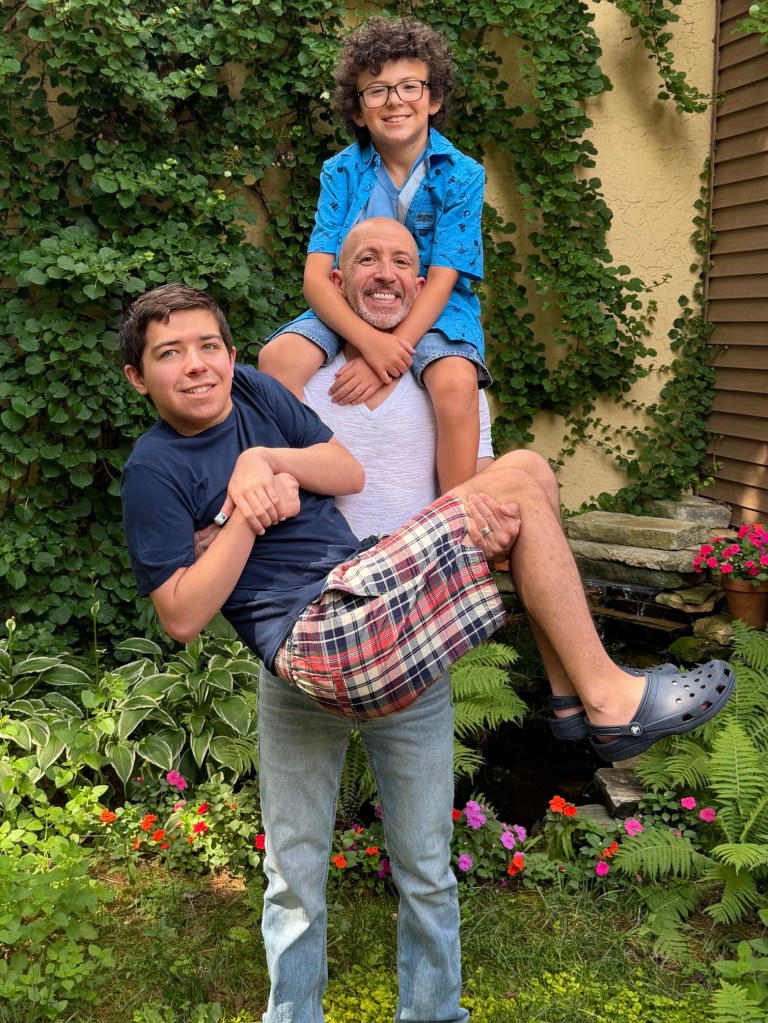
    47. There’s nothing more beautiful to me than the smiles of my wife and my boys. Nurture more smiles in your life.
    48. Have a space to write out your feelings. Not everything in your mind needs to be part of a conversation (especially when you’re emotional) but everything needs a home. Write or type out your thoughts to give your mind clarity and delete or toss what you need to. Declutter your mind.
    49. Many years ago, my father wrote me a letter and the first words were “How do I write to inspire?” I’ve never forgotten those words and I try to keep them at the forefront of my mind when I write to and for others. I hope something in this list inspires you to take action.
    50. Practice daily gratitude. To that, if you’ve stuck through this list to the end, thank you in large part or small for being involved in the first 50 years of my life. I’m eternally grateful.
  • Fitter For Less

    I have to remind myself constantly that I provide a service that is a luxury.

    Not many people can afford to have a personal trainer.

    Not many people can afford to have a nutrition coach.

    Not many can afford to work remotely with someone who can write their training programs and coach their diets, no matter where they live in this world.

    And yet, everyone deserves the opportunity to be and feel fit.

    So, this article is about some ideas for getting yourself there if you don’t have much money but you need to improve your health.

    Start With Steps: Improving your step count remains one of the most underrated forms of movement you can do for your body. It’s easy to do, it’s free, it’s low impact, and yes, it burns calories. It’s also good for your heart, your lungs and your brain. I’ve worked with clients who could barely walk a full block when they started with me but they built up their stamina and endurance to be able to walk miles. If it’s financially possible, buy a pedometer to track your steps and see how you’re improving. You may also need to invest in some shoes that can handle the mileage. You can start slowly. If the best you can do is 1000 steps a day, it’s a start. Build up to 2000, and then 3000. Just improve. You can break it up into several short bouts per day. Every little bit counts.

    Bodyweight Movements: Depending on your current physical condition, some bodyweight movements may be easier than others. For instance, you may not be able to do a free-standing bodyweight squat, but you may be able to squat and stand back up from a chair. As your body acclimates to that motion, try losing the assist of the chair and you can try squats on your own and build up your repetitions. If you can’t do a push-up from the floor, try doing one from your counter-top. Like the squats, you can build up your strength and reps over time to start attempting push-ups from the floor. Other bodyweight movements that you can utilize might be lunges, step-ups, planks, crunches, glute bridges, bird dogs, dead bugs and more.

    Band Resistance: While bands have been around for decades as an alternative to weights, the lockdowns during COVID were a great example of leaning on band work when you don’t have access to more (and heavier) equipment. With bands, depending on the type of band, you can introduce band variations of squats, bicep curls, lunges, band chest presses/flys, rowing movements for your back, kickbacks and extensions for your triceps, and over head presses. Some movements may require that you have an anchor point for your band to complete the movements.

    Dumbbells: Many people have light(er) dumbbells in their home. Maybe they were found at a garage sale, thrift store, or were handed down from a friend or family member. While dumbbells give you considerably more variation when it comes to exercises, limitations may be whether or not you have a weight bench and the very real potential that the weights you have are too light and aren’t challenging enough (this can also happen with bodyweight and band movements). Nonetheless, the more tools you have at your disposal, the more variation you can add to your routines.

    Gym Access: With the popularity and ease of access of places like Planet Fitness and YMCA, your most affordable gym options (with the most amenities) might be places like those. The downside is that you may be going at busy times and may have longer that ideal weight times to get to the equipment you need. Many people find they’re intimidated by the huge selection of equipment and have a genuine concern that they are risking injury by being unfamiliar with how a piece of equipment works. The good news is that most people in a gym are friendly and helpful. No one wants to see another member get hurt when the main reason someone goes to a gym is for self improvement. You can ask for assistance from a staff member or another customer to gain better understanding of what every machine does. Like a lot of things in life, just because the variation is there, doesn’t mean you need it. It’s amazing what you can accomplish with just a few staple movements in your program that you can track progress with.

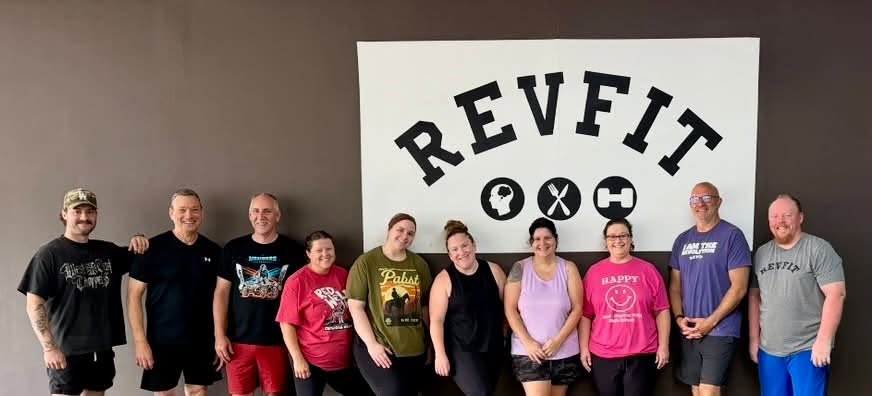
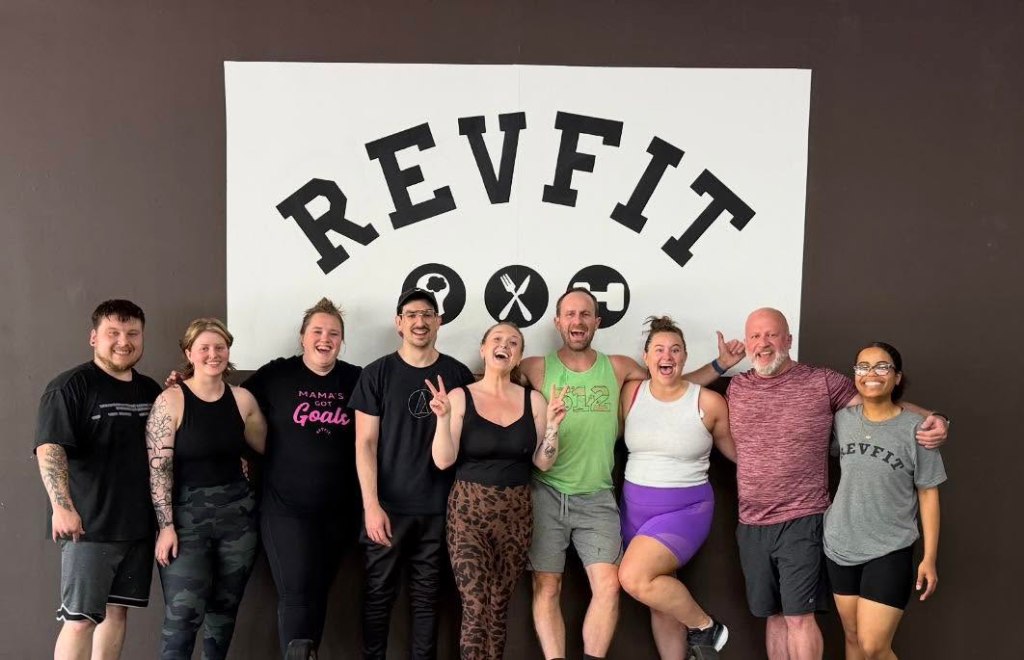
    Of course, in a perfect world, I’d love for everyone to have the ability to work with a personal trainer. I think the more people we can lead to the gym, the better. Should you be in position to have a coach, or a boutique gym like RevFit, you gain the advantage of the community, someone to take responsibility of writing your training programs, to teach you how to lift as safely as possible, and to have a place of accountability.

    However, if that’s not in the cards, remember that you can do a lot with a minimal amount of equipment or very little monthly expense if that’s the best option for you.

    The most important thing, is to start moving and find a method of movement you can stick with for the long haul.

    (Photo courtesy of Danielle Cerullo)

  • How To Journal Your Food Intake

    If you’ve followed my work long enough, you likely have seen a subtle shift in how I prefer to approach food intake.

    Years ago, I mistakenly thought everyone should be tracking calories and apps like Lose It, MyFitnessPal, and MyPlate (I’m aging myself) were popular options at the time to do so. This was also before the “rage” of tracking macros which I won’t go into much detail with here.

    I’ll save that for a later post.

    Over time, learning more about how to coach nutrition, based on continuing education, more certifications, and a better understanding of eating disorders (or disordered eating behaviors), I found myself changing how I wanted to approach food intake for clients.

    I maintain that many people have very “simple” solutions to their food intake. When I say simple, I mean, simple to spot, not necessarily simple to fix. For instance, some people have an overabundance of alcohol in their diet. Eliminate the alcohol and, chances are, the scale will probably shift down.

    However, addressing that obstacle and getting someone to make that change are two different challenges.

    I prefer food journaling over calorie counting/macro tracking for a few reasons:

    -It removes the “numbers” from the conversation. Many people have all-or-nothing mindsets when it comes to their diets and calorie counting, for example, can present an issue where if someone feels or sees that they “overdid” it, they have a good likelihood of allowing the rest of the day, weekend or week to go overboard as well, viewing themselves as “failures” for not adhering.

    -Calorie counting, while sometimes helpful, is not always easy to do when you’re on the go. Mom-and-Pop restaurants don’t make it easy to estimate caloric intake and you’re not usually going to take a food scale and measuring cups along with you to your local Mexican restaurant.

    -If you have a background in disordered eating, calorie counting/macro tracking, are often contraindicated when it comes to reducing lapses or relapses in behaviors. That does not mean that calorie counting or macro tracking “cause” lapses/relapses, only that they may increase risk of maladaptive behaviors.

    So, here are some thoughts for food journaling which may be helpful for you.

    -You can start with simply writing down what you eat: not portion sizes, not calories, just food selection. Be as accurate as you can. If you have a salad, write down that it was lettuce, tomatoes, cheese, chicken, nuts, dressing, etc.

    -You can also add the time of day that you ate. This can help you identify if you go long bouts without eating and if you recognize that you are overconsuming later in the day as a result. You might also notice certain trends, such as, always eating something after dinner. Allow that feedback to pique your curiosity.

    -Write down everything. If you had a handful of chips, just write it down. It’s neither good nor bad, it’s just a data point to help you gain awareness of things that might be of interest to improve on.

    -You may want to give yourself more detail such as your emotional and/or state of hunger when you ate: Were you angry when you had lunch? Why? Was there a correlation between your emotional state and how much you ate? OR, were you ravenous when you ate that meal? Is that because the previous meals didn’t have enough protein or fiber?

    -Food journaling can also be helpful if you’re trying to recognize intolerances or sensitivities to certain foods. If you believe that gluten is problematic for you, you can write down how you felt after consuming a gluten containing food. Did you feel bloated, gassy, nauseous? Also, if you choose to eliminate a food for a period of time, you can try reintroducing a food in a small amount and in isolation to see if the problem remains. The journal can be a data bank to understand how your body reacted to that food inclusion.

    There is no universally great tool for all people. Some tools work perfectly fine for some and terrible for others. This could be due to prior experience with a tool, life stressors, or accessibility.

    The great thing about food journaling is that you don’t need any special software or apps to do it. You can use the notes section on your phone or just a pen and paper.

    As always, my suggestion if you do decide to journal, is to do it in real time. Try not to do your journal at the end of the day because you’re more likely to forget pertinent details.

    (Photo courtesy of Hannah Olinger)

  • How To Use Your Scale

    I know this might seem a bit simplified for many of my readers but because scale habits come up with so much frequency in my conversations with clients, I thought I might pull together some of my best tips for using yours.

    Before I go to far with this, I do want to give the gentle reminder that many people have an unhealthy (which could be dysfunctional or sabotaging) relationship with the scale.

    While the reasons can be multi-factorial some could be:

    -having a coach (or someone in a coaching position) who overvalued the number

    -people with “all-or-nothing” mindsets who correlate down is “good” and up is “bad” without appreciating the context of why those numbers might be that way

    -unfair societal judgments that “smaller is better” and if you’re not small enough, you’re not of enough value as a person.

    You have tremendous value as a person.

    What I will say is that the scale is only one unit of measurement when it comes to progress and how we quantify it.

    Just like the money in your bank account can’t tell the world if you’re a decent human being or a complete jerk, the scale is equally at a disadvantage.

    It’s only a number, and it doesn’t tell the whole story.

    To that, there are people who need therapy to have a better view of their body, how they qualify improved health, and whether the scale is a worthwhile tool, or if other methods should be used.

    I’ve said it before and I’ll say it again, improving your health is great but not if it comes at the cost of your mental health.

    Everything further will be written for the benefit of anyone who is not at war with the scale and is mentally comfortable using it.

    First, find a scale that has the appropriate yield for the people using it. If your scale yields no higher than 300 pounds and you weigh 348, find a scale that can yield 400 pounds or higher (with consideration of having a wide enough “footprint”, that you can stand comfortably on it.)

    While many scales have the ability to estimate body fat and BMI, those measurements often are not necessary, and when it comes to body fat, the margin of error can be significant enough that it’s not worth using for that purpose.

    Many perfectly adequate scales can be purchased for less than $50 and “should” last for several years.

    Once you have your ideal scale, the next consideration is placement.

    Many people keep their scales in a bathroom, and you want to find a place in the bathroom with the most consistent read. Shift your scale to enough places and you might find the “lowest” weight, but you may not be able to replicate it. Try a few different spots, get the most consistent number, and keep the scale in a spot where you have the consistency.

    Just remember that depending on how uneven your floor is, little shifts in the scale placement can give different reads. This could be because of the floor, or you may need new batteries.

    Next, determine how often you’re going to weigh. Some people have great success weighing daily and some people need to weigh once a week or less.

    Depending on how much “value” you put on those numbers, keep a record of them so you can see what’s happening with trends over time. With regard to fat loss, if you are consistently (not perfectly) achieving an energy deficit, the numbers should reflect that over time.

    If you’re doing weekly weigh-ins, I suggest finding a mid-week day to use. This might mean somewhere in between Tuesday through Friday. Part of the reasoning, is that many people get a bit looser with their intake on the weekends and typically, not always, Saturday through Mondays reflect the highest points of the week. There are exceptions to that.

    However, let’s use Wednesday as an example. You’ll wake up, first thing in the morning, have a pee, step on the scale in your birthday suit, and then go about your business. Don’t drink any water, don’t have any coffee prior to the weigh in. We need a situation we can replicate over and over without any changes.

    To note, this doesn’t mean that this morning weigh-in will be your lowest point of the day. You will likely have a lower weight post-bowel movement. The problem is, you’ll never be able to consistently replicate how much weight you’re losing each time, so don’t let this mess with you.

    Please know, and embrace this fact with your whole body and mind: You can be doing ALL of the right things and the scale will NOT reward you with instant gratification every time you step on it. This does not mean you’re on the wrong track. The scale is a fickle little asshole and, much like the stock market, sometimes you just need to ride the wave and wait for things to fall back into place. This is usually easier to tolerate and understand when you have more frequent weigh-ins, but not everyone can mentally handle that.

    Ladies, my love note to all of you, if you’re still having a monthly cycle, the days leading up to and the days during your period, are probably not the best days to step on the scale. Wait until your period ends.

    For some women, they might experience the normal “drop” the week after their period and sometimes, the week after that, the weight goes up again. This can happen independent of calories so you may want to make note of that if you’re a woman who tracks her cycle.

    Also, just remember the other issue around weigh ins, and something I even had to remind my wife of recently: If the number jumps up fast or drops fast, it’s water weight.

    Said differently, if your scale hops up one pound overnight, you likely did NOT overconsume calories by upwards of 3500 over your body’s maintenance. You’re just holding onto a little bit of extra water.

    So, carbohydrate fluctuations matter, stress levels matter, the intensity of your matters, your sleep habits matter, sodium fluctuations matter, etc.

    There are a myriad of factors that contribute to all of the little frustrating ups and downs that happen on the scale that are not directly tied to how much you ate.

    The scale is not everything. It is one tool, in a selection of tools, that you can use as an indicator of progress. It is nuanced, it is not for everyone, but if you are mentally flexible with understanding how and why it gives you the number it does, it can be helpful.

    (Photo courtesy of Freepik)

  • Number One

    Around seven or eight years ago, I drew up a Top Five board for our strongest lifters.

    We’re not a “powerlifting gym” by most accounts (none of our current members compete), but we tracked the best of the best in our roster for trapbar deadlift, squat, bench press, and deadlift.

    Once records were set, there was a good amount of friendly competition to get to the top spot or, at the very least, make it into the Top Five.

    Some records were so far above the norm, that reaching the number one place seemed impossible for many.

    However, over the last several months, we’ve had clients who’ve started to carve out their paths into those highly coveted first place positions.

    Take, for example, our Ken K., a RevFit member for over nine years, who has held a Top 5 position in squat, trapbar, and deadlift, patiently worked his way into the top spot in squat back in July with 415 lbs.

    There’s also, Laura E., who’s been with us a little over a year. She currently holds Top 5 in all four lifts but in September she took first place in deadlift with 340 lbs. She now has distance in that lift with an all time best of 345.

    And I can’t talk about Laura without also mentioning the other woman who has been neck and neck with her in the lifts. Amanda has been training with us for about two years and she also holds Top 5 in all four lifts. She and Laura are so comparable in strength that any given day at the gym, they manage to bring the best out of each other.

    Last week, Amanda managed a feat that we’ve never seen her do before. She came in with the expectation that she would put another 5 lbs on her previous best (from 385 to 390.) When she hit 390, it looked so easy that she told us: I just want to know what 410 feels like.

    We loaded the bar up to 410 and she killed it.

    And with that, she took over 1st place in the trapbar.

    Which brings me to the next person of mention, Amanda’s husband, Chris.

    Chris started with us about two months ago, and during the time that Amanda has been training at the Rev, she had mentioned on more than one occasion that Chris was strong.

    So, when he joined the roster, we started pushing his numbers and two weeks ago, Chris also took the number one spot in the trapbar.

    And these are just the numbers we’ve seen since the summer.

    Currently, Faith G. holds the number one spot in squat with 320, Sammy P. is number one in bench with 175, Dan S. is first in bench with 330 and David L. and Ken are tied at first in deadlift with 465.

    And we have a load of clients aiming to hold on to (or make their way into) the Top 5 rankings.

    I should also remind readers that many of our clients aren’t focused on the Top 5 at all. That’s the beauty of having a wide range of diversity at the studio. Every one who’s there celebrates victories in ways that are unique to them.

    But with so much recent movement, I wanted to pay a small tribute to the people who are bringing the best of the friendly competition out of each other.

    You know our tagline: We make great people greater.

    (Clockwise from top left: Ken K, Laura E., Chris and Amanda S.)

  • A Trajectory For Fat Loss

    224, 223.2, 222.7, 222.7, 220.6, 218.3, 219.4

    This is a week’s worth of weigh-ins from an online client of mine. Let’s call her “Shannon” (not her real name.)

    As you can see, Shannon lost over 5 lbs in one week but the progress is not linear.

    Let’s talk about that.

    We estimated her maintenance calorie needs and her calories over the past week have been approximately 30% less than her maintenance.

    30% is not a small deficit.

    Most of that deficit came from pulling back carbohydrates so not all of those 5 lbs are “fat”, but water weight.

    Carbs hold somewhere between 3-4g of water per gram, so big changes in carbohydrate intake tends to fluctuate the number on the scale as well.

    Shannon was not in her normal environment over the past week, and there could have been many opportunities for her to go overboard with intake but she chose to stick to the course.

    She also has a big goal ahead, not just for the amount of weight she wants to lose, but for a big event she plans to be a part of next year, one that will test her both physically and mentally.

    Right now, motivation is high and gaining the momentum of the 5 lbs drop only adds to the motivation.

    Here’s the thing: a 30% deficit probably isn’t the number she needs to stay at indefinitely. It will affect her ability to have intense workouts and she will likely notice that her energy levels are taking a hit.

    It’s also worth noting that as Shannon continues to drop in weight, a smaller body requires fewer calories so what is a 30% deficit now, will be less over time. That changes her caloric needs.

    We’ve developed a strategy for how and when to implement refeeds and diet breaks to make sure that she has a plan when things get a little sideways (especially with upcoming holidays.)

    Along the way, she’ll need to manage stress levels and sleep to make sure that she still feels okay. If she sees a pattern worth mentioning, we may need to play with calorie intake again.

    It also helps that she recognizes that despite being in a significant deficit, the scale won’t drop every single day (as noted above).

    Changes in fluid intake, sodium retention, changes in waste removal (bowels or urine), stress levels, etc. can all influence what the scale says.

    However, as long as she keeps a mindful eye on protein intake and fiber intake, the numbers should continue to trend down over time (even with the occasional uptick.)

    If you’re struggling with your numbers, make sure that you’re holding yourself accountable to your intake.

    Be honest, be as accurate as possible (using a food scale and/or measuring cups/spoons), and take breaks when you feel you need to (for either social or mental sanity).

    You don’t have to race your way to the finish line.

    Need help along the way? Drop me a line.

    (Photo courtesy of Joachim Schnürle)

  • You Don’t Need Perfect, You Need Better

    One of the more frustrating things you’ll encounter as you’re trying to improve any aspect of your life is how much motivation will ebb and flow, how often you’ll feel uninspired to do the work, and how easy it will be to talk yourself out of making progress.

    And that’s because nothing about progress is linear.

    It’s messy.

    Progress, whether financial, physical, or mental gets stuck, loses ground and picks up steam again.

    And that’s assuming that you stay committed to it.

    I look back through the history of the majority of my clients, and motivation tends to start strong.

    A few weeks later, people get stuck.

    They realize, often the hard way, that the road between here and their goals is going to be marked with more potholes, detours, and dead ends than they expected.

    That doesn’t mean that you won’t get where you want to go, it means you need a better plan for when things go wrong.

    Expect to not be motivated every day and have a strategy for what you still call a win.

    Expect to not be the poster child for disciplined effort but have a plan to remind yourself why you are your number one priority.

    If you find that you can stick to your diet for only three out of seven days in a week, look at the areas you’re getting stuck and see how you can improve them. You don’t need a 180 degree turn, you need to pivot about 10-20 degrees and stay there.

    The clients I’ve worked with who have been with me the longest, and have seen the best results, have chaotic schedules, they’re raising children, they’re working, their diets aren’t laser focused, they don’t hit personal bests every time they hit the gym, and they still fall victim to negative self talk.

    Which means, they’re a lot like you.

    Stop chasing perfection and then giving up when you don’t string 14 perfect days together.

    Just aim for better.

    If you slip up, learn how to improve.

    Some people like hearing numbers to help them focus on improvement, 1% better, 10% better, etc.

    I personally like how Maya Angelou said it: when you know better, do better.

    It’s not always about the numbers.

    It’s about being able to look in the mirror, taking honest inventory and telling yourself that you did better than last week, last month, or last year.

    Most importantly, don’t ever, ever, give up, because no one can do the work on you, but you.

    And that’s the hardest and most valuable work of all.

  • Eleven Years

    Eleven years…

    Marissa and I will be celebrating eleven years of marriage this week.

    Several months ago, we were invited to join two other couples (shout out to Audrey, Sean, Keon and Rachel) for a photo shoot at a restaurant.

    The photos were going to be among a selection of shots to be used for a travel guide, detailing spots to visit and places to dine at, in and around Canton, Ohio.

    Our location that evening was Social At The Stone House.

    We were encouraged to bring more than one outfit for the evening, and I normally have to prepare for the fact that my wife can outdress me any day of the week.

    I just have to do my best to keep up.

    This particular night, Marissa had more than one argument with her closet (something I’m sure no other woman can relate to), but she found a few dresses to bring along.

    Fortunately for her, the one she came in with got some great comments from the photographer and the art director so she kept that dress going for the night.

    Each couple took turns in the bar, with a variety of poses, and a selection of drinks.

    We were given instructions where to look, when to smile, what to imagine, anything that would make the pictures do justice to the location.

    Afterwards, we were brought into a private dining area for more shots of us being served with dinner, more drinks, and different angles of us enjoying our meals.

    Early on, in the bar, I caught a glimpse in my wife’s eyes and I can struggle to put it into words…

    I think back to every vacation we’ve been on, every unforgettable experience we’ve shared, every bit of joy we’ve been photographed with, and some experiences go well beyond a price tag.

    They’re about a feeling.

    And this night in particular was very much about a feeling.

    There are those moments when you look at the person you’ve committed your life to and remind yourself: Yes, this is why I adore you.

    It wasn’t just the dress, although whenever I’ve seen her wear it, it never fails her.

    It wasn’t just the limelight of the photography and the couples we were enjoying the night with.

    It wasn’t just having delicious drinks and delicious food served our way.

    It was where my wife could, for just a bit, forget about the stresses of life and just be in that moment.

    And the look in her eyes was out of this world.

    And I reminded myself…yes, this is why I adore you.

    I was so taken with my wife right then, that when I had the chance to speak to the art director later on, I thanked her profusely.

    There are some feelings and some moments that no amount of planning and expectation can give you, they just happen.

    And when they do, it’s up to all of us to capture those moments, cherish those moments and do what we can to never forget them.

    So I have some thanks to give out.

    First to Jessa Hendershot, our art director and the owner of Root & Folio. I encourage you to look up her work and she how she can help you. Thank you, Jessa for being part of the inspiration for how and why my wife lit up my world that evening.

    Second, I want to thank Megann Galehouse of Lady Luck Studio for capturing all of those moments. The picture below is one of many I remember that will help me keep my memory of my wife that night for posterity. Give Megann a follow and see how she can help you.

    Third, a special thank you to the staff at Social At The Stone House. The food, drinks and atmosphere were exceptional.

    Lastly, to the woman who I’ve had the fortune to call my wife for eleven years. Here’s to many more memories, planned and otherwise, that remind each of us how we made it this far.

    Happy Anniversary, Mrs.

  • Good For The Gut…Unless It’s Not

    I saw a post on Instagram recently, offering “Eights Snacks Nutritionists Swear By For Gut Health.”

    It was a post that went viral and I do have to give it credit because each of the snacks had a reasonable amount of calories, some protein and some fiber in them.

    You’ve heard me say a lot about protein on this site, and fiber is arguably just as important but for different reasons.

    I believe if you can hit your protein ranges and fiber ranges, you’ll be well on your way to a healthier version of you.

    However, because I took the time to discuss low FODMAP options on this site last year and more recently, this year, I offered a spin on the original post to highlight where those same snacks could be problematic for those who struggle with IBS (irritable bowel syndrome) or IBD (inflammatory bowel disease.)

    Here are the eight snacks they referenced. I’ll set in bold the ingredients that might be problematic for those struggling with IBS/IBD and offer alternatives that might be better. If you want to see actual portion sizes to make these snacks, please check out the original post.

    Fiber Chocolate Chip Cookies: Almond Flour (try rice flour, buckwheat flour or oat flour), Flaxseed, Butter, Maple Syrup, Egg, Dark Chocolate Chips

    Sauerkraut Hummus Wrap: Whole Wheat Tortilla (try corn tortillas), Hummus (try a carrot-based dip with mashed carrots, tahini, lemon juice and cumin), Sauerkraut (try fermented red cabbage), Shredded Carrots, Spinach

    Kefir Smoothie Bowl: Kefir (try a lactose free variation), Mango (try papaya or pineapple), Chia Seeds, Shredded Coconut

    Mediterranean Chickpea Salad: Chickpeas (try lentils or edamame), Cucumber, Tomatoes (try red bell peppers), Olive Oil, Dill

    Kimchi Rice Cakes: Rice Cakes, Kimchi (try fermented red cabbage), Cottage Cheese (try lactose free), Sesame Seeds

    Probiotic Berry Parfait: Greek Yogurt (try soy or coconut yogurt), Mixed Berries (blueberries and raspberries are okay but blackberries or strawberries may be problematic), Honey (try maple syrup), Pistachios (try sunflower seeds or chia seeds)

    Apple Tahini Bites: Apple (try an unripe banana), Tahini, Cacao Nibs, Hemp Hearts

    Sardine Avocado Toast: Sourdough Bread (try rye, oat or kamut variations), Sardines, Avocado (try tahini paste), Lemon Juice, Sea Salt

    As always, it’s important to note that every person struggling with IBS/IBD will have different dietary triggers. Some people may have to do complete eliminations of certain foods and some people can tolerate small amounts.

    I defer to the excellent low FODMAP app by Monash so that you can see the list of red light, yellow light and green light foods as well as finding alternatives to foods you normally like but need a safer option for.

    It does take some trial and error to get it all right but unfortunately, not all snacks that are good for gut health are universally good for all.

    (Photo courtesy of Heather Ford)

  • Space To Breathe

    As we’ve nestled comfortably into fall temperatures in Northeast Ohio, my wife and I have been making our way through many of the hikes and trails the state has to offer.

    In 2023, around the time of our wedding anniversary (and her birthday), we took a trip to Hocking Hills with our youngest, Sebastian, to see the trails in that area.

    That was my first real experience getting a grasp on hiking in the state and I’ve been growing more and more fond of it ever since then.

    To that, we’ll be heading back to the area this year to commemorate the same events and to soak in some more of the environment.

    For Marissa and I, especially this year, being on the trails together isn’t just about the movement practice (although it definitely helps). It’s about time to catch up, talk through issues we’re thinking about (personally and professionally), and to just “be” together.

    I find myself keeping this practice at the forefront of a lot of my conversations lately because I drastically underestimated how beneficial it would and could be.

    In a day and time where the cost of basically everything is increasing, walking nearby trails is 100% free of charge. All it costs is the gas to get to and from the location of choice.

    So, if you find yourself getting stressed out about any number of things that might be bogging you down right now, I’d encourage to start hitting the trails.

    Be aware that some trails have not only greater distance to cover but may have more difficult terrain, so if you struggle with ankle, knee, hip or back issues, you may want to scope out the ratings of the trail(s) before you hit them.

    If you live in the general area, two trails of note that we both found surprisingly fun to cover: The Ledges at Liberty Park (in Twinsburg) and Piney Woods in Goodyear Heights (Akron.)

    Many Ohio natives are not new to the game when it comes to this information, many of whom have been involved in the hiking sprees that the county offers each year.

    But for me, I feel like I’m still in my infancy. It’s been arguably one of the best things I’ve done for my mental health, stress relief, relationship bonding, and just appreciating the world around me.

    The latter becoming more and more of a lost art these days…