Category: Uncategorized

  • You Have To Take The Training Wheels Off Your Diet

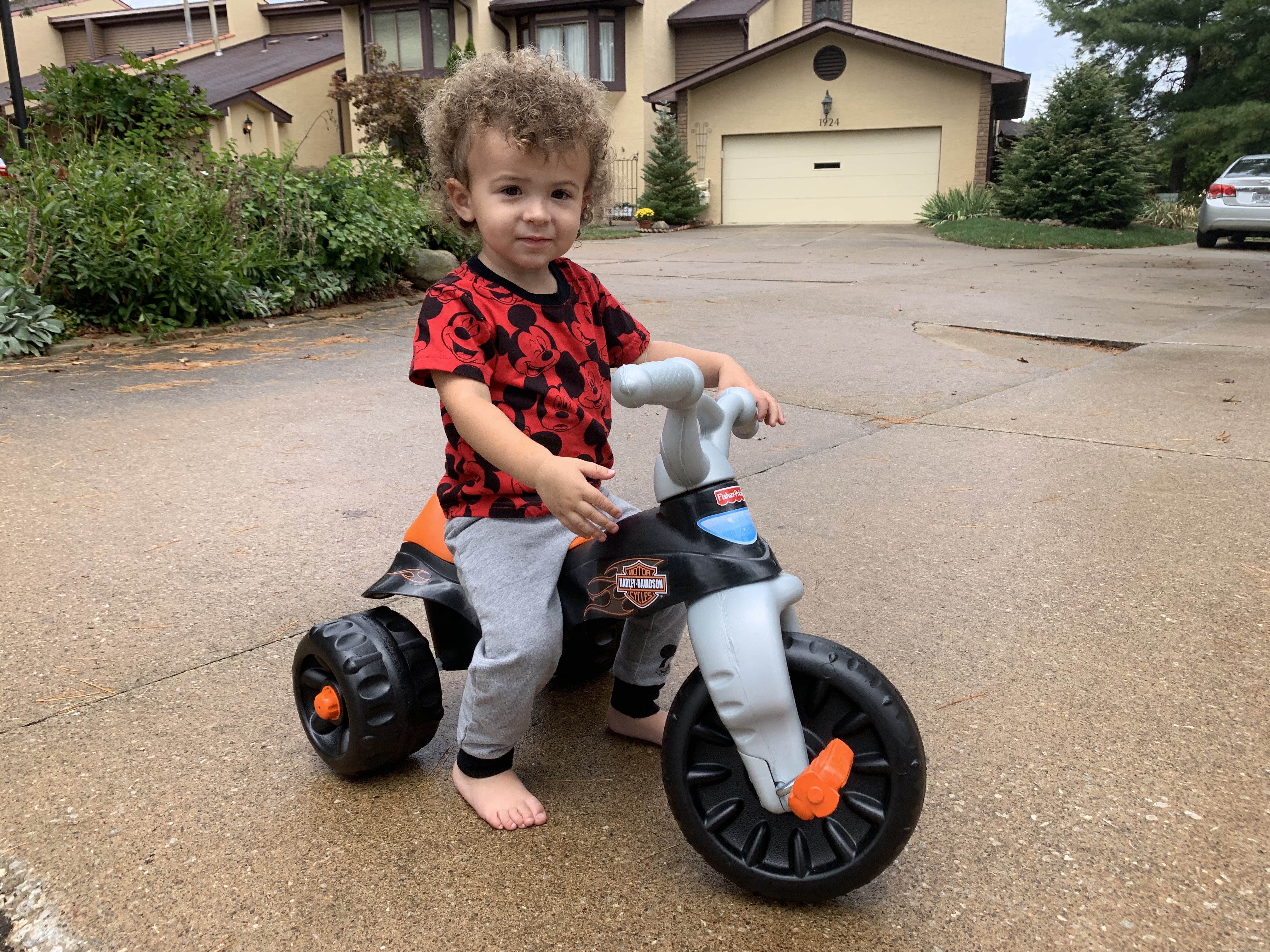
    When you were first being taught how to ride a bike, you likely learned in stages. It would have been some version of a tricycle and you had to learn how to move the pedals in effort to propel yourself forward. The risk of injury was low.

    Then you progressed onto a “big kid” bike.

    With that big kid bike came the option of training wheels. Now, you’re in charge of a much larger piece of equipment but with the safety measure of those smaller wheels so you didn’t have to worry about falling.

    You still had to master the skill of maneuvering something bigger than a tricycle.

    And then the day came where you took the training wheels off. It’s that first exhilarating moment where you were wobbly, excited, intimidated and well on your way to your fair share of bruised knees, shins and anything else that could be impacted by some hard earned tumbles trying to get your bearings with two wheels only.

    Your diet isn’t much different.

    Sure, we all learn how to eat long before we embrace a tricycle.

    And, we can usually get away with a fair amount of dietary luxuries at an early age too.

    But something changes as we get older. Maybe it changes when we’re adolescents and maybe it doesn’t change until we’re adults. But we just can’t eat the way we used to and expect to have the bodies we want.

    That’s a hard pill for a lot of people to swallow.

    Because there is something about eating that seems like it should be this natural, safe, instinctive behavior that just works for us.

    Which is why it can be so incredibly frustrating to take a behavior or set of patterns like eating and stick training wheels on it when we’re 20, 30, 40 or even 60 years of age in attempts to change it.

    What does that look like in practice?

    It may mean you have to track your food for a short amount of time to see your dietary trends.

    It may also mean that you have to measure your food to see what an appropriate portion size actually looks like (specific to your needs and respective goals.)

    You may have to reduce the frequency with which you go out to eat because it can be difficult to ascertain how many calories you’re consuming (even with a margin of error for places that are kind enough to post calorie counts.)

    You’re essentially taking your eating behaviors within the framework of your life and putting training wheels on it again so that you can teach yourself the right way (and the safest way) to do it.

    And that’s great for a refresher.

    But at a certain point, those training wheels will have to come off.

    You re-learn and refine a skill so that you can pull the trainers off and get back to riding. Or in the case of your diet, get back to living.

    The biggest difference is that once you learn how to ride a bike, you basically never forget. You may be a little wobbly if you haven’t been on one in a while but the instincts come back rather quickly.

    Navigating your diet is a more complicated skill to learn because (for most people) there is too much of an emotional connection to it. We eat when we’re happy, when we’re bored, when we’re stressed, when we’re tired, when we celebrate and even when we mourn.

    Your goal, the ultimate goal, is to trust yourself with the way you eat. It’s to trust that you have coping skills in place to replace things like emotional eating when life gets stressful.

    It’s also to remind yourself that you can’t do whatever you want with your diet and not have your body pay a relative price for it.

    It’s okay to put your “training wheels” on periodically to adapt your way of eating to where your life and body is currently. What you could do when you were younger is likely no longer effective or it’s not as effective as it used to be.

    That’s not just with diet, it’s the same for exercise too.

    A body that has decades of mileage and stress on it doesn’t behave the same with activity and food as it used to. It doesn’t mean that you have to pivot 180 degrees, but change will occur.

    Change HAS to occur.

    Much like you learned how to ride a bike in those three stages referenced above, your diet will go through stages of change where you initially need more help and guidance so that you can develop the confidence and insight into how you eat to serve you (and your goals) best.

    And just like bike riding, it may take some tumbles and spills before you get it right.

    It’s all normal. Which makes you normal and it’s all a part of the process.

    Below is Sebastian, showing you his first stage in riding. He’ll support you on your journey too. And yes, at two years of age, he can eat pretty much whatever wants and have no ill effects.

    The same can’t be said for you and I.

    Nevertheless, we’ll be rooting for you.

    “We Make Great People Greater”

    IMG_4617


  • Revolutionary You! #213-Ruby Cherie: You’re Not The Person You Used To Be

    Back for the second time and after nearly two years from her first appearance (Episode #96), coach Ruby Cherie joins me this week. In this week’s episode, we talk about different perspectives and tools for progress beyond the scale, a focus on better digestion and hydration, and taking the person you are today (not the person you were in the past) and learning how to move the needle forward for that individual to reach goals. To learn more about Ruby’s work, check out http://www.facebook.com/rubyreneecherie and on Instagram at http://www.instagram.com/rubycherie.coachingspecialist To learn more about your host, check out http://www.jasonleenaarts.com and http://www.revfittherapy.com You can also like our Facebook page at http://www.facebook.com/revolutionaryou Download, subscribe, share with your friends and please take a moment to leave us an iTunes review.

    iTunes OR Stitcher OR iHeartRadio

    24EC5B25-090F-4405-81DE-0302DAA943D7

  • Don’t Ever Tell Someone They’ve Lost Too Much Weight

    When I moved back to Ohio to start this business in 2009, my Dad decided that was when he wanted to lose some weight. He didn’t have a lot to lose, approximately 30 pounds. I was trying to find a location to set up shop in and I needed a place to train in the meantime.

    So, my father and I got a membership at a local gym that had a low monthly rate and opened in the wee hours of the morning so that we could get a session in and he had time to get to work after.

    It took my Dad approximately a year but, slow and steady, he lost all the weight he wanted to and he looked and felt the best he had in years.

    After he hit maintenance, he had back-to-back surgeries spread 6 weeks apart for carpal tunnel syndrome. The surgeon requested that he stop exercising for the time being so that no sweat got into the place where incisions were made.

    My father did as requested and a strange thing started happening.

    He kept losing weight.

    He hadn’t made any more changes to his diet and he had drastically reduced his level of activity.

    This was the first sign that something was wrong.

    We would soon find out that he was dealing with effects of multiple myeloma.

    We kept the news quiet for sometime and just within our close friends and family.

    One day, a neighbor saw my Dad walking outside and he said something along the lines of “Hey, Paul! You should probably stop that diet you’re on. You look like hell!”

    At which point, my father, ever the diplomat, informed the neighbor of his diagnosis.

    *take foot…insert in mouth*

    I ran into said neighbor sometime later and he apologized profusely for making an incorrect assumption about my father.

    Not unlike people who ask a woman with some “extra” around her belly when she’s expecting, there are some things you probably should keep to yourself.

    With my clients, just keeping the momentum is difficult enough in and of itself. Some people have to contend with the unsolicited feedback of others that can potentially derail their efforts.

    It’s this part that I find especially frustrating.

    From an outsider’s perspective, when you see someone who is trying to improve their health, weight loss to some degree is likely part of that conversation. If you’ve become accustomed to seeing someone at a higher weight, even drops of 10-20% below their starting point can show dramatic differences.

    At some point, genetics take over and there may be more looseness of skin in certain places or simply areas that don’t get as firm as one might like (especially if you’re using strength training to combat this.)

    But here’s the thing (and I say this lovingly): it’s none of your business how much weight someone loses unless their health is in jeopardy (which is determined through a doctor.)

    I know there are those with legitimate concerns like anorexia nervosa but this article is not about that. For those individuals, please seek the guidance of a general practitioner and a therapist with specialization in eating disorders.

    For the weight loss client, what they need to hear is words of support, words of kindness and words of empathy. Not words that potentially trigger sabotage or make someone feel like their hard work and effort in improving themselves is a lost or unworthy cause.

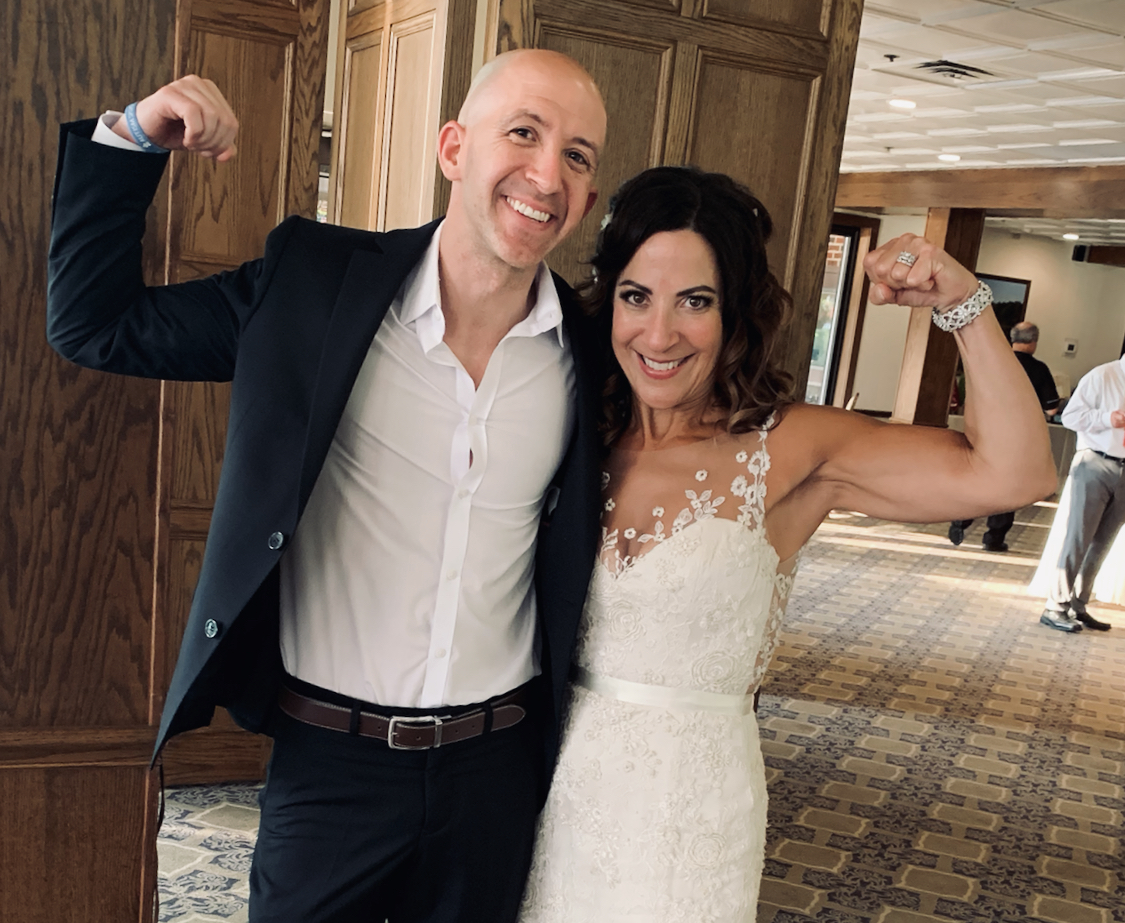
    Below, you’ll find a picture of my client and friend, Laura.

    Laura has been training with me for over 4 years and had already seen great weight loss before we started working together. She works a very active job and manages to fit in 3 days of strength training with me in addition to hiking frequently as weather permits.

    As her wedding day was approaching, Laura got her game face on and focused on hitting her calorie goals to reach her desired weight goal. She was motivated, determined and consistent with her food intake and her activity level. She even had to overcome the obstacle of a freak injury that occurred outside of the gym just months before her big day.

    We worked around the injury and kept her focused despite the fact that it would have been so easy for this to derail her hard work.

    Even leading up to her special day, she had people tell her:

    “If you get too skinny, your wrinkles will show more.”

    “You don’t want to get too much muscle because it will look ugly.”

    “I liked you better when you looked normal.”

    Do I need to say it? This is unacceptable.

    For some people, they’ve waited months, sometimes years and sometimes decades to achieve a body they can be happy with. To have anyone look down on them when they’ve neared the finish line is appalling.

    But I’ll you decide for yourself. I think Laura looked absolutely radiant on her wedding day and I’m not the only one there who thought so. She lit up the room.

    And as proud as I am of what she accomplished, she deserved more acceptance than what she got.

    Anyone does who’s trying to improve themselves.

    If you want to be helpful, be helpful. And as the adage goes: if you can’t say anything nice, don’t say anything at all.

    But as for us, we accept everyone, we applaud everyone,  we help our clients get to their goals because they earn it.

    “We Make Great People Greater.”

    IMG_4537


  • Revolutionary You! #212-BONUS-Oonagh Duncan: “Healthy As F*ck”

    For this week’s bonus episode, I get to spend time with trainer Oonagh Duncan to help promote her brand new book “Healthy As F*ck.” As of this date of this show’s release, we are one day early for when her book is officially available but you can pre-order your copy on Amazon.com or through her website listed below. In this episode, I bring up a few topics I really enjoyed Oonagh’s take on within the book. I found her sense of humor in the writing and a more realistic leaning towards the health conversations we likely have with our friends to be extremely refreshing. You can learn more about Oonagh’s work at http://www.fitfeelsgood.com To learn more about your host, check out http://www.jasonleenaarts.com and http://www.revfittherapy.com You can also like our Facebook page at http://www.facebook.com/revolutionaryou Download, subscribe, share with your friends and please take a moment to leave us an iTunes review.

    iTunes OR Stitcher OR iHeartRadio

    DA878BCA-9CBC-4362-8907-573158EFCBCF

  • Revolutionary You! #211-Chris Cooper: Personal Care For Personal Trainers

    I’m honored this week to welcome fellow coach, Chris Cooper to the show. Chris is the owner of Amp Training and oversees the Facebook group: Personal Care For Personal Trainers. In this episode, we discuss the commonalities between coaches and clients when it comes to our personal struggles, self-care and behavioral obstacles that many of us go through on a daily basis. Chris and I also discuss how we handle our priorities including business and family to make sure the best version of ourselves is constantly at the forefront of life. For trainers, you can join the FB group at www.facebook.com/personalcareforpersonaltrainers and to learn more about Chris, you can follow him on Instagram at www.instagram.com/chris_coopercpt To learn more about your host, check out www.jasonleenaarts.com and www.revfittherapy.com You can also like our Facebook page at www.facebook.com/revolutionaryou Download, subscribe, share with your friends and please take a moment to leave us an iTunes review.

    iTunes OR Stitcher OR iHeartRadio

    93D7F02F-7EE6-4B6B-BF69-1C33EA422B10


  • Do You Deserve Your Goals?

    For a moment, I’d like you to think of a time when you’ve felt disrespected, talked down to or felt that someone was treating you with a condescending tone.

    Maybe it was a co-worker, employer, friend, or a loved one.

    And I’d like you to think about how you felt at that moment.

    Did you feel insulted or betrayed?

    Did you tell yourself that you deserved better than that?

    I believe it can be a slippery slope with human behavior. The unfortunate thing is sometimes it’s those exact scenarios that elicit change.

    I think back to employers I’ve had who treated me with disrespect, especially when it was done in front of my staff or my peers. I remember how small it made me feel. I also remember that, in many ways, they got the desired result from me.

    I recall one manager who could (and would) rip me up one side and down the other. And as much as it embarrassed me and made me feel terrible, I would ultimately come around and do what he asked of me (in the short term.)

    Sometimes a degree of shame can make a difference in delivering desired results.

    But workplace efforts are different than weight loss efforts.

    It’s the rare person who can shame themselves to a life of happiness and better health.

    It’s the rare person who can berate their self image and turn into a person of adequate self-worth.

    So rare, that it’s probably not worth considering.

    And yet, this is the place so many people that I see decide to start from.

    They begin with a foundation of shame but hope and pray and kick and scream that maybe, just maybe, they’ll get the body they wanted.

    I’ve never seen this work.

    Ever.

    Let me rephrase that.

    I’ve seen people with low self esteem make progress with strength training and progress with weight loss. I see that frequently, if I’m being honest.

    What I don’t see is people who maintain their efforts or applaud their success who have this self-destructive emotional foundation they’ve set for themselves.

    And there will be more I have to say in future posts about why I think this foundation is set.

    But today, I’d just like you to reconsider your foundation.

    Because if you are hoping to motivate yourself through self-hatred or at the very least a place of self-deprecation, you’re going to find yourself in a perpetual state of unhealthy eating and unhealthy training.

    I’d like you to do something really uncomfortable.

    I want you to take a look in the mirror and ask yourself if you can be okay with that person.

    You don’t have to be over-flowing with body positivity and pride.

    You just have have to accept that this is your starting place.

    It’s a good place because this is the place that arguably has the most room to improve. And when you can see that there is room to improve you can shine your own light at the end of the tunnel instead of waiting for someone else to provide it.

    I find that many of the same people who have no tolerance for being disrespected by others have zero problem disrespecting themselves.

    They feed that low self-esteem with poor quality food or even too much of the high quality food, they self-medicate with things that don’t fill the void but blur it and temporarily cover it up, they treat themselves like shit when there’s no way in hell they’d let someone else treat them that way.

    The really clever ones will use exercise as a way to punish their indulgences and hope that enough HIIT classes will swoop down and unveil the happiness they’ve been begging for.

    And in case you haven’t guessed yet, I haven’t seen this work before either (certainly not long-term.)

    It’s that kind of person who looks in the mirror and says: “You don’t deserve better. You’re too fat/unworthy/unattractive/unkind, etc. You are doomed to stay right here and never make progress.”

    This person becomes the manifestation of those thoughts.

    Or as famed speaker Earl Nightingale once said: The more intensely we feel about an idea or a goal, the more assuredly the idea, buried deep in our subconscious, will direct us along the path to its fulfillment.

    That can be a scary thing. So when you’re planting those seeds, plant good ones.

    Here’s the thing: despite your lack of belief in yourself, I believe you do deserve better health, a more capable body, and a stronger positive self-image. I believe you can have those things without a degree of narcissism (which can be equally destructive.)

    Perhaps your original goals were unrealistic and thereby unattainable which makes each failure along the way more painful because it’s one more reminder that you didn’t achieve what you wanted.

    You can get closer to where you want to be…actions that only you can accomplish for you.

    But you will likely need support, which is where a trainer or like-minded community or friend can be of help.

    If you don’t feel worthy of your goals now, your ability to accomplish them is minimal.

    The best person to get you where you need to be is you, right now. You just have to believe in that person.

    The people that come through our doors, our RevFit family, I believe in them and we succeed together.

    The goals you want to achieve may have to be modified to fit your lifestyle and mental well-being at this stage in your life. It may go well beyond a scale number or a pant size.

    But make no mistake, you do deserve those goals.

    I promise.

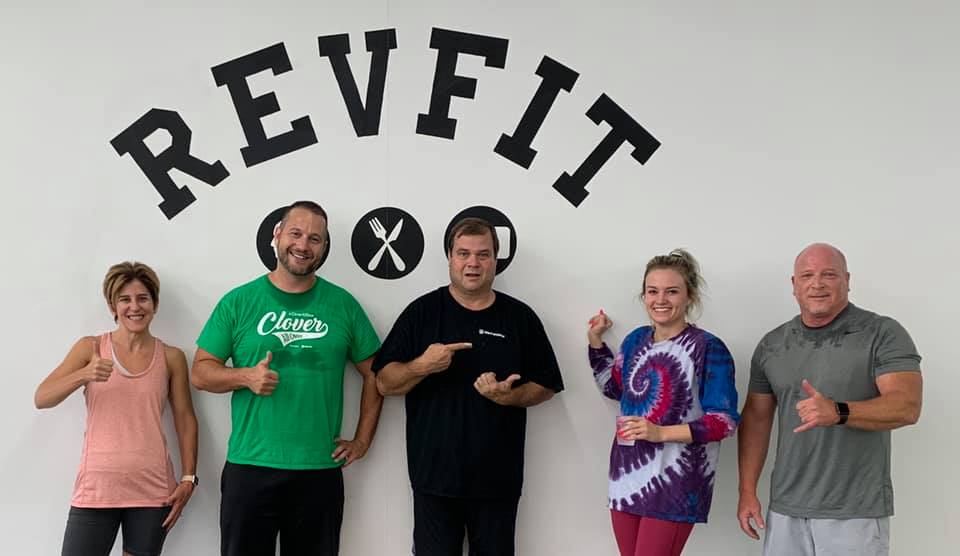
    Below is just a handful of our RevFit family. I’d like to introduce you (left to right) to Pam, Brandon, Adam, Jaylen and Kelvin. They all came here with goals. They all deserve those goals. We’ll help them get there.

    “We Make Great People Greater”

    70502007_2622683647744154_307106688698155008_n


  • Revolutionary You! #210-Heather Robertson: Weighing In On WW and Kurbo

    Returning to the show for her third time (see episodes #108 and #172), Heather Robertson of Half Size Me joins me this week. This conversation was inspired from a couple of directions. She was a resource I utilized for a recent article of mine which you can read at www.jasonleenaarts.com/2019/08/27/weigh-watchers-has-almost-ruined-you and we both had similar opinions regarding the introduction of WW’s new Kurbo app. As someone I have immense respect and admiration for, this was another topic I knew I had to get Heather back on the show to discuss. Per the mention in this show, you can access Heather’s course at www.halfsizeme.com/family To learn more about Heather’s work, I can’t recommend her podcast, Half Size Me, enough. You can also learn more about her at www.halfsizeme.com To learn more about your host, check out www.jasonleenaarts.com and www.revfittherapy.com You can also like our Facebook page at www.facebook.com/revolutionaryou Download, subscribe, share with your friends and please take a moment to leave us iTunes review.

    iTunes OR Stitcher OR iHeartRadio

    2C744CF6-42F2-4588-90FA-AB9E11C8CD9D

  • Yes, You Need To Detox (No, Not That Kind Of Detox.)

    When I hear clients express the desire to “detox” or, for the sake of this post, to do a “cleanse”, I try to always ask them “Why” they think they need it.

    The responses can vary. But it includes things like:

    “I think I need to kickstart my metabolism.”

    “I’ve been drinking too much and eating too much junk. I need to flush my system.”

    “I think it may be toxins that are keeping me from losing weight.”

    While the allure of these things sure is persuasive, it lacks a foundation in reality.

    Because somewhere intertwined in the desire to flush, kickstart and detoxify is some notion of “clean eating.”

    It’s as if we live in a dietary world where the line is drawn between dirty food and clean food, good food and bad food; this dichotomous relationship of what crosses our lips every day.

    But what I find in practice is that the same people who get romanticized by detoxes and cleanses inevitably end up right back in the same eating and drinking habits that led them to the desire to detox in the first place.

    In all the years I’ve been servicing clients, I’ve yet to meet the person who said: Well, what really solved my weight loss puzzle was the appropriate amount of detoxes that I administered on myself.

    I can’t forget the meme I saw on social media proclaim: Detox is white girl for diarrhea.

    I digress.

    Let’s work with the premise of detoxing because I do believe that there is value in the intention, even if I’d like you to consider it from a decidedly less marketable way.

    By definition, the verb detox means: “to abstain from or rid the body of toxic or unhealthy substances.”

    When we work from that definition, I think we can view detoxes from a new lens.

    What in your life is currently unhealthy?

    -Friendships

    -Diet

    -Social/love life

    -Marriage

    -Self Image

    -Activity Level

    Take inventory. Then ask yourself what you need to temporarily or permanently detox from.

    I want you to go full-Marie Kondo and start removing things that don’t add value or give you joy.

    Warning: this could get uncomfortable. More uncomfortable than diarrhea.

    And the results might look something like this:

    -If you’re trying to lose weight, remove/unfollow websites and social media pages that promote foods you have no control over. Tell your friends and family not to share those things with you. You would also be well served to empty your pantry, fridge and freezer of the same foods that you can’t moderate effectively.

    -If you’re struggling with self image, unfollow the profiles of people who make you feel like you need to compare yourself to them. This is rampant on Instagram where the line between fantasy and reality is so fantastically blurred that you almost have no idea what the definition of “normal” should be.

    -If you spend time around people who “push” food and alcohol on you, put some distance between yourself and these social occasions. It doesn’t mean never, it means less.

    -Kill your television. Not literally. Put more time into your self-care (meal prep, journaling, going for a walk, going to bed earlier, taking a bath, etc.) There’s a reason we call it binge-watching, it’s not a positive thing. Those shows aren’t going anywhere any time soon. And yes, you’ll survive if you aren’t up to date on the water cooler conversation about whateverinthehellishappeningonthebachelor.

    And I’d like to add something else, something for you to at least ponder.

    In 1998, when I was admitted into rehab for some things I could not moderate in my own life, the topic came up about alcohol consumption.

    We were told that it wasn’t how much you drank that made you an alcoholic, it was your emotional relationship to alcohol. So, even if you drank once a week, if that drinking relationship was unhealthy, chances are there’s a situation that needs to be resolved.

    That’s something you can apply not just to alcohol but your relationship with food, toxic friendships, and your coping mechanisms. Apply it accordingly.

    Here’s the most important thing that I can hope to leave you with. It’s unlikely that your solution to detoxing will come in a box, a pill or a powder. If you don’t find a way to sort out the unhealthy things happening in your life, those better marketed band-aids will only provide a fancier way for you to have a bowel movement.

    That doesn’t sound like a solution to me.

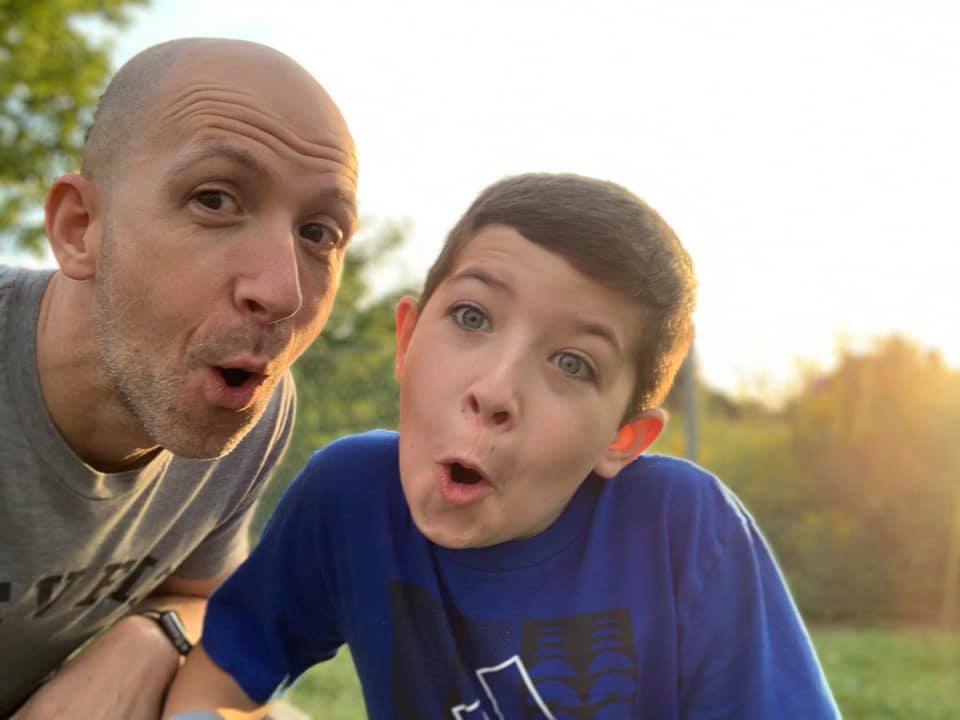
    (Below is a recent picture of my son, Jackson, and I. We’d like to encourage you to work on the hard stuff so you have a better chance for success.)

    70083753_2608922939120225_3660969826064531456_n

  • Revolutionary You! #209-Dr. Reid Wilson: On Anxiety

    I am honored to share time this week with Dr. Reid Wilson of Anxieties.com, author of “Stopping The Noise In Your Head” and co-author of “Anxious Kids, Anxious Parents.” I wanted to connect with him and bring him on the show to discuss the rise in anxiety today and some of the troubleshooting he likes to use for his patients and individuals suffering from a wide spectrum of anxiety disorders. You can learn more about Dr. Wilson via his website http://www.anxieties.com and by purchasing his books on Amazon. To learn more about your host, check out http://www.jasonleenaarts.com and http://www.revfittherapy.com You can also like our Facebook page at http://www.facebook.com/revolutionaryou Download, subscribe, share with your friends and please take a moment to leave us an iTunes review.

    iTunes OR Stitcher OR iHeartRadio

    FC98020A-18F7-4516-ABE2-282364682498

  • Weight Watchers Has (Almost) Ruined You

    Weight Watchers (now branded as WW) has been around for over 50 years. And if you know even the slightest bit about the dieting industry, you’ll know that diet trends come and go in almost as rapid fashion as clothing styles.

    And much like how fashion trends recycle and become popular again years later, so do some of these dietary trends (*cough* low carb, *cough* keto, *cough* intermittent fasting.)

    How does WW remain top of mind for all of these dieting individuals who have failed time and again to lose weight or maintain weight loss?

    Well, they adapt. Just like fashion.

    We, as people, are fickle. We are also fairly impatient. And if there’s one thing I’ve learned coaching hundreds and hundreds of people to weight loss is that clients always want weight loss NOW.

    And I do have to give sincere credit to WW for keeping the fickle public in mind and still being a name worth mentioning when it comes to weight loss programs that actually work.

    I know people, right at this moment, who are succeeding on WW. To them, I say from the bottom of my heart, CONGRATULATIONS. Keep doing what you’re doing.

    This article isn’t really for them (although it kind of is.)

    This article is for everyone who has been psychologically screwed over by WW.

    Let me explain.

    I am one of a crowd of coaches in the health and wellness industry who feeds his family by a system of results that marries the concepts of calorie/food tracking, healthy habits and strength training.

    I sell no supplements: no powders, pills, wraps, etc. I have no affiliation to any MLM service/product.

    What I believe WW has done exceedingly well is take a rather complex concept like calorie counting and boiling it down to a point system.

    It’s a flawed point system but I have to admit that it is far easier to count 23 points than it is 1300 calories.

    And, no system (even mine) is 100% perfect and accurate.

    As we are individuals, we all respond differently to different systems.

    And WW knows this, which is why every few years, they change.

    Sometimes the changes are dramatic (like this newest 2019 version.) The belief is that as science and research change, so should their points system.

    I don’t disagree.

    Here’s the first part of my rub.

    WW historically has offered a support group. This has tremendous upside as having a community can be exponentially helpful when it comes to sustainable weight loss. I see this with my own closed community as well.

    And within the support and the designated weigh ins, people learn how to “game the system.” A crafty enough person can play around with laxatives, diuretics, water, carbs and a host of other variables to “win” at weight loss on a given week and appear victorious in front of their community.

    I’m not immune to those things and I know why they work. This does not teach someone how to eat. It teaches them how to play a game. And while I don’t believe for a moment that WW endorses this behavior these are the things that tend to happen when weight loss becomes a contest or a place where people feel the need to one-up others in their weight loss journey.

    Another unintended consequence of WW is that there is now an emotional component to eating. This is something I’ve seen carry back to my first years of owning this business (since 2009.)

    A person could take their given WW points and treat any day where they are below their points as a “Good” day. Conversely, any day where the same person was over by even one point is a “Bad” day.

    Wrong. It’s just a day.

    I’ve given speeches over the years where I’ve said half in jest, that WW is the perfect diet for Catholics because it’s riddled with guilt. That’s not a knock on Catholics. My father was Catholic and he was an exceptional human being. But if you’re Catholic, you know EXACTLY what I’m talking about.

    And since we’re on the topic of faith, this opens another door that WW has failed the public with. A nearly blind faith that a person’s worth is determined by their point system. And that if every other diet has failed them, then they go running back to their beloved point system.

    Which is why so many people who have been such ardent followers of WW over the years felt so betrayed by the newest changes to the system. Many found that their points were reduced.

    This is concerning.

    It’s like being told you’re being given a reduction in pay for the same amount of work. It feels like a slap in the face.

    What WW got right with the new point system is a focus on lean sources of proteins and vegetables. What they got wrong is they gave these foods a value of zero points.

    This is concerning.

    Every food has a calorie. And every calorie counts (right down to the unmeasured, unsweetened creamer you eyeball into your 4 cups of coffee each day.)

    When you take a person who is near their allotted points and you to tell them that grilled chicken has no points (but 4 ounces DOES have 170 calories) what exactly are you showing them? Well, you’re setting them up to be in caloric maintenance or caloric surplus. That means NO WEIGHT LOSS.

    Should I mention the fact that the same piece of grilled chicken has gone through phases of being 2 points and 4 points as well? The same 170 calories??

    Let me slice this a slightly different way.

    Let’s say I’ve been led to believe (not incorrectly) that I should be focusing on lean proteins and fruits and veggies for the majority of my diet. How could I construct a day’s worth of eating?

    Breakfast: 2 eggs scrambled with spinach, side of unsweetened Greek yogurt and a banana. Total points: zero. Total calories: approx 350-425 calories

    Lunch: Grilled chicken salad (4 oz chicken, lettuce, beets, tomatoes) and a side of blueberries/blackberries. Total points: zero. Total calories: approx 300-350 calories

    Dinner: Baked salmon (4 oz) with a side of asparagus and corn. Total points: zero. Total calories: approx 300 calories.

    What you see is an individual who played by the WW rules and has a zero point day with a “healthy” assortment of food but accumulated anywhere from 950-1075 calories.

    What if they’re allotted 18 total points to play with for extra food??

    What if it takes this person 1200-1400 calories a day to lose weight?

    Do you know what that spells? S-C-R-E-W-E-D.

    WW has not been able to solve the law of thermodynamics for it’s clients. No amount of anecdotal evidence can change laws of physics. If it could, we all would be making up the rules every time the game didn’t go our direction.

    With almost frightening accuracy, I can tell you there is a strong correlation between a client’s inability to lose weight with how many times they have been in the WW headlock. They deny calories. They deny physics. And in turn, they are denied sustainable results.

    This breaks my heart.

    Because what I really want, and what this country undoubtedly needs from a company that has survived over 50 years in the diet industry is to do GOOD.

    Which brings me to the icing on the cake for WW.

    The newly launched Kurbo app for kids.

    Now, we (as coaches) no longer have to JUST fear that WW clients will drag their children to WW meetings and start them on diets. Now, there’s an app to facilitate and encourage eating disorders at arguably the most impressionable age of a child.

    Shame on you, WW. Shame on you.

    As a parent, this also breaks my heart.

    I understand the need for technology because I do ask my clients to embrace it if they’re willing. But to ask it of our children so they can lose weight? No, thank you.

    Because I will tell you what I see. I see people who come to my business and they have been dieting for decades. Many of these people have cycled in and out of WW for much of their dieting “career” and they still haven’t been saved.

    And I’m not standing on a soapbox. I haven’t solved the riddle. And neither have my fellow coaches who preach from the same pulpit.

    We’re pleading with our clients to learn another way. A way that isn’t WW. And it isn’t because WW failed everyone. They didn’t. They bobbed and weaved just like a great boxer to stay relevant in the diet conversation.

    What WW stands for isn’t wrong per se. But the legions of people who have valiantly followed them who have not succeeded are still unwilling/unable to let go of the WW machine.

    And I’m tired of watching good people suffer because they were not taught effective eating skills.

    Dieting is not, and will never be, easy.

    And if you are someone who has been betrayed by the next modification of WW and are hoping and praying they don’t let you down again when they change again (and they will change), know that there are other skills that have to be developed.

    No one wins in weight loss by shaming themselves to the finish line.

    I offer some simple solutions.

    -You can follow the WW point system if you so desire. I would encourage you to double-track and cross reference those foods within a food tracking app like MyFitnessPal, MyPlate, Lose It., etc. Make sure your accurate details have been logged: age, height, weight, gender and level of daily activity.

    -Use exercise as a tool to get you to your goal but NOT the most effective or efficient way to get your desired weight off. It is too difficult for the average person to accurately know how many calories they burn during exercise and too many use extra energy expenditure as an excuse to over-consume food.

    -Remove shame from your journey. Embrace the person you are as the best person you can be at this given moment. Accept that this person can still be sharpened, polished and improved on. We are ALL works in progress.

    -Teach your children to eat for different goals. Teach them to eat to fuel effort. Teach them to be strong, teach them to be capable, teach them how to be worthy in the skin they’re in.

    WW, you need to up your game. The rest of us are trying to pick up the pieces you left behind. And we’re holding you responsible for damaging the psyche of millions of people over the last 5 decades who did not succeed in the program that you cannot consistently stand behind.
    IMG_4228