I have the privilege this week of welcoming Ted Ryce to the show. Ted is a fellow coach who has worked with A-list celebrities and other high performers in the world and now coaches clients exclusively online. He also hosts the Legendary Life podcast. In this episode, we talk about the traumatic past that Ted has lived through and what he’s done to overcome those tragedies to be the coach he is today. Ted offers some strategies that work for his clientele and a perspective not frequently covered on this show to date. Download, subscribe, share with your friends and please take a moment to leave us an iTunes review.
I spend a lot of time in different groups on Facebook tailored to other fitness professionals. As you can imagine, there’s a range of tenure between them (beginners and veterans) as well as a vast assortment of training styles (group exercise, one-on-one training, sport specific, etc). One question I seem to come across with more frequency than others is over client acquisition.
Because social media is the monster that it’s evolved into, there is an overabundance of ” business coaches” who are now advertising their services to help fellow trainers generate more leads than they ever knew what to do with. I’ll reserve some of my more candid opinions by saying, some of these coaches are worth their weight and many, many, many more are not.
However, the same basic conditions apply now as they have throughout history: develop better, trusting relationships with others and you stand a better chance of having a sustainable model for generating new clientele.
I thought I would sink my teeth this week into giving you a free resource to help.
Before I go any further, what I’m about to discuss below can work for nearly any service providing industry. You may have to decide how and to what extent you want it to work for yours (assuming you’re not a personal trainer) but I will tailor the message to others like me.
Please also note, nothing I’m mentioning below is of the “get rich quick” variety. If you follow similar steps, it can take weeks, months or years to achieve what we have at RevFit. I can tell you, it was and has been worth the time and effort.
When I started Revolution Fitness & Therapy (RevFit) in the spring of 2009, nearly 11 years ago, I knew no one. All I knew was that the economy had recently tanked in the U.S. in 2008 and I was damn near out of my mind to make a go out of starting a business.
I started with the lowest hanging fruit I could aim for and I introduced myself to every neighboring business in my plaza. I picked up my very first client just from that first set of introductions. Then, I started going to other businesses in the area and introducing myself to let others know that I was taking on new clients.
I priced myself as low as I could handle just to get people in the door. I wanted more people at an affordable rate so I could get results, gain experience and hopefully get them telling their friends and family about me.
It was slow going at first. I met a lot of really nice people but I wasn’t bringing in new clientele in droves.
I realized early on that print advertising was not working for me. I didn’t have a lot of money to spend and what little I was putting into marketing was not generating new business for me. I needed a low to no-cost option that would net a bigger return for me.
B2B (Business To Business) Networking
I was told about a local networking group that was for fellow non-competing businesses and business owners to refer clientele to each other. I knew that if I could get involved in a group like this it could be monumental for me. I had tried going to Chamber of Commerce events and other networking functions but it was simply too many people for me to try to connect with. I am, at my core, an introverted person. The more people I have to connect with, the harder it is for me to do so.
I knew I needed a more intimate circle to work within and when it became possible for me to join that smaller networking group, I knew I had to make the best possible impression.
If you’re just starting out as a trainer, you may not have much of a clientele roster to work from. Like me, you may need to just get in front of people so they can learn as much about the person you are before they decide to part with their hard earned dollars and invest time and energy with you.
I made a vow to myself to give as much business to others as I possibly could. Sometimes, I did so out of my own pocket. Sometimes, I had to listen to the needs of family, friends and clients to see if I had a viable, trustworthy resource to send them.
For instance, one of the members of my networking group was in insurance. He was able to work with several different insurance companies to shop the best rate for home and auto insurance rates. I went to him first to see where I could save money. Once I saw that he had saved money for me, I got my family over to him as well. Not only was he able to save my family money on insurance rates but I had the added bonus of picking him up as a client. Win-win-win. (Thank You, Mike M.)!
There was also a member of the group who handled credit card processing for small businesses. I had him quote me on rates for what his company would charge to service my business. At the time, I was using a company with a low up-front cost but very high percentage rates per transaction. My friend in the group gave me a quote with a higher up-front cost but a lower percentage rate per transaction. On an annual basis, he saved me so much money as my business continued to grow. He also became a client. (Thank you, Brandon H.)!
I was a member of this group for about 2-3 years before I realized I had essentially hit my relative ceiling for referrals. Throughout that time, I gained tens of thousands of dollars in business not only from members who decided to train with me but from the people they referred to me as well. This was an incredible avenue for me to build my business. I still utilize many of the core members of this original networking group for services even though I haven’t been a member in nearly eight years.
The Unlikely Success of Free Speaking Engagements
As you’re developing your expertise within your given field, you’re likely to come across an opportunity to speak in front of others. I was given a chance like this when the husband of one my clients asked me to come and speak for 30 minutes to a group of junior high students who were about to start high school the following school year. He wanted me to teach them some basics about exercise (with a little bit about nutrition).
I knew I wouldn’t get paid to do so but I liked being offered the opportunity to speak. Since most of my working time was spent within the four walls of my studio, I knew that the only way I could meet more potential clients was to simply get out there and be in front of them. I was allowed to hand out some flyers as well with the hopes that maybe one of these students (or, even better, their parents) might be interested in training with me.
In that first class, a young man (Jack V.) took my flyer home to his mom (Jeanne V.) and she called me the next day to set up a consultation. As a result of working with her, I got to train her husband (Gregg), her son (the one who got my flyer) and their daughter (Jamie). Also, through knowing the family, another gentleman was referred to me (Grant M.). Through him, I got to train his wife (Margot) and both of their sons (Craig and Ian). He was also the guiding referral for another ten clients! All of this came from one free speaking engagement that lasted 30 minutes. (Thank You, Mark O.)!
I will caveat that this kind of scenario doesn’t happen all the time. I’ve given many free speeches that just ended with more practice for me and absolutely zero new business. This is still a win. The more comfortable you can become with speaking in front of others, the better. You can never get too much practice fine-tuning your wisdom in front of a group of strangers.
The Astonishing Zero Cost Power Of Social Media Networking
Several years ago, I started posting pictures of my clients. Initially, there was little rhyme or reason in what I was doing. I just wanted to highlight some weight loss success or show off one of my clients hitting a new personal record. Sometimes, it would just be a picture of someone doing something cool like battle rope sprints or a prowler (sled) push.
Over time, I did start to find a groove with not only what I enjoyed posting (new member introductions, weight loss, and personal records) but I had the added benefit of willing clients who allowed me to tag them in the pictures as well. This opened me up to what author Bob Burg called a “sphere of influence”.
By tagging my clients, their friends could see the great things they were doing at the studio, perhaps get inspired with their own fitness journey, and sometimes, ask questions about us: “Where are you training?”, “How do you like it?”, or “Can I come check it out too?”
Of course, not every client wants to be posted and we are 100% okay with that. For those who are comfortable with having their hard work and success bragged about, we’re happy to brag about it because we know how inspiring it can be.
Even though you have an option of paying to boost your posts on social media, we haven’t needed to do that with client success pictures. The more they accomplish, the more we get to post. The more we get to post, the more their sphere of influence can see what they’ve been doing to succeed. This is a win-win for all parties involved and it’s the best free advertising I’ve ever come across.
Find Complementary Businesses To Help Generate Leads
When I first started, I had an idea to reach out to some local hair salons and spas. I knew that anyone who was looking to improve their self image via hairstyling, pedicures/manicures, and facials would likely be interested in improving their physiques as well. I wasn’t wrong about that BUT I was wrong in how I originally approached it.
I tried to drop off some containers with our business information on the front and with the notion for clients of the salon to drop in their business card and be selected for a free personal training session. In all honesty, the containers didn’t look great so I didn’t get a lot of leads from this.
What I did learn was that I needed to focus on one salon (not several) and develop a working relationship with that salon. This proved to be a huge step in the right direction for me. I gave a generous discount to the owners and staff of that salon and let them know that if they referred their clients to me, their clients would also get a discount. (Thank You, Kristie W.)!
This gave me a much better working environment to start from. Get a stylist in great shape, get them talking to their clients about us, and let the power of networking take over from there. I also utilize this salon when I want to give gifts to my clients. I rarely have a female client who doesn’t have an interest in a pedicure/manicure, facial or a massage. Having a great, mutually beneficial working relationship with my neighboring salon has been pivotal to my business.
Become The Person With The Resources
Over the years I’ve had this business, one thing I’ve tried to always be great at is having great resources.
-Need a great realtor? I’ve got that (several, actually).
-Need a great banker? Let me connect you via email.
-How about a plumber, a computer repair person, a financial advisor, a CPA, a handyman, or an attorney? I’ve got you covered. How would you like me to make the introduction?
In fact, I’ve only been stumped twice. One time, a client of mine needed an audiologist. I literally had no one to refer to. However, now that I know my client had a great experience with their audiologist, I know where to turn. I also had a client ask about a resume building service. I didn’t have an exact resource for that but I was able to refer something close that could have sufficed.
When you work in a service industry, you can never have too many contacts. Yes, you may have more financial advisor friends than you know what to do with but you may also learn over time which of them is the most trustworthy, dependable and worth investing your money and investments with.
Ultimately, the business you want to build as a personal trainer is built on trusting relationships. You not only have to find ways to connect with people that work well for your personality but you also need to be available to give resources out when your clients need them.
Know Your Brand Ambassadors
I’ve been very fortunate that throughout the years I’ve had my business, I have had several clients who knew how to spread the word about us. It wasn’t just that they told their friends and family about RevFit, it was the fact that when they did, people listened.
It’s important that you recognize the efforts of these brand ambassadors. They care not only about the experience you’re giving them but they care that your business continues to thrive. Of my current clientele, I can easily shout out the actions of: Cherie E., Tatsyana H., Brandon H., Chris C., Ned P., and Shon C. as people who spread the word far and wide about training with us.
As a result of clients like the ones I mentioned, my business has continued to grow by leaps and bounds. Sometimes, it’s come when I’ve least expected it (that’s always appreciated too)!
Find Your Niche And Spread The Word
I am a middle-class, white, heterosexual, married male. Why does that matter? Well, if you are of a certain ethnic background (African-American, Latino, Indian, etc.) or if you align with a particular sexual preference (LGBTQ+), I cannot recommend more that you involve yourself in networking groups catering specifically to those demographics.
When you become the go-to person in those group for your field, you are opening up a goldmine of business for yourself. Often, people feel they can trust others of like mind, background, or preference. This won’t always be the case.
We proudly cater to everyone of any color, religious belief or sexual preference. We always have and we always will.
I was recently speaking to a fellow trainer who was trying to build his training business. I mentioned the idea about talking to a neighboring hair salon. But I also asked him if he had ventured into any networking groups that cater specifically to gay men.
He had not.
I told him: “You need to find a group like this. You are knowledgeable, trustworthy and you share the same interests. Be THE trainer available to that group.”
Final Thoughts
As someone who was never going to thrive in a “Here’s my business card, let’s trade” type of environment, I had to find more intimate circles to work within. I love being around people but I also need time to recharge my batteries so that I can engage again the next day.
Nearly every thing I’ve done to build my business to where it is today came as a result of patience, consistency and making sure my clients got good results. It’s also been huge for me to focus on what I can do for others before I could ever expect (or desire) them to do for me.
So, before you sink thousands of dollars into a business coach, see which of the tactics mentioned above work for you. You don’t have to be the neighborhood socialite to build a successful personal training business. However, you do have to make sure that anyone who can know about the great work you do knows it and keeps you top of mind when someone they know needs a trainer.
Want to see more proof of the power of better networking? Take a look at the picture below. Left to right, I’ll tell you how these people found me:
Bill K. (was referred to me by the esthetician at the salon I referenced above, Cherie E.)
Charlie H. (his mother heard about us through mutual friends who train with us).
Kelvin and his wife, Jean (were referred to us by a client, Ryan U.)
Brandon H. (originally joined me from the networking group we belonged to. He was also the person who helped set up my credit card processing).
Shon C. (we met through having a similar bond in raising sons with special needs. In the past year, Shon has sent more business my way than any other client. Thank YOU!)
Eric M. (he found us through a drive by in our plaza).
That means 6 of the 7 people you see below came to us through networking.
It is EVERYTHING to your business and we are grateful to service them.
This week, I welcome the debut of Amy Kubal to the show. Amy is a Registered Dietitian with a strong background in Paleo, autoimmune, ketogenic, digestive and kidney health, athletic performance, eating disorder, weight loss, and figure/bodybuilding diet and nutrition counseling. She specializes in distance consulting and has a passion for helping others discover how powerful good nutrition can be. In this episode, we cover some problems with trend dieting, thoughts on therapy for eating disorders and how to live with the diet that works best for your life and goals. Download, subscribe, share with your friends and please take a moment to leave us an iTunes review.
It’s a number heard so frequently and with so little context that many times, women who are trying to lose weight don’t know if it’s the right way to turn or the wrong one.
I’ve even had some exceptional female coaches on my podcast who criticize the number, claiming it’s too low.
It would be easy for me to cough up some general stats about this as it pertains to my clients but I see 1200 calories come up so frequently in my consultations that I decided to dig deeper and go right to the source.
Some background: I currently train (online and face-to-face) 94 clients. Of that 94, 55 are female (approximately 60%). Of that 55, 48 are with me for weight loss.
I went through every file of these women to check the parameters that dictate where someone might fall to lose fat mass. In case you don’t know the factors involved it’s: age, gender, height, level of daily activity and ratio of fat to lean muscle mass.
There are a multitude of algorithms on the internet designed to help you understand how many calories your body needs just to maintain its current weight and keep your health optimal. Anything less than that number would contribute to weight loss, anything more would contribute to weight gain (if consistent over time).
What did I find? I found that of the 48 women who are currently training with me for fat loss, 12 of them will lose weight on 1200 calories a day (1500 calories at maintenance with a 20% reduction) and an additional 11 will lose weight on 1300 calories a day (1600 calories at maintenance with a 20% reduction). That means that nearly half of all the women I train are on the lower end of a given spectrum for weight loss. I should note that MOST (not all) of these clients qualify as sedentary.
If we remember that all numbers are estimates, there may be some room to wiggle but perhaps not much.
However, let’s zero in on those 12 women who are at 1200 calories a day to lose weight. What do they have in common? For frame of reference the age gap between these women was as young as 22 and up to 71 years of age. They each had about 100 pounds of lean muscle mass. Most of these women are sedentary but a small handful are on their feet most of the day (the way you might consider a teacher or hairstylist). They had a median weight of 150 pounds.
What differentiated the women who need 1200 calories to lose versus the ones who need 1300 to lose? By and large, the women who could lose (at approximately the same rate) who were allotted 1300 calories either had more lean muscle mass or they were more active. When I say active, I don’t mean how often they exercise, rather how active their actual daily life is in comparison. Bear in mind, it seems silly to be squabbling over a 100 calorie difference BUT if you’re dieting, you know how much you appreciate having a 100 calorie buffer.
I was asked by a client once if she could just stay at her 1500 calorie maintenance and just train harder/more frequently. The answer: it depends.
Yes, in theory, you could train harder to lose weight but it’s incredibly difficult to quantify caloric burn even with some crafty and expensive trackers that we wear on our wrists. These are estimates and the body will adjust to your cardiovascular expenditure. So, over time, you’ll have to work harder, longer, faster, or higher to burn the same amount of calories.
This is why we try to focus on “intake” for weight loss as the priority rather than how many calories you “think” you burned in boot camp.
For the record, I don’t like telling a client that 1200 calories is the number to aim for. As you can see, 25% of my clientele is facing that number and another nearly 25% isn’t far off.
I should also add that any person on a fat loss program should embark against any number with skepticism. Could you lose fat mass at 1500 calories a day? Try it. See what happens. If you’re not losing, dial down by 100 calories and watch your trend.
The females I train who are allotted the most calories are either the ones who weigh the most (by comparison to the median 150) or they have substantially more lean muscle mass. A larger person by comparison needs more energy to keep the body functioning at an optimal level. As an individual loses fat mass, calories will need to come down gradually over time because a smaller person requires fewer calories to exist.
I also have to mention that menstrual cycles, hormonal fluctuations, lack of sleep, abundance of stress, medications (anti-depressants, anti-anxieties, blood pressure meds, etc.) and environmental factors can make it hard for any woman to diet.
To this point, there may be times throughout a given month or training cycle when you should not be at a deficit because of the stress it places on your body. For some women, they need to be at maintenance or slightly above during their menstrual cycle.
If you’re constantly training for an endurance event (marathons, obstacle races, etc.), if you’re a competitive athlete (soccer, basketball, lacrosse, etc.) if you’re frequenting HIIT classes, boot camps or CrossFit, it’s likely that 1200 calories is too low for you.
You may find that on your days of high activity, you’ll need to spike your calories up to 1400 or 1500 so that you don’t “bonk” during your intense training time.
It’s important to note as well, since some women claim they cannot lose weight at 1200 calories, to determine if their food tracking is on point. It can be very easy to overshoot (especially if you eyeball food or if you eat out at restaurants often).
The other concern is for the woman who eats 1200 calories a day Monday through Friday and hits 2500 on Saturday. This is common. This can also completely undo an entire week’s progress.
1200 calories is not a one-size-fits-all suggestion. It’s a one-size-fits some. In my case, it’s approximately 1 in 4. That may be different if you compare my clientele against another coach’s clientele.
If you’re a woman who is trying to make 1200 calories work for you, I offer my general recommendations based on the stats/averages I’ve referenced above:
-aim for approximately 100g (roughly 400 calories) of protein per day
-aim for 20-25g of fiber a day
-aim for no less than 25-30g (roughly 225-370 calories) of fat per day
-stay well hydrated, get quality sleep and utilize any stress reduction activities you can
As with any dietary plan or strategy, it may be beneficial to start higher as opposed to lower within a deficit to see how your body adapts. 20% of a reduction from maintenance may be too aggressive for some women.
Most importantly, listen to your body. Take notes. You know yourself better than anyone and ultimately, your body will let you know what’s working and what isn’t.
I should also finish with the kind note that the calories it takes your neighbor to lose weight may not be the same as yours. Perhaps your best friend can lose weight at 1500 calories a day when you need to be at 1200. There are a host of reasons why this might be. Maybe she’s more active in a given day than you (exercise, at work, level of non-exercise activity thermogenesis or N.E.A.T. for short or the way she metabolizes her choice of foods).
It’s my long and short way of saying that 1200 calories a day may be exactly what you need for fat loss success, it could be too high and it could be too low. Each person will have to decide that based on their own set of circumstances.
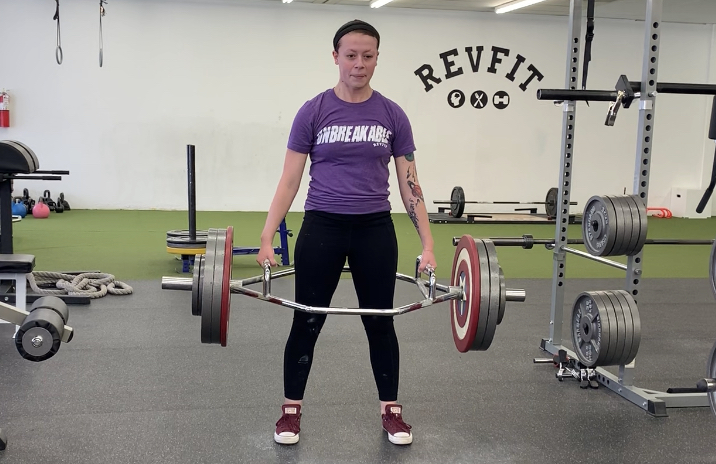
Below is our very own Jessica, hitting a new personal best of 325 pounds. Should she elect to drop weight (not necessary in my opinion), 1200 could be a goal she’d aim for.
I’m honored to share the time this week with returning guest, Mike Doehla of Stronger U (Episode #165) and the Revolutionary You debut of Jay Woith of Macros Inc. Both of these guys oversee two of the largest nutrition coaching companies I’ve come across and I knew we would have a great conversation about what we see with our clients. We cover a ton of ground in this one as we talk about calorie expectations, the problems with comparisons, why you need to be self-aware when it comes to your food tracking and more. Download, subscribe, share with your friends and please take a moment to leave us an iTunes review.
When Kelvin first started working with me, he and his wife had already seen some weight loss success on a version of Weight Watchers. After our initial consultation together, I was able to give him some more pointed insight into caloric goals, macronutrient targets and some thoughts on double tracking against the WW points system.
He did see some more weight loss occur but it was fairly slow coming. After several months working with us, he got his wife Jean training with us as well.
Jean went through a similar consultation but since she is not only female but a smaller person in comparison to her husband, her numbers were invariably different.
We got through the 2019 holiday season together and Kelvin and Jean asked to sit down with me to revisit a weight loss plan so they could both reach new lows together.
They have both been kind enough to let me use their specific information to highlight some major differences when it comes to couples being successful together at weight loss.
I try to always be mindful to say that dieting in and of itself is stressful enough. Having a supportive spouse can be the difference between succeeding or not. The fact that Kelvin and Jean are on the journey together is a really big deal.
Kelvin is in his early 50’s, weighs approximately 210 pounds and has approximately 155 pounds of lean muscle.
Jean is younger than Kelvin (withheld for privacy purposes), weighs approximately 150 pounds and has approximately 100 pounds of lean muscle. It is important to remind the reader that women typically carry more body fat than men, a factor that not only affects hormonal differences between the sexes but can affect ability to lose weight as well.
Comparing the daily activity of each, Kelvin is more sedentary and Jean is on her feet more.
In comparing caloric needs between the two, Kelvin can consume approximately 2500 calories to maintain his bodyweight and Jean can consume approximately 1500 to maintain hers.
Since weight loss is the goal for both, I gave them each a guideline of roughly 15-20% to reduce their caloric needs by.
For simplicity’s sake, let’s look at 20% to compare both.
Kelvin can eat approximately 2000 calories a day and Jean gets approximately 1200 calories a day. Before I go much further on this, I do want to give the disclaimer that they could lose weight on less of a deficit, it would just be at a slower rate.
For conversation’s sake and to highlight some important numbers, I’ll stick with the 20% deficit.
A point to make is that if we use the reference point of 3500 calories per 1 pound of fat, if Kelvin does nothing but change his diet, he will lose 1 pound of fat per week (on average). It will take Jean almost 12 days to lose the same 1 pound.
Of course, we need to consider any additional activity (calories burned) to help expedite weight loss. The caveat I always give is that it is far easier to control intake than it is calories burned. This is why you hear the adage “You can’t outrun the fork”. To be honest, yes you can outrun the fork but you’re not going to like it…
Let’s continue to consider calories for a moment and just compare what meals might look like between Kelvin and Jean. If you split their days up into three meals, Jean could theoretically have three 400 calorie meals. Kelvin by comparison could have three meals just shy of 700 calories each. That’s significant.
This is where I start to see some degree of dietary resentment set in between the sexes. Kelvin gets to eat significantly more and will drop weight faster. This is just one of those unfortunate harsh truths about weight loss between genders.
My advice to them both was to start by getting the diet as predictable as possible. Assuming they can both eat the same types of foods with little variation it would take a bit of practice to nail the portion sizes down and then meal prep/planning can become more automatic. As weight starts to come off and portion sizes become more realistic in line with goals, more variation can be introduced.
Should Kelvin and Jean decide they want to go out for an evening at a restaurant, they could theoretically eat less throughout that particular day so they have more room within the allotted calories to eat out and still try to remain in a caloric deficit.
Since the two of them met with me a couple of weeks ago, their routine of food tracking has already reflected in weight loss for both.
Words I would give to any couple trying to lose weight together:
Be Supportive. As mentioned before, weight loss is hard enough as it is. If you have a partner who tells you they support your goals but they come home on Friday with your favorite Oreos because you had a tough week, that is not support. It’s sabotage and it’s not helpful.
Plan A Dietary Break. Some people can white-knuckle their way to their weight loss goal. They are not the norm. Get on the same page with your partner about when you will take your first scheduled dietary break. This could be a weekend or a week or two weeks even. This is where you spend the agreed upon time to eat at maintenance before you embark on the next cycle at deficit. Ask each other if it is a 10 pound goal, a pant size, or a timed cycle. In other words, will you diet for 4-weeks and break for 1-week?
Know How To Communicate Through The Process. Because dieting is stressful, it’s important to set the guidelines for how you want to stay on path together. If your eating gets a little bit sideways, how do you want your partner to communicate that effectively for you? No one likes a nag but sometimes we all need a gentle nudge in the right direction. Learn those words and that unique vocabulary together so that your inner petulant child doesn’t rebel and head to the pantry.
Stop Buying The Trigger Foods. If you know that your partner can level half of a pizza in 2 minutes flat, it’s probably not “safe” to keep up Friday’s pizza delivery service. Some sacrifices have to be made if you want to keep the progress moving. These are not necessarily long-term solutions, but make a pact about what foods you can control versus what you can’t. I talk more about trigger foods here.
Celebrate but don’t gloat. Did you drop a pound this week? Congratulations! Maybe your partner was flat or they went up a little bit. Know how and when to mention that your progress is moving the direction you want. This complements #3 in learning how to communicate when one of you has “good news” and the other doesn’t. These things are temporary especially if you have to consider things like menstrual cycles which can invariably affect the way the scale reads.
Below is our RevFit power couple, Kelvin and Jean. They’re learning how to win together. You can to.
Joshua Shea returns to the show after our first episode together (#156) back in November 2018. He returns to discuss his newest book, something of a companion to his first, also covering the topic of porn addiction. He has co-authored “He’s A Porn Addict…Now What? An Expert and a Former Porn Addict Answer Your Questions” with Tony Overbay. In this week’s episode, we talk about the overlap in addiction no matter whether it is porn, alcoholism or other coping behaviors. Joshua also covers when it might be beneficial to enlist the help of therapy if you or someone you know may be struggling with an addiction they need to overcome.
To learn more about Joshua’s work and to purchase his books, please visit:
It’s the question I am frequently asked when people hear about my past with drug addiction. The answer is that I reached the point where I couldn’t bear the pain any longer.
You’ll hear this commonly referred to as “rock bottom” and I guess that’s appropriate but it didn’t happen the way that many might think.
I thought, in many ways, that drug use was erasing my pain. In reality, it was just masking it so it could reappear the next day or at a later date. My pain didn’t go away because I never faced it and dealt with it.
Throughout my decade of hard drug use, I saw friends get hospitalized, die, get arrested (some are likely still in jail) and just become vegetables from how drugs affected their bodies and minds. For some reason, that didn’t motivate me to quit.
I was never arrested for drug use, I didn’t have any overdose experiences, and I didn’t have any particular life-threatening events occur.
It boiled down to money.
I was living in Tennessee, working a very stressful job that paid well and allowed me to pay all of my expenses. Strangely enough, I always had drugs and I was always behind on my bills.
I had reached a point of drug use where the only way I would function through my day was to be high from morning until night. Towards the end, it was cocaine and weed. Every other drug had filtered out of the repertoire.
I was living in a house that my father had to co-sign on due to my lack of employment history. Even though I made enough money to pay my mortgage, the lender wouldn’t let me do it on my own because I hadn’t been with my employer long enough.
At this point in my life, I had alienated most of the people around me and most of my drug intake was by myself. I was suffering with some digestive issues that kept me in and out of a gastroenterologist office and I couldn’t find the missing link that was causing this unbearable pain in my stomach. We later discovered that was the stress of my job.
My father called me one day and asked me why I was behind on my mortgage payment. In my state of mind, I wasn’t sure how he knew I’d fallen behind on my bills. Come to find out, he was changing business credit cards for his employer and since I was late on my mortgage it affected his credit score as well as mine. As a result, he didn’t get approved for the card.
I was devastated.
It was one thing to wreck my own life. I couldn’t imagine wrecking his.
I knew I had to stop. This was my lowest (highest) pain point.
That was nearly 14 years ago.
And so, after a decade of usage, I was done.
When I work with clients, the hope is always “change”.
-I want a leaner body
-I want my joints to hurt less
-I want to be toned/more defined.
-I want to look better naked.
-I want my spouse to be more attracted to me
-I don’t want Type II diabetes
-I don’t want a heart attack/stroke
I hear all of these things.
And yet, those same people are not in enough pain to make change stick.
Are they broken? No.
Are they ignorant? No.
Are they weak? No.
They just haven’t reached that point where the pain of their actions outweighs the pleasure they believe they’re seeking.
I’ll caveat this with mental illness. If you are suffering from clinical depression or anxiety, your lowest “pain point” will be the day you go to your doctor and demand that your medication help you and not lead you down a darker path than the one you’re on. Medication can be wonderful for those who need it. If you find that the mental illness you’re struggling with is keeping you from living the healthiest life you can, take the time, effort and energy to get the right medication for your mind and body. You will need that stability to conquer the rest of your goals.
Unfortunately, much like drug addiction, some people never hit rock bottom. Rock bottom is death. That’s a frightening thing to type out.
I’ve seen people on the verge of losing limbs, due to choices they made with food that they were unwilling to change. “Take the limb, I’m not going to eat differently.”
It’s not my place to judge. It’s my place to help.
Whoever you are, whatever battle you face, whatever end result you crave, you have to ask yourself how much pain you’re currently in and if it’s worth the pain/discomfort of changing.
What diet books and diet gurus won’t tell you is that change is frequently painful. It’s painful because it upsets the status quo of your life. It affects your marriage/relationships. It can affect your co-workers. It affects your social life.
Every aspect of your life has been custom built (often by you) to keep you comfortable with the decisions that now make you physically and emotionally uncomfortable. Maybe that’s a 20 pound problem and maybe it’s a 220 pound problem. Either way, there is a moment you’re trying to hit where that problem is so painful that you have to change course.
When you consider that circle of your comfort zone, many people just want to stick their big toe outside of it and go “Ok, let’s get those results!!”
It won’t happen there. You’ll need at least a full limb outside of that circle.
Matter of fact, do the hokey pokey and turn yourself all the way outside of that damn circle (…that’s what it’s all about…)
If you’re not successful at reaching your goals, I challenge that it’s not the diet, not the training, not the motivation/willpower. It’s your level of pain tolerance.
When you decide you can’t take anymore, you will move mountains to see different scenery. You’ll fight, you’ll cry, you’ll lie awake at night, you’ll do the things you didn’t do consistently enough before because the skin you’re in no longer feels right.
That will look different for everyone so this is where you may not want to get lost in the comparison game.
Change is hard. Change is frequently fraught with resistance, frustration, and doubt. That’s “part of the process”.
Before you invest another dime on the next diet fad, HIIT workout, or seek to demonize a food group, take a more important step and ask yourself what your pain is like now.
Is it time to change?
Are you ready for change?
These are the conversations I have with my clients like the ones you see below, people just like you: with jobs, and families and stress and goals.
Left to right: Eric, Bill, Jean, Kelvin (front), Brandon and Pete.
Susan Niebergall returns to the show after a great first appearance (Episode #94) back in 2017. She has been a champion for women fighting to stay fit through menopause and we definitely have that as a focal point of our conversation in this episode. Susan recently posted a series of videos on Instagram with her thoughts on “The 6 Biggest Fitness Mistakes Middle Aged Women Make” and I loved it so much, I wanted to go into greater detail today. Spoiler Alert: Many of the mistakes women make are also made by men as well! Download, subscribe, share with your friends and please take a moment to leave us an iTunes review.
It’s the one thing almost every parent can unanimously agree on: the time with our children just flies by.
Jackson will be turning twelve this week.
I think to myself, how on earth is he already twelve?
I don’t know that I can top this article I wrote about Jackson or this one. They arguably say the most in the best ways that I can express them.
And this past year has been no less remarkable but in a very different way.
Jackson is still much of what he has been: sweet, happy and loving. He still loves Lego’s, movies, singing and dancing. He is still blissfully unaware of the world around him.
A client of mine recently asked: Do you think he’ll ever really communicate?
And my response was: No, he will likely never hold a conversation.
By and large, I think I’m growing accustomed to that. He still knows how to express himself, even if it’s not in conventional ways.
As Jackson nears his teenage years, we have been mentally preparing for the hormonal changes that invariably happen with children as they near pubescent age.
One thing his mother and I were told by the director at his special needs school was that the Jackson we’ve grown so accustomed to could be very different when he hits puberty. He may not know how to express what’s happening with his body.
While I do believe we still have time before those changes really start to take effect, one thing that has been increasing over the last year is some heightened degree of anxiety.
Last summer, he was prone to bouts of overheating and stomach aches. We started to wonder if he was getting anxious about something. He would drink water more frequently and it would take some time for his system to calm down.
As the weather cooled off throughout the year, this became less of an issue.
He has also become more vocal about what he wants and doesn’t want and the fact of the matter is that his little brother, Sebastian, admittedly adds to Jackson’s anxiety.
It’s difficult to interpret the dynamics between my boys: the (nearly) twelve year old on the autism spectrum and the two year old who is neuro-typical. How much of what goes on between two boys with such a disparity in age is simply because of the age gap and how much is due to the barriers in communication?
It’s hard to say. Jackson is comparatively more withdrawn and more introverted. Sebastian is arguably more animated and social.
I’m still fascinated to watch the two of them together. Sebastian loves Jackson. He loves being around him and, more often than not, he just wants to be near his big brother. Jackson, conversely, likes having space to himself.
I think this next year will unveil even more interesting things about my big boy. Before we know it, he will be mainstreaming into a public school where he will require the assistance of an aide to help him get through his day.
This is just a little tribute to the child who has taught me more about patience, compassion and tolerance than almost anyone else in my life.
And yes, time truly has flown by over these last 12 years.
When I write next year’s tribute, it will be to a teenager…
Jackson, you remain a hero to me. There isn’t a day that goes by that you don’t make all of us so proud of you.





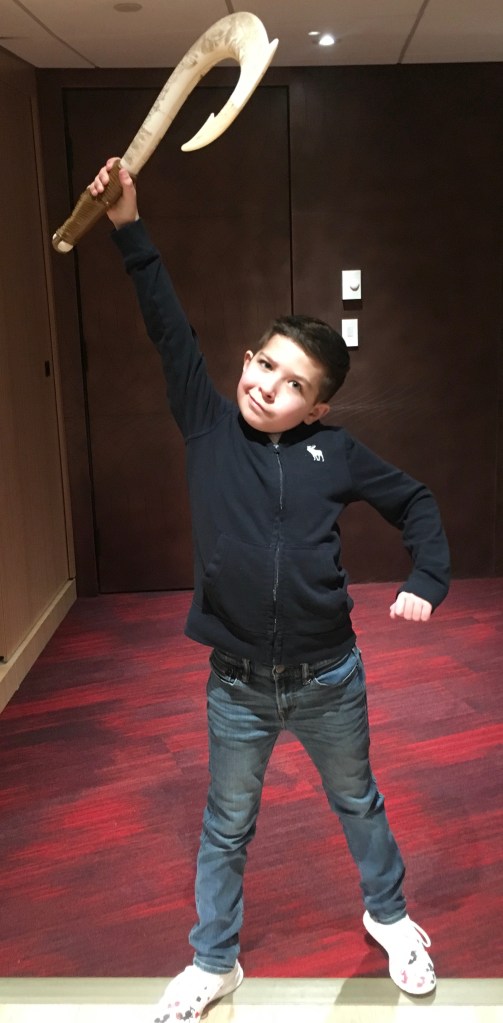
 Jason Leenaarts