I’ve been connected with B-Well Nation’s Leslie Benedetto for several years and of many things we have in common within fitness we also have raised children with autism and have struggled with addiction leading into this industry. In this episode, we talk about the intersection of those factors, how her own business with group exercise has evolved over time and most recently, how they have shifted and changed their business model on the heels of the pandemic.
It’s been a while since I’ve been able to update the news on our staff and so much has happened over the last several months that it felt as if now were the best time to do so.
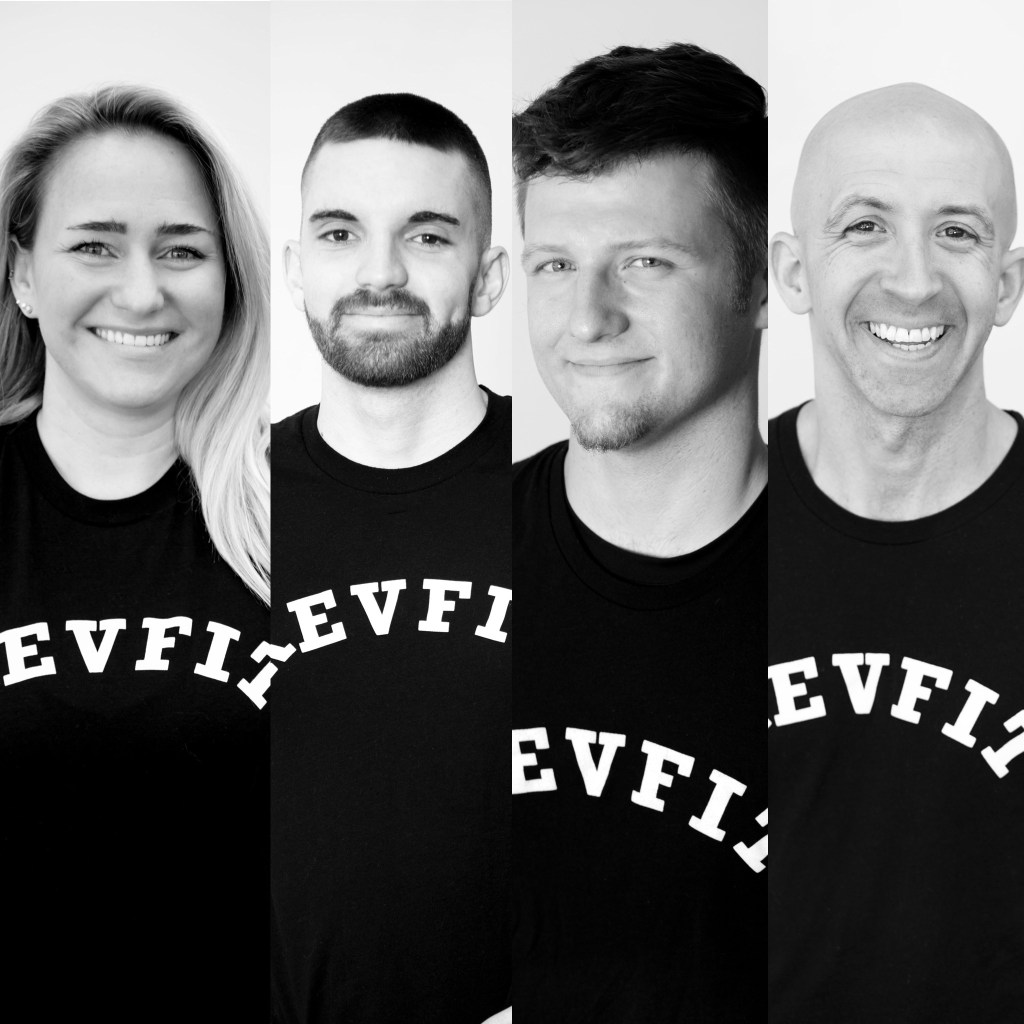
I’ve recently brought two people onto our official staff roster: one, a returning face to the business and one, who has transitioned from intern to employee. In addition, we’ve seen a shift in one of my longstanding coaches as well.
I’ll start here:
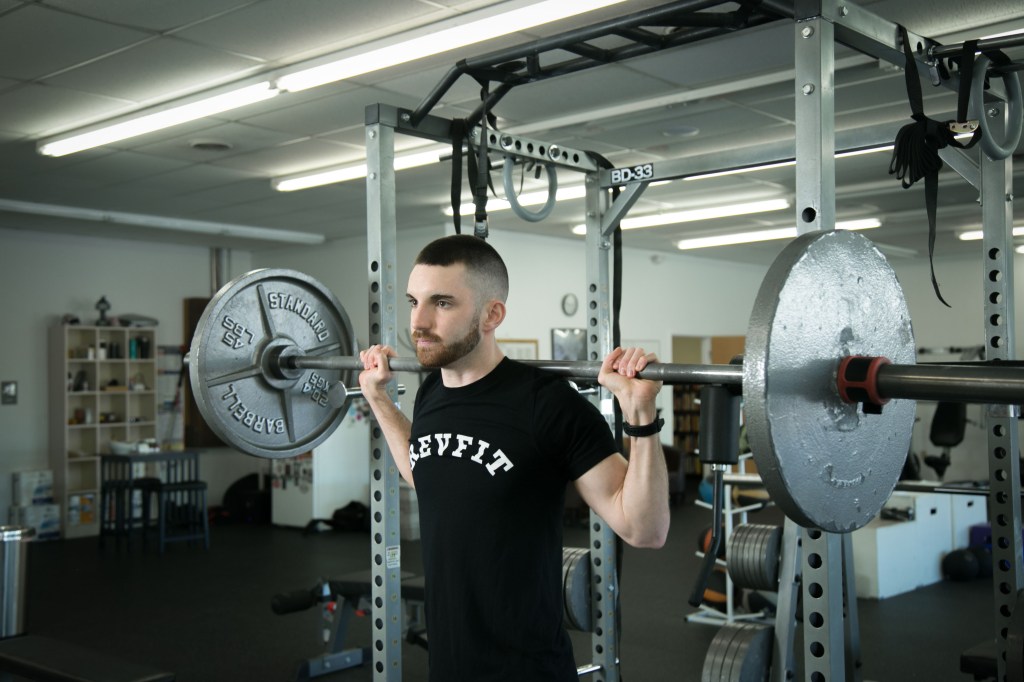
David Cameron and I connected about a year and a half ago through an internship program through the Exercise Science department at Kent State University. My last three hires had come through Kent State, two from Exercise Science and one from Dietetics, and I had been very happy with all of them. David brought a slightly different look to our staff. He is currently in the final semester of his junior year and his backstory into Exercise Science comes from a love of martial arts. When we first sat down to discuss a potential internship opportunity, we were only a couple of months prior to lockdowns due to the pandemic. David expressed that his dream was to open up a facility of his own with services as both dojo and a fitness studio. Between his school demands and the potential of being able to start his own business sooner than we may have initially thought, David interned with us for several months and started to train a small group of martial arts students out of RevFit. That business operates under the name: Blue Wolf Martial Arts. He is a 1st degree black belt in Tae Kwon Do as well as a 2nd degree in Isshinryu Karate and Ryukyu Kobudo (Okinawan Weaponry). As he is continuing to grow that business, I felt it was time to make him official as staff with us and, when the time is right, I know he’s going to likely be up to great things with his own business. It’s my hope that he will have learned some beneficial things being with us, since he’s been able to see both the positive and negative of small business ownership (here’s a hint: it’s not for the faint of heart!) David lives in Kent and just recently celebrated 4 years together with his girlfriend, Jessica. I am very grateful to David for his commitment to RevFit thus far and I look forward to seeing what the future brings for him.
Megan Winiarski first began her time with RevFit as a client, upwards of 10 years ago. Her mother actually started as a client of mine in my first location and she referred Megan to us all those years ago. She is a Kent State graduate with a major in Health and Physical Education. The stars aligned sometime back and Megan got certified as a personal trainer to join us on staff. She and I had the opportunity to work together for about 5 years before she transitioned out of the fitness industry altogether. That was about 3 years ago. A few months back, Megan rejoined RevFit as a client again and the conversation came back around to the potential of her rejoining as staff. The field she had transitioned to had taken some unexpected turns and it gave us an opportunity to work together again. I am very happy to announce that this RevFit veteran has returned and she has hardly missed a beat. I can tell you with certainty, many of our tenured clients were very happy to see her return! Megan lives in Stow with her husband, Nick, their son Jack and their dog Bailey.
Mike Roder, like the aforementioned, David Cameron, came to us over three years ago through the Kent State Exercise Science program. He began as an intern and I was so impressed with what he brought to the table, I invited him to join staff officially not long after. He got his BS in Exercise Science and then furthered his education with a Masters in Cardiac Rehab through Cleveland State University. While Mike was waiting for job openings to become available in Cardiac Rehab, he continued to grow his youth athlete clientele. If you know Mike, you know that there is hardly a soul more passionate about sports than he is. He is exceptional at his craft and it is truly amazing to see the work he does with his athletes and their commitment to working with him. He is my go-to when I hear that someone wants their child to get fantastic sport-specific strength and conditioning for their respective athletic endeavors. Last year, Mike married his college sweetheart, Marina and, at the end of January 2021, Mike and Marina welcomed their first, a baby girl named Millie Rae into the world. Mike was able to secure a position in the field he majored in, so between that schedule and his scheduling with his youth athletes, he is not currently able to work the shifts with me that he once was before. This is far from a bad thing. Mike has been tremendous for me and for the business and it stands to reason that he needed to take the next step up in his career. While I can’t say that Mike won’t ever be back to help with my roster, right now the focus is on Cardiac Rehab, his youth athletes and, of course, fatherhood. Mike continues to train his athletes out of RevFit so if you know someone looking for that service, he’s your guy.
Lastly, there’s me. I started this business in the Spring of 2009. My initial goal was to help people lose weight through exercise appropriate to their goals and sustainable nutrition coaching. Since then, we have not only grown year after year, but we have changed our physical location twice. We began in Hudson, Ohio and outgrew our spot by the end of 2012. This led us into neighboring Stow and we relocated to the Shoppes of Stow plaza. We were in that location for about 5 years and then growth demanded a bigger playground. I was fortunate that our landlord had a much larger spot available for us in the same plaza, so we took that spot in the fall of 2017. Since I started the business, I started a podcast (Revolutionary You) which is inching towards its 300th episode, I wrote two books which are available in physical and Kindle versions on Amazon, I maintain this weekly blog and I am the head coach of the monster we affectionately know as RevFit (formally Revolution Fitness and Therapy). It would not have been possible for me to write the words I do today or oversee this business as we know it without the help of a pretty damn amazing staff. It’s because of them that we are able to service our kick ass community, who are the real heroes of RevFit, and keep the train moving forward. All of this allows me the privilege of supporting my family: my wife, Marissa, and my sons, Jackson and Sebastian. Oh yes, there’s also our boxer, Dempsey. It’s still sort of breathtaking to think that we are about to celebrate 12 years of business (which we will celebrate at the beginning of May).
But my staff deserved a formal introduction and in some sense, a re-introduction, to all of you. I would not be where I am without them and at the rate that RevFit is growing, I can’t proceed forward in the most supportive way possible to our clientele without a team to help me do it.
We are RevFit and if you missed our tagline somewhere along the way: We Make Great People Greater.
Ned Parks has been a client and friend of mine for almost 3 years now and, within that time, he has not only referred friends and colleagues to the business but his wife and daughter have become a part of the community as well. In this episode, we talk about what inspired him to start, how he remains motivated to improve, where a tendency to fall to extremes may have backfired on his journey and how sustainability plays a significant role.
Hiring a coach can be an intimidating process. Not unlike having a hair stylist, accountant or financial advisor you spend many years working with, it’s based on a relationship. That relationship requires a give and take of both leading and following.
It stands to reason that this relationship you’re looking to forge is determined by hiring someone who has a degree of expertise you may not have or, can help provide a blueprint making it easier for you to reach your goals or desired endpoint.
Just like those aforementioned other industries, there will never be a shortage of people available to you who have the qualifications to help. However, as it’s said from the mountaintops in my industry: The perfect program means nothing if the client can’t stick to it.
There is also a complementary sentiment that a mediocre program can get you a lot further if you can stay consistent with it versus a more advanced one that you cannot.
All that aside, before you decide to spend your time, effort and money on a coach, here are five signs that perhaps now is not the best time to do so:
You’re financially strapped. Hiring a coach is typically not a cheap expense. If you find that you’re rubbing your pennies together just to afford one, that’s a sign to wait. Your coach, upon signing you as a member, likely has a long term plan for your success. This is not remotely synonymous with a 21-day fix or whatever snazzy title has been marketed to you. The change that most (not all) people want, whether it’s weight loss or strength gains, take time to see occur. Yes, there are some very aggressive things that a coach can do to help you lose weight but the rebound for those endeavors can be less than appealing. If you can’t see yourself financially prepared to spend at least 3 to 6 months committed to a training plan (on the low end), you may need to wait until you can. This is as much for the benefit of yourself and your habits as it is for the coach you hire since they are looking ahead to the results they can help you attain.
You have unrealistic timelines. Can I help you drop 10 pounds in 2 weeks? Probably. Should I? Probably not. When you see clickbait headlines like this, it gives an unreasonable expectation of what the human body can and should do to reach a given goal. With regard to weight loss, an adage you may have heard is that: you didn’t gain the weight overnight and you shouldn’t expect to lose it that quickly either. A responsible coach is going to try and help you change your relationship with food so that you have a lifetime of healthier eating habits. A coach who cares only about their bottom line is going to give you false promises and blow a lot of smoke out of their photoshopped ass to get your money. Similar to the point made in #1, put yourself in position to commit at least 90 days to a plan. If you can follow the dietary and training options for that amount of time, your results should be commendable. This advice is not applicable to athletes who may have to “make weight” for a given sport. They operate under different rules and may be willing to do more aggressive things to achieve a certain weight class (albeit temporarily before they rehydrate and replenish glycogen stores).
You’re unwilling to stay off the internet. This is a dicey one, since, you’re reading this article on the internet and, I’m trying to give some helpful advice. However, just because you see something on a website or written in a book does not make it true (and you’re invited to read my words with skepticism too). In addition, what works for one person may not work for another because of their own respective characteristics they bring to the table. This is why a vegan diet is fantastic for some, keto is fantastic for another and someone else out there has absolutely no business whatsoever doing either of them. Your neighbor is likely not a credible source for nutrition and while I’m on that topic, neither is Gwyneth Paltrow, Dr. Oz or Tom Brady (and I love Tom Brady…he just needs to stick to playing quarterback). If you hired a coach to help you break through the relentless nonsense that exists on the internet, it will help both you and your coach if you follow their guidelines. This is assuming, of course, that they have real results, with real people, and no snake oil shenanigans.
You can’t be honest with yourself. There are exceptions to what I’m about to say so take this with a grain of salt. There are essentially two types of fat loss clients: The ones who tell you every single detail of their diet and the ones who will do everything they can to only tell you the “good” parts of their diet. There are pros and cons to each of these extremes. That being said, the client who is only willing to share the “healthy/clean/virtuous” sides of the diet can be some of the toughest ones to help succeed. It’s the coach’s job to flesh out the problem areas of the diet to help you achieve your results. As I’ve been known to tell clients: I’m less concerned with what you’re eating and more concerned about how much of it you eat. So, if you eat a couple of forkfuls of your kid’s mac-and-cheese and you snag a couple of handfuls of trail mix, that counts! It can be easy to forget those things if we’re not cognizant of the behaviors. This is where some degree of short-term tracking/food journaling can be insightful. Think of it like this: I pay an accountant X amount of money to show me things like my debt-to-income ratio on a given month. If I mistakenly don’t tell her about a couple of credit cards that are on my credit record which have balances on them, she can’t do her best work for me. I have to lay all of my cards out (pun intended) if I want her to do the best job she can that I hired her for. This is the same principle that applies for fat loss. The more I know, the more I can help.
You can’t have difficult conversations. Like my financially inspired example in Point #4, there are two things that I find most people are VERY sensitive about: their food and their money. Most couples I know generally have to discuss candid details about their finances. These aren’t easy conversations to have and they can absolutely become heated discussions. Food is no different. It is necessary to our lives and vital for our survival. However, if you are trying to lose fat and you plan to hire a coach to help you, the coach can only do so much. The true test happens outside the doors of the gym. If you are not ready to have conscious, serious discussions with your family members about how food is affecting your life and how grocery shopping and cooking may need to temporarily or permanently change, now may not be the best time to hire a coach. Eating for fat loss requires deliberate change. Sometimes, these are small changes, like reducing the creamer in the four coffees you drink each day or swapping regular Coke for Diet Coke. More often than not, there are far too many tempting food options in your home that you cannot currently regulate. If you decide that chips aren’t allowed in the house for the foreseeable future, who else in the home is affected by that decision? That’s why these changes not only require the positive influence of a coach but making sure the troops at home can rally behind the decision process.
And of course, since this is not a one-way street, I have three tips for the fat loss coach looking to make a positive impact on their client. Bear in mind, that everyone who comes to you is in a different place when it comes to readiness, willingness and ability to change. In addition, it’s our job to either give them the skills they’re seeking or improve the areas that are already trending the right direction.
Keep an open-door policy. There is no conversation that is off limits to me. I have heard and seen more about the human body than I thought I’d ever know. The more I can keep an open mind and ear to what is happening with my clients, the better work I can do for them. I need my clients to know that I am willing to listen to any concern they have on their plate which might be holding them back from better results. There are a lot of things I can’t relate to (like menopause) but it doesn’t mean that I can’t have good resources for my clients to help them reach their goals. In fact, having a strong network of people to refer out to when I’m out of my depth has been one of my greatest professional assets.
Realize that movement may have to precede dieting. Well over half of the clients who train with me are here for fat loss. I know that an energy deficit is what makes that possible. However, some clients need to gain confidence in movement, consistency with scheduling/showing up for their workouts, and need to feel stronger before they can even attempt to focus on their food intake. I don’t force the issue and I realize that sometimes life gets completely screwy (kind of like the vast majority of 2020) and trying to be in a deficit is just not in the cards for now. Focus on other areas to improve and some non-scale victories before you wage the battle with calories.
Allow room for the ebb and flow. Let’s face it: motivation will not always be high and skill-sets take time to develop. Many clients are motivated when they begin and 3 weeks in, they hit a lull. Be patient and continue to nurture whatever good things are happening at the time. It’s not uncommon for a fat loss client to lose some weight, gain some back and recommit to the process. This is normal and it should be treated as such. One client isn’t better than another because they can white-knuckle the ride. Some clients need space to breathe and learn what works within their lifestyle at that moment. Changes in work environment, family stressors and relationship woes can have a dramatic effect on how someone eats, sleeps and trains. Be prepared for those shifts in behaviors and refer back to Point #1 of keeping an open-door policy. Foster open, kind, honest communication until your client is ready to push forward.
Below is my client and friend, Amy C. She has had spectacular weight loss, incredible increases in strength and been committed to the plan for the last four years. Also within that four years, she has seen her weight increase from her lowest and has experienced many dips in motivation and consistency. That being said, she has turned a recent corner with her progress. She remains one of the most inspiring people I’ve ever worked with. The beauty of a coach/client relationship isn’t always in the numbers, it’s in the impact. Amy inspires others no matter what the scale says and no matter how life may be trying to dictate otherwise. That’s why we play the long game with health, nutrition and fitness.
Last year, I had the pleasure of joining a group of fellow fitness professionals looking to understand how to maximize their mailing lists to help their clients. Tara Arndt led the way and she definitely knows what she’s doing! Tara is the wife of Tim Arndt who made an appearance on the show way back on Episode #161. If you are a fitness professional tuning in, I highly recommend checking out how Tara helps me dive into my own mailing list strategies. If you are not in the industry, the conversation might help you understand why you are marketed to the way you are within the industry. Tara has even provided a free link for a boot camp course below.
Sometime before I started RevFit, I was working under another trainer for a short spell of time. He had a personal training model very similar to the one I would be inspired to build on my own when I opened this business.
I was taken under his wing and was only newly certified having had my training certification for less than a year at that point.
Like a lot of wet-behind-the-ears trainers, I had a head that was swimming with knowledge and no reasonable filter for what was appropriate for any given population.
The coach I was working for had stepped away from the studio for a shift and he let me take over for his clients that day. There was a woman working with me who I knew was very strong because I had seen him take her through some sessions in the past.
With an eye on giving her a “great” lower body workout, I proceeded to have her do a brutal session of Smith machine squats. I can’t tell you exactly how many reps she did but I can say it was well beyond something like 3 sets of 8.
She was perspiring, she was huffing and puffing, she was walking sort of funny, you name it. Every indicator was there that I had given her legs a wake-up call that day.
Two days later, the coach called me and asked: What did you do to “Client A”?
In my excitement and, what I assumed was a reflection on my great training skills, I told the coach about her squat sequence.
He listened carefully, didn’t interject and said: Well, her husband called me. She’s barely been able to walk over the last two days because her legs have been so sore. He was NOT happy.
I was devastated. I thought clients wanted soreness, I thought perspiration and being out-of-breath were a badge of honor. Not because that was how I trained myself, mind you, but because I “thought” that I knew how to push someone and it would be a sign of how smart, intuitive, and talented I was as a coach.
That could not have been further from the truth. I was completely embarrassed. I apologized to the coach. I apologized to the client (and her husband). It was, and remains, one of a handful of the most embarrassing professional circumstances I’ve gone through since 2007 when I first got certified.
Since then, I have taken on an almost polar opposite stance on training. I love strength. I love making people stronger. I love taking someone who probably has no earthly idea of how strong they are, fleshing it out and making them strong as nails. It is one of the most satisfying, gratifying and inspiring things about running this business.
But strength, and gaining it, come from a certain amount of restraint and respect. You have to know when to push and when to pull back. You have to know when there are reps in the tank and when “just showing up” is the best you can do.
I even tell potential clients now during our consultation: I am not the type of trainer who is here to crush you. The program is not designed that way. I operate under a “live to fight another day” approach. I want you here, fresh and ready to tackle the workout. I want you to feel good when you leave and not as if the workout wrecked you.
We can forget sometimes that our 20-yr old bodies were capable of amazing things and could survive on poor nutrition, shitty sleep habits and enough caffeine to choke a horse. We could wake up, go to the gym or go to work and put the time in with hardly a negative drawback.
Fast forward 2 or 3 decades and something as simple as a hangover can be debilitating the day after, a nagging injury can take weeks/months (not days) to recover from, and a night of bad sleep can turn the next day of work into a foggy nightmare that not even caffeine can fix.
The bodies we, as coaches, are trying to build demand respect. The results come from the push, the challenge, the stimulus and also, the recovery, the proper nutrients, and the right head space to know how to make progress.
Our clients pay us their hard earned money to know when to check the ego and when to apply both “the art of” and “the science of” strength to their own circumstances. We have to respect that too.
I’m just over 13 years certified and nearly 12 years as the owner of this business. I’ve learned a lot, I’ve forgotten a lot, I’ve screwed up a lot and I’ve seen a lot. I am nowhere near as great as I want to be and nothing will stop me from learning how to get better.
It’s the same philosophy I want to impress on my clients too: Find ways to improve, carve out a path, celebrate the victories, take care of your body/mind and let’s kick some ass.
Recently, a newer client of mine shared a sentiment that made me happier than she will probably ever know. She said: I want you to know, this is the first time I’ve worked with a trainer since 2008 that I haven’t ached right down to my bones after a workout.
That was high praise indeed.
Every client has their own motivations and foundations to succeed and work from. It’s our job, our duty, our obligation as coaches to know how to work with that.
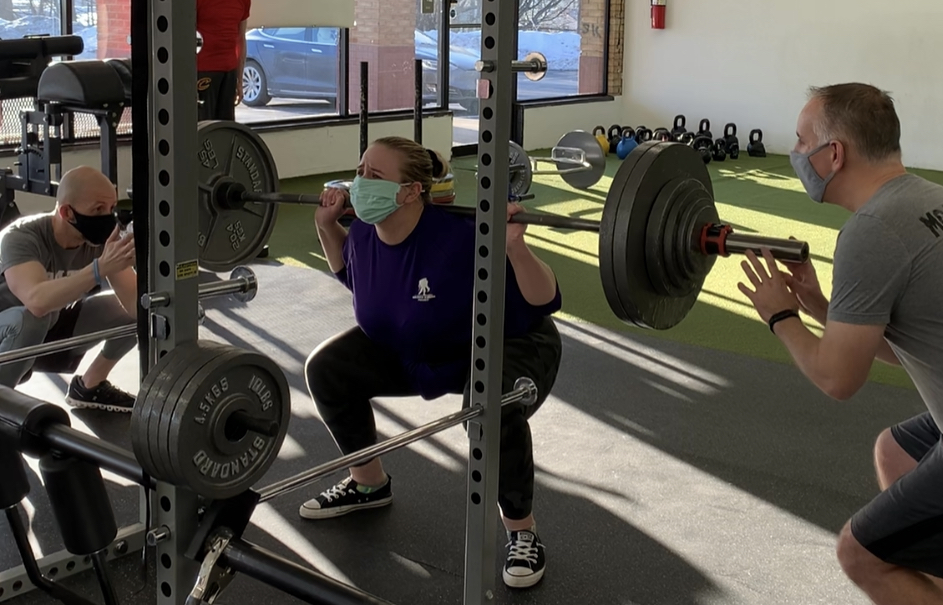
Pictured below, is our very own Faith G, executing a 310 pound personal best on the squat. She got there because we spent the time learning how to work with her, her body, her goals, her schedule, her life and her aspirations. And every week, people like Faith inspire the rest of us to get better too.
I welcome Chris Kershaw a.k.a The Heavy Metal Strength Coach to the show this week. In this episode, Chris and I talk about coaching philosophies, thoughts on writing words that have an impact, how grief informs the work that we do, how he helps his clients thrive and how the UK’s response to the pandemic made him a better coach.
In 2010, shortly after my father was diagnosed with multiple myeloma, the pain he was experiencing in his body kept him from being able to work full shifts at Goodyear.
Throughout my life, when Dad wasn’t travelling for Goodyear, he would be working, on average, 10-12 hour days in the office.
However, when the pain from the bone marrow cancer became more than he could tolerate, he had to condense the amount of time he spent at work and try to get more done in less time.
I remember him making the comment: “It’s amazing how productive you can be when you have to be.”
That sentiment has continued to resonate with me ever since.
My schedule, my own relative sense of productivity, and how I manage the 24 hours I have in my day (like you have in yours) has been the subject of more than one conversation.
When I’ve been a guest on podcasts, I’ve been asked about it and even clients of mine have asked: How do you get it all done?
I don’t claim to have all the answers when it comes to productivity and I maintain that much of what I do is due to a reaction of how business and life mold together.
I am also kind of nuts.
I would never encourage you to follow a template like this. It’s just what works for me and sometimes my own sense of habit and routine have to ebb and flow depending on how much is on my plate.
If you struggle with finding enough time to do what you need, maybe there are some hints in my day that can help you as well.
Monday through Friday, my schedule looks very similar to this:
345am: My alarm goes off. I never, ever, hit snooze. That’s non-negotiable for me. If I hit snooze, I lose time and time is not something I have the luxury of losing. I’m up to let our boxer, Dempsey, out and to get him fed. I start coffee and spend about 30-40 minutes checking email, Facebook and my messages to see if there are any scheduling changes I need to be on top of. Sometimes, I read while drinking coffee and lately, I’ve been working on my continuing education (more on that later).
430am: I get cleaned up and dressed for work. I’m typically out the door en route to work which is 20-25 minutes away depending on which roads I take.
500am: I arrive at work and get the studio in order to start seeing clients.
515-6am: Clients begin arriving for the first training block of the day. This block will go until approximately 10am.
10am-230p: I shut down the studio during this time. It’s during this block that all other business is handled for RevFit. This includes responding to emails, writing client programs, recording my podcast, working on this blog, working on my continuing education, my own training, lunch, doctor’s appointments (if necessary) and any other errands I need to run for the business.
230p-5/6p: This is our final training block of the day where we see the remainder of that day’s scheduled clients.
6-7p: I head home for dinner with my family and try to wind the day down.
8-9p: We are normally getting cleaned up, ready for bed and on most evenings, are asleep by 9p.
Rinse, repeat.
On Saturdays, I keep the same waking schedule but I only train for a small window of time on Saturday mornings. Anything that happens after that short training block might be another consultation or sometimes a scheduled podcast.
The rest of Saturday is spent with family.
Sunday is the only day that I turn off my alarm and just let my body wakes when it needs to.
Over the last several years, I’ve tried my best to make a point of picking up new certifications so I can continue to learn areas in this industry which interest me. Last year, I started Mac-Nutrition Uni, which is a year-long nutrition course based in the UK. It is, without question, the most I’ve spent on any one certification. It is also the one that has required the most work, between each week’s lectures, quizzes, and homework. It all comes to a close for me at the end of March when our exams are scheduled.
Since we are coming to the end of that course, I’ve been spending more time over the last several weeks re-watching lectures from the beginning of the course. This takes place during that segment of the day when the studio is closed, so each week, I’ve been watching 3 older lectures plus whatever that week’s current homework is.
I still spend a fair amount of time reading for both pleasure and work interest. Due to the Mac-Uni work, I’m not able to commit as much time to that but I’ll pick that up again when the course concludes.
For me, it helps that my wife understands all of my commitments. While she doesn’t necessarily share my enthusiasm for the blog and the podcast (they aren’t her preferred mediums), she knows what each means to me and how they have become extensions of my business.
It’s a pace and workload that, quite honestly, I’ve brought on myself so you won’t hear me complain about it often. Times like now, when the studio is very busy plus all of my extracurricular work added in to the mix can make me run at a furious pace from bell-to-bell.
My wife asked me recently what I planned to do once the course wrapped up.
My response: I’m going to relax my mind for a little while.
Of course, my idea of relax just means that I probably won’t jump into another certification with much haste.
To be frank, I still find myself wasting more time in a given day than I’d like to: Too much mindless scrolling on Facebook and Instagram, too much leisurely article reading on the internet and don’t even get me started on the YouTube holes I can vanish into if I get carried away.
Somehow, I get most everything I need to done in a day. By time I come home, my mind is spent and I’m not quite human after a day’s work.
But, it’s what I do, it’s become who I am, and I feel like I’m barely scratching the surface of who I want to be, what I want to learn and where I want the business and life to be.
Here are three quick tips I can leave you with if you’re trying to accomplish more with your 24 hours:
1-Realize that everything you do requires sacrifice: Any new area you want in your life (think meal prep, exercise, meditation, etc.) will take up time. This means that something else will temporarily or permanently take a backseat. If health is your priority, meal prep may need to take precedence over Season 8, Episode 3 of whatever show you planned to watch that day.
2-Routine/Habits matter but shit happens: All the best laid plans don’t mean a thing when you get your first curveball thrown your way. You may have had the perfectly scheduled day until you get a crisis thrown your way you hadn’t anticipated. This is normal. Look at the rest of your week and see how you can still stay relatively close to “on course” as you can.
3-As life evolves, so must your schedule: My day today is not the same as it was 6 months ago or 2 years ago. Little changes have been made along the way that required small pivots and a rearranging of priorities. Things that may have been important then may not be important now. Take a look at the things that not only provide YOU what you need but also have the least amount of detrimental effect on those in your close circle.
Much like health, fitness, and our continual search for self-improvement, there are always ways to progress, always new things to learn/teach, and I remain fascinated with all of the things available to help me get there.
Susan Niebergall joins me for the third time on the show (see Episodes 94 and 231) and this time around, we get to talk about her excellent new book, “Fit At Any Age: It’s Never Too Late”. We discuss the pitfalls she experienced with her own weight loss journey, how she had her “a-ha” moment and what we see affect our clients in practice. Susan’s story never ceases to inspire and I know you’ll love the episode and her book.
To find out more about Susan and to order a copy of “Fit At Any Age” for yourself:
On the afternoon of October 9, 2020, my wife, Marissa, and I were leaving Glenns Creek Distillery in Frankfort, Kentucky. We took a trip down starting the day before to celebrate her birthday which fell that week and our wedding anniversary which would be two days later.
We were making our way through certain parts of the “bourbon trail” that weekend and Glenns Creek was our last stop that day. We were fortunate to have a tasting with the owner of that distillery and it would prove to be one of our more memorable stops for more than one reason.
We did our best to pick up mementos from each distillery we could, whether it be a bottle to bring back home, a tumbler or something of that nature. At Glenns Creek, there were bourbon staves available for sale and I asked for one of those to add to our transaction. The owner was kind enough to sign it and I asked for a special request after his signature.
“Could you please write your tagline on the stave as well?”
As Marissa and I were leaving, I handed her the stave and said: “Read it.”
Alas, I’m getting ahead of myself.
Something I’ve made mention of more recently, via this blog and my podcast, is that Marissa and I have had an interesting history together. None of it has been traditional or orthodox, none of it has been what I think either of us ever considered normal.
As I’ve said to her, I feel as if we’ve spent the better part of our 11 years together going from one challenging circumstance to another. The upside being, that you get to be really good at solving problems and overcoming those challenges; the downside being, that you can (as we did) lose sight of actually having a relationship.
Readers of mine who have been in a long term relationship of any note know that nothing is ever perfect and as the adage goes “marriage is hard” and we’ve seen a lot of that in our time together.
The first 16 months of our relationship, Marissa was still a performer at DisneyWorld in Florida. We would see each other once a month, me in Ohio trying my damnedest to get RevFit off the ground, and she, 1000 miles away in Orlando. What we didn’t have in quantity of time, became a focus on quality.
It was within the first 7 months of those 16, that my father was diagnosed with multiple myeloma. He would leave this world nine months later. Marissa had to see me through all of that and I can’t imagine it was easy for her to do.
Her contract ended at Disney shortly before my Dad passed and after 5 years living in much warmer climates, she moved back to Ohio to be closer to me and her family.
Sadly, her parents were soon to be separated not long after she moved back. So, we transitioned from the trauma of losing my father to the trauma of watching her parents split.
We were both in these strange phases of our lives. RevFit kept growing and as it did, the demands on my time increased which meant, less time to spend with her. Marissa did her best to balance whatever degree of support she could provide to not only our relationship but the one with her parents too.
Due to the circumstances of losing my father and how it affected my mother and the way that Marissa’s parents were handling their divorce, our time became even more compromised, each of us children trying to step up in efforts to support the women who brought us into this world.
As my business continued to grow, it fed into my workaholic nature and I not only threw more of myself into the business, but it took more away from what I could emotionally give to my relationship. As one could predict, this began to create friction between Marissa and I.
Nevertheless, our relationship continued to move forward, and in October of 2014, we married.
“They” say that your problems don’t go away once you get married and those wise people would be correct. Our problems, no matter how they manifested, would only simmer and explode or be swept under the rug, waiting for a cleaning that never wanted to arrive.
August of 2017 brought the arrival of our son, Sebastian. Marissa’s first child, my second, having Jackson in my first marriage. The year before, Marissa and I had the opportunity to take over another business, a performing arts/dance school where she could let her creativity continue to grow.
But, the addition of a child, plus the demands of a new business proved to be more than she or I could handle, and the stress of that business only compounded the stress we brought into our marriage.
And so, each of us fiercely stubborn and independent in our own way, began to focus on the things we felt control over: RevFit for me and motherhood for her. Resentments, continued friction and a growing inability to communicate only furthered our problems.
When the dam finally broke, and it did, there was little left for us. We had nearly become strangers in our own home, two people passing like thieves in the night, trying to maintain composure for the sake of our son and not really succeeding at anything.
So, we had to step back, both of us coming to the conclusion that we each needed a therapist to sort through what was happening.
There were times when I think neither of us quite knew how to step forward or even if we could.
Slowly, that tide began to shift. There was no one catalyst. There were so many forces working for and against us that it felt as if we were speaking two different languages trying to work towards the same truth.
In many ways, it was an approach of “burn it all down and build it back again.” (Not a method I would recommend to others).
Little by little, our communication changed, the way we looked at each other changed, the way we said “I love you” changed, the way we actually showed love in our house changed.
It had to.
Too much damage had been done and it was our own way of reinventing the wheel.
That trip last year was a pivotal shift for us. It was our first time away together without Sebastian and we needed time to talk without interference, without fear of reprise, laying all of our cards out on the table.
Today, we are not the same. We could not possibly be. We deserved better than that.
And when I gave her that stave, the tagline from Glenns Creek, written on the stave by the owner said: “A little different, a lot better.”
Marissa read it.
I looked at her and said, “Like us.”
Her eyes started to well up with tears and she said, “Yes, just like us.”
And it’s been our mantra to each other ever since.



 Jason Leenaarts