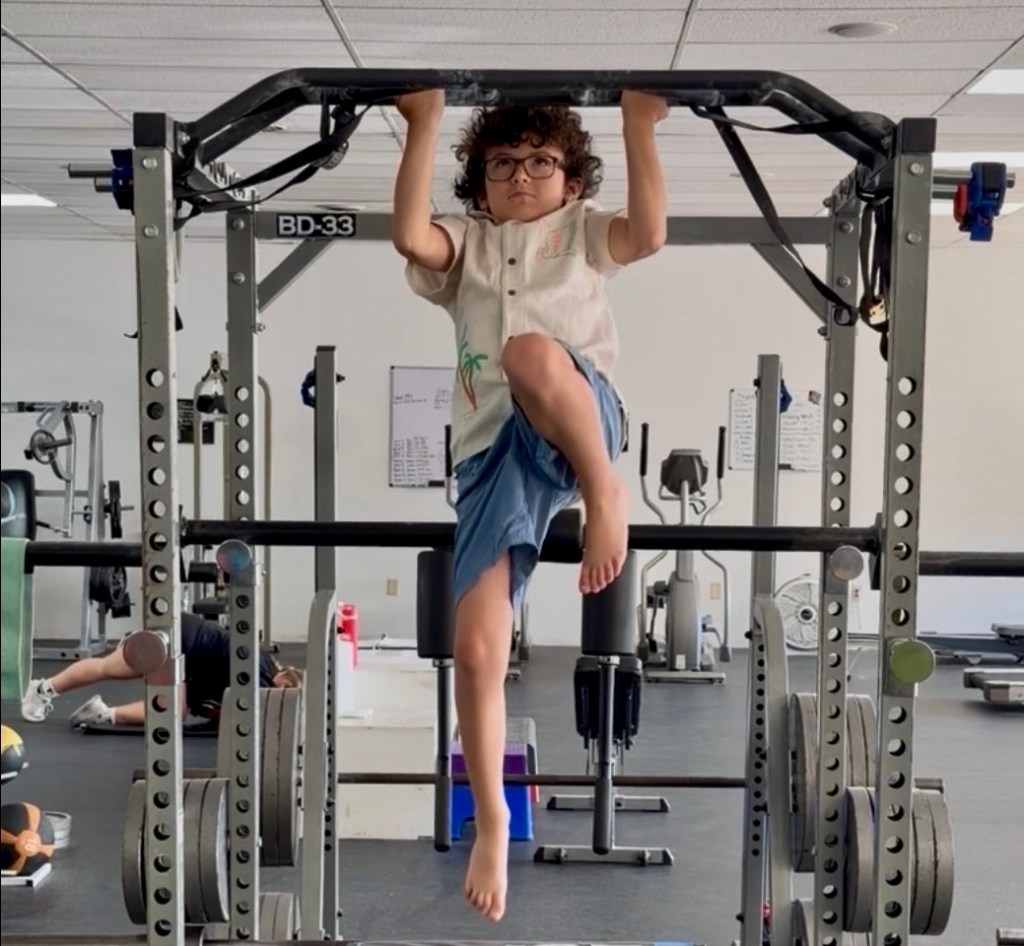
Our son, Sebastian, has grown up in a home where topics around exercise, health, food, etc. are common conversations.
He’ll be present for conversations between Marissa and myself where I might be discussing things that happen at work.
And within those conversations, he has historically asked questions:
-What are calories?
-Does candy have calories?
-Does seafood give you energy?
-How do I do a push-up?
-Where does that food come from?
-What’s fiber?
And we’ve tried to explain all of these things not only in a language he can understand, but from a place where food is neither good nor bad, where exercise is a gift to our bodies, where it’s okay to be challenged by the way we move our bodies, and how we might develop confidence in our bodies.
We ask him to be open-minded about food experiences, we ask him to try new exercises, we let him enjoy tasty treats, we give him space to play and explore how his body moves.
And behind closed doors, Marissa and I have further conversations about what we do and don’t want Sebastian to experience (if we can help it).
We don’t want him to feel self-conscious about his body shape or size.
We don’t want him to feel forced to move his body in ways that don’t feel right to him.
We don’t want to surround him with negative messages around our own bodies or someone else’s body.
I write all of this not because we’re perfect parents.
We’re not.
Like every other set of parents I know, we’re figuring it out as we go along.
Some approaches work better than others. Some approaches change as he ages and understands more.
We do what we can to speak about bodies from a place of respect.
Respect for our own.
Respect for others.
We look at food as fuel and fun and pleasure and exploration.
We have conversations about the origins of food: land and sea, animal or plant.
We talk about what foods help you poop…because what little boy doesn’t find the whole topic about poop hilarious?
We talk about the energy that food can give you and how carbs, fats and proteins provide energy but in these neat and unique ways.
He has also learned, by default, that Marissa can’t eat certain foods because they’ll make her sick. In understanding that, he can see that those same foods have different responses in his body.
I also need to share space with fact that my oldest son, Jackson, has autism and all of these topics come up in vastly different ways for him.
Also, I know that many people have a troublesome history with these subjects due to their own upbringing. I’m not parent-shaming.
As generations pass, as I’ve spent the last nearly two decades coaching individuals both before my generation and after, I continue to find it fascinating the messages we’ve all grown up hearing and being exposed to.
But many of the same foundational concepts keep coming up:
-Nourish yourself and your family with the foods you can afford and keep you feeling good.
-Hold positive conversations within your family about what our bodies are capable of.
-Celebrate movement of all kinds: for leisure, for sport, for competition, for strength, for flexibility, and for longevity.
-Stay proactive with doctor’s visits to make sure that everything “under the hood” is as it should be.
-Refrain from demonizing foods and refrain from body shaming.
-Acknowledge that bodies of all shapes, sizes, heights, and weights are capable of brilliant, miraculous, and inspiring feats.
-Most importantly, lift each other up. We only have one body to course through this world with. Be it’s number one fan. We are the first role models to our children. Our words, our actions, and our responses to them set a foundation they’ll carry for the rest of their lives.


Leave a Reply