Dr. Allan Bacon makes his second appearance on the show after a great first episode with his wife, Beth (#244) in April of 2020. We kick off the first of our 4-part series with a massive conversation about breaking through diet and exercise plateaus. We know they are nearly inevitable during any path towards self-improvement so this episode is jam-packed full of tips to get you moving in the direction you want to be.
Over the last year of his life, his mother and I have seen, in grand fashion, what it’s been like to live with a “threenager”.
Much like every other toddler parent over the last year, having a child spend the majority of his time inside due to a pandemic and not be able to go to some type of daycare or socialize as most kids would typically do came at a cost.
We were not alone in coming face-to-face with that cost.
However, in the same year, Sebastian got to partake in tee-ball, karate, superhero classes and gymnastics. He transitioned his fascination with vacuum cleaners and home appliances to fire alarms, fireworks, Port-A-Potties, urinals, and science experiments. He normally had colossal meltdowns if we did not give him immediate access to fire alarms, fireworks, Port-A-Potties, urinals and science experiments. Our apologies to anyone who got to witness that!
Anyone who knows me knows that I have some undiagnosed OCD issues and a nagging history of collecting things which are traits that not one, but both of my boys have. (You’re welcome!)
I recently taught Sebastian how to put records (safely) on a turntable and it was a whole new world for him. Now, we have frequent “record parties” where he/we pick out a handful of records to listen to and Sebastian does his best at forming a one-man mosh pit.
It’s entertaining to say the least.
Suffice to say, he’s had his first experience “digging through the crates” at record stores and starting his own collection of vinyl. Upon displaying all 7 of his first records, he stood back to admire his handiwork and my wife looked at me to say: That’s YOUR child.
She’s right.
Our little bundle of sunshine is now frequently found listening to songs by: Journey, Twisted Sister, Van Halen, Ramones, The Dirty Nil, Beastie Boys, Sciatic Nerve, The Charlatans and….the soundtrack to Hamilton. Some of these he came upon through the handy algorithm of YouTube and some were definitely inspired by his parents.
Sebastian still absolutely adores his big brother Jackson but, to be candid, he loves just being around other children in general.
He frequents the gym with Marissa as she is consistently training 3x/week and Sebastian is always in tow with her. Sometimes he elects to work out with his mama and sometimes he’s back in my office waiting for her to finish up.
All in all, Sebastian is carefully crafting a world that we all simply pass through and it’s going to be interesting to see if he manages to beat my timeline of thinking he might be in jail by time he turns 5. (He is my child, after all….)
This week’s post is just a little celebration to our favorite 4 year old. Sebastian, life is never a dull moment with you…even when you go nuclear because you can’t find a urinal (even though you don’t have to pee, you just want to hear how loud the flush is!)
Ruby Cherie and I conclude our 4-part series this week diving into our thoughts on motivation. We talk about how the evolution of motivation in our lives and within health and fitness can and should adapt on a given spectrum, why gratitude and mindfulness matter and what it looks like in real life to have competing interests and priorities continue to change.
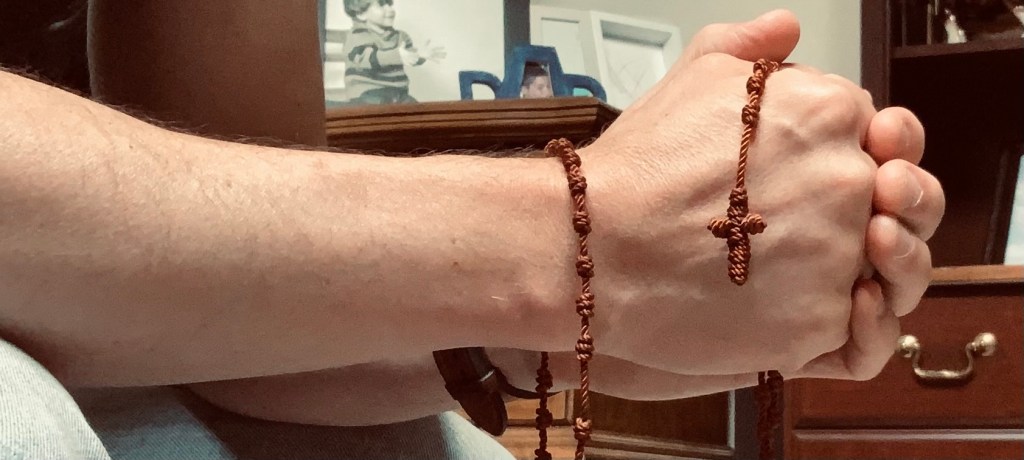
Spiritually speaking, I grew up as something of a denominational mutt.
My father was raised Catholic. My paternal grandfather (Opa) was Catholic and my paternal grandmother (Oma) was born a non-practicing German Jew. She survived 13 (or 14, depending on who you ask) concentration camps in WWII and became Catholic to marry my Opa.
My mother was raised Baptist and that diversity in religious beliefs brought me (in a roundabout way) into this world.
As time passed and we would relocate with each of my father’s job transfers and promotions, we would invariably end up at any church where my parents felt they got the best sermon and felt the best sense of community.
That included any combination of Baptist, Methodist, Lutheran and some non-denominational churches.
I, myself, haven’t stepped foot in a church beyond the purposes of weddings or calling hours since I was in my early 20s. Not because I lost faith, per se, I just lost faith in what I felt the church was giving me.
However, I’ve always held a place in my heart and my life for God, even when I walked away from church services and didn’t keep up with any consistent level of prayer.
Growing up in a God-fearing household, I know that faith is an important thing. Whether you believe in God, Allah, Buddah, or simply yourself, faith means something. Faith is that concept, often a blind one, that we all strive to have to give us hope that something better is out there, in this life or the next.
I’ll often find people who put that faith into God (or their higher power of choice) to help solve their problems; whether it’s a financial struggle, an emotional one, or a physical one (like losing weight or recovering from an injury).
And personally, I don’t take an issue with it, I just think that it needs a little bit of modifying.
Because so many of my readers (and my clients) come to me with weight loss as one of their main goals, I’m tailoring this week’s article to those same God-fearing people who are asking for some guidance with those goals (and even a little something for those who don’t believe in God, because their goals matter, too).
I’m adopting a stance with inspiration (and a dash of tough love) from the serenity prayer to talk to you from this week, specifically three key words from that prayer: Serenity, Courage and Wisdom.
Serenity
When you think about “serenity”, think about peace. And if you have weight loss (more specifically, fat loss) as your goal, there are certain things you’ll need to come to peace with:
-An energy deficit must be created and consistently reached. Whether you choose to eat slightly less or move slightly more or a convenient combination of both (which is advised), this is the only way to get you to your goal shy of weight loss surgery (or limb amputation which I don’t believe is something you signed up for). You have to make peace with this.
-There is nothing about an energy deficit that is inherently fun or exciting. No self-respecting adult likes to be told they can’t do something or can’t have something but if you are trying to foster an environment where you are eating less (however you choose to make that a reality), that means that sacrifices and compromises must be made. Will you be skipping ice cream for dessert or downsizing that super-sized Coke for a medium? These choices matter and they do count. You will also have to make peace with this.
-As part of the notion of serenity, it’s in accepting things we cannot change. With regard to fat loss, you can’t change the fact that as part of that journey, you’ll have to get better at saying “No” more often than you say “Yes” when it comes to the boundaries you set. That may mean fewer social engagements, less eating out at restaurants, ordering take-out or connecting with UberEats. That may mean more strategic grocery shopping and purchasing fewer impulse items. You also can’t change much about your resting metabolic rate (simplified: the calories you burn at rest not including exercise). So, unless you’re going to change your sedentary job for a job working construction or landscaping full-time, you may not have a lot of calories to work from when it comes to fat loss. In addition, if you don’t have plans to train year-round for marathons and half-marathons, you probably aren’t burning a lot of calories during exercise either. You have to make peace with this.
Courage
Courage is taking the first step (or at the very least, the next step) and moving forward. You’ll need courage to:
-Start your first gym membership, attend your first exercise class, approach your family to tell them your goals for yourself and your health, and to develop your team/community of support.
-Courage is working from the point I referenced in serenity about setting boundaries and enforcing them. That “No” means “No” and that the people in your life who are there to support you respect what you are asking of them. “No” is not synonymous with “Never”. It can mean, “Not now”, “Not in that way”, or “No, thank you.” Boundaries are healthy, boundaries are frequently necessary especially if you are someone who has spent a lifetime being a “people pleaser” and you’ve lost sight of your own goals and aspirations because you didn’t look after yourself first. Remember the concept of the airplane: If the plane goes down, you have to put the oxygen mask on yourself before you help others.
-Courage is trying new things, learning new skills like (where appropriate): meal prepping, food journaling, or simply learning how to cook foods you’ve never had before (and being willing to mess up the occasional meal in the process).
-Courage is making new friends who have been where you want to be. They’ve made the changes in their lives that you want to make in yours, they’ve adopted healthy habits that you admire and can be inspired by.
-Courage is being willing to fail often and stepping back from those failures to assess: What went wrong? How do I change that?
Wisdom
Perhaps you’ve heard there’s a difference between knowledge and wisdom. Knowledge is essentially what you “know” while wisdom is what you “know to apply in the right circumstances”. When it comes to fat loss, many people “know” what to do but they are not applying wisdom to consistently make the appropriate choices.
To help:
-Develop better noise filters. This is where having a coach can be helpful. A qualified, tenured coach has likely worked with enough people and seen enough circumstances similar to yours and they can help remove a lot of the “distractions” from your process. Between the deluge of information (most of which is out-of-context, misconstrued or simply wrong) on the internet and the opinions of anyone in your social circle, a good noise filter can help you focus on the steps that work versus that steps that might just be wasting your time.
-Wisdom also helps you differentiate from the fact that you are not like your neighbor. In other words, if your neighbor recently lost 40 pounds on the diet du jour, there can be a host of reasons why that diet will not work for you. While it is both admirable and inspirational that your neighbor lost the weight, comparing yourself to them is typically not advised. You have a different body, perhaps a different weight/height/age/level of activity/psychological relationship with food that is difficult to replicate. Wisdom helps you understand those differences so that you can find the tools that will work better for you.
-Wisdom reminds you that sensationalized information is rarely accurate. This goes for the nutrition documentary you watched on Netflix to any fear-mongering guru or “doctor” who is trying to scare you away from certain foods or food groups. The only foods you should fear are the ones you are allergic to (or for the purposes of fat loss, foods that you cannot moderate the portion sizes of). Celebrities are not credible sources of nutrition information and neither are late-night infomercials and the vast majority of best-selling diet books. Bear in mind, that just because something gains popularity does not mean that it is factual, credible or evidence-based.
If you’ve been praying to Jesus to help you with your fat loss goals, keep praying. Allow those prayers to give you comfort. But Jesus is not grocery shopping with you, Jesus is not removing the fork from your mouth, Jesus won’t put the sleeve of Oreos in the trash and Jesus won’t lift that weight for you.
You’ll have to do that work on your own.
The fortunate thing is that Jesus gave you the tools to do so: a mind and a body.
And for those of you who choose not to believe, the fortunate thing for you is that you’ll still need serenity (peace), courage and wisdom to accomplish the same goals, you just might not be using a higher power to get there.
In Part 3 of our 4-part series together, Ruby Cherie joins me again as we try to look at the myriad ways we tend to view progress when we’re trying to improve our health and our physiques. We talk about the dangers of echo chambers and curated opinions, how progress looks in the scope of our lives outside and inside the gym and where comparisons can hold us back.
I was recently on a coaching call with one of my online clients (Hi, M!) and there was something that was giving her some trouble. For the record, whenever M and I are getting caught up on exercise, diet and life in general, she’s normally one of the most positive, optimistic and motivated clients I’ve had the pleasure of working with.
So, when we had a chance to connect this past week, she made a list of things she wanted to discuss that were giving her more stress than normal.
The most notable was the fact that she would be seeing her mother in about a month’s time. She prefaced by saying: “You know my mother’s a really wonderful person but she ALWAYS makes a comment about my weight and I find myself already stressing out about it a month before she even gets here.”
She continued: “It’s not that she harps on me about my weight but there is always one comment that she makes and I get so anxious and discouraged about it because it’s upsetting to me.”
As a coach, I find this to be one of the more consistent and frustrating aspects of self-improvement for my clients. It’s so often that I find that many of my clients who are just trying to keep one foot in front of the other when it comes to their journey of a healthier weight and a better relationship with food/exercise have this persistent mental footprint of a parent who, despite their best intentions, leave them feeling bad about themselves.
As a parent, as imperfect of a parent as I am, I have only ever wanted the best for my children. However, even as that is the case, I’m sure I don’t always say the most helpful and most effective things to them either. That aside, there is sadly something to be said for the way that mothers and daughters interact with each other in a way that can be more damaging than motivating, much of which comes from the discussion about bodies (and weight in general).
I don’t want to throw every mom under the bus though. Sometimes, it’s a father, a sibling, an overstepping aunt/uncle, etc.
But I did want to spend some time on this with M and I asked her to consider a few things:
First, I asked her to think about rates of weight loss. If we work with the generally accepted rate of 1 to 2 pounds of fat loss per week, M could lose 4-8 pounds by time she sees her mother. My words to her were: If you were to lose on the upper end of that spectrum, let’s say 8 or so pounds down, would your mother still make a comment about your weight?
“Yes, she would.” M said.
So is it fair to say that even if you got laser focused on the weight loss, she’d still have an opinion about it? Is it worth stressing over?
“No, I guess it wouldn’t.”
In addition, I added, look at all the other things you have to be proud of: your studies are going great, you have a great job, which you love, your marriage is going well, you’re committed and excited about your training and your diet is in a place that you feel positive about. Is someone else’s opinion going to take up that much space on your plate?
“Now that you say it that way, I really don’t think I should let it bother me so much. Especially since I can’t change the fact that she’ll have a comment to make, only how I react to it.”
Exactly, I said. And out of curiosity, how much weight do you think you’d need to lose for her to give you a pat on the back or that “gold star” you’re looking for? Is it 20 pounds? 30, 40?
“You know, I honestly don’t know.” She replied.
I know it’s easier said than done, but I wouldn’t let this worry you anymore. Certainly not a month out. You know her behavior, you can’t control it, and the likelihood that she will still have something to say is high. I would just focus on the good in your life right now and accept that her opinion of you has more to do with her than you. In a manner of speaking, and something I’ve heard before that I don’t know who to credit the sentiment to: what rent are you charging for the space she’s taking up in your head?
M laughed, “You’re right. I’m glad I brought it up!”
Shortly after we got off our call, I got one of those annoying spam calls that came up on my phone. I went back into the info link and saw the option to “block the caller”. I thought: how apropos…
Isn’t this how we need to treat other people’s opinions of us?
Unfollow the social media people and pages that make us feel negatively about ourselves.
Reduce our exposure to people in our lives who don’t contribute something positive to our self-perception.
Most importantly, protect your headspace at all costs. You have to live there 24 hours a day and you determine what “calls” you’ll accept and what influence you’ll allow.
In Part 2 of our 4-part series, Ruby Cherie and I take inspiration from a recent article written about our last episode together to discuss what we can learn about privilege and identities within diets and fitness. There were so many avenues to take the conversation and it almost seems like we only scratched the surface. Suffice to say, we’re all working from completely different foundations when it comes to how we approach self-improvement.
It’s Monday, 3:45 a.m. and my alarm has just gone off.
Unlike a typical weekday, where I have approximately 30-45 minutes to let the dog out, feed him, make coffee, catch up on client correspondence and read for a few minutes before freshening up to go to work, I have no extra time.
On this particular day, I wake up, let the dog out, feed him, make coffee and start getting ready. I have to be at work just before 4:30 a.m. because I am recording a podcast with a guest based in Australia, 14 hours ahead of me.
Not only that, but I have to be “dialed in and turned on” before my brain even logically knows what in the hell it’s doing.
Immediately after the 45-50 minute episode, I have to change gears and get ready for a rocking and rolling training block with clients which typically starts right before 5:30 a.m. and ends around 10 a.m.
The pressure to perform from 4:30 a.m. to 10 a.m. that day is very real.
And by time the morning training block comes to an end, I feel like I’ve been hit by a truck. I have a handful of hours to write client programs, catch up on client consults, get my own training in, eat lunch and be ready to attack it all again when the afternoon training block begins.
Pressure is all I know.
Recently, I was talking with a client who has a very specific, very deep-rooted motivation to lose weight. She is driven, she is nervous and, in her words: “I have a lot of pressure on me to do this.”
She’s not wrong.
It was that notion of pressure that I wanted to expand on this week.
We are all under pressure to perform.
We are expected to be diligent, responsive parents raising respectful, responsible children.
We are expected to be hard-working, punctual, self-motivated employees.
We are expected to be kind, loving, fully attentive partners to our loved ones.
We are expected to be healthy, health-seeking, and committed to self-improvement.
We are also expected to be mentally, emotionally and socially stable.
Is it any wonder why we feel pressure?
Is it any wonder that we routinely fail at meeting these expectations?
Is it any wonder that a fear of failure holds us back from greater outcomes?
Allow me to step back just a few paces on this one…
I find pressure to be not only necessary but vital. Much like stress, we know that we have to accept a certain degree of it. Wishing for a life without the strain of stress or pressure is not only unlikely, it runs completely counter to any reality we belong to.
There is a caveat, of course.
Much of the pressure we feel is self-imposed. We create boxes that are frequently difficult to break out of and set standards that are frequently impossible to reach. Even without the clinical diagnosis of suffering from anxiety, we foster an environment that is impossible to not get anxious with.
There is an adage that I recently re-heard that goes something like this: If you want to experience success, you need to fail twice as often.
Now…apply that to your life.
Apply it to your parenting.
Apply it to your job.
Apply it to your marriage.
Apply it to your training.
Apply it to your diet.
If you can give yourself the freedom to do so, knowing that it’s inevitable, you’ll stop chasing perfect circumstances and you’ll start learning how to thrive under pressure.
You’ll start learning to expect and welcome failure.
Because failure is where you learn.
Failure is where you have indisputable data to say: Well, that sure as hell didn’t work. How can I do this differently?
Attention must be given as well to the very real situation of simply taking on too much. If you are not good at setting boundaries, pressure will make you burn out. And I can tell you from personal experience, burn out makes me do stupid things. However, burn out taught me a lot about myself. That was feedback from failure.
To my client, and others like her: Don’t fear pressure. Don’t fear failure.
My client is going to learn a lot about herself, her motivations and her steps to success from her journey. They are uniquely hers. The results of her efforts are far-reaching well beyond what she is trying to do for her health and her body.
To my fellow coaches and small business owners: Don’t fear pressure. Don’t fear failure.
Embrace both, anticipate both but know when you have to start setting boundaries for yourself and your mental and physical health. In other words, know how to take care of number one.
One thing that has helped me reframe how I view pressure and stress in my own life is to remind myself that I essentially have two options: To remain stressed about the areas in my life where I feel the pressure to perform or to be grateful that I’m in the position I am to have the opportunities I do to work through. The mindset shift is something I am still trying to improve.
The pressure to perform is real. The acceptance of which can get you one step closer to a better life, a healthier mind and a more realistic view of what life can give you.
Lastly, please don’t confuse the sentiment with the notion of: just hustle harder. Embracing pressure is not the same as acting as if it doesn’t exist. The sooner we can accept what we’re dealing with, the easier it is to find solutions and have peace of mind as well.
Ruby Cherie returns as my next guest for our newest 4-part series on the show. She was previously on Episodes 96 and 213 which I definitely recommend you check out as well. In this first part, we conquer the reasons why you would benefit from focusing on health before focusing on getting smaller at all costs. Within that, we discuss better sleep, better self-talk, a focus on getting stronger and a focus on challenging yourself with new goals.
Several years ago, a young lady (we’ll call her K), started training with us. Initially, her goal was weight loss and she wasn’t new to strength training or a consistent exercise regimen.
K was working in a high-stress corporate job and had also been dealing with some degree of depression and anxiety which she was on medication for. Like many people, she was hoping that getting her weight in a healthier place and getting some regular exercise would help reduce her stress and also help manage her depression and anxiety, too.
I always try to overdeliver when it comes to our onboarding and consultations. I want my weight loss clients to have as much information as they’ll need to make the best decisions when it comes to diet adherence and reaching their results.
However, it didn’t take long in our journey together to see that K was continually getting bogged down with workload and that began rearing its head into her diet plans, too. In other words, more stress resulted in less dietary adherence and, it wasn’t uncommon for her to have to cancel her training sessions last minute because work began to take over.
We were working together one night and K was relaying some of her frustration to me. She really wanted to see better weight loss results but work and life were spreading her thin and she was having a difficult time keeping every plate spinning in her life.
I recall going to one of our whiteboards here in the studio where I could draw out some of my thoughts and show her some things that might help so that she had realistic expectations about what she could or couldn’t do based on what life was throwing her way. I thought the conversation went well.
A few days later, one of my coaches, Megan, was working with me and she asked: “So, what did you say to K the other night?”
I drew a blank. I knew we had discussed some tactics to help her with her diet plan but I couldn’t quite recall anything more specific than that. I asked Megan what she meant.
She said, “Well, I know you pretty well and I’m sure you had the best intentions with her but she was really upset about how you approached the conversation. She told me she was ready to leave that night and stop training with us.”
I was stunned. I had absolutely no idea what I had said or how I had said it that would have upset K to that extent. But when Megan explained it all to me, it had a slightly different feel to it. In other words, what I said and how it was interpreted were two very different things.
The next time I saw K, I had to bring it up: “Hey, listen…I am so sorry if something I said the other night to you upset you. I would never intentionally do that. I may have not used the choice of words that was best at that moment but I sometimes get carried away in coaching conversations and may have expressed some thoughts that weren’t helpful at the time.”
K replied: “You know, I know that now but I think it was just one of those things where I wasn’t in a good place mentally and it felt like you were talking down to me. I just didn’t appreciate it.”
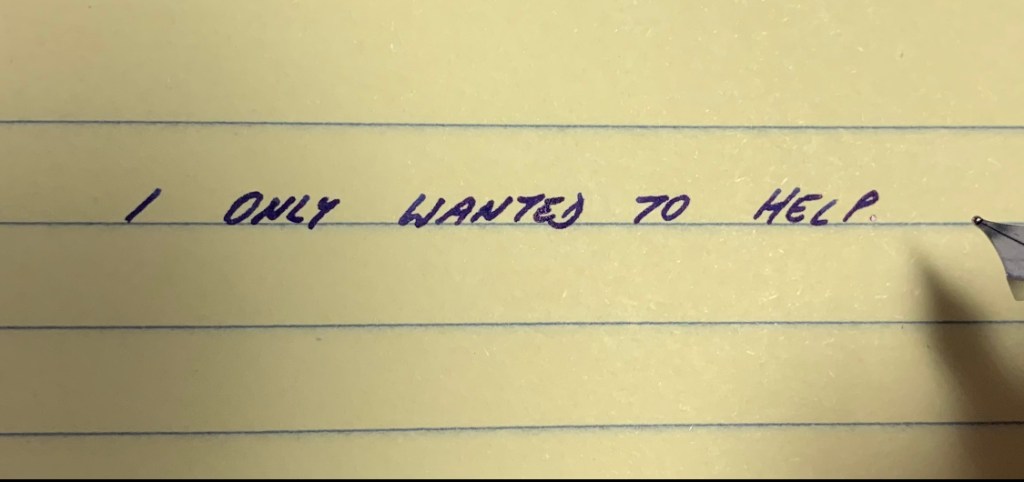
“K, I am so sorry. I would never approach a conversation like that. I know how delicate weight loss can be and I know how much stress it can put on people. I only wanted to help and I would never intentionally do something to offend you.”
“It’s ok”, she said. “I’m good now. I appreciate you talking to me about it.”
Nevertheless, K was not a client of ours much longer. That was about 3 years ago.
And within those 3 years, while the specifics have gotten fuzzier for me over time, the sentiments have not. I constantly have to remind myself that I need to choose my words as carefully as possible because I never know all that my clients are going through or are trying to process at a moment when we’re having a coaching conversation and the last thing I want is to trigger a negative experience.
It’s not just within the four walls of this business either. It’s in our friendships, our relationships, our marriages, our parenting styles. The words we use and the tone in which we use them are constantly in a battle for effectiveness and as the adage goes: Do you want to be right or do you want to be effective? (There can be a difference…)
I look back on that conversation with K and it taught me more about coaching than many other scenarios have.
How can I be the best coach I can be?
How can I use the best and most accurate words to help my clients?
Truth be told, it’s both art and skill. Like many things in life, the ability to coach effectively is not unlike dancing: sometimes you lead and sometimes you follow. Honesty and candor go a long way towards producing great results but that means that both parties have to be willing participants.
Fast forward through those three years and I know I’ve improved as a coach because I keep trying to learn as much as I can. Not only that, but I keep trying to teach those lessons to the rest of my clients because you never know when the wisdom or lessons might sink in.
And also, a little update on K…
K left her corporate job recently after going through both a mental and physical shift in her life. She moved away from this area and started a business of her own, coincidentally a coaching business. I’ve continued to follow her throughout the time since she stopped training here and would engage on her posts whenever I could.
Last week, I decided to reach out and I wanted to share part of that conversation with you: I said “Hey stranger, I’ve been following many of your updates and just wanted to congratulate you on the new ventures. I hope all continues to go great for you.”
She replied: Hey!!! It’s been forever!!! Thank you for reaching out and sharing that with me. Ironically, this morning I was thinking about something you said to me years ago, which was…. When shit hits the fan you have to figure out what you are going to do so you don’t spiral.
To which I said: It’s funny you mention that. I still remember (the scenario, not the specifics) when you and I were working through something related to weight loss and I said something that didn’t sit right with you. Megan was the one who tipped her hat that I had upset you which would have never been my intent but sometimes, the words just don’t come the way we want them to. I frequently remind myself of that because, when I think back retrospectively to coaching conversations, I have to ask myself: Did I say that the right way? Did it achieve the right result? Could I have said it better? But as far as the “spiral” goes, it’s interesting because, especially in light of the pandemic, shit totally got weird! And truth be told, I’m still having that same conversation with clients today: What are you going to do when it’s not “perfect”?
K replied: I don’t remember that upsetting me and if it did, it was what I needed to hear. I was so out of sorts back then and trying everything but getting nowhere. The pandemic is actually when I got my shit together, lost about 30 pounds and started working on my mental health. I have definitely learned it’s not about perfect action – it’s messy action. So keep pushing people in that direction, it was what I needed.
And I concluded: Well, suffice to say we’ve both evolved since then. Thank you for the learning opportunity. 🙂
I couldn’t overestimate how much that original scenario with K would inspire and inform many of my coaching sessions afterwards. The “teacher” must always be willing to be the “student” as well.
This week’s article is just a reminder to any of my fellow coaches (including K) that if we’re paying attention, we stand to learn just as much, if not more, than our clients do. And that process not unlike any process of self-improvement, is ever evolving and rarely perfect.
The words we choose make a difference. The actions do, too…