Blog

  • The Man You Never Knew

    Sebastian,

    I write these words to you just days before what we recognize as the anniversary of your Opa’s passing, this year marking 11.

    I do not know if you will read these words when you are old enough to read and understand them, if you will read them after I leave this world or perhaps never read them at all.

    As I’ve tried to do on a few occasions each year since Opa passed, I wanted to write something in his memory as a tribute to the life he lived, much of which has been mostly therapeutic for me as a way to handle losing him.

    Your brother, Jackson, had only recently turned 3 when cancer took Opa from us. Due to both Jackson’s age at the time and his autism, I don’t know that we’ll ever truly know how much Jackson remembers Opa.

    Which means that one of the greatest tragedies of your life is that you never knew him at all.

    I am so sorry for that.

    This post is just a few of my thoughts on what I believe you may have missed out on by not having him around.

    First, know that for the three years of Jackson’s life, the man the world knew as Paul and that I knew as Dad, absolutely loved being an “Opa”. If he were still here today, he would have loved having not one, but two boys to be a grandfather to.

    Like you, Opa loved technology. He was endlessly fascinated by what could be done with computers, smartphones and televisions. He would have loved to see your curious mind and the things that grab your attention.

    As someone who understood science more than the average person, he would have encouraged your fascination with science experiments and how you are able to bring them to life. He would have challenged your mind to continue and find answers to the questions you think of.

    Opa would have been thrilled that you, like so many of us in your family, also take a liking to music. Not just listening to it, but picking up instruments and trying to find the one that resonates most with you. Opa played guitar and bass and he gifted me with his acoustic guitar many years ago that you still see me play. I have arguably written more songs on that guitar than any other instrument. It holds more than just sentimental value to me, it’s part of my own history as well.

    He would have encouraged you to keep exploring, to keep finding your beat and your rhythm in more ways than one so that, at the very least, you could contribute the beauty and magic of music to this world (even if it’s solely for your enjoyment).

    Opa would have known the ways to get you to channel your intelligence. He would help you understand your curiosity so that the world around you keeps you searching and pondering but forces you to think of not only problems, but solutions as well.

    Perhaps one of the greatest gifts Opa gave to me, which he undoubtedly would have shared with you, was the gift of tolerance and acceptance. Opa saw everyone as his equal, no one was beneath him. This went for all colors, all cultures, all beliefs, all backgrounds. He only ever wanted to expand his understanding of who people are, what they stand for and learn, to the best of his ability, to see the world through their eyes and not just his own.

    We live in a world that tests those abilities and not everyone will be kind to you (or to each other). Opa would have helped you understand that we don’t all have to be in agreement with one another to have respect for one another, and that respect will get you much further in life than disrespect. This is a lesson which took me a long time to comprehend and appreciate.

    Sebastian, I’ve spent much of my life and certainly many years of the last eleven trying desperately to fall into Opa’s shoes only to realize that I was trying to fit into the wrong pair. He taught me to be the best I know how to be at all times. If I do right by his memory, I’ll continue to shower you with the lessons that not only he taught, but the ones I took the time to learn.

    Undoubtedly, you have more than just his influence in your world. Much like I grew up with, you have the privilege of a mother and father committed to your best interest. The lessons won’t always be easy to learn, and we won’t always be the perfect teachers, but we will love you through and through.

    I was very lucky to have that in my life.

    And I’ll spend the rest of my days giving it to you and Jackson as well.

    Never forget how much I love you.

    And always know that Opa’s light shines through me.

  • Revolutionary You! #349-Kaleen Canevari: An Introduction To Pilates (1 of 4)

    In our next 4-part series, I welcome Kaleen Canevari to the show. Kaleen is the creator of Flexia, a Pilates model that allows you to use technology and Pilates in the comfort of your home for quantifiable progress. In this episode, we build a framework for what Pilates is, who it might be useful for and considerations for beginning the practice of Pilates. 

    To learn more about Flexia and Kaleen’s work: 

    www.flexiapilates.com

    www.instagram.com/flexiapilates 

    www.instagram.com/thefitreformer

    www.medium.com/@kaleencanevari

    To learn more about your host: 

    www.jasonleenaarts.com

    www.revfittherapy.com

    www.facebook.com/jason.leenaarts

    www.instagram.com/jasonleenaarts

    You can also like our Facebook page at: 

    www.facebook.com/revolutionaryou

    To purchase my book, “A Revolution A Day”: 

    www.amzn.to/2R9Larx

    Apple Podcasts OR Stitcher OR Spotify OR Amazon Podcasts

  • Ditching The Diet Halo

    It’s arguably one of the most frustrating bridges to cross with a fat loss client, when we have to make the distinction between what might be considered a “healthy” diet versus one that is calorically appropriate for them.

    Unfortunately, much of what we’re inundated with (aside from flagrant misinformation) is still the notion of good foods versus bad foods and healthy (clean) eating versus “dirty” (junk/highly processed) eating.

    I’ll make a short comparison below. Here’s a sample of what a client might show me as their “healthy” breakfast:

    2 slices Ezekiel (sprouted grain) toast

    1/2 avocado

    2 eggs

    1 TBSP olive oil/coconut oil to cook eggs

    Now let’s look at the estimated calories:

    2 slice toast (160 calories)

    1/2 avocado (150 calories)

    2 eggs (140 calories)

    1 TBSP oil of choice (120 calories)

    Total intake: approximately 570 calories

    On the flipside, is a client who goes to McDonald’s and orders an Egg McMuffin (310 calories).

    Which is “better” for fat loss? The Egg McMuffin.

    That being said, the “healthy” breakfast will have more fiber (and a different micronutrient profile) and would hypothetically be more satiating (which is key during fat loss) but if we’re looking for ways to reduce calories, the numbers tell a certain story.

    Over the years, I’ve found that the two most misleading phrases a fat loss client will say can be:

    But I don’t eat that badly

    I eat mostly healthy foods

    Neither of which gives one shred of reality to how MUCH someone eats.

    And if the scale isn’t trending down over time, quality means a lot less than quantity does.

    At risk of my readers opting to go through the fast food line to kickstart their fat loss, just remember that no one is going to convince you an Egg McMuffin is the best thing you can put in your body. To the credit of most chain fast food establishments, we can at least say that the calories are close to accurate and it removes a lot of the guesswork if you’re counting calories.

    Here are 5 areas you might want to look at where your diet halo might be getting in your way:

    1. Those are healthy fats, right? From olive oil to walnuts to fatty fish, we hear about the numerous benefits to essential fatty acids. However, with fat calculating a whopping 9 calories per gram (more than double what’s in carbs or protein), it’s an easy nutrient to go overboard with. Measure your oils, count your almonds and be mindful that foods like salmon, while delicious, are not low calorie options.
    2. Organic, grass-fed and/or free range options don’t reduce calories. If you have the financial wherewithal to afford organic, non-GMO, grassfed, etc foods, remember that calories don’t necessarily change between the alternatives. 4 oz of steak from a locally sourced beef is going to have approximately the same calories as 4 oz of steak from Applebee’s. The source may be different and you might have a concern over the quality of each but don’t count on calories to be noticeably different.
    3. Eyeballing is a terrible form of measurement. If you think you don’t use too much of a salad dressing, coffee creamer, cooking oil, nut butter or “handful” of anything, think again. Our eyes routinely deceive us so grab your tablespoon, level the nut butter and look at the listed serving size on the label. Often what is advertised as lower calorie is only so because the portion sizes have been broken down. Notice when a food label says that it contains 2.5 servings in a container and calories are “XXX’ per serving.
    4. Poor protein sources. Cheese, nuts, and nut butters. All of these items are sources of protein and they are “quality” sources of protein. However, you’re getting far more calories from fat in these foods than protein. Much of what is marketed now is protein-centric because companies know that bringing your attention to that will help sell a product. Even Starbucks advertises a protein box that has 23g of protein and nearly 500 calories. That means that only 92 calories are accounted for by protein. By comparison, 225 calories in that box comes from fat but they probably wouldn’t sell as many if they were marketed as the “fat box”.
    5. Minimizing calories from alcohol. I’ve written a lot more about tracking alcohol for fat loss in the past. The short of this is that not only does your body halt fat loss when you’re consuming alcohol but we typically consume more food calories when we drink as well. Restaurants/bars will frequently eyeball serving sizes so you’re at the mercy of someone who may or may not have your fat loss goals in mind. It’s not uncommon for me to see at least 30% of a person’s daily caloric intake come from alcoholic beverages (especially ladies who are frequent wine consumers).

    (Special thanks to Jessica Slater for the nifty halo).

  • Revolutionary You! #348-Sarah Campbell: Matters Of Perspective (4 of 4)

    #348-Sarah Campbell: Matters Of Perspective (4 of 4)

    In the final episode of our 4-part series together, Sarah Campbell and I talk about life perspectives. We touch on a lot of areas from how we perceive ourselves, the circumstances around us, our interpretations of what we see in the media and more. As always, we cover a lot of ground in a short amount of time. I hope you enjoy!

    To learn more about Sarah’s work:

    www.joycoachsarah.com/subscribe

    www.facebook.com/joycoachsarah

    www.instagram.com/joycoachsarah

    To learn more about your host:

    www.jasonleenaarts.com

    www.revfittherapy.com

    www.facebook.com/jason.leenaarts

    www.instagram.com/jasonleenaarts

    You can also like our Facebook page at:

    www.facebook.com/revolutionaryou

    To purchase my book, “A Revolution A Day”:

    www.amzn.to/2R9Larx

    Apple Podcasts OR Stitcher OR Spotify OR Amazon Podcasts

  • Better At “No”

    A few months ago, there was a phrase that I was hearing from my clients more often than normal.

    “I really need to get my shit together.”

    And when I took stock of the clients who were saying that to me, it was evenly split male/female and always by individuals who I considered to constantly have a lot on their plate.

    We live in a ‘hustle harder” society where there is something of a perceived reward for putting in long hours, existing on little (or poor quality) sleep, and (I’m no exception here) there’s an adage that goes something like: the harder I work, the luckier I get.

    Depending on where you root around on the internet, Thomas Jefferson was attributed with the phrase: “I am a great believer in luck, and I find the harder I work, the more I have of it.”

    And whether the attribution is right or not, the sentiment is basically the same: The more we take on, the better our life goes.

    Except at the expense of our health.

    I recall, many years ago, when I was working at a gym in South Carolina selling gym memberships (before I got certified as a trainer), there was a woman sitting on a recumbent bike reading a book called “How To Say No Without Feeling Guilty”. I chuckled to myself, because at this time in my life, I had no children, I wasn’t married and it seemed like the simplest thing: One word, one syllable, two letters.

    Just say “No”.

    How hard could it be?

    Turns out, it’s harder than we give it credit for.

    As a business owner, I remember having to say yes to every opportunity I could get to train clients, participate in networking functions, meet new people, and do everything I could to build my business.

    “No” was not in my vocabulary. I was in a constant state of “Yes”.

    Yes, I can train you.

    Yes, we can train at that time.

    Yes, I’ll be happy to meet you for lunch.

    Yes, I’ll attend that event.

    Yes, I’ll sign up for your group.

    This was a scenario I wrote about recently when it came to taking some of that time back because I reached a point where I was spreading myself too thin.

    Now, I’m at a point where I find more freedom, more control over my schedule, and more sanity (if you will), in saying “No”.

    It’s not out of disrespect. On the contrary, it’s an exercise in self-respect.

    And I believe that the more we exercise our ability to say it, and enforce it, the easier it is to (collectively) get our shit together.

    I made a short list of ways that you can use the word “No” more effectively in your life with the hope and assumption that it gives you back what it’s given me.

    Apply as you see fit.

    I should also remind that “No” does not mean the same as “Never”. It just means, not now. It’s a shift in priorities.

    “No, I’m sorry, I’ve got something scheduled at that time.”

    “No, that day is booked solid for me.”

    “No, I haven’t been feeling great and need to rest.”

    “No, one drink is enough.”

    “No, I’m trying to get to sleep earlier.”

    “No, my workout is at that time.”

    “No, I have a doctor’s appointment that’s been scheduled for a while.”

    “No, one serving is enough. I’m full.”

    “No, that’s when we have our family time.”

    “No, I don’t feel well when I eat (insert food here). I’ll pass but thank you.”

    “No, I appreciate you thinking of me and I hope to make it next time.”

    “No, I need a bit more advance notice with everything we have going on.”

    “No, if I do that, I’ll be late for my next appointment.”

    “No, I’d rather not.”

    “No, I have a weight loss goal that’s important to me right now.”

    “No, thank you.”

    It’s important to remember as well that “No” is not a sign of weakness. It’s a sign of strength. It’s a sign that what matters most to you and what you value in life is taking precedence over things that are less important.

    In the words of someone probably smarter than me: If it’s not a “Hell Yes!”, then it should be “No”.

  • Revolutionary You! #347-Sarah Campbell: Process Oriented Or Personal Oriented? (3 of 4)

    In Part 3 of our 4-part series together, Sarah Campbell is back and we’re talking about a process oriented perspective versus a personal one. As coaches, we frequently encourage our clients to “trust the process” while the world around us pushes back our reactions can be quite personal by comparison and it’s difficult to detach emotions from real life. Sarah and I take some time to unravel those messages in this episode. 

    To learn more about Sarah’s work: 

    www.joycoachsarah.com/subscribe

    www.facebook.com/joycoachsarah

    www.instagram.com/joycoachsarah

    To learn more about your host: 

    www.jasonleenaarts.com

    www.revfittherapy.com

    www.facebook.com/jason.leenaarts

    www.instagram.com/jasonleenaarts

    You can also like our Facebook page at: 

    www.facebook.com/revolutionaryou

    To purchase my book, “A Revolution A Day”: 

    www.amzn.to/2R9Larx

    Apple Podcasts OR Stitcher OR Spotify OR Amazon Podcasts

  • What A Decade Of Dealing Drugs Taught Me About Coaching

    The story, as it goes, is that my decade of drug addiction started when I was twenty years old. I got clean at the age of thirty. My appetite and tolerance for drugs grew so quickly that my job no longer afforded me the luxury of buying what I wanted to consume. As a result, I transitioned into dealing drugs to keep working a regular job and be able to afford an increasingly growing habit.

    I saw a lot and I learned a lot in those ten years. Most of it not of a pleasant variety despite the fact that it felt like one long, blurry party.

    With an eye on the past, there were lessons that I learned not only of my own behavior but the behavior of those who partied with me and the people who only knew me because I had the supply they wanted.

    Not every lesson is a comfortable lesson but one thing I’ve always appreciated is that there are parallels between our behavior with drugs and our behavior with food. I’m not going to talk to you about the addictive tendencies between cocaine and cookies because there is a monstrous divide even if the brain acts in similar ways.

    What I will be writing about is three things I took note of then and I still consider now when it comes to helping people change their lives.

    1. People Will Do Almost Anything If They Want Something Bad Enough I saw people steal, lie, cheat and manipulate their way through the most bizarre scenarios just to get their drug of choice. I’m no exception in that. Most notably was a shift in priorities. Buying drugs would trump paying routine bills like car payments, mortgages, etc. I remember one customer of mine who intentionally never bought a car. It wasn’t that he couldn’t afford it. He knew that a car payment and the insurance for the car would affect how much he could spend on drugs. Instead, he worked jobs where he could ride his bike or take a bus and still have more than enough money for his habit. That was a calculated shift in what was important to him. He even knew where certain times of the year would bring in less income for him so he would stockpile drugs so that there was plenty around when money was tight. What’s the takeaway? When we, as coaches, talk to clients about values, priorities, desires, etc. what we’re trying to determine is what you (as the client) are willing to do to reach your goals. In it’s simplest form, we ask the question “What is your why?” WHY do you want to lose weight? WHAT are you willing to do/not do/temporarily sacrifice/temporarily compromise to get to your goal? HOW are you going to stay the course to reach your goal?
    2. You Can Never Judge A Book By It’s Cover What does a drug addict look like? Can you picture that? What details did your mind conjure up? Is it someone with gaunt facial features, or someone who twitches uncontrollably or someone with unusually cracked lips or vacant eyes? Maybe you drew this picture from something you experienced in real life or something you saw from a dramatization on television. I can tell you, firsthand, drug addicts don’t look the same. Sure, you might find someone who fits the description mentioned above but addicts are the soccer mom next door, the business executive in a three piece suit driving a luxury car and the person who’s down on their luck scraping pennies for meth. I served all of them (and every type of person in between). What they all had in common was that they used drugs to relieve stress, to cope with the demands on their lives or just to feel something that only drugs could give them. What’s the takeaway? Not every person who looks like they need to lose weight actually wants to lose weight. Not every person who looks like they’re not very strong are in reality weak people. Not every person who swears to you that they want to change their lives are actually ready to do so (more on this later). I have had to remind myself as a coach that it’s my job to understand where people are at this moment in time to help them bridge the gap between who they are now versus who they want to be. Taking a person at face value with the information they give regarding their lives, their challenges, and their personal history helps me understand what tools to give them. The more I know, the more I can help.
    3. No One (I Mean No One) Will Change Before They’re Ready This is probably the most difficult lesson to share. In my case, ten years is a very long time to spend with addiction and it’s a shockingly long time to spend dealing drugs in all sorts of scenarios and still manage to dodge incarceration, not to mention death at the hands of an overdose. Despite the concerns of my loved ones and at many points, the direct request of my family and loved ones to stop using and stop dealing, I wasn’t going to stop until I was ready. Watching friends suffer with their addictions and seeing friends go to jail wasn’t enough to deter my behavior. I simply assumed that what happened to them would never happen to me. Chasing the next high was all that mattered. What’s the takeaway? I would love to tell you that every person who steps through my doors at RevFit is ready to change. They might say the words and they may even have themselves convinced that they’re ready but it’s just not always the case. Change is hard. We live in a world of such high pressure to perform and high stress equally matched with poor coping mechanisms, poor sleep habits and a food environment custom built to give us instant pleasure (not better health). Despite the fact that many people know they need to reduce calories to a given extent, or to move more than they currently move and trying to keep it as consistent as possible all while dealing with setback after setback, wanting to change and ACTUALLY changing are two very different realities. The fact is, many people want improved health and are not prepared to do what it takes to move the needle forward. It doesn’t mean it will never happen. It may mean that change as people want won’t happen right now. They’re being pulled in too many directions and their priorities (see #1) are not aligned with their values.

    I’m always somewhat hesitant to write about my past with drugs. I know that, for some, it’s a triggering conversation. I never mean to trigger anyone. When I was in the thick of it, I don’t know what voice would have been the most effective at getting through to me. What I do know, is that quitting may have been a one-man job but staying clean took having a solid support system and steering clear of undue influence.

    If you want change, expect resistance, expect discomfort, expect things to work against you, expect to be frequently disappointed with yourself (in spite of your progress) but most importantly, value yourself enough to expect better out of you.

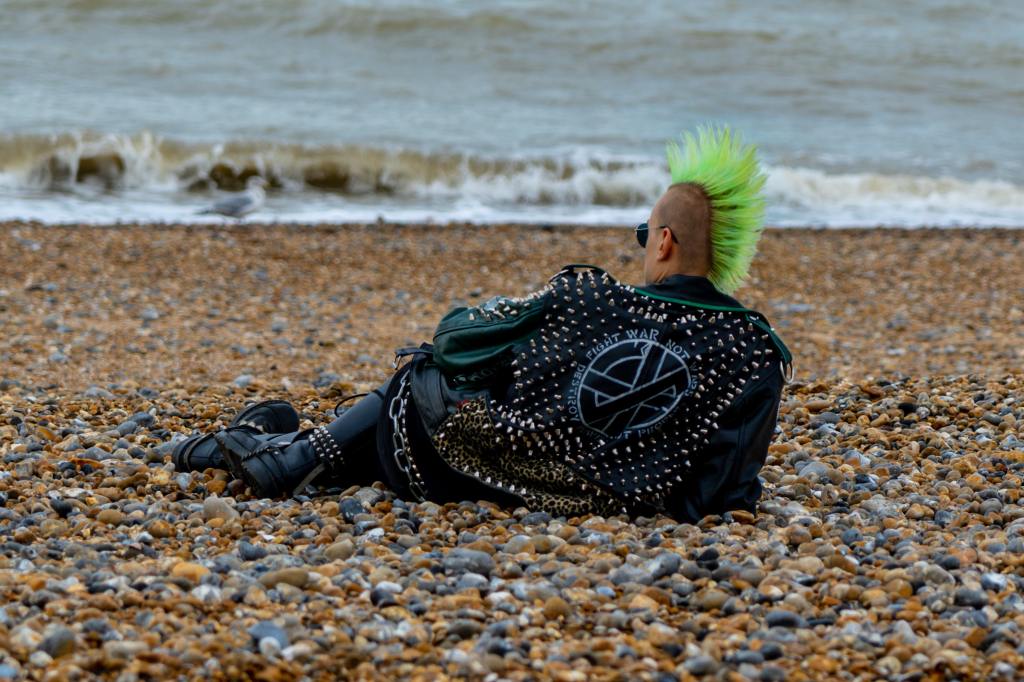
    Pictured below, me, midway through those ten years.

  • Revolutionary You! #346-Sarah Campbell: A Simple Look At How Our Brains Work (2 of 4)

    In the 2nd part of our 4-part series together, Sarah Campbell and I take a basic look at how our brains work for us and against us. We talk about the “myth” of balance and understanding the messages our brains give us that can either help us improve or stand in our way. We also discuss the importance of technology detoxes and the need for human connection. 

    To learn more about Sarah’s work: 

    www.joycoachsarah.com/subscribe

    www.facebook.com/joycoachsarah

    www.instagram.com/joycoachsarah

    To learn more about your host: 

    www.jasonleenaarts.com

    www.revfittherapy.com

    www.facebook.com/jason.leenaarts

    www.instagram.com/jasonleenaarts

    You can also like our Facebook page at: 

    www.facebook.com/revolutionaryou

    To purchase my book, “A Revolution A Day”: 

    www.amzn.to/2R9Larx 

    Apple Podcasts OR Stitcher OR Spotify OR Amazon Podcasts

  • Embracing Imperfection

    I was speaking with one of my clients recently (Hi, Michelle!) and I’ve been so appreciative of her support of my work. She was asking what my next article would be about and, at the time, I wasn’t sure.

    At any given time, I am sitting on a handful of drafts: ideas that popped into my head that I started working on and gave pause to because a better or more pressing idea came up instead. Sometimes I revamp the drafts and give them life and some times I shift my way of thinking and trash the draft to leave room for something else.

    And Michelle made a comment that inspired this week’s post: “I wish I could write like that. I keep telling myself I should write but I never do.”

    To which I replied: “You should. Just start writing.”

    Michelle responded: “No, I would misspell things and my grammar wouldn’t be right.”

    “It doesn’t matter,” I said. “It matters that you put your thoughts to paper instead of just letting them sit on your mind.”

    However, Michelle’s concerns are indicative of why a lot of people never really accomplish what they want to; not in their jobs, not in their relationships, and not with their health and their bodies. They’re too focused on it all being just right.

    I probably should give credit to all the years I spent writing songs and poems that the good stuff came with consistency. It took writing when I was in the mood and when I wasn’t. It took writing when I felt inspired and writing when I was down on myself. Improvements came with consistency and there was never a perfect time to write nor was there a perfect way to write. I just had to do the task.

    I think about how many years I’ve dedicated to this website, with a weekly blog (without fail) for over 6 years. What many people may not know is that despite the fact that I read and re-read each article several times before I hit “publish” to catch any typos, I frequently publish articles and catch a typo after the article is released. Only after eyes have been on it by others, do I go back and make the edits. I don’t wait for perfect. I write, I release, and edit later if need be. I embrace and expect the imperfections.

    I think also about how many years I’ve dedicated to my podcast (also roughly 6 years) and the issues I’ve dealt with regarding sound quality, vocal nuances, inconsistent internet speeds, etc. which can all play into the final product of what a listener will hear. Unlike my blogs, once I publish a podcast episode, that’s the way the world hears it unless I want to go through the effort of completely deleting an episode just to touch it up and try to re-release it (I don’t). My podcast remains full of imperfections.

    My diet is never perfect.

    My training is never perfect.

    My sleep and recovery patterns are never perfect.

    My coaching skills are never perfect.

    My marriage is not perfect.

    My ability to parent is not perfect.

    My life, as great as it, and it is great, is rarely ever perfect.

    Waiting for the perfect time to diet or the perfect time to start training will net you a lot of wasted time.

    Train with purpose, nourish your body with purpose, sort the details out later.

    And to Michelle: write. Write until your fingers ache and cramp, write until your tears hit the page (or the keyboard), write as if you’re writing for the world to read (even if you have an audience of one). Write to tell a story, write to be a better storyteller, write because words breathe better in black and white.

    Color comes from the details…those messy, imperfect details.

    Kind of like life.

  • Revolutionary You! #345-Sarah Campbell: The Continuum Of Life Experience (1 of 4)

    In our next 4-part series, I welcome back to the show, Sarah Campbell. Her first two appearances were Episodes #39 and #121 which makes it nearly four years since she’s been on. In this episode, we talk about the “continuum of life experience” and how we’re susceptible to all of the input we receive on a daily basis. We cover self-talk, how social media affects our mentality and how to handle the fact that our lives and how we react to what life throws at us can change over time. 

    To learn more about Sarah’s work: 

    www.joycoachsarah.com/subscribe 

    www.facebook.com/joycoachsarah

    www.instagram.com/joycoachsarah 

    To learn more about your host: 

    www.jasonleenaarts.com

    www.revfittherapy.com

    www.facebook.com/jason.leenaarts

    www.instagram.com/jasonleenaarts

    You can also like our Facebook page at: 

    www.facebook.com/revolutionaryou

    To purchase my book, “A Revolution A Day”: 

    www.amzn.to/2R9Larx 

    Apple Podcasts OR Stitcher OR Spotify OR Amazon Podcasts