For the last 11 years, I’ve written thousands of words about my father.
In many respects, there are so many words of love I’ve written about him that it’s a shame he wasn’t alive to read them.
Perhaps that’s a regret of mine.
Not that my father left this world doubting my love for him, he didn’t. I was fortunate that I had time to tell him how much me meant to me over and over again during his final months with us.
However, before I have the same regret with other family members, I’m writing this post to and for someone who is still alive and well.
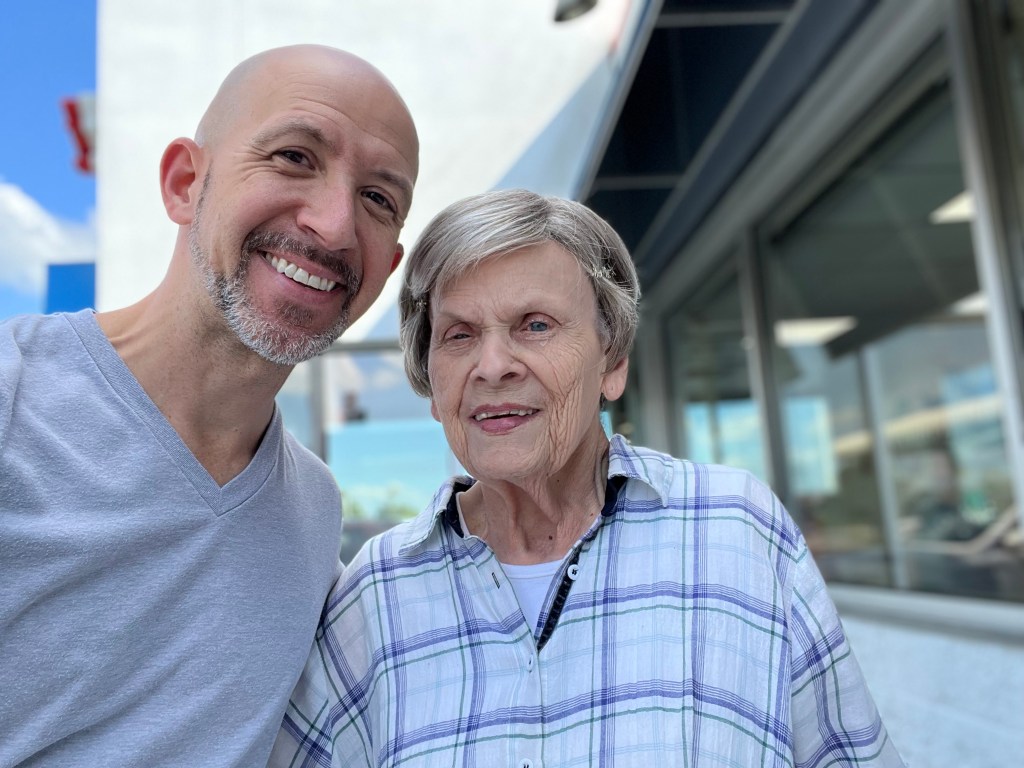
My grandmother.
LaRue Wright (née Rankin) was born over 89 years ago in Ridgely, Tennessee. Ridgely was also the birthplace of my mother and where my father was laid to rest.
It resides roughly 45 minutes away from my hometown in Union City, Tennessee.
She is my last living grandparent and she still lives in Union City, in a house that has been a part of my life for nearly 47 years.
The first 4 years of my life were spent in Union City, so I was fortunate to spend a lot of time during those years with my grandmother.
She was a schoolteacher from 1976 to 1997. That career became an integral part of my upbringing. I credit Gram with being the one who taught me to read, something I still do voraciously all these years later.
I also credit her with the fact that RevFit would not exist without her. We lost my grandfather and my uncle (her husband and youngest son) in 2008. As a result of their passing, several pieces of rental property in my hometown were left to my grandmother. She did not want to oversee them, so they were gifted to me.
That gift became what funded the opening of my business in 2009.
Growing up, I called her “B’mama” and later it turned to “Gram”.
We would dance to records by Elvis and Mac Davis in her living room, so the love of music that I carry with me today didn’t just come from my parents.
In paying tribute to her and the life she has lived thus far I wanted to write this as much for the benefit of our family as I hope it might be for my readers.
I asked her if she would collaborate with me on this week’s article so that you can have a piece of inspiration from someone I’ve been so privileged to call ours. I’ve edited and adapted our conversation so that it would be a cohesive read.
5 Lessons From Her Career Teaching:
–You Have To Be Patient: To be an effective teacher, you not only have to be patient with your students but patient with yourself. Everyone learns at a different pace.
–You Have To Accept People As They Are: Not only do we all come from different backgrounds, but we have a different understanding of the world around us. Teaching helped me realize that every child who came to my class required a slightly different set of skills so that they could perform their best.
–You’re Adopting A Second Family: There’s the family that I raised and the family that I took care of at school. I had to respect that both of these families required love, attention and care. Each student was coming under my wing so that I could help prepare them for a future as I would the children I brought into this world.
–You’re Given Precious Assets: I had to remind myself every day that, in teaching children, I’ve been given someone’s most precious asset. I would argue it’s even more precious than money and material things. People trust you with their children’s best interests and it was up to me to honor and respect that.
–Be The Teacher Worth Remembering: I can’t tell you how many times I’ve had grown adults come up to me and tell me how grateful they were that I was their teacher in elementary school. To know they looked back on all of those years in the school system and that I was the one they remembered so fondly means I did a commendable job.
5 Lessons From Marriage
-They say that marriage is 50/50. It’s not. It’s 100% of yourself and it’s 100% of your spouse. You may be different people but you still have to give the marriage 100%.
-You have to admit when you’re wrong.
-You have to make compromises.
-Marriage is equal parts love, compassion, patience and understanding.
-Marriage is not easy. It can be a lot of work. You won’t always agree but you have to be committed to each other. (Of note, this year would mark her 70th anniversary if my grandfather was still alive).
5 LessonsTo Impart On Your Children
-I wanted all of my children to be raised in a Christian home and to be Christians themselves.
-I wanted all of my children to be successful and to believe in themselves and what they could become.
-I wanted my children to understand and respect the sanctity of marriage.
-I wanted them to take care of themselves and their health.
-I wanted them to value an education: to not just be intelligent but creative as well.
5 Things You Wish You Could Have Done Differently
-I wish I would have gotten my doctorate. It would have taken more time away from my family than what I wanted to do at the time.
-You don’t know what you don’t know but as a parent, I wish I would have known how to help my children and grandchildren with their struggles in life. There’s nothing more difficult to see than the people you love struggle and not know how to help them.
-I would have reminded my husband about how good our life was despite the obstacles we had to overcome. He and I had many conversations before he passed and he kept asking me: “We had a good life, right?” I knew that we had, he knew that we had, but sometimes, we just need reassuring.
-I grew up seeing addictions and infidelity affect various family members. If I would have known how to help them work through those things, I would have. I saw how those vices crippled people and I knew that I just couldn’t go down that road too.
The final lesson needs some explanation. My Oma (my father’s mother) was a Holocaust survivor. Growing up, my Opa expressed to mostly everyone that we not discuss the war around her. I speculate it was because the conversation could easily trigger feelings that may not be easy to overcome. Nevertheless, sometimes Oma would discuss the concentration camps on her own. After my Opa passed, she was even more forthcoming with those experiences.
-I would have asked your Oma more about the war and her time in the camps. I believe it was therapeutic for her to talk about it even though we were discouraged from doing so. I always wanted to respect that your Opa didn’t want the subject brought up but she and I had many conversations about those experiences and I just wish I could have learned more. You know what she told me? She said: “You need to tell my story so that people will learn to be kind to each other.”
This past weekend, I was helping my mom out at her flower shop.
She was under-staffed for a big event and asked if I could lend a hand to help set up for a large wedding.
While I was waiting for all of the flowers to be finished so we could load them up, one of her staff members (let’s call her Ann) came up to me and asked:
“Jason, I wanted to ask you… There are so many diets out there: keto, paleo…which one is the best one for losing weight?”
My response:
“The one you can adhere to.”
And of course, as unsexy as that response is, I could see the hope deflate from Ann’s face.
So, I owed it to her to elaborate and I thought I’d share those thoughts with you this week as well.
To start, there’s nothing “wrong” with any diet.
That being said, there are some diets that are likely ill-fitted for certain health conditions. For instance, I wouldn’t encourage a person with a heart condition or high cholesterol to adopt a high fat diet like keto.
I can play both sides of that fence and say that maybe, just maybe, if said keto diet helps that person successfully lose fat and keep it off then perhaps the heart condition improves.
There’s just something about a diet that’s at least 70% fat that tells me: maybe my ticker isn’t going to be happy with me. Call…me…crazy…
To that, I said to her: “If you want a really easy way to lose fat, take your diet as it is, and write it down. Don’t count calories, don’t count macros, don’t judge your food choices. Just write it down and ask yourself: Where can I cut back?”
Ann looked at me like I had three heads. Sometimes I feel like I do.
“As an example,” I said, “let’s assume you had a donut today.”
She laughed and said: I did have a donut today!
I chuckled as well and asked: “Would it have been too much to ask that you only eat half of it? Or maybe less than half? Would that have been sufficient?”
Ann smiled and said: “Yes, I think I could have done that.”
I looked down and saw that she had an insulated mug with coffee. I happened to notice the particularly light color of that coffee.
I pointed and asked: “Now, consider your coffee. What do you put in there?”
She blushed and said: “Cream and sugar.”
“That’s right, and you probably didn’t measure either of them, you just poured them in until you got the color and taste you wanted.”
She nodded her head in agreement.
“Try measuring them for a few days. See how little of each you can get away with that you’ll still enjoy your coffee.”
Ann said: “But I’m such an emotional eater. My husband tells me to just stop buying certain foods.”
“Your husband is right. If it’s in the house, you’re more likely to eat it. And if you can’t trust yourself in the grocery store due to the allure of all the snacks and treats, then start buying your groceries online and picking them up. It may not stop you from buying the Snickers bar but at least that bar isn’t staring you in the face while you’re waiting for the person in front of you to check out. I worked in retail for 16 years. There’s a legitimate reason they call those items “impulse items.” Droves of marketers know exactly what they’re doing!”
We left the conversation there because we had to keep working on the event.
So, I’ll add this:
Just me pointing out the areas that I saw in her diet (the donut and the calorie-laden coffee) could give Ann 300-600 calories out of her current diet if she could just make some substitutions. 300-600 calories dropped out of her daily intake may be all she needs to actually see fat loss occur. That depends on what she puts back in to replace the donut and how much she removes from her coffee each day.
And, I have to be honest, just because the fix sounds easy and very effective to me, doesn’t mean that Ann will actually do it.
However, what it can show is that it’s not about the next diet you pick, it’s about being crystal clear on what you’re actually eating and making more strategic choices from there.
It’s not sexy, it’s not flashy, it won’t sell books off the shelves.
But I’ll be damned if it doesn’t work.
Rather than ask what the best diet is for you to follow, ask yourself how you can make your current diet better.
Lately, I’ve been diving into more information about binge eating and other types of disordered eating and, while I am not an expert nor am I a doctor, I wanted to compile some information which might be helpful to both fellow coaches and anyone who may be struggling with some of these challenges and is looking for a place to begin. I should note that these patterns are correlated with an underlying psychological component which may require the help of a qualified professional to address.
Much of what I will write is being repurposed in my own thoughts and words based on the work of Dr. Christopher Fairburn and things found to be effective through Mac-Nutrition Uni’s coursework.
Part of the reason I want to tackle this is that I have found there are possibly four types of people who struggle with binge eating or disordered eating that enter into a fat loss program:
–Those who have a history of binge eating but may not currently be struggling with it.
–Those who are currently struggling with it and openly discuss it.
–Those who are currently struggling with it and don’t initially discuss it but it does come up later in the working relationship.
–Those who are currently struggling with it and do not discuss it.
This post will aim to be helpful to all four of those and to anyone else who knows someone struggling with binge eating.
I should also note that not everyone who struggles with binge eating is overweight. Binge eating can also affect those who are underweight, such as those with anorexia nervosa.
If you are someone who struggles with binge eating (or know someone who does) this information is not meant to replace the guidance of a doctor, a therapist trained in eating disorders or dietitians trained in eating disorders.
Fortunately, many people can overcome binge eating through some guided self-help assuming they are willing to put in the work.
I should note right off the bat that if you are someone who is trying to lose fat AND you also struggle with binge eating, it is in your best interest to reduce the frequency of binge eating or eliminate it before you try to lose fat.
This may seem somewhat counterintuitive.
One of the biggest issues with binge eating is the fact that things such as calorie tracking and intermittent fasting protocols can actually trigger binge eating episodes. In addition, having a list of demonized/forbidden foods can also trigger binge behavior.
While an individual is working through the process of binge eating, they may have to accept the fact that weight may or may not reduce during that process: it may remain stable, it may drop and it may go up.
Let me discuss some common behaviors exhibited by those who struggle with binge eating and some of the drawbacks of those behaviors.
I’m going to do my best to exercise some respect and sensitivity with this next section as this part may contain more triggering subject matter.
There are a handful of types of eating disorders someone could potentially fall under. The most common are:
–bulimia nervosa –anorexia nervosa –binge eating disorder –eating disorder not otherwise specified (ED-NOS: which may include mixed eating disorders or night eating syndrome)
We know that with any of these individuals a degree of guilt and shame surrounds the behavior. This can result in something of a cyclical pattern of behavior that may look like:
Feelings of guilt/shame->loss of control->binge eat->extreme form of dieting->repeat.
Why someone binges can be multi-factorial and may include:
Shame around current weight/physique Difficulty in relationships Difficulty coping with stressful circumstances Fear of failure Fear of success
Self induced vomiting (SIV) appears to be most common in bulimia nervosa and, to a lesser extent with anorexia nervosa. For some, it is the belief that utilizing this tactic will remove the calories from the food(s) they binged on. However, when this has been studied in labs, only about 50% of the calories have been removed from the system. Said differently, if the binge was upwards of 2000 calories, roughly 1000 are removed through the process. This is not the only reason why this may be used. For some, they have binged to such a great degree of discomfort, that SIV serves to release the tension of that discomfort.
Laxative and diuretic misuse can be done on its own or in combination with SIV. There is a similar misconception around laxatives (as with SIV) that calories are being removed from the system with their use but this is not accurate. Food absorption happens higher in the digestive system while laxatives work lower in the digestive system. Diuretics have no effect on calorie absorption, they simply deplete fluid from the system. Some people feel the need to continue their binge patterns with the use of SIV or laxatives/diuretics because they believe they have cleansed their system. This can actually lead to larger binges later on.
Extreme exercising is exhibited more in individuals with anorexia nervosa and can be categorized when exercising has a tendency to take over one’s life. This can also manifest in a way where someone may not consume a meal until they have sufficiently “burned off” the calories of that meal ahead of time.
Fluid manipulation can take form by using high fluid intake to induce vomiting or to register that enough vomiting has occurred when there is no more color coming up. Again, this is with the belief that the system has been “cleaned”. Another area may be purposefully not drinking enough water as dehydration may show up as a loss of weight (not fat) on the scale.
To reiterate, shame and guilt may be significant reasons why we don’t hear more about binge patterns. It’s also worth noting that strict dieting can trigger binges, men may be less likely to report binge behaviors than women, some people feel that binge behavior helps them manage other stressful circumstances better and some believe that the behavior can resolve itself without help.
Now, I’ll break down the four different types of eating disorders related to binge eating.
-Bulimia Nervosa -Anorexia Nervosa -Binge Eating Disorder -Eating Disorder Not Otherwise Specified (ED-NOS: specifically mixed eating disorders and night eating syndrome)
As a reminder, this is not meant to diagnose. A doctor would need to oversee that diagnosis. If you believe you suffer from any of these disorders, you are encouraged to get medical advice if you feel it’s needed. For the purposes of this post, it’s simply for information and potentially for the reader to use as guided self-help.
Bulimia Nervosa With bulimia nervosa, a person has to exhibit 3 of 4 of the criteria listed. One of these must be absent.
The criteria: 1) The individual must have frequent objective binges (consuming genuinely large amounts of food) with a feeling of a “loss of control”. All persons with bulimia binge eat. 2)The individual must utilize at least one form of extreme dieting (as referenced above). 3) The individual must have an over evaluation of their body size and shape, characterized by primary judgement of their physique beyond simply “unhappiness”. 4) The individual must not have anorexia nervosa.
It may come as a surprise to some that many people who suffer with bulimia would be considered a healthy weight and size. In approximately a quarter of cases, an individual may start with anorexia nervosa and transition to bulimia nervosa. It is more common in women than in men. Also, some may eat very little outside of their binges (comparable to those with anorexia). By the time someone gets help with this, they may have already been struggling for 5-10 years.
Anorexia Nervosa Two conditions must be met: 1) A BMI somewhere between or under 17.5-18.5 2) Evidence of overvaluation of body size and shape. Many fear becoming overweight or getting fat and despite their current size, they may already view themselves as overweight.
It is more common in women than in men. They achieve their weight by both eating too little and possibly exercising too much. Roughly 1/3 still have binges however they are considered subjective binges (smaller in size).
Binge Eating Disorder This is characterized by those who do struggle with binge eating but do not exhibit forms of compensatory behaviors like the aforementioned extreme dieting measures. Considerations in diagnosis may include (adapted from Dr. Jake Linardon):
1) Eating more rapidly than normal 2) Eating to the point of discomfort 3) Consuming more than normal even when not hungry 4) Eating alone associated with feelings of embarrassment 5) Feelings of disgust, depression or guilt after binge eating 6) Marked distress associated with binge eating episodes
Where many who have bulimia nervosa are of a healthy weight, most who struggle with binge eating disorder are overweight or considered obese. More men appear to be affected compared to the previous two (1/3 men to approx 2/3 women).
ED-NOS (Eating Disorder Not Otherwise Specified) Lastly, there are eating disorders not otherwise specified which are defined by similar features as bulimia nervosa, anorexia nervosa, and binge eating disorder without meeting all of the criteria (also called subthreshold). Mixed eating disorders could have features of all three. Night eating syndrome is classified as those episodes which only occur at night (or after waking up from sleeping at night) and are smaller in size than actual binges. The individual may not feel the same “loss of control” as those who suffer with binge eating in the other disorders.
Next, I want to start tackling what an individual can do to reduce and hopefully eliminate binges in their lives.
A few reminders:
-Some people will need medical help. Self-help or even guided self-help with a coach may not be enough for severe cases.
-Strict dieting, aggressive deficits, “forbidden” foods, and diets that remove food groups are all capable of triggering binge behavior. Calorie counting and macro counting are contraindicated practices for binge eating behavior.
-Accept the possibility that in order to overcome binge eating, an individual is advised to temporarily abstain from conscious dieting practices so they can get a better handle on all of the circumstances that are currently contributing to binges.
The first protocol would be to start monitoring food intake. This is not the same as calorie tracking. This is writing down the times you eat, what you eat, if any extreme form of dieting came after you ate (self-induced vomiting, laxative or diuretic use) and how you felt in general.
Monitoring is a short-term plan. That being said, you may find that you are monitoring for several weeks/months to develop awareness of trends and patterns of behavior. Dichotomous thinking and looking at foods as good/bad and right/wrong also fosters binge behavior.
Monitoring allows you to take an objective look at food intake without judgment. It is a skill to practice. It is very much likely that you will still experience binges with the long-term goal that they are reduced in size and frequency.
Questions you are seeking to answer through monitoring will include:
-What’s eaten during a binge? -Do binges include “forbidden” foods? -When do the binges happen? -Is there a trigger for binges? -Is there an emotion connected to binges? -Are the binges a form of coping or a form of punishment?
Within the scope of monitoring, remember this is not to judge. It is to have documentation of events with candor and honesty. It will not be easy and it will likely be a lengthy process. Persevere all the same if you are determined to end the behavior. Review the previous week’s monitoring and go back through the questions listed above to see if patterns can be found.
It’s Dr. Fairburn’s advice that weigh-ins should be once a week to follow the trends of monitoring. Your weight may reduce, it may remain stable and it may go up. Monitoring is not synonymous with dieting. At each weekly weigh-in, review the previous week’s information and go back through the questions listed above to see if patterns can be found.
When you have developed the consistency of monitoring and recognizing patterns you can move to the next stage of establishing a regular eating schedule.
This means, not going lengthy spans of time without food (except while sleeping). In execution, this will look like: Breakfast, Morning Snack, Lunch, Afternoon Snack, and Dinner.
Remember that experiencing the discomfort of hunger is what can lead to binges. This is why strict dieting and intermittent fasting tend to backfire on those who struggle with binge eating. Of note, the ability to discern the signals of hunger and fullness can be distorted in those who are working through these patterns. Once a regular eating pattern has been established a more intuitive approach may be easier to adopt.
Set a schedule based on your current lifestyle (work, family, commutes, etc) and build your five times of eating into the schedule. You’ll be working to keep the eating schedule consistent with the understanding that perfection is not necessary. You are simply trying to get the body and mind on a schedule of regular eating to prevent future binges.
It is assumed that you are no longer using extreme forms of dieting after eating. To the best of your ability, do not eat in between your scheduled meals.
If you have a chaotic schedule, this may take time to implement. Do the best you can at focusing on consistency, planning ahead, and having food available so that you can eat when you are scheduled to do so.
You will still be monitoring intake so that you can continue to ask the same questions referenced above. Even though you are developing a consistent eating schedule, you may still have negative feelings (physical and/or emotional) around food that should be accounted for in your monitoring efforts. Stay candid, stay honest, and resist the urge to judge yourself.
Lastly, there are some other areas that would be in consideration for a long-term view for the individual struggling with binge eating.
Something that is a common thread when it comes to dietary practices is developing new coping mechanisms. For many people who struggle with binge eating, it can serve as the cope for when life is stressful, boring, tense or sad.
In taking that long-term view of health, new coping mechanisms will need to be developed and nurtured.
This may be in finding a new hobby or in reclaiming an old one. You’ll want something that serves as an active option (going for a walk, going for a hike, calling a friend, playing an instrument, etc.) Watching television is seen as a passive coping mechanism and will likely not accomplish the same goal.
Whatever you choose, make a list of viable alternatives because the urge to binge will still come. Remember that, for many people, binge patterns have been a part of their lives for many years and it will take time to not only accept that the urge to binge will come but that, like many urges, it will pass as well.
Finding alternative ways to occupy your body and your mind will help reduce the length of urges and the frequency in which they occur. If binge patterns are apparent because of challenges related to work, family, relationships or a trama informed response, working with a therapist can be crucial in this process.
It will help to find things that actually seem enjoyable and realistic to do. So, if you’re not an outdoor person and you think that hiking will be an option, it may not be a good fit. You may want to align with an activity that is more appealing and still effective at working through the urge to binge.
Throughout this time of exploring and implementing these activities, you’ll continue to monitor intake, addressing any areas of vulnerability or areas of opportunity to improve on, as well as keeping an eye on the trends of body weight through weekly weigh-ins.
Recognize that due to the fact that urges to binge will still come, you’re looking to develop insight into when you feel urges, what may be triggering the urges, learning how to spot problematic areas and having a plan for how to work through them. It’s an evolving process. Much like one would problem solve for a business, there are areas of opportunity, a plan to overcome obstacles and implementing those plans to see what works, what doesn’t and how to modify as you go.
Take the time to review what’s working in your problem solving process. How can things be improved? What could be done differently if a course of action didn’t go as planned? Practice forgiveness in ways that remind you of the progress you’ve made as you now have qualitative and quantitative data to show that binge eating has likely been reduced in your life.
It’s also at this point where you may want to experiment with re-introducing “forbidden” foods back into the diet. If you find this to be overwhelming at first, try only adding one or two foods at a time to assess your psychological readiness around them. It’s important to remind that the introduction of these foods still has the potential to trigger a binge so you’re aiming to introduce the ones you feel least likely will cause that outcome.
As with every step of the solutions for binge eating, expect some resistance, expect to still have moments when you struggle. This is part of the process and still is a very important step to tackle and develop confidence with.
Issues may still arise with the overvaluation of body image and size, since, as previously stated, this process is not designed specifically for the outcome of weight loss even though some may lose weight while working through these steps.
Also, it is still entirely possible that additional help is needed. You may still need the help of a therapist and/or a doctor to continue this process.
Strict/aggressive dieting is too risky of a scenario for those who have a history of binge eating. This is information I wish I knew more about throughout my career as it would have helped me better serve my clients and not attempt things that are popular in diet culture such as “food challenges” where certain foods/food groups are eliminated for the purposes of fat loss.
Should the individual who has struggled with binge eating still elect to lose fat after they have worked through these steps, a more conservative (less aggressive) diet approach may be suggested. Exercise for the purpose of holistic health and not as punishment can still be a part of a well-rounded plan.
Should you want more in-depth information on what I’ve written here, I highly recommend the book “Overcoming Binge Eating” by Dr. Christopher G. Fairburn where much of this information has been adapted from. Dr. Jake Linardon (www.breakbingeeating.com) has excellent information as well. If you prefer to take in information via podcasts, Georgie Fear, RD has a great show called “Breaking Up With Binge Eating”. In addition, I took knowledge from my work coaching nutrition for clients and my coursework with Mac-Nutrition Uni.
For my fellow coaches, especially those who also coach nutrition, be mindful of how certain dietary tips and practices can be triggering for those who struggle with binge eating. What works for one does not work for another. This is one of the reasons why diets don’t serve everyone equally.
As I write this, I think back to the periods of my life when I was in therapy.
First, it was in my early 20s, prior to the start of my decade of heavy drug use, and my life was a chaotic mess.
A decade later, I was back in therapy, for completely different reasons and still in something of a mess.
And in my 40s, I took another tour through therapy: first for a couple of visits after my father passed away and then again a few years ago.
I have remained a staunch advocate of therapy since this most recent turn.
One of the things that I felt I needed was a paternal voice in my ear. Since losing my father, it was a voice I knew I was missing.
Mind you, I still have family members I could turn to who could give me a “piece” of what my Dad would have. However, having great and supportive family members is one thing, having a great therapist is another.
Let me tell you what therapy isn’t for me:
Therapy isn’t having someone browbeat me.
Therapy isn’t having someone spell out the answers for the things that I struggle with.
Therapy isn’t having someone highlight all the things about me that are wrong or faulty.
Rather, therapy is having someone provide that little “nudge”, those small handfuls of questions that stop me in my tracks and make me consider how and why I do the things I do, when those same actions don’t make a lot of sense to me.
And, to be frank, with the things I can account for in my rather colorful life, there are a lot of things I’ve done that needed some explanation.
I went through a spell of about 7-8 months where I wasn’t in therapy most recently and, quite honestly, I’ve missed it.
Every time I was in therapy over the last 20+ years, something bad was always happening and so that became the correlation: therapy = bad things in life to sort through.
This time, it’s different.
It’s a way to unclog my mind.
It’s a way to get someone who “cares” about me who isn’t bound by blood or marriage to do so, who can ask me the questions I can’t ask myself.
And what I’ve learned over the last decade and a half of coaching others, is that a LOT of people probably need a therapist too.
If they’d make that happen, they’d probably find that their diet plans go better.
Or that their self-image invariably improves.
Or they’ll leave one toxic job or relationship for something healthier.
Therapy, for me, has become another part of my life no different than strength training for my body, cardiovascular work for my heart and mind, good nutrition to fuel everything I do and there doesn’t seem to be any reason to exclude it.
A person might ask themselves: Why would I need therapy?
And my response: Why wouldn’t you?
When the light comes on in your car for an oil change, you don’t wait until the engine starts smoking and 3 of 4 tires have gone flat, you get your oil changed because you value the life of the car and you don’t want to be left high and dry.
Doesn’t your brain deserve the same consideration? You live there ALL DAY.
And, somewhat selfishly, I think more men need to be in therapy.
I feel there is way too much men will cover up and assume that they can sort through without help and it’s to the detriment of the men who are drowning and pleading for help.
So, that’s a crusade I’ll go on.
This time, being back in therapy is refreshing. It doesn’t feel daunting because I’m not trying to “fix” anything. I just know that the best I can be for me is a better me for everyone who’s around.
And I’d like to keep all of those people around me.
It’s hard for me to express what the journey from 4 to 5 actually has been like.
However, I’ll let you in on some parenting wins that have certainly made our favorite preschooler an entertaining part of the household.
I can think back to Sebastian when he could barely speak and I’d be opening his ear drums up to all manner of rock, punk, metal, etc.
So much so, that if it was naptime and I had him in his car seat to drift off, I could have some obnoxiously aggressive music playing and he’d be fast asleep in no time.
Over the last couple of years, his use of YouTube exposed him not just to the music I listen to but he came across older bands like Journey, Twisted Sister, Van Halen and more which he also enjoyed.
As I write this, we are preparing to surprise him with tickets to his first “big boy” concert in seeing Journey live this weekend…I know, I know, it’s not Steve Perry but he does happen to like both Steve and Arnel (the fella handling vocal duties for the band now).
Surprisingly, despite the fact that I used to sing in bands and his mother is an accomplished vocalist in her own right, Sebastian has never sung around us. We have caught him humming songs from time to time but no outright singing.
That was until about a month ago when Sebastian, my wife and my in-laws were at a July 4th party and the karaoke machine came out.
Sebastian decided he wanted to be in the spotlight.
When my wife asked him what song he wanted to sing, his response was “Enter Sandman” by Metallica.
And to the astonishment of friends and family, Sebastian held the mic, waited for the cue from the karaoke host and did his best rendition of the song (although it’s up in the air how many of the lyrics he actually knew!)
Nevertheless, it was a hit and we promptly put it up on social media so we could share the moment with others.
Since then, Sebastian is notorious for getting in my car and saying: “Dada, play something loud” or coming into RevFit despite the fact that there is a room full of clients training and asking: “Dada, can you play Pantera?”
And believe me, parent to parent, I’m proud as punch.
While he would never in a million years get this (in)formal music education from his mother, we do try to give him exposure to a lot of different styles of music.
He loves his electric guitar, he loves his drums, he loves science experiments, he loves fireworks, he loves electronics, he is apparently allergic to the word “No” and he loves throwing nuclear meltdowns.
For the record, his mother and I aren’t fond of the meltdowns but we try and work through it…
All in all, Sebastian is our favorite 5-year old. When he isn’t in meltdown mode or banging his head to Machine Head’s “Davidian” (another classic moment we caught on video), he is happy, he is loving, he still adores his big brother Jackson and I think he’s going to have a very good birthday.
To our head banging, hell raising child…Sebastian, we love you. Happy Birthday, Dude.
-If you want to eat hyper-palatable foods, portion out the serving size into small Ziploc baggies. For instance, if a serving size of crackers, chips, nuts, trail mix, etc. is “X”, take the time to portion that amount out into several baggies so you’re less likely to keep going back into the same container. If you don’t want to take the time to do this, see if someone else in your household will do it for you.
-Always order salad dressing on the side. Practice “spearing” the dressing: dip your fork into the dressing and then pick up as much of your salad as you can.
-When dining out, eat your protein & veggies first and starches last. You may find that filling up on protein and fibrous carbs is more satiating than say, breads, pastas, and rice.
-Consider drinking a little bit of zero calorie seltzer water before consuming a restaurant meal. The carbonation may help reduce how much you consume (Coke, Pepsi, etc. probably will not have this effect). If seltzer isn’t available, try drinking regular water before your meal.
-Don’t discount the value of making a meal swap: grab a protein shake and a small piece of fruit instead of your standard breakfast or lunch.
-If you don’t want to count calories, find TV dinners/frozen entrees that fall in line to 300-600 calories and have at least 20-30g of protein.
-Reduce temptation in your home. You wouldn’t ask a recovering alcoholic to mix drinks at a your birthday party just because you heard they make a mean Manhattan. If you don’t feel in control of certain foods, minimize the exposure you have to them in your home/workplace.
-Routinely ask yourself: what is the least amount of “X” food I can have that will satisfy me? Think about things like desserts, alcohol, etc.
-Sharing food/desserts is a sneaky easy way to reduce your calories. I’ll enjoy a milkshake, a piece of cake, etc a lot more if I share it with my son Sebastian (for instance).
-If you’re currently peri-menopausal or menopausal, foods/alcohol that you used to consume may no longer be tolerable for you. It’s not fair but it may be your reality.
-Get better at saying No. You can do it politely. Having boundaries will take you far with dieting.
-If you are a woman, married to (or in a LTR) with a man, there is a fantastic chance that if you both are dieting, he can eat almost double what you can and not only lose weight but lose weight faster than you. This is also unfair but it’s also very common.
-Be mindful of the food pushers in your life. They are either consciously or unconsciously sabotaging your efforts. It isn’t because they don’t love you or care about you. It’s because the very act of you trying to diet upsets the status quo and some people are very resistant to change.
-I have seen more people than I will ever be able to count screw up their fat loss efforts through liquid calories. This could be alcohol consumption, juice, energy drinks (not zero calorie), dressings, condiments, cooking oils, coffee creamer, etc. If you’re not losing fat, start looking there.
-There is nothing wrong with you if you have trigger foods and your friends or loved ones do not. Stay aware of what those foods are, let the people in your life know what they are and reduce your exposure to them.
-Treat your nutrition coach/RD like you would your accountant/bookkeeper. If I needed help balancing my accounts (income/expenses) and I “forgot” to throw in a couple of credit cards with balances on them, the numbers won’t be right. You may not like how your diet looks but the more honest you are about what’s happening there, the easier your coach can help you.
-Last but not least, you are under NO obligation to lose weight (unless you have a health issue that is directly correlated to your current weight.) At any point, you can stop weight loss or proceed forward. Stay in the driver’s seat.
This year will mark my 15th year since I first got certified and I’ve been fascinated by fat loss ever since.
I love seeing how happy clients are when they make progress.
I love being part of their journey to celebrate the scale victories and the non-scale victories (because they both count).
I love when fat loss is easy.
Some clients, I just have to give a little nudge to and off they go.
I love when fat loss is challenging.
Other clients need more TLC, more frequent touchpoints, more reminders that their struggles are normal struggles, that they have the room to make mistakes, to “lose ground”, to eat things that weren’t “part of the plan”.
All of which is what keeps fat loss from ever being boring.
And it’s an interesting dynamic, because often, a coach is taking on a client when they’ve reached a point which implies: “I need you to care more about me than I care about myself to help me succeed.”
It’s a loaded statement.
When you wake up one day and you make the decision to lose whatever amount of weight you feel is necessary, who are you doing that for?
Is it for you?
Completely and totally for you?
Is it because someone influenced your decision to do so? Who is that person? How did they influence it?
Do you want to lose weight to be a role model for your children?
Do you want to lose weight because you had a health scare?
Do you want to lose weight because your joints ache or you have sleep apnea or your clothes don’t fit as you’d like?
And when you’re sad and you’re anxious and you’re stressed and you’re bored, what is the compass that you use to point you in the right direction to your goals?
Here are some thoughts to throw into the mix.
Perhaps you don’t NEED to lose weight.
Or now is a terrible time to try to lose weight.
Maybe you should focus on other areas of your life that need attention like: sleep habits, stress management, water intake, step count and getting in 2-3x/week of strength training.
Maybe you need a therapist.
Maybe you need to get divorced.
Maybe you need to change jobs.
Maybe you need medication(s).
Maybe you need to be nicer to yourself behind closed doors.
Maybe you need new friends.
Maybe you don’t need to try and party at 52 like you did when you were 22.
Maybe you’re actually in really great shape RIGHT NOW and you’re letting a scale rule your life.
There are a host of reasons to lose fat and there are plenty of reasons people tell themselves they need to lose fat that really don’t hold up to scrutiny.
If you think the answer is in willpower, you’re probably wrong.
If you think the answer is in motivation, you’re probably wrong.
If you find that you’re kicking and screaming your way to the next 5 pounds down, maybe fat loss isn’t in the cards for you right now.
So pick a different game to play that you can feel better about.
Frequently take a moment to ask yourself:
Why do I need to lose fat?
What am I willing to do to lose it?
What am I willing to do to keep it off?
Who am I doing this for?
Is it worth it?
If you take the time to write these thoughts out, the picture gets clearer.
I wanted to write more about it this week, from a slightly different angle.
A few years ago, I offered up a “challenge” to my clients at RevFit.
It was 30 days of no alcohol, flour or “added” sugar.
In hindsight, I regret doing this.
If I knew then what I know now about eating disorders, I would have never pursued the challenge.
However, this is me “on record”, apologizing.
I am sorry to anyone this challenge may have triggered.
At the time, there was good intention and, I would say that the clients who chose to embark on the challenge likely didn’t suffer any negative outcomes from participating.
What I’ll illustrate, having gone through the challenge myself is what I’d like you to think about with regards to our patterns of behavior.
At the time, my wife and I weren’t drinking exclusively bourbon at night but we were having a beer.
The way our house is set up, I’d pull my car into the garage, walk into the house and through the utility room which would lead into our kitchen.
I’d open the refrigerator door, grab a beer for each of us, pop them open and we’d sit and have dinner.
This pattern was so ingrained into my behavior that when I started the 30 day challenge, I still would walk into the house and go for the refrigerator door before reminding myself that: Oh, yeah…I’m not drinking for the next 30 days.
It took me about 3 days of abstinence before I started to walk past the refrigerator door instead of defaulting to opening it each night when I got home.
Some people are very aware of their patterns. Some are not.
I know that each morning when my alarm goes off, the next 5 minutes of my waking time are almost clockwork exactly the same: from when I grab my coffee, to when I use the restroom, to when I check my phone. It’s all very much a carbon copy of the previous day.
These are the patterns I challenge you to pay attention to.
Within those patterns you may find the times when you are most likely to snack/graze, when you might reach for the second glass of wine, when you wake up in the middle of the night for a snack, when you go for a third cup of coffee instead of grabbing water…
And if you’re not aware that you have patterns, ask someone: Do you see me exhibit any patterns of behavior?
For those of you who read my work looking for fat loss tips, our patterns can show us where we might not be aligned with our goals (or our values).
Take some time to see where your patterns may be holding you back and how you can change them to work for you, not against you.
In the 70s, there was a movement happening in both the U.S. and the U.K. Bands like the Ramones and The Sex Pistols (respectively) were leading the charge with a style of music that was known as much for it’s DIY ethic as it was for how quickly it burned and fizzled out of style.
While neither band can claim to be the “first” punk band, they arrived at a time in music history where much of the music that was popular at the time was everything like the arena rock of Aerosmith, Led Zeppelin and KISS to disco and the progressive rock of Yes, Genesis and Emerson, Lake and Palmer.
Punk music showed audiences that you didn’t have to be overflowing with talent to make catchy music. You could get by with the bare minimum of skill, look the part, and write songs that not only still hold up nearly 50 years later but kept audience members showing up (and starting bands of their own).
While it may never hold the same regard as it once did, the 90s showed a resurgence of punk with updated forms of the genre when bands like Green Day and Blink-182 started to make their mark. It seems every decade brings its own styles of punk to audiences still clamoring to hear it.
It’s in the spirit of the original DIY ethic of punk rock that I write this week’s post about fat loss.
A lot of people looking to drop unwanted weight think that the application of nutrition knowledge and dieting is more complex than what it is. Don’t get me wrong, there is a lot to know about how food interacts with the body and we can have endless discussions on energy balance.
However, this post is for the people who don’t need complicated interventions. They don’t need fancy diet plans, they don’t need macro splits and they don’t really need to know anything about the gut microbiome.
What they need is a very simple, do-it-yourself philosophy for how to get results.
–Find The Pattern: Take a few days to keep an honest, candid journal of what you eat and drink. You don’t need to see the calories or the macro splits. You need to see what you eat and how frequently you eat. You’re trying to spot patterns of eating that may need some attention. For instance, you may notice that you have a tendency to always eat something after dinner. Put your focus into that area and see if the scale starts to shift in the direction you want.
–Examine The Weekends: It’s not uncommon to find dieters who eat in line with their goals during the week and then burn down the house they spent all week building by time Friday-Sunday rolls around. The good news is that most people who do this are actually aware it’s happening, they just need to have a better strategy for weekend luxuries.
–Raise Your Step Count Before You Reduce Your Calories: Most of my clients have sedentary jobs which keeps their butts firmly planted in a seat and in front of a screen for too much of the day. Before you start slashing away at calories, start increasing your step count. You don’t need to sprint or jog (unless you’re into that kind of thing). You just need to move more than you currently do and as often as you can. Once you’ve locked that habit down, if the scale isn’t changing, then you can re-examine caloric intake.
–Have A Sense Of Confidence. One of the most disheartening things I see with individuals trying to lose fat is that they have no sense of confidence in themselves. That could be due to a history of yo-yo dieting, a poor track record of work with other coaches, or perhaps something in their upbringing. No matter what dietary practice you utilize, or what exercise plan you follow, have a simple belief in yourself and your abilities that you can achieve what you want. It may take the help of a coach you trust but the goal is to develop a sense of autonomy on your own.
Fat loss success doesn’t have to be complicated.
In spirit of the DIY approach to punk, you can approach fat loss with the same attitude: be bold, have confidence, and don’t ever think you don’t have what it takes to succeed.
Decades of punk music history can inspire you to think differently.
(With kind credit to Nick Fewings for an excellent photo to coincide with this article.)
I find myself hearing, reading, and using the word “permission” more than usual lately.
So, for all who are trying to lose fat and succeeding, for all who are trying to lose fat and are stuck and for all who are trying to lose fat and are somehow gaining:
You have permission to make mistakes (a lot of them).
You have permission to not always be losing fat.
You have permission to not get your calorie tracking or macro tracking “just right”.
You have permission to not go to the gym.
You have permission to not get in extra steps even though you told your coach you were going to raise your step count.
You have permission to not be absolutely perfect with this process.
You have permission to take fat loss slowly.
You have permission to lose fat quickly.
You have permission to eat the delicious food.
You also have permission to temporarily or permanently take certain foods, occasions, events, alcohol or drugs out of your schedule and repertoire.
You have permission to go on medication to help you lose fat.
You have permission to be angry, frustrated or resentful that much of fat loss is unfair.
Why am I giving you permission?
Because somewhere along the way, many of you learned that dieting is an all-or-nothing adventure and it cannot be further from the truth.
The best gift you can give yourself in this process aside from a genuine desire to be better and to pursue health as you define it, is to be forgiving of yourself.
Fat loss is hard.
Keeping the weight off is hard.
Changing your life and your patterns and your social circles and standing up for yourself and your boundaries is hard.
All I want you to be is the best version of yourself.
It may come quickly and it may take years.
Either timeline is realistic, either timeline is satisfactory.
The goal is to help you move the barriers that are in your way.
I am a guide, I am human and I promise you my diet is not perfect either.
One last thing: you have permission to succeed.
You know that, right?
(This was a post I made in a closed community on social media last week. It has been edited and repurposed for this site).