I welcome back two returning guests and two great coaches: Melody Schoenfeld (Episodes #88 and #205) and Chad Landers (Episode #106). As they are both gym owners in the state of California, a state which has been more aggressive than most with lockdowns, I wanted to know more about how they’ve been reacting to the situation. Both Chad and Melody operate different formats of training and both had to shift their clientele to methods that worked best at the time. Tune in to find out what worked, what didn’t and how they are continuing to move forward despite more uncertainty with how California is handling the virus response. Download, subscribe, share with your friends and please take a moment to leave us an iTunes review.
I’ve been an omnivore my entire life. From a mother who, like me, was born in the South, there was never a shortage of pork products, chicken or beef. From my father, a Dutch immigrant, there was still the inclusion of pork, as well as a fondness for seafood and some organ meats (namely liver).
Much like we see with eggs, the general public continues to see sensationalized, fear-mongering headlines demonizing red meat year after year (because it sells and invites clicks) and the truth is rarely what you see.
It’s important to note that when a headline links a correlation to health and tries to pin the blame on red meat consumption, there are other factors at play. A study published in 2012 found that individuals who consume red meat frequently have a high BMI, they are found to lead sedentary lifestyles, may or may not be smokers and consume more than their maintenance calories on a regular basis. In addition, they are found to eat fewer whole grains, fruits and vegetables. When considering all of these variables, it’s difficult to blame red meat for mortality rates.
So, what is a reasonable amount of red meat to consume?
This study, published in 2016, was able to link to a 0.5 serving of red meat per day with no adverse cardiovascular effects. Consider that a serving of steak could be 4-8 ounces depending on the individual, which means that 2-4 ounces daily of consumption has no negative health conclusions.
Of course, we know that our diets don’t exist in vacuums. Rarely will we see an individual eat only a 0.5 serving of red meat and nothing else so that we can watch the effects it has on the body.
Which red meats should you be concerned with?
As with most anything in our diets, a term that gets used (and abused) is moderation. If you enjoy red meats (beef, lamb and pork), eat them somewhat sparingly and in conjunction with whole, minimally processed foods (whole grains, legumes, fruits and vegetables).
The problem areas tend to be the processed red meats eaten in abundance such as bacon, hot dogs, chorizo, pepperoni, salami, ham, etc. Does that mean never? No, it means less frequently.
Opt for leaner cuts of red meat, as well as skinless chicken, turkey, seafood (although not all seafood is lean) and plant proteins to give yourself not only a variety of protein choices but a variety of micronutrients.
Further, if you do want to continue the consumption of red meats and have any of the other factors as noted from my first referenced study, do what you can to reduce/eliminate smoking and alcohol, eat in a sustainable deficit to reduce overall BMI and do what you can to change the sedentary aspect of your life: strength train and get in a cardiovascular activity that works well for your lifestyle.
Remember that news outlets, social media and most food documentaries operate on concepts and attitudes that get our attention and do not always align with accurate, honest information.
Of course, with all due respect to any vegans reading this, you’ve likely found a style of eating that works well for you which is truly the biggest battle most will face when embarking on a healthier body. The purpose of this article is not to sway someone from that side of the fence to this one, rather to present options to those (like myself) who want to continue to keep red meat in their diets.
Assuming calories are controlled and a varied, whole food, minimally processed diet is in place, most foods should fit within reason into your diet (assuming there are no particular food intolerances to be mindful of).
If you’ll excuse me, I’m off to eat some ribs…
(With kind regards to my 2020-21 class of Mac Nutrition colleagues).
It’s a topic that is very close to my heart, having a son with autism. This week, I welcome Eric Chessen of Autism Fitness to the show. We talk about how he got started focusing on this incredible niche demographic and what eventually led to him creating two certifications to help trainers learn how to effectively coach individuals on all degrees of the autism spectrum. Download, subscribe, share with your friends and please take a moment to leave us an iTunes review.
To learn more about Eric’s work and to get more information on getting certified:
I first met Rick Carson in 2011. He had just opened his restaurant, Nosh Eatery (now Nosh Creative Catering) in Hudson, Ohio and, in efforts to bring awareness to their work, he had joined the business-to–business networking group I was a member of at the time.
I don’t know a lot about the food and beverage industry. My work experience prior to starting RevFit was almost solely in retail. I do know it’s a relentless pace with very low profit margins. It stands to reason when you own a restaurant, you do it for a love of service to others, not to roll in the dough (pun intended) unless you make it as a celebrity chef.
There has always been something about Rick that I’ve been drawn to. He’s a bit younger than I am and you could tell that he was passionate about his approach to cooking, something further enhanced by his ability to bring as much farm-fresh, organic and often locally sourced food to what Nosh offered.
Since 2011, I’ve seen him go through many changes to the way he operates his business. Ever the restless business owner, he would change the business and the hours of operation as the demand for their services began to be dictated by the overwhelming catering work they did.
2011 was a tough year for me and my family. We lost my father to cancer in March of that year and many of my business friends in the networking group Rick and I were a part of came to support my mother and I, a gesture we were immensely grateful for.
As a part of that group, the members would frequently give direct business to one another, so I became a dedicated fan of Rick’s culinary work.
Pretty soon, the word around town grew exponentially and all you heard was how great the food was.
In 2013, my mother would be celebrating her 60th birthday. Had my father been alive, he would have absolutely made it a birthday to remember. I was still trying my best to fulfill that role for my mom; to give her special gifts for those unique days like a birthday and holidays.
Not knowing what Rick would be available to do, I reached out to him and expressed my interest in throwing a surprise birthday party for her. My mom and I are both native to the state of Tennessee and we absolutely love Southern food.
I asked Rick if he had an interest in cooking a Southern spread with his own unique spin on the food. He said he did and we arranged to have the occasion at Nosh on a night they weren’t normally open to the public.
As a way to keep things quiet for my mom, I told her I wanted to take her out to dinner for her birthday. I invited several local friends and even some friends from Tennessee to be a part of the special occasion with us.
The day before the event, I had a last minute idea and I called Rick to see if he could help. I knew how much my mother loved pecan pie and I asked Rick if he could pull it off. In his always kind way, he said: “Jason, I’d love to but it’s really tough to pull together everything we need when we’ve already done our ordering. I know I can’t get the pecans in time.”
“Rick, I happen to have about 2 pounds of Tennessee pecans. If I drop them off to you, will that help?”
“Yes, I think I can come up with something if you can bring them to me.”
I rushed the pecans out to him that day and got the rest of the little details worked out for the party.
The day of the event, one of my Mom’s friends called her (not someone I had initially invited) and asked her if she wanted to go out to eat for her birthday. My mom called me, knowing that we had plans and asked if it would be a huge inconvenience if her friend joined. Knowing that we had a buffer for our head count that evening, I was happy to have her friend come along, especially since she had no idea about the surprise party and would get to find out at the same time as my mom.
When we got there, there was not a soul in the dining room with the exception of the kitchen staff. There were some decorations up but they were somewhat ambiguous with no hint that they were specifically for my mom. Once we walked in, the guests came out of the back.
Much to my delight, my mother was completely surprised. Not just with the party itself, but we had some close friends of the family who made the trip all the way up from Tennessee to be with us and celebrate.
And, to Rick’s part, the food was to.die.for.
Rick came out and gave a really nice introduction into his thoughts and approach to how, why and what he cooked for the evening. Everyone loved the food.
At the end, Rick brought out the pecan pie.
As he was cutting the slices up, he made the remark: I’ve never made a pecan pie before so this was a new thing for me. I give myself a 5 out of 10.
We all tried a slice and couldn’t have disagreed more, it was at least an 11 out of 10. Way to be humble, Rick.
Of course, the truest test was to not only satisfy the Tennesseans in the room, but my mother who was the queen of honor for the evening. Everyone was over the moon about the great work Rick and his staff did.
Since then, I’ve had the pleasure of training his chef Derek, his son Issac, his girlfriend Laura and Rick himself throughout the years.
Ever since 2013, Rick has always held a special place in my heart. He came through in more ways than one for my mother and he completely overdelivered. I’ve never (and I don’t say this lightly) ever had a better dining experience.
That he did this to commemorate such a special time for my Mom in a bittersweet way without my Dad being there is something I’ll never forget.
You might be wondering why I’m telling you a story that happened 7 years ago. It was a long way of carrying you to why this matters in 2020.
Like many other small businesses, Nosh was absolutely affected by the pandemic. Like we had to do with RevFit, Rick continued to find ways to keep Nosh afloat by making great food available to his customers in whatever way they possibly could. When you have a business that is almost completely about catering and a virus forces many people to cancel their events, your business model suffers greatly.
Rick was one of the first business owners I reached out to when the closures began. I knew how much he would potentially be affected and I would have been devastated if he couldn’t survive it.
Last week, he reached out to me to let me know about some new things he was trying and he asked if I could spread the word. As I told him then: Brother, anything you need, you know I’ll do all I can.
So, this week’s blog is dedicated to him, his staff, and, true to the title of the article, his sentimental value to me. He’s always been a great friend, they do exceptional work at Nosh, and I want to see my guy thrive year after year. Especially after the insane start to 2020 we’ve all experienced.
If you’re local to the area, please consider getting on their mailing list to find out about their weekly pick-up/delivery menu and try some of their amazing food.
You can learn more about what they do by clicking HERE.
I should offer the disclaimer that I make no money by promoting them nor am I receiving any free food for doing so. To be honest, even if Rick offered it, I wouldn’t take it.
To my friend Rick, stay true to your mission of Nosh. Keep making exceptional food and I’ll do all I can to help promote you. I know the city of Hudson (and neighboring areas) will do right by you to do the same.
Thank you for what you’ve done for me and my family. I’m in your debt. Love you, brother.
(Below is a picture of Rick and I after we were invited to speak to a group of doctors, dietitians and weight loss patients about the importance of quality food in our lives.)
Alex Leaf returns to the show this week after a great episode he did last year, featuring wife Briana Theroux (Episode #187). This time, he’s here to talk about his new program which he has put together with Briana and Ari Whitten called “The Fat Loss Blueprint”. While there are many components to the program itself, I asked Alex specifically about a few areas that I felt don’t get enough mention on the show: circadian rhythms, hormesis, hedonic resets, and the nuance between women’s fat loss versus men’s. Download, subscribe, share with your friends and please take a moment to leave us an iTunes review.
To learn more about Alex’s work and to purchase The Fat Loss Blueprint:
In my lifetime, I’ve lived in 5 different states (Tennessee, Oklahoma, Texas, Ohio and South Carolina) and one other country aside from the U.S. (Brasil). I was born in a small town in Tennessee (Union City) and from there, we would be transferred several times through my father’s work up until I graduated high school.
At that point, my life followed it’s own strange trajectory that led me back and forth from Tennessee to Ohio more than once.
I still have family in my hometown: my maternal grandmother and a maternal uncle. My mother is the oldest of four and she lost one of her brothers in 2008 (as well as her father in the same year).
Union City has always been “home” to me. Never mind that I haven’t actually resided there in any capacity since 2008-09 and my family and I moved from away there in 1979.
I think the fact that my grandmother still lives in the house I spent so much time in those first few years of my life still keeps me very much grounded to my hometown.
In 1975, the year I was born, the population was roughly 10,000 and today it’s approximately the same. By most accounts, my little birthplace is just that…little.
It never ceases to amaze me that every time we make the trip down from Ohio to Union City, that my own stress levels decrease the further down south we go.
It can be tough to find stress relief when you own a business. This year found industries not just struggling to get through the pandemic through grants, loans and any means of generating revenue but many simply couldn’t survive at all.
We were fortunate to be one of the survivors.
The last year of my life was fraught with stress even before I knew what a Coronavirus was. I had both personal and professional challenges I was trying to sift through and even though the business was riding a high, being busier has it’s own share of stressful circumstances.
As a result, it’s difficult for me to turn my racing mind off. I’ve grown more accustomed to using my downtime to read, exercise, or write.
While those outlets can be stress relievers for me, many times I’m so hyperfocused on the next task in the day it can be difficult to flip the switch and turn things down a notch.
These quick jaunts down to Tennessee almost invariably do that for me.
Because of our hectic work schedules (my mother is also a small business owner), we can usually only get away for a very quick weekend to see family down south. That typically looks like working a half-day on Fridays, hopping in the car for nine hours, spending the day with family on Saturday and heading back first thing Sunday. It’s a lot of travel time for not a lot of downtime.
We made a trip like that this past weekend.
And yet, there’s something strangely peaceful about it for me. Everything slows down in my hometown. There’s no frantic pace I have to adhere to. I can keep a pace that’s just as slow and calming as that southern drawl I grew up with.
If you’re like a lot of my clients, your stress relief during quarantine probably became some combination of television, food and alcohol. I’ve written a fair amount about the last two of those things over the last couple of months.
I am one of those strange people who, when stressed, can barely keep an appetite. It takes everything in me to stay well-fed because stress can do a number on my stomach, making food less appealing in general.
This week’s post is just a kind reminder to check in on your stress levels. Find the things that are holding you back, write them out on a sheet of paper if need be and see what you can temporarily remove from your list of worries.
Time with my mother, my grandmother and my uncle was much needed to recharge my batteries and come back to the madness of the Rev.
For yourself, go for a walk, a hike, play in your garden, learn a new craft, pick up an instrument, teach yourself a new type of cuisine, give your dog a bellyrub, for Christ’s sake turn off the damn television, do something that restores you, renews you, reminds you that most of life’s problems aren’t solved with a remote control or a fork.
For me, it’s some Tennessee sunshine, a good novel, and my Gram’s laughter.
For you, find the things in life where stress fades away. You need it…probably more than you know.
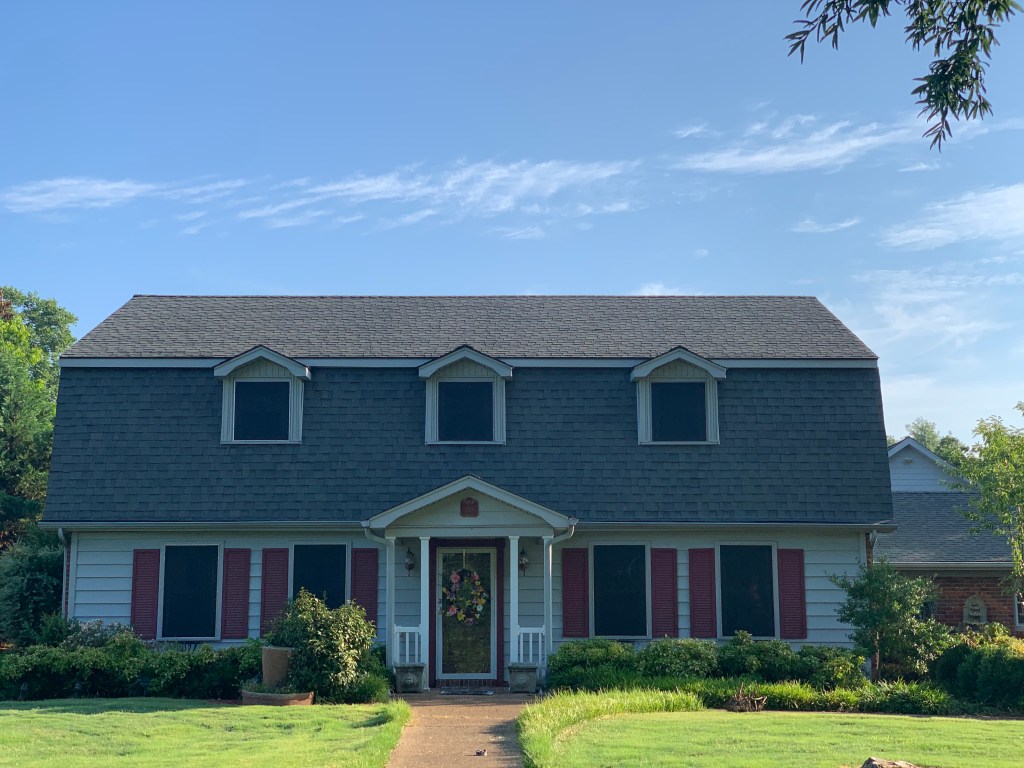
(Below is my Grandmother’s house. She renovated it after my Grandfather passed away in 2008. This will always feel like home to me.)
This week, I’m back to another client spotlight to share time with our very own Kimberly Young. We talk about the events that led to her starting with us two years ago, what’s kept her with us throughout that time and thoughts on improving the gym atmosphere to be more inclusive to black communities. She’s been an awesome person to work with and you’ll find out why we think so when you tune in. Download, subscribe, share with your friends and please take a moment to leave us an iTunes review.
I was speaking with a female client (let’s call her Cara) recently and I wanted to share some of the conversation in hopes that it helps you. This is a lengthy post, with a lot to sift through.
Like many, she gained weight through the lockdowns. Fortunately, she’s been reading my posts and articles and listening to my podcast to hear/see that she’s not alone.
There are three areas of our conversation I wanted to detail in this week’s post: Habits/Skills, Alcohol Consumption and Accountability.
Habits/Skills
In trying to determine how to reverse the trend, Cara mentioned that her alcohol consumption had increased. She was also doing some late night snacking (going to bed, waking up to let the dog out and eating while she was awake) and just being somewhat unintentional with her eating habits. In addition, she felt that she needed to get back to calorie counting.
I asked her to pause for a moment and focus on one thing. It’s not that any of those four variables were earth shattering things to change. It’s that it’s too many things to focus on at once.
Imagine Joe Shmoe walks in to RevFit and wants to lose weight. He determines that he needs to do more cardio, lift weights, drink more water and eat less processed foods.
Sounds easy, right? It’s not. It’s too much to focus on.
I asked Cara to pick the place where she felt she could influence the most change.
In other words: What one problem can you tackle that can give you a win?
In her case, we spoke about the alcohol. She has developed a routine with her husband which sounds like it became counterproductive to her weight loss goals. I get it. I think everyone who is reading this and likes to imbibe started drinking more during quarantine.
Again, not unusual.
But for most of us, we are now out of quarantine which means, we need to get some control (momentum) built back up again.
And let’s go back to Joe Shmoe for a moment. When a potential client comes to me, with the goal of weight loss, that list is very similar:
Eat in a deficit relative to your needs
Lift weights
Drink more water
Do your preferred type of cardio
The list looks profoundly simple. However, every one of these things forces your life into a dramatic turn. You can’t eat the way you used to when you eat in a deficit. Portion sizes and food choices must change.
Sure, showing up to lift weights is relatively easy to do. You schedule the appointment, you show up, you lift weights and then you leave. That’s great. It also may have required you to change your schedule, perhaps go to bed earlier or wake up earlier and it’s disruptive.
How about water? If you normally don’t drink much and I ask you to drink more, it’s a chore. For some of you, it might feel like a part-time job. Drink, pee, drink, pee, drink, etc.
Oh yeah, and cardio? We have to do that too? No, you don’t have to do it, but it might help. Plus, your heart likes it even if you do mind-numbingly repetitive things like running (bleh!)
Alcohol Consumption
I’m going to try and tread carefully with this one because there’s almost no way to address all of this without sounding like a psychologist/psychiatrist which I am not. I’ll use both anecdotal and observational circumstances to highlight some of my points so I hope you’ll take all of what I’m saying with a grain of salt.
I will reinforce that nearly all of my clients who partake in the consumption of alcohol increased their alcohol consumption during quarantine. That shouldn’t surprise anyone. It’s not just an alcohol thing, either. The same thing happened with food. I had very few clients who lost weight during the quarantine. Chances are, you didn’t lose weight over quarantine either. That small percentage of mine who did succeed with weight loss are unicorns and I have sent their DNA to a lab so we can replicate them and I can sprinkle their fairy dust on you…
Let’s again consider the increase of alcohol intake and food normal and par for the course since we have arguably, as a society, gone through one of the most chaotic and stressful times any of us have collectively seen.
I hope that it, at the very least, opened your eyes to the fact that you “might” need some new coping skills to handle stress. That’s not a judgment, by the way, I’m not going to judge a soul who’s reading this. As you’ll see, I’m going to go down in the sinking ship too because I wasn’t immune to the effects of the lockdown either.
As I’ve said many times in the past, I am not, nor have I ever been a particularly heavy drinker. My body doesn’t agree with it. When I had my lengthy drug problem (circa 1996-2006), I did fine with a boatload of drugs in my system but alcohol was always a completely different monster for me.
However, my alcohol intake did indeed increase during quarantine. And, as these things have a tendency to do, when you take in more, you develop a tolerance and that just leads to more…
Let’s come back to Cara.
She noticed that during the quarantine, her husband started to make and experiment with mixed drinks, cocktails, etc. I know that they also enjoy craft beers and the like as well. These are significant calorie bombs and if you’re looking for a place to cut back, what you’re consuming in the way of liquid calories is ALWAYS a place to be mindful of.
To her point, I also got a little bit creative with mixed drinks over quarantine too. Now that I have this obnoxiously large bourbon collection, what started as simply making Manhattans for my wife from time to time became Mint Juleps, or Bloody Widows or American Breakfasts on Sunday mornings.
What I found with these drinks was two-fold: 1) I drink mixed drinks way too quickly. They go down like Kool-Aid for me. Not a good thing if I were someone who needs to watch caloric intake for weight loss. 2) Without fail, alcohol in the morning makes me tired. That wasn’t a problem during quarantine when you don’t have a damn thing to do. It’s more of a problem now when there are actually things to get done on a Sunday afternoon and all I want to do is take a nap.
I also noticed some other things about alcohol consumption. The earlier in the evening I start drinking (say 5-6p), the more I’m inclined to want more than one drink. If I could push my intake to later, say, 7ish, I’m more inclined to just have one and then go to bed. That’s relative to the person. I go to bed early because I’m up early every day.
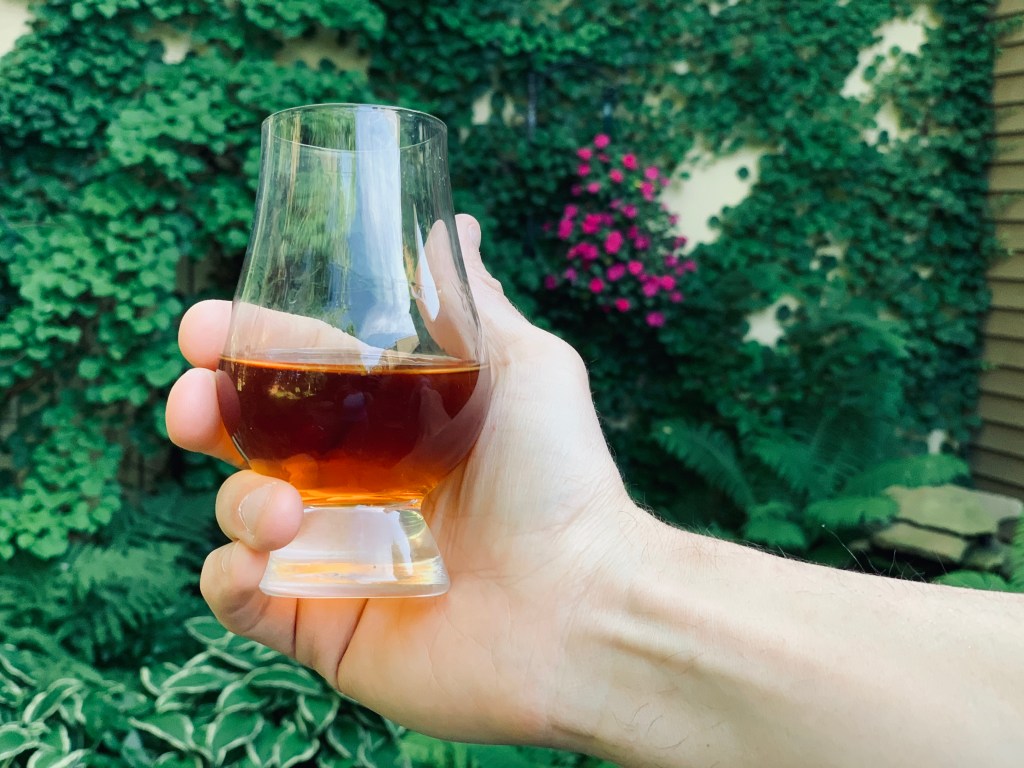
I also noticed (hence the picture posted below), that I’ll drink more slowly if I use a nosing glass than a tumbler. There’s something about the way the glass feels in my hand that I take my time with a nosing glass. If I drink bourbon in any other glass, I don’t sip it, I down it.
I referenced all of this to Cara the other day. I will never, ever tell anyone to stop drinking. It isn’t my choice to make. However, if weight loss is your goal and you like to imbibe, I can pretty much guarantee you that you’re going to have to cut back. It’s all going to be a matter of how you cut back.
Here’s where we’re going to wade into muddy waters.
One thing I have tried to share with as many people as possible is my experience in rehab. I went to rehab in 1998 and it was mandatory that we attend AA and NA meetings. Everyone, male/female, was there for a different chemical dependency and emotional set of hurdles.
The topic came up about the notion of alcoholism. One person said: “Well, I don’t drink every day. I only drink on the weekends.”
The therapist leading us reminded us, it’s not about how much or how often you drink. It’s about your emotional attachment to drinking.
This could potentially be framed up as:
-the desire to drink alone
-drinking to get drunk
-drinking to forget about your problems
-drinking daily
-binge drinking on the weekends
-spending your day in anxious anticipation of drinking
The strange thing is that many of us have fallen into one or more of those descriptions at one point or another in our lives. It doesn’t automatically define us as alcholics.
Or does it?
I raise this question because over the last three weeks, I’ve had three different clients (1 male, 2 female) express the sentiment that they may be, indeed, alcoholics.
And here’s the thing, it doesn’t matter to me if you are or you aren’t.
What matters to me is:
Are you okay with that?
Are you happy?
Despite being (potentially) an alcoholic are you getting close to your goals?
Stepping away from alcohol for a moment, the same could loosely be applied to food. Do you have a healthy relationship with your food? If not, does it merit seeing a professional about that who has experience working with eating disorders?
Ok. Back to alcohol.
We live in a society that is socially accepting of heavy drinking. In other words, it’s normal if you drink beyond the stated 1-2 measured servings per day per person (1 for women, 2 for men).
However, your goals are important to you.
As my readers/clients know, I am all about the calorie. So, in the grand scheme of things, I don’t care whether the bulk of your caloric consumption comes from juice or from food, from alcohol or from steak, from veggies or from fruit. It all counts. It all matters. And, if you care about HOW your body looks and feels, you may want to be more discerning about the quality and variation of your intake.
One of my clients recently raised a great point. Should she have to give up drinking? No, not necessarily. However, if she hopped on the scale each week and was pissed off that the weight wasn’t going down, guess what I’m going to ask about? The drinking. Why? Because I know it happens at enough frequency that it could be holding her back.
Then, she has a decision to make: Does she cut back on alcohol and focus on quality food or does she cut back on food so she can keep drinking? That’s her call.
I will tell you, unequivocally, that what was once a 1.5/2 oz pour of bourbon has increased to closer to 3 oz for me. That’s nightly. That’s about 200 calories (I drink neat) every single night. I don’t plan on giving it up but if I needed to lose weight, I would probably either drink less frequently or measure my pours. Part of that is because when I drink (and this will be like most of you), I almost always eat more as well.
To sum all this up, if weight loss is your goal, look at every single area of your intake and decide: Where can I cut back?, Am I in control of my alcohol intake, and What is the big picture effect of my consumption? If you’re not sure how to answer these questions, perhaps involving a loved one/close friend can help with areas where you may not have as much self-awareness.
Accountability
As mentioned earlier, one of Cara’s challenges was the increase of calories from having cocktails with her husband. I asked her to consider who was the person typically asking for another round of drinks?
Since quarantine, I have one liberal shot of bourbon and that’s it. My wife, on the other hand, despite drinking the same amount as me, has a higher tolerance for alcohol. While it doesn’t happen often, she will likely be the one who asks: Do you want another?
For me, it’s almost always no. For one, I hate how I feel after the second drink. It doesn’t taste as good as the first and even though the second won’t necessarily make me drunk (not my goal anyway), I hate how I feel the next day.
However, it highlights the point I want to raise about Cara.
Whether your problem is food or alcohol or food AND alcohol, if weight loss is your goal, one of those situations is absolutely YOUR challenge.
First, define who the saboteur is in the household. (Caution: I’m not trying to start a war in the household). I just want you to determine, are you the one asking for second helpings of food/drink or is someone else suggesting it?
Second, have the difficult conversation about this. This comes up so frequently for my clients and it’s a HUGE roadblock to your success if you don’t address it.
Third, you not only need to know how to use the effective words to stop or reduce this behavior but you need to know the verbiage in return that helps you stop the behavior if you are the one causing your own problems. In other words, if my wife was actively trying to lose weight right now and she had plateaued, we could look at alcohol consumption as a potential area based on what I’ve said in this post. She and I would have to have the conversation about declining the extra drinks if she wants to get to her goal faster. Since I’m not the one who typically suggests the second drink, we would have to address not only the fact that she does but how she wants me to express that to her in a way that is not nagging or discouraging to her efforts and goals of weight loss.
Lastly, and this is a touchy one because, again, it affects so many of my clients: Your goals are your goals. No one else deals with your obstacles with your perspectives and your self-talk. Otherwise known as “no one else is walking in your shoes.”
I should also mention the fact that during quarantine, many of us resorted to eating and drinking in abundance as something of a bonding experience. We were now spending more time than ever with our loved ones, who in turn were dealing with the stressful situation with us and, admittedly, were following many of the same behaviors as a way to cope with the situation.
It’s extremely easy to throw our loved ones under the bus when it comes to sabotaging and counterproductive eating/drinking behaviors. How often do you hear someone say: “Well, I’d be down in weight if she/he didn’t bring those fucking chips in the house!” That may very well be the case. You didn’t buy the chips, they did. However, you are in control of your behavior and if there is food/drink in the house that you cannot successfully navigate/moderate on your own, that’s on YOU. If you’re not taking the step to address this head-on, other people will always be the reason you don’t lose weight and you can play the victim card over and over again.
Let me take some of the steam out of that statement before I get a bunch of folks riled up about that. Relationships end because of things like this. Fundamentally, it is on a similar level as talking about finances, child-rearing, etc. How we eat is deeply personal and on a very basic level, many of us, despite our requests, don’t like being told what to do. Some people are very good rule followers but some people just like to toe the line.
I have a list of foods that I cannot successfully moderate in my home. In no particular order it can be chips, crackers, candy, and cookies. That doesn’t mean every single kind of those foods. It does mean most of them. I can’t even see them or I start thinking about them. And if I think about them, I eat them. I know myself well enough after nearly 45 years on this planet. If weight loss were the single most important goal on my plate with regards to my health, you bet your RevFit ass my wife and I would be having a discussion about those foods being in the house. They might not be her problem foods but that isn’t the point. We all have our vulnerabilities. Know yours, address them, rally the troops and get to your goal. It’s your body, no one else can control what happens to it except you and you will most likely need help (beyond mine) to get there.
As we have a fondness for saying at RevFit: Showing up and lifting weights is one of the easiest things you’ll do all day, what you do with the extra 23 hours of the day is where the biggest change will happen. And that absolutely has to do with how you interact with your fingers and your fork.
Thanks for hanging in there with me on this. I think I need a nap now…
I’m honored to be joined this week by fellow coach Chrissy King. This is her debut on the show and she has put together a timely and incredible workshop called “Anti-Racism For Wellness Professionals”. There has been a lot happening socially and I’m very grateful to Chrissy for putting together an exhaustive and comprehensive project to help others in the industry know how to better serve others at this time. This was a very eye-opening workshop to participate in and I highly recommend it to anyone looking to understand more about what’s happening with the black community and how we can all shape a more unified country to live in. Download, subscribe, share with your friends and please take a moment to leave us an iTunes review.
To learn more about Chrissy’s work and to purchase the workshop:
Since my father passed in 2011, I’ve spent the last nine years measuring myself against him; this seemingly endless path to fill his shoes, a sentiment I expressed to him weeks before he left this world.
I think it can be helpful to have role models, to have people who you look up to, and people who inspire you to be better, to do better, and to live better.
I think it can also be a damning curse to live in those shadows too.
It’s these shadows that I feel can cripple us as individuals.
You are meant to be the best version of you that you can possibly be. Not a perfect you, the best you; an ever evolving and changing you.
That best version will go through peaks and valleys of being admirable and awful, beautiful and tragic, confident and scared. Sometimes, you may embody a lot of that all at once.
I’ve said it before, I’ll say it again: on my best day, I’m a fraction of the man my father was. It’s those misgivings and shortcomings that keep me doubting myself, sometimes consciously sabotaging myself. As in, if I can’t be him, maybe I’ll be the antithesis of him.
He would have never wanted that for me.
Each year, around the anniversary of his passing, Father’s Day, his birthday, Christmas, etc. I have to remind myself of the things he taught me, or rather, the things he hoped I would learn.
When I reach those standards, it’s a sense of accomplishment. It’s something my mother and I will nudge each other to say: Dad would have been proud.
And when I fail?
Y’all when I fail, I fail big.
This is where I find that comparing myself to him, especially all these years after he’s passed feels like I’m letting him down even more.
He never taught me to be more like him. He just taught me how to get better.
He never said “Do it like I do it. It’s the best/only way.” He always said “Give it your best. That’s all I’ll ever ask of you.”
When I think about how I interact with my clients and how I interact with my boys, maybe I did learn something from him:
-Do your best.
-Keep trying.
-Don’t give up.
He never beat me over the head about it. He didn’t stand on a soapbox. He just did the best he could to lift me up and say “Look. There’s a path. There’s a way. Follow it.”
Coming off the heels of Father’s Day and still dealing with the ramifications of quarantine that I saw my clients experience, it was easy to see things go drastically off anyone’s desired path.
When you’re trying to improve your health, via diet and exercise, it can be easy to find inspiration in others. If you see someone lose 30 pounds, you tell yourself “If they can do it, I can do it.”
When you struggle, you doubt yourself and the words become “What have they got, that I don’t? More willpower, more dedication, or better genetics? Maybe I’m just unlucky…”
With my clients, I have conversations with some who compare their bodies to others: I want shoulders like hers, I want a midsection like his, I want to be as strong as they are.
I believe some of that inspiration can be a guide. In other words: this is what you must do with your training and your diet and your recovery and your priorities to achieve something close to that.
I especially feel for my clients who, despite making good progress before quarantine, seemed to lose ground during it. That insidious feeling of failure crept in and paralyzed some of my clients.
I know that feeling well.
Every time I recognize that I haven’t fulfilled the characteristics my father tried to raise me with, it’s easy to just say: Fuck it, why bother?
And nothing good comes from that question. Nothing good happens when you give up on yourself. You don’t wake up one day and are miraculously gifted a different, easier life.
The life you want, the health you want, and the body you want come from work. Sometimes tedious, tiring, and relentless work.
That’s, as they say, where magic happens.
I come out of Father’s Day each year in something of a lull; thankful for my beautiful boys and sad my Dad’s not here to enjoy them.
I know how hard my father worked to give my mother and I a good life. I do the same for my family. I’m still trying to get this parenting thing down because, quite honestly, my Dad had a gift. I’m still trying to learn how to have some of that.
To my clients: Work hard, do the tedious things, and reap the benefits. Don’t worry about the way you compare yourself to others or even your younger self. Those comparisons rarely matter. The progress you make with what you have available to you now does.
To my sons: Your Opa is looking down on you and smiling every day. Your Dad will be doing the best he can to show you what kind of love he was raised with and pass it down.
I guess that’s a good way to live anyway.
(Below is the last three years of Father’s Day celebrations with my boys. They keep getting bigger so Dad has to keep getting stronger.)





 Jason Leenaarts