With every twist and turn, every fantastic moment or tragic detour, there’s an opportunity.
Each day that I wake up, I have another chance, another glimpse at a different reality.
I’ve taken the parts of my story, the ones where bad and good things happened to me, the ones where I’ve initiated the good and bad in my life, and those parts have shaped me.
Defined me.
Molded me.
It’s a flawed life. It’s a painful life. It’s a beautiful life. It’s an ever-evolving life.
I have allowed that story to shape friendships, my marriage, fatherhood and into owning a business.
I have allowed that story to define who I am, how I live and how I react to the things that happen around me.
That story has nearly killed me on a handful of occasions.
I’ve shared many parts of that story on this blog.
It’s said that depression is when you are chained to the past and anxiety is when you are in fear of the future.
I’ve suffered both (not always in a clinical sense) for much of my life.
And there are stories you tell yourself too.
Whether you are the victim or the hero(ine).
Whether the way you were raised defined every choice you made into adulthood.
There are those who point a finger at the people around them and say: You’re the reason I am this way.
And those who aim their finger at the mirror and say: You are the reason I’ll be better today.
Every decade of my life has brought it’s share of: I can’t believe that happened to me, I can’t believe I did that, and When will you ever learn from your mistakes, you stubborn son of a bitch…
It’s in between those moments, those mind-altering, game-changing moments, that life continues to happen.
A life that can either pass us by because we stop paying attention to the signs or a life we become enraptured by.
If your life is anything like my life, you have a past that has defined you.
Respect that past.
Let it guide you.
However, if you are a prisoner to your past, you have a choice.
You can continue to write the same story over and over again and be discouraged by the results (the definition of insanity…)
Or you can take your proverbial pen to imaginary paper and start writing something different.
Something better.
Something to be proud of.
Something your children, your loved ones, and the people who have left this world believing in you knew you were capable of.
Coach Ashley Day of Kick Ash Training joins me this week. In this episode, we talk about the mental obstacles that stand in the way of our progress and how a change of perspective can be the difference in whether we succeed with our goals or not. We also talk about how a foundation of strength and self-respect can be the best place to start.
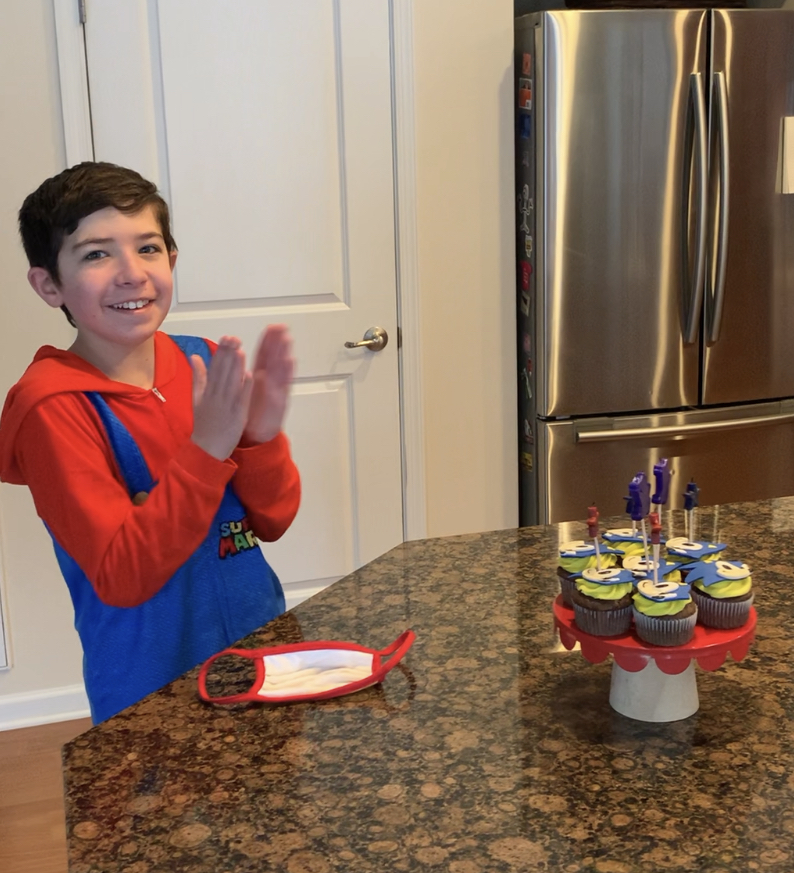
By time you read this, my son, Jackson, will have turned 13.
I have my own shock at how these last 13 years have passed by so quickly.
I am still telling myself, like any other parent who’s been through this: I can’t believe I have a teenager…
Most of my readers know that Jackson has autism and for all of his 13 years to date, he’s been just about one of the happiest children I’ve ever had the opportunity to know.
I write this week’s blog in tribute to my new teenager and from a bittersweet place in this pandemic.
When everything began with the coronavirus last year, it affected our ability to see Jackson as frequently as we might normally.
His mother and I have maintained a great relationship despite our marriage not working but the initial fear when businesses were on lockdown last spring, led us to agree that perhaps it was safest and best for all parties that we put a pause on visitations until we all felt more secure with how the virus spikes were happening.
So, we didn’t see Jackson for about 2 months last spring and then we tried to pick up frequency when things “seemed” normal again. However, that was before a November spike happened in the state of Ohio and we put a pause on the visits again.
Unfortunately, during that time, Jackson’s mom tested positive for the virus and she self-quarantined away from Jackson and her boyfriend so that they were not at greater risk to catch it.
The good news is, she has mostly recovered and is trying to get back to her previous strength and stamina relative to where she was prior to diagnosis. And, Jackson remained negative.
So, as a father, it’s been tough to go through so much of the holiday season and into his birthday month with only a handful of FaceTime calls to get us through. If there were a silver lining to Jackson having autism, it’s that he has shown little negative effect of being in quarantine. He has access to all of his toys all day long, can partake in school virtually and rarely has to hop out of his pajamas. I’d say, that’s quite an enjoyable life for him.
I know that others have it much worse. I have clients who can’t visit their parents in nursing homes and may have had to discontinue traveling to see family because of safety concerns for elder parents. I can’t rank my pain against anyone else’s.
It’s just part and parcel for how 2020 has transitioned into 2021.
I know that we miss having him the way we did when things were “normal” but that this too shall pass and we’ll look back at this as a small hiatus in his long, happy, healthy life.
Sebastian definitely misses having his big brother around and no doubt will shower him with more attention than he likely wants the next time we have him.
I was fortunate to be able to see Jackson on his birthday after nearly three months of not seeing him. He was, as I suspected, just as happy as I could ever ask him to be.
I write these blogs each year for my boys as part diary and part just a place to put some random thoughts.
To Jackson, he may never be able to comprehend these words but I write them as if maybe one day he could.
Until then, this is my love note to my son: Dad loves you (and misses you) and I can’t believe you’re 13.
Happy Birthday, to my young man, my little “meatball” who is not so little anymore.
Melody Schoenfeld returns for her 4th appearance on the show this week. You can check out episodes 88, 163 and 205 to hear her former appearances. This time, we get to chat about her new book “Diet Lies and Weight Loss Truths” which she co-authored with another veteran of this show, registered dietitian, Susan Kleiner. If you’re looking for a great dive into the most popular diets out there and a very un-biased, evidence based look at what they do and don’t do, Melody did fantastic work here. She also looks into the other areas of successful dieting that tend to get overlooked like: psychological impact and goal setting. This is another HIGHLY recommended read.
To learn more about Melody’s work and to purchase your copy of “Diet Lies and Weight Loss Truths”:
Several years ago, I wrote a blog outlining some options to pick from when venturing into the conventional fast food drive-thru. I kept those options higher in protein and still calorie controlled for those wanting to have better choices and not feel like they derailed their weight loss efforts simply because they made a planned/unplanned detour into McDonald’s or some place similar.
However, due to changes in public taste, the need to add variation, and relative availability in light of the pandemic, many of those options may have changed since then.
As a refresher, if all you had access to was fast food options, you can still lose weight effectively assuming you are consistently in a caloric deficit.
Some people may snub their nose at the quality of fast food as opposed to a home cooked meal and they wouldn’t necessarily be wrong. However, this isn’t a discussion on quality, it’s on portion sizes/quantity.
Here’s the thing: no matter where you go in the domestic U.S., a Big Mac will always be the exact same amount of calories because they’re made in the exact same way, every.single.time.
Several years ago, my friend and fellow business owner, Kristie, asked me for some help with her weight loss goals. I knew that Kristie was a big fan of cheeseburgers and when I gave her a calorie estimate to shoot for, I asked her to consider how she wanted to include cheeseburgers into that diet.
Kristie, not unlike a lot of people, assumed that any weight loss plan would deny her the ability to have her favorite food. I reminded her that calories mattered more than food choice for weight loss efforts and she asked: I know that a Big Mac is about 500 calories. Are you telling me that I could have a Big Mac every day and as long as I make up the difference to get to my calorie goal, I’ll still lose weight?
“Yes”, I said “That’s exactly what I’m saying.”
To Kristie’s credit, she didn’t eat Big Macs every day but she had them several times a week. She also removed alcohol from her plan for a lengthy amount of time in efforts to keep her calories in line as well. Ever since then, we’ve always joked about her great weight loss success on the “Big Mac Diet”.
Of course, Kristie’s not alone. Internationally renowned coach, Jordan Syatt, ran the experiment on himself too. You can read about that HERE.
If we were arguing that Chipotle (for instance) is a healthier option than McDonald’s, the source of the food might be “better”, relatively speaking. The problem with places like Chipotle is that you are at the mercy of the person serving you. A “little” bit of sour cream means one thing to one server and something different to another server.
I was recently at a Chipotle near RevFit and I asked for a “little” bit of sour cream. My server, the nice gal that she was, dropped a loaded ladle full onto my steak bowl. Estimated calories in that ladle: somewhere between 300-400…IN SOUR CREAM!
I wasn’t the type to be nasty about it and ask them to make it over again but now that my bowl was drowning in sour cream, it definitely made caloric navigation a lot more difficult to do.
Places like Subway and Panera aren’t exponentially different either. While you do have the advantage of watching them prepare your food, you don’t have complete control over how added options like: dressing, cheese, guacamole and added oils can drastically derail what might otherwise be a decent option.
Of course, it does help that many of these chain restaurants post the calories for the foods they offer. It makes it easier for you, as the consumer, to make a more informed choice of what you’re going to order.
Where things tend to get dicey is when we cave in to options that send us further from our goals. In other words, maybe you weren’t planning on getting fries with that burger but as soon as the person taking your order asks if you want to add fries, that little voice goes off in your head says: Fries would be delicious! YES! Order the fries!
And even on the low end, you’re adding an easy 300 calories to your meal and often double that.
So, here are some loose guidelines to help control the calories at the drive-thru or fast food establishment. I’m including places like Chipotle and Subway even though they aren’t always considered in the same breath as McDonald’s and Burger King.
While you certainly don’t have to follow all of these, adhering to any combination of them can drastically reduce your total caloric intake in that meal.
–Skip The Side. Whether it’s chips at Chipotle or Subway, a baguette at Panera or fries at Wendy’s, your entree probably has enough calories in it to be sufficient for a portion size (and often well beyond that). If you want to stack the deck in your favor, opt out of the side offering.
–Grab a bottle of water. While diet drinks are often low or zero in calories, a bottle of water is going to not only guarantee a zero calorie option for you but you get the added bonus of better hydration, flushing excess sodium through your system and assisting with processing fiber and waste removal. I try not to over hype any one area of a diet but you’d be hard pressed to find anyone who won’t encourage an increase in water intake.
–Swap a veggie for a starch. A really easy way to cut back on calories without necessarily counting them is to swap out your starch option and toss in a veggie instead. Sub shops like Jimmy John’s let you wrap your sandwich in a leaf of lettuce and Chipotle can set your bowl over greens as opposed to rice. While salads can be a good option, if you’re not careful they can actually be higher in calories than a sandwich. I spoke in greater detail about that HERE.
–Watch the condiments. While I’m on the subject of salads, take any dressing on the side so that you can control the amount you’re consuming. I’ve seen hundreds of calories get added to a fairly innocuous offering of food in dressing/oils alone. It’s not just dressing though. For weight loss purposes, steer clear of mayonnaise, tartar sauce, and dressing. If you really want those condiments, get them on the side and use the smallest amount you can. Mustard and balsamic vinegar tend to be safer options from a calorie standpoint. Also, never discredit how added black pepper or oregano can spice up a dish without adding much in the way of calories either.
–Hold the cheese. Need a ridiculously easy way to cut back at least 100 calories from any food option? Remove the cheese. 100 calories is conservative though. I’ve seen Subway and Chipotle put well over that in their offerings simply because they don’t measure cheese. It just gets tossed on. Other high fat options that can get out of control are avocado/guacamole, sour cream (as mentioned above) and added nuts.
–Eat mindfully. One of the reasons it’s called “fast food” is that it’s not only fast to make but exceptionally fast to eat. I can inhale a burger in around 5 bites. Total time to consume? Probably less than 3 minutes. Does that sound mindful? Of course not! Take your time chewing the food, slow down your pace and actually try picking out the combination of flavors. Disclaimer: One health professional I know used this tip to actually turn his patient away from fast food dining. The slower pace of eating allowed his patient to realize that: Wow! This stuff doesn’t actually taste very good when I slow down my eating!
Ultimately, you are in control of this dining experience for yourself. By virtue alone, eating higher quality foods doesn’t necessarily equate to fat loss and eating fast food doesn’t mean you will gain weight. Some options are custom-designed to 1) make you eat more than you might normally 2) make you come back for more.
How you handle the convenience, the chance of impulsive options and the wide array of ways to play things in your favor is on you. These tips may just help along the way.
And for the record…I did eat this Big Mac (pictured below) and if I had to guess, this was probably the first time I’d eaten one in about 15 years. I do love a good burger but I’d be perfectly content if I didn’t have another Big Mac for another 15 years. I also got a small order of fries which I was not able to finish. Total calories had I eaten everything would have been around 750 calories. By comparison, I would have much rather eaten a burger from Five Guys but I would have paid a greater price (calorically speaking) to do so. A regular hamburger at Five Guys is approximately 700-800 calories and their small order of fries is over 500 calories.
So, if weight loss was my obstacle, what’s the better choice? I think you know the answer.
I am honored to welcome Coach Brendon Rearick to the show this week to chat about his brand new book “Coaching Rules”. We get to touch on his fascinating story in the industry to date and the origins of his book. On the cover, are 4 bullet points that Brendon tackles in greater depth within the book. We break down each point and why they matter to coaches regardless of how long you’ve been in the industry. I can’t thank Brendon enough for not only sharing his time but writing a great book as well.
To learn more about Brendon’s work and to purchase “Coaching Rules”
Each day, I’m inundated with emails and social media notifications of the things I enjoy. Namely: new books, new records and new types of bourbon.
Each new email into my inbox is a veritable Russian roulette in “what can I be tempted by now”?
Every time I hop on social media, it’s a crapshoot of which ad I will be enticed by since many of my online searches might revolve around books, records and bourbon. As a result, those algorithms know exactly what types of things might be of interest to me.
Each day, is a lesson in temptation. Do I buy the shiny new thing to add to an ever-growing collection?
I have “collected” things all my life: from comics to cassettes (yes, I’m THAT old) to CDs and so on and so on. Of course, there simply isn’t enough money to buy it all but that doesn’t stop me from caving in when I get that dopamine hit of “Buy Now” in whatever form it takes.
It’s more insidious than that, though.
Feeling that need to buy the shiny new thing may be due to a sense of scarcity. Are there limited quantities? That makes it more enticing for me. Marketers know this which is why they make use of limited editions and show notifications of “Only 3 left!!”
Buying something new may also come through a sense of entitlement. In other words, I earned/deserved that because I did “such-and-such thing” and this is how I show myself appreciation.
Or, sometimes I’m stressed out about something and retail therapy feels like the only (albeit hollow) solution.
Much of this plays into the notion of F.O.M.O. (a.k.a. Fear of Missing Out). In other words, if I don’t buy that thing now, what if I never get to own it, drink it or consume it?
And, like a lot of things in life, actually experiencing the “thing” is not quite as fulfilling as the reward of simply purchasing it.
When I was younger, this incessant need for the next material thing would supersede my priorities like paying my bills. As I’ve gotten older, that same impulsive behavior is there I just have to be very cognizant of it and remind myself (where possible) of where my priorities are in line with my desires.
There’s more to dive into on a later date about my tendency to succumb to those material temptations and the parallels with my weight loss clients.
For me, it’s those physical gifts that tempt me. For you, it may be food…
If you’re trying to lose weight, think about how scarcity affects you. Do you eat everything in front of you because you have a fear you won’t know when your next meal will be? This happens sometimes for clients of mine who may have experienced some degree of poverty in their childhood. However, these same clients are rarely ever experiencing true scarcity as adults. For those of us raised in the “Clean Plate Club”, perhaps it wasn’t about scarcity but the belief that we had to finish everything on our plate because that’s how our parents raised us.
Think about that sense of entitlement as well. I have clients who succumb to the ice cream, the chips, the treats and the snacks for no other reason than because they “had a hard day” and they “deserved it” or they bargain with themselves by saying “I skipped the fries with lunch so I earned the chocolate after dinner!”
And, sometimes stress is the main culprit for why my clients can’t stay consistent with an eating regimen. When things get tough (as they invariably do), the food plan is the first thing that goes to hell in a handbasket.
A breakdown in dialogue between coaches and clients highlighting these problems might go something like this:
Clients say: I need more willpower.
Coaches say: You need better habits.
One thing I continue to talk about with my clients is the notion of the food environment. If the tasty, easy-to-overeat foods are around, guess who’s going to dive into them when the world gets weird: You are.
By the way, were you living in the domestic U.S. last week when all that madness was happening at the capitol? How’s THAT for weird?
This is why it’s helpful to step back sometimes and ask yourself: How often am I tempted?
Are chips lying on the kitchen counter? That’s temptation.
Did your kid forget to finish his fries and nuggets on his plate? That’s temptation. (One nibble and a couple fries won’t hurt, right?)
Are there any candies leftover from the holiday season that probably should have been thrown away by now and keep lingering in hopes that your willpower will win the war? (Good-effing-luck with that!)
Y’all we are not even 2 weeks in 2021 and I can tell you with all confidence that the weirdness of 2020 isn’t over yet. Willpower, while nice in theory, won’t last. Just ask my bank account.
Shape your environment better. There is absolutely nothing wrong in admitting some things are not easy for you to control right now and if weight loss is your goal, food is the place to set your sights. Are you designed for success or just more temptation?
For myself, when I know that finances need to be on point, I have to push certain emails into my spam folder, unfollow certain pages on social media, and remind myself what the priorities are. I’m not much different than you, I just have different things to be impulsive about.
Temptation is EVERYWHERE.
How will you control it?
(Featured below L to R: Superdrag-Head Trip In Every Key, as great of a power pop album as one could ask to listen to; The Dutch House, a novel by Ann Patchett I just finished reading; and Blanton’s, a good bourbon with a reasonable pricepoint and an absolutely obnoxious secondary market price).
It’s been a long time since I’ve done a solo episode but due to some tech issues on my end, the show I had originally planned to release will be coming out next week instead. I give some more insight on that in today’s episode. I also take some liberties with my most recent blog of the same title to give you some thoughts on how to make 2021 a great year for you and your health.
I’m not sure about you but 2021 already feels different than 2020 to me.
Maybe I’ve just adjusted to the relative weirdness that we all had to face last year.
Like many of you, I did struggle with workout consistency (and that’s despite owning a gym as my playground), I did struggle with stress management, with sleep and with feeling like I just wasn’t doing enough for myself and my own goals.
However, I reminded myself that I needed just as much forgiveness and flexibility as I would ask my clients to give themselves. It was one hell of a year no matter who you are and what you went through.
So, before you attempt to race yourself to the finish line with another crash diet, another balls-to-the-wall HIIT class or 7 days a week of two-a-days to erase the guilt, shame and any other nasty taste 2020 left in your mouth: breathe, take a moment, and read on.
There are so many questions about what’s best for our health in light of a pandemic, I thought I’d make a short list of things to make your life easier as we begin the year.
1.) Be less aggressive. Fans of Jocko Wilink and David Goggins won’t like this and I know there is a time and place for faster-harder-more in a workout. If there wasn’t, high intensity training wouldn’t be as appealing as it is for some folks. However, if you’re not training for a sport/race/event, pulling back the intensity to get your year started might not be the worst idea in the world if you need some traction and a general sense of feeling better about yourself. Most of my clients are well past their glory years when it comes to what their “peak condition” was. Training a 50 year old body the same way you trained a 20 year old body is not exactly a recipe for success. There’s mileage on you for a reason. Respect it.
2.) Steer clear of food documentaries. I haven’t watched a food documentary in nearly a decade. I’m not about to start now. In fact, a great deal of the company I keep in the industry (folks far smarter than myself, mind you) aren’t much different. While documentaries have managed to find better financial backing, higher quality cinematography and more celebrity endorsements behind them, they are also not completely honest either. If you’re going to waste an hour or two of your life watching one just to have it push your emotional buttons and completely alter your diet landscape, do yourself a favor and look up the “debunks” and criticisms of the documentaries as well. I can assure you, you’ll find more holes than Swiss cheese in the arguments and learn to be more skeptical of the information you receive (not a bad attribute to have in general).
3.) Learn but execute. If you are going to spend the time, effort and energy learning about a diet that you think might work for you, make sure you actually DO the diet. All too often, people spend an inordinate amount of time learning about (insert bestselling diet plan here) and very little time actually following the process within. If you haven’t found a way to make a diet work for you (a.k.a. actually maintaining the results) within 90 days of learning about it, that’s a pretty good indicator that it’s not suitable for your lifestyle right now.
4.) Success leaves clues (and so does failure). Credit to Coach Dan John for the “success leaves clues” wisdom. Look back on last year and determine what went right for your health plan. Did you find a way to consistently exercise? Are you more comfortable making meals at home? Continue to nurture those things. In addition, look constructively at what went wrong as well. How can you improve that? If lockdowns and quarantines threw you off of your game, what can you work on to change that response now?
5.) Consider abstinence but question it as well. I hear a lot of people talk about things like “Dry January” for cutting out alcohol or “Veganuary” for experimenting with a vegan diet. While I certainly understand the allure of “cleaning up” certain parts of your diet, ask yourself where you expect to be at the end of the month. Does cutting out alcohol or animal products directly result in weight loss for you? If so, great! Maybe those changes were enough to demonstrate where attention needed to be placed in your diet. By the same token, are you going to spend that time learning why the things you’re excluding had the affect on you that they did or will you go right back to your pre-January behaviors in February after the challenge is over?
6.) Get strong. It’s hard to write anything about health improvement without asking you how you’re challenging your current level of strength. This is not the same as venturing into powerlifting. This is about pushing your body on those last 2-3 reps of an exercise. It’s about stimulation. It’s about progress. It’s about paying attention to your form and listening to how your body responds to resistance. And if you haven’t heard, life is about resistance. Scratch that, 2020 was a profound lesson in resistance (and your reaction to it).
7.) Have fun. Learning how to eat for your health goals is not exactly entertaining. It’s a skill. One worth learning if you want to reap the benefits. Exercise is not always enjoyable. Find the parts that are and look forward to them. Most importantly, be aware of the areas of your life that you feel are holding you back from better outcomes. Find enjoyment and curiosity in fleshing them out to change what you need. There’s no race to a finish when you’re learning how to respect your body. A cup of patience and two cups of consistency can get you a long way (refer back to Tip #1).
Coach Sebastian (and Dad) peace-ing out this week. Make this January a more exceptional one than last year’s.
I welcome Robert Linkul to the show for our final episode of 2020. Robert is the owner of Be Stronger Fitness and the creator of Training The Older Adult. In this episode, we touch on how the pandemic affected his brick-and-mortar business, how he has continued to improve the lives of his clients in light of those changes, and why his community has been continued to be successful. Robert also shares his thoughts on where the future of the industry may be heading and a call to action for other coaches who are uncertain where to direct their attention next.