It’s a conversation Marissa and I have been having with our son, Sebastian, as well.
The sentiment being: that we encourage him to be kind, to be considerate, to be respectful…
And also, that’s it’s possible to be both nice and to not allow yourself to be disrespected.
Respect, I’ve found, can be a heavy word.
It’s something that I think many people can relate to not always giving where it’s due.
As the adage goes: respect is not given, it is earned.
I look back through the pages of my own life and I can see where, when I had no respect for myself, I, in turn, had little respect for others.
And it was in those moments, I would commit many of my gravest mistakes as a human being.
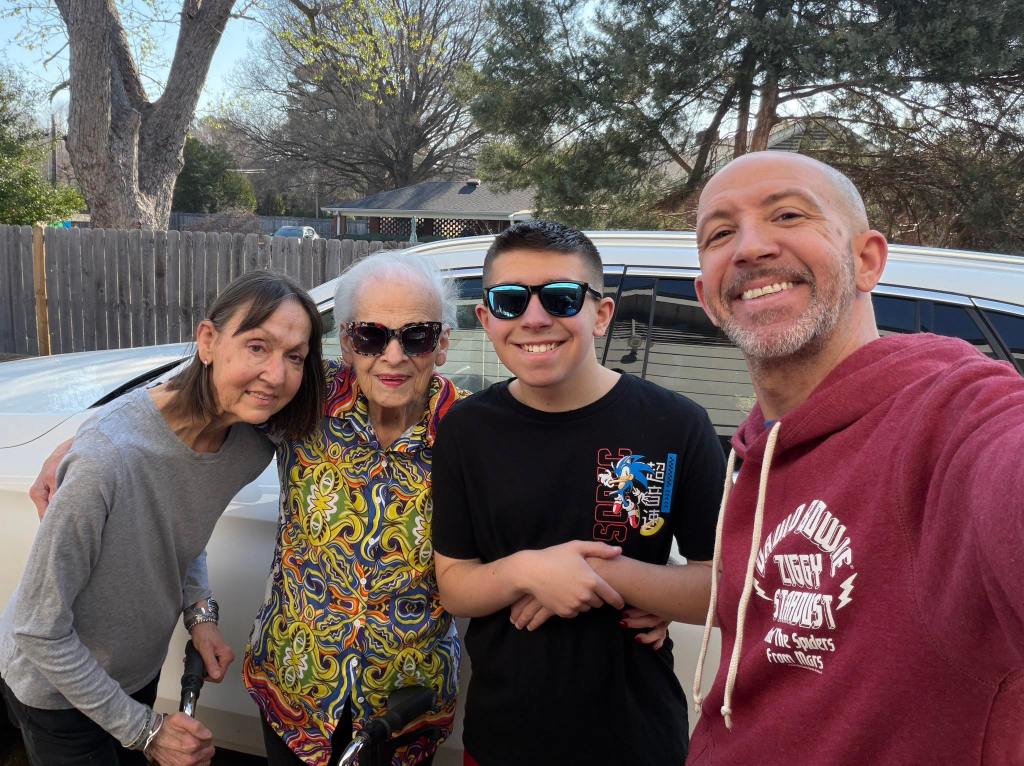
I’ve listened to stories told by my mother, stories told by my father (before he passed away in 2011) and stories I still hear from my maternal grandmother (pictured below, who just turned 93 this week) and I hear countless examples of where respect was granted and where respect was lost.
I write these words as a father, a son, a husband, and my life tends to work much better when I work from a place of respect.
Respect for myself, first and foremost.
Respect for others, as a result.
Easy words to write, much harder to live and demonstrate.
I believe, that when we can work from a foundation of respect, we listen better, we care more deeply, we pay attention to signals our bodies give us about when to press the gas and when to pump the brakes.
It’s not a perfect process, it’s not a perfect philosophy, it’s flawed and nuanced and fraught with periods where it all goes off track.
It’s a sentiment that’s been a consistent thread in our home, in our family’s conversations, and I believe it will remain something we talk about for many years to come.
I believe it takes a certain degree of self-awareness to see where it’s missing in your life.
I also believe that when we have it, and show it, the world inside us and around us tends to improve.
I know how it was taught to me, and even though it has not always been at the forefront of my mind and my behaviors, respect is something I try to always bring back to the center.
And I hope you’ve found a place for it in your life as well.
Back around the time I got started in this industry, circa 2007-08, fasting was seeing a resurgence in popularity.
While fasting itself has been around for centuries, part of the recent popularity surge was its effectiveness for fat loss.
Advocates of fasting will often cite improved cognitive function, better mental clarity/focus, and their ability to handle and manage their hunger signals.
That being said, fasting is often contraindicated for those struggling with eating disorders.
When I was watching fasting protocols regain momentum in the fat loss world, there were two protocols in particular which appeared to be the most popular:
-A 16:8 protocol with a daily fasting window of 16 hours and an 8 hour eating window.
-A weekly 24-hour fast, often fasting from dinner of one day to dinner the next.
Of course, there are myriad ways to utilize a fasting protocol, using shorter or longer fasting periods and also, alternating days of fasting.
While fasting is not magic and when studied in metabolic wards where calories and protein are matched against a consistent energy deficit, both dietary methods work with the same level of effectiveness.
Ultimately, any diet tool you can stick with consistently is likely going to have the best results.
I do want to give a rough breakdown of how fasting might work to your benefit and how it might work against you.
Let’s start here.
We’ll assume that your body’s current maintenance calories are 2000 calories per day to stay at the same body weight.
This also correlates to 14,000 calories per week.
It’s roughly estimated that 3500 calories equals one pound of fat.
The numbers aren’t perfect but we want a guideline to work against.
One approach might be to reduce daily calories by 500 to drop you down to 1500 a day (10,500/week)
After one week, you “should” be down one pound of fat.
One person might decide to keep themselves at a relatively consistent energy deficit throughout the week to achieve this drop in fat.
Another person might utilize a fasting protocol to do the same.
Bear in mind, that if you use a 16:8 protocol, it doesn’t mean you’ll automatically be in a deficit. It’s still very much possible to consume at least 2000 calories during your 8-hour eating window.
However, if that protocol makes it easier for you to hit 1500 calories, perhaps it’s a good tool.
If you opt for the 24-hour fast, you’ve removed upwards of 2000 calories from one day of the week, but you’ll still need to find the space in the remaining 6 days to account for the additional 1500 reduction. One way to do it, is to change your deficit from 500 a day to 250 a day. This will still get you to the same weekly goal.
One thing to note is what happens to your carbohydrates. Carbs hold 3-4g per water per gram of carbohydrate. If you’re seeing large drops in carb intake, “water weight” will also be reduced which usually shows up on the scale too.
As the adage goes, if you see a fast drop in the scale, that’s probably water weight and if you see a fast rise, that’s also probably water weight.
A couple I currently train, were recently telling me about a particular fasting protocol which worked for them sometime back: a 48-hour fast followed by a one day feeding.
Using our 2000 calorie example, that’s 4000 calories removed from the diet during each fast and the same fast is completed twice in a week:
Theoretically, 8,000 calories are removed from the diet over the span of one week. That’s just over 2lbs of fat lost per week, even if the feeding days are brought back up to 2000 calories.
It should be noted that if you’re engaging in high intensity activity like boot camps, CrossFit, HIIT classes, etc., fasting protocols may reduce your energy levels.
In addition, with as much talk as their is around retaining lean muscle during a fat loss phase, you will likely find it much more difficult to hit your protein goals week after week if you follow the aforementioned 48-hour fasting protocol. As a result, you may end up losing more muscle than you wanted to.
What I will say is that I’ve done some fasting protocols myself and I’m not personally a fan. I have an active lifestyle and I prefer to be fueled appropriately throughout the day.
In practice, I have had many clients experiment with fasting protocols during their time training with me. While most will see results initially, the novelty tends to wear off and once old habits return, I find it’s harder for people to come back to their fasting programs.
As with any dietary method (I’m not referencing fasting for religious purposes), if you feel that fasting helps you get closer to your goals, by all means utilize it.
And if you feel that it leaves you ravenous, lethargic, or frustrated with your results, perhaps another tool may be better.
When Melanie (not her real name) came to work with me, one of her main goals was fat loss.
What we saw when we looked a bit deeper into her lifestyle habits was that her sleep routines were a big area of opportunity.
Melanie is married, raising two children under the age of 10, and she knows, as many mothers do, that the time you get with your children moves at a rapid pace.
You don’t get those years back.
So, time spent teaching habits, going over homework, feeding, nurturing, cooking, cleaning, etc. in efforts to provide for the household are tasks that feel and often look like a more than full-time job.
And when the end of the night rolls around, there are the bedtime routines of the children, and that precious amount of space where Melanie can decompress, spend time with her husband and drift off to sleep.
Where on Earth is there time to focus on her health?
I won’t go far into the belief that we “all have the same 24 hours” because, while the clock still moves at the same pace for everyone, what that time looks like is very different from one to another.
In Melanie’s case, we needed to zoom out on those 24 hours, specifically, the waking hours, and find out, where can we possibly increase the time spent sleeping, so that not only is she getting longer, more restful sleep, but that the remaining hours in the day are as productive as possible.
What we saw was that, if Melanie slept longer, her cravings for sweets was reduced.
If the cravings were reduced, she was eating in a deficit.
If she was eating in a deficit, she saw better progress on the scale.
If she saw better progress on the scale, she felt better about herself.
If she felt better about herself, she felt she had more mental and physical bandwidth to work out.
And if she worked out, she improved her energy levels for the day.
Nearly everything improved in the span of a day, if and when, she made sleep hygiene her number one focus.
There’s a caveat though…
Focus in one place might mean sacrificing time in another.
It might mean slightly less time with her children getting them to bed, or reading shorter bedtime stories.
It might mean slightly less time with her husband.
It might mean slightly less time decompressing (or doomscrolling) on her own.
10 minutes here, 10 minutes there, 20 minutes elsewhere…just to improve her sleeping time by 30-40 minutes each night.
It wasn’t a plan meant for perfection.
It was a plan that, when it worked, improved the next day by significant measure.
And maybe sleep isn’t YOUR issue.
Maybe it’s fitting in time to exercise.
Maybe it’s finding time to meal prep.
Maybe it’s carving out 30 minutes of peace, meditation, or time otherwise to yourself where you can focus on just you.
Time spent in one area is time taken away from someplace else.
Everything comes at a cost.
And this is not a post telling you what you SHOULD do.
It’s a post to get you to explore what’s missing in your life and how to add it back in.
Because if other areas of your life are going to be compromised, make sure it’s in exchange for something that truly benefits you.
For nearly the entirety of my career in this industry, I have struggled with one thing in particular.
To be fair, I’ve struggled with a lot of things…
But one area, that has continued to elude me is knowing who my avatar is.
And if you’re not sure what I’m referring to, in business, it relates to who you market yourself to.
You’re trying to capture a picture in your mind: Who is my ideal client? What do they look like? What do they wear? Could I spot them walking down the opposite side of the mall?
And for all of these years, I didn’t really know.
I wanted to work with everyone: kids, adults, seniors, middle-aged, men, women, etc.
Basically, I just wanted people with great attitudes who wanted to improve their health.
To be honest, it worked pretty well for me.
But over the last several months, I have nailed it down.
I know WHO it is, I know WHY it is, and I think I’m/we’re pretty damn good at knowing HOW to help them.
It’s women.
Women who want to feel better about themselves.
Women who want to own their strength.
Women who have spent much of their lives caring for others and forgetting to care for themselves.
Women who are retired.
Women in the menopause transition.
Women who are tired of taking shit from others.
Women who need confidence.
Women who are underappreciated.
Women who might, one day, stand in the mirror, flex their bicep and say: I built that. That’s my hard work.
Does that mean we’ll stop serving men? Not at all. We’ll take them too.
Does that mean we’ll stop training their kids? Of course not. We’d love to have them.
But I will tell you, if I haven’t told you before: There is something almost indescribable that happens to a woman’s face when she’s accomplished a feat of strength that she’s never been able to do before.
It’s transformative.
I’ve seen it. My coaches have seen it. And if you’re a woman who can dial back her memory to remember when it happened to you, you know exactly what I’m talking about.
It will change you forever.
The more I’ve dialed this avatar in, the easier it is to conceptualize it.
And there is arguably no better time in recent memory than now to make women stronger than ever.
If you don’t believe in yourself yet, give us some time, we’ll help you get there.
We’re watching little miracles happen on a near daily basis.
And I’d hate for you to miss out on it.
Of course, if you’re not close to the Rev, the invitation still stands.
Find a gym, find a coach (if you can), and find the piece of your life that can change you indefinitely.
I’ll just give you one little push….you better work.
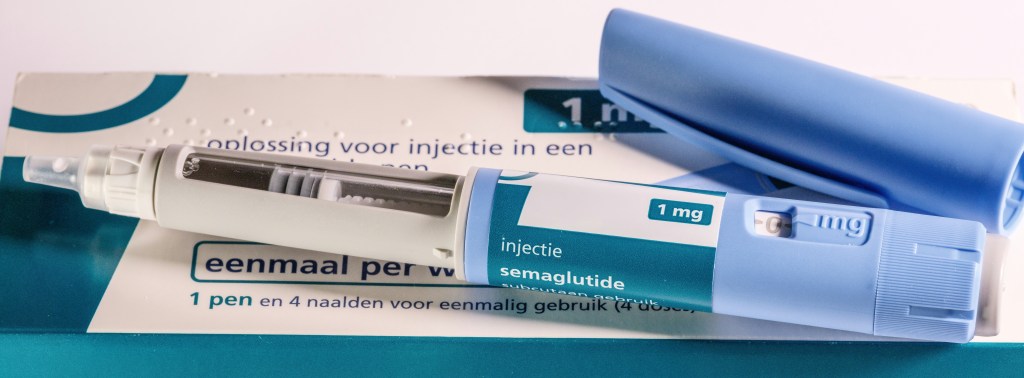
I had not intended to write another article on GLP-1s right after last week’s post.
However, there’s another element towards the usage of these medications that I haven’t covered to the same degree on this site and I thought I needed to spend some time this week doing so. The week that this article is being released also happens to be when we recognize eating disorder awareness.
Starting back a couple of years ago, I began to observe results on the opposing end of a given “weight” spectrum.
Before I go much further, I need to establish some points:
-If we were to look left to right on this spectrum, the far left side could comprise those below a normal range of BMI. The far right side, would be those above that normal range.
-I understand that BMI is wildly nuanced and does not take into consideration those who carry more muscle mass than others. There are also sociological impacts of that measuring point that span races, genders, cultures and more that I won’t delve far into in this article.
-On both sides of the spectrum is a correlation of greater health risks and it’s the left side of the spectrum that I want to focus the rest of this post on.
-“Health” means something different to everyone. You can be metabolically healthy at any weight and you can be metabolically unhealthy at any weight.
One thing I’ve observed is that some people, who have seen great results on the medications, stay at dosages that take their bodies below the normal range.
Much like we see with individuals who struggle with anorexia nervosa, some of the side effects can include:
-Thinning hair/hair loss
-Dry, brittle skin
-Loss of menstrual cycle (amenorrhea)
-Cold body temperature
-Fatigue
-Dizziness
-Chronic constipation
-Loss of bone mineral density and/or prone to fractures
-Decreased cognitive function
And while the initial positive benefits of fat loss (which vary between individuals)were once there, the body is now at a place where other negative outcomes are now present.
In many cases, the associated doctor or RD, may recognize what’s happening and start lowering the dosage or reducing the frequency of dosage to allow the individual to consume more food and return to a more stable health baseline.
Of course, the other concern, is individuals, many of whom are influencers on social media, who are making unsubstantiated claims of the medications so that you can take advantage of their discount code on compounded (unregulated) versions of the medication.
Many of these same influencers are already in lean bodies using predatory messaging to persuade you to believe that YOU are broken and THEIR version of the medication can help.
Compound this with the very real problem of other influencers not being transparent about their own GLP-1 usage and offering up their “what I eat in a day” posts, “how I train” posts, all while showing you their carved up midsections.
The overarching message being: You’re not working hard enough, and if you were, you could have this body, too.”
My stance is this: If it is within your power and ability, build the strongest, healthiest version of yourself. This may mean a body that weighs more than you think.
Stay current on your bloodwork, as negative outcomes will likely not show up overnight. They may take time to develop and that may make recovery from those side effects more difficult to bounce back from.
Being on a GLP-1 does not guarantee that you will struggle with disordered eating behaviors just like being on a diet does not mean that you will be diagnosed with an eating disorder.
However, we are seeing a rise in people who are taking the medication to its furthest extremes and, in doing so, ultimately risk organ failure.
It wasn’t that long ago that phrases like “Thin is in”, “Nothing tastes as good as skinny feels” and more “pro-ana” statements spread like wildfire. Along with it, came the intense pressure to be thin, no matter what cost, and it took a long time for the general public to push back against that narrative.
While I have been a strong advocate for the usage of GLP-1s for so many people because they hold so much promise and potential, it’s not an open invitation for all.
It’s not just your current health that matters, it’s the future of your health as well, because what good is longevity if you can’t actually enjoy it?
And the enjoyment can be found across myriad of body shapes and sizes.
BMI is not the whole picture.
Body fat percentage is not the whole picture.
What your scale reflects back to you is not the whole picture.
Last week, I mentioned that the FDA is continuing to crack down on companies offering compounded versions of GLP-1 receptor agonist medications.
At the same time, a recent update in this world is that there is now an FDA approved oral alternative that is not only a viable option for those who don’t like needles but is also more cost effective.
And yet, many people who are either currently on GLP1s, no longer taking GLP1s because of cost or side effects or considering taking them in the future, there isn’t enough dialogue around how to stack the deck in their favor.
Here’s a short(ish) list:
-Protein
You have to make sure you’re getting in enough protein. You may find that smaller, more frequent meals help to manage any GI distress on the medications.
The same protein considerations that would be helpful on a fat loss plan without a GLP1 is the same if you’re on one. The difference being: if the medication is working the way it’s supposed to, you may find that your current calorie intake is relatively low.
Stick with leaner sources of protein, protein shakes/powders, and possibly protein bars that aren’t filled with sugar alcohols.
A protein range to shoot for is 1.2-1.6g of protein per kilogram of current bodyweight. So, a 200lb (91kg) person is aiming for 109-146g of protein per day.
You don’t have to be perfect, but you need to be close. This helps support your lean muscle mass, your immune system and helps you stay satiated while you’re losing fat.
-Fiber
One issue that many people fall into when they’re in a significant energy deficit is that they don’t consume as many carbohydrates and that’s where you’ll find fiber.
Fiber can be found in many vegetables, fruits, whole grains, nuts and seeds. Be mindful that nuts and seeds also have a fat component to them and they can push your calories higher than you might otherwise recognize.
A good place to shoot is 12-14g of fiber from a variety of sources per 1000 calories in your diet. A very loose guideline which does not apply to all is 25g for many women and 35-40g for many men.
Increase fiber slowly. If you’re currently averaging 10g per day, don’t try to meet the minimum right out of the gate. Try adding 5g or so over a couple of days to see how your digestive system handles it before going up the next small amount.
You want to have enough bulk in your diet to still have quality bowel movements. If you’re concerned about the consistency of those movements, the Bristol Stool Chart is very helpful.
-Strength Training
If you’re not already lifting weights, this is your cue to start. At least 2 full body workouts per week can set a great foundation in making sure you’re supporting and stimulating the lean muscle mass you currently have.
Many of the claims of “Ozempic Face”, “Ozempic Butt” or whatever other headline is making the waves can be helped by keeping an eye on the nutrition assistance listed above and starting to lift weights.
Everyone responds to fat loss in different ways and not only can you not “spot reduce”, you also don’t have a great deal of control over skin elasticity with fat loss. Building muscle (even if you’re not trying to be a body builder) can be crucial.
-Food Journal
I can’t stress this part enough. When the GLP1 is working the way it should, it might feel like magic is happening: food noise is reduced, you’re no longer finishing your plate, portion sizes you used to eat you are boxing up for later and the pounds are just dripping off.
The problem is, some people can’t stay on them. Either the side effects are too significant, they aren’t affordable or they didn’t plan to use them long term.
If you still have a fat loss goal, the same principle applies: you have to find a deficit you can stick with and the best place to start is with the food intake you had while you were on the medication.
Make note of portion sizes, food selection, meal and snack frequency, etc.
It’s been reported that many people regain upwards of 2/3 of their starting weight when they get off of the medication. If you don’t want to go that direction, having a food journal that shows you what worked can be extremely helpful.
Please don’t mistake this sentiment for being “easy”. One of the most impressive benefits of the GLP1s is the reduction of food noise which can be a “make or break” when it comes to success.
If you can’t stay on the medication for any reason, the food noise will likely return as well. Getting yourself as close as you can to your ideal weight will give you the flexibility of increased calories when you’re eating to support body maintenance.
This assumes also that you’re still keeping up with the previous 3 tips in this article to make the process as “simple” as possible.
-Support
I’ve been working with clients on GLP1s since 2022. I believe the number of clients who are on them will only increase over time as the medications become more cost-effective and newer, more powerful medications hit the market.
I do not see GLP1s as a shortcut, but rather, an integral tool for those who need it and have found success utilizing it.
On the flipside, I also support those who have had to discontinue GLP1 usage. Everyone deserves to have a sounding board and resource to turn to with or without the medication.
Need my help either face-to-face or online? Drop me a message.
I haven’t pulled one of these articles together in a bit so let’s dive in.
-If a diet plan tells you that “calories don’t matter” for you to succeed, they’ve likely done the work to give you a plan that forces you into a deficit so that you still get results. You may not be focused on calories on this plan, but calories still matter whether you’re accounting for them or not.
-I will probably never say that daily weighing is a necessity for successful fat loss. However, if you do embark on daily weighing, you need to have a good mentality on the fluctuations that happen on a day-to-day basis. Said differently: Just because you’re in a deficit, doesn’t mean your weight will be down every day.
-Please don’t let someone tell you that excess cortisol is stopping you from losing fat. Yes, it is possible that you have chronically elevated cortisol. It is also possible to be very stressed out and be successful at fat loss.
-Fat loss progress, much like strength training progress is rarely linear. You can be doing “every thing right”, and the scale will not go down (yet), and every workout won’t be stellar. Stay in it. Results come from appropriate work done consistently (not perfectly) over time.
-If you haven’t taken a maintenance break in a long time from your diet, here’s your sign to do so. A maintenance break is not a free-for-all. It’s a strategic phase eating enough food to support your body, your goals, and your activity level based on where you are at this moment.
-There’s some interesting movement happening in the GLP-1 world. If you’re taking a compounded version (as of this writing) you may not have access to these medications much longer. Where appropriate, you may need to talk to your doctor about pharmaceutical options if you qualify for them.
-Also on the GLP-1 note, if you’re currently taking them, please make efforts to get enough protein, enough fiber, and that you’re making progress with your strength training. Preserve as much of your lean muscle as possible.
-Being “stuck” at a given weight for a week is not indicative of a plateau. You would need data to show that little to no movement is happening over the span of weeks. I like digging deeper after two weeks of no movement. Some coaches, who I hold in high regard, might stretch that out over three weeks. I leave that up to the individual but if you’re truly stuck, look at areas where you can move slightly more or eat slightly less. Nothing major, nothing “crazy.” Also, keep in mind that a smaller body requires fewer calories so if your intake hasn’t changed in quite some time, you may need to make some tweaks. Also, read the above note on maintenance breaks.
-Despite what some might say, fat loss does not solve all problems. If you have an ache and a pain somewhere, there is no promise that losing fat will absolutely make that pain better. It “might.”
-Be careful with the world of “peptides”. Many of these are highly unregulated. Please don’t take my word for it. Listen to this podcast if you would like more insight. Just because some influencer on social media with a physique you admire says to take them, they are very likely not a qualified source of information.
Several months ago, Andrea got clearance from her doctors, post-double mastectomy, to resume strength training.
She got online and started looking for coaches locally who had experience working with cancer survivors and my name came up.
It was also around that time, that RevFit had to give a sorrowful goodbye to one of our own, Kelly Battershell, who lost her battle with cancer after having been in remission for several years.
Cancer has been something near and dear to me, since we lost my father to it in 2011. And ever since then, we’ve had many cancer survivors come through our doors.
So, when Andrea reached out, I told her that I did have experience there and that I’d be happy to liaise with both her doctors and PT to help her get her strength back.
It was a slow process.
Fortunately, Andrea had been very active prior to her cancer diagnosis.
As such, we weren’t starting from “square one” per se, but we did need to start with care because I wanted to make sure her body, post-chemo, post-radiation, and post-surgery, would respond positively.
The first couple of months, there was a lot of dialogue between the two of us, specifically around upper body recovery, the scar tissue she had developed on her right side and trying to understand what amount of discomfort was appropriate and expected versus something unwanted.
And over the last few months, something changed.
We had been steadily building her strength back in the trapbar, and the numbers were moving a positive direction.
She also got clearance to start adding in pressing movements to target the chest and see what her body could tolerate.
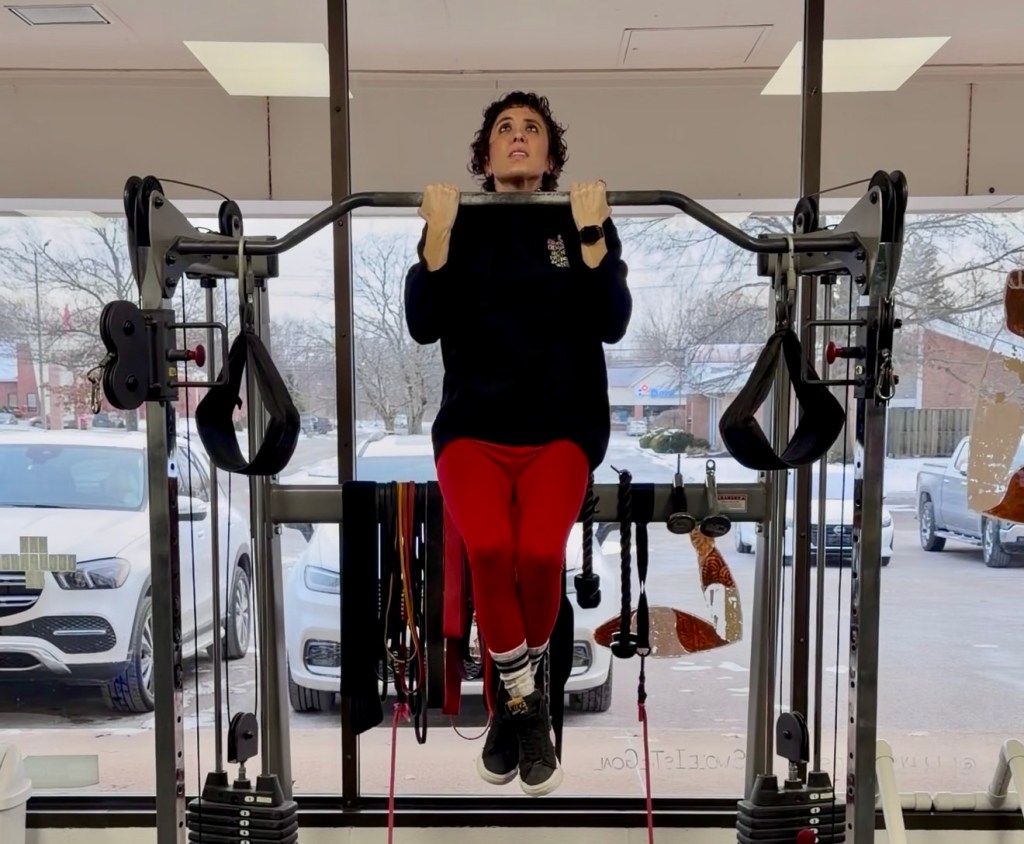
But the best thing, was that one day Andrea turned around to me and said: You know what I really want to be able to get back to? Pull-ups. I could do those before I was diagnosed.
So, I started her on the lat pulldown machine, testing a close grip (underhand) pulldown to see what she could do for 1-2 reps.
After we had a conversation about the weight she was pulling down versus her actual body weight, I moved her over to the pull-up bar, asked her to adopt an underhand grip (technically a “chin-up”), and see what was in the tank.
And after a moment of hesitation, she got the rep.
The look on her face was…priceless.
When she went back to her PT, she told her what she had accomplished. Her PT said: You’re the first patient I’ve had who’s been through what you have and been able to get back to that exercise.
Once Andrea saw that it “could” be done, then we started adding up the reps.
She can confidently do three sets of chin-ups for reps, she’s slowly building her bench press back to a heavy single rep, and her traplift keeps climbing as well.
This past weekend, she asked me: Do you think I can try an actual pull-up?
Let’s try it.
And after that same moment of hesitation, from a dead hang at the bottom, Andrea had an overhand grip on the bar and performed a flawless pull-up at a pace that begged for more reps (even though she stopped at one that day.)
That same look came across her face as it did when she hit that initial chin-up.
There are a lot of things that happen in a coach’s career that make showing up at the gym worth it over and over again.
And story’s like Andrea’s are one of them.
Because it’s not just the comeback from cancer. Andrea’s raising three kids, she’s a loving wife and she works full-time improving the mental health of those in her practice.
Cancer may have forced her to take a temporary pause, but she’s back with a vengeance, and we’ll do all we can to make sure she’s strong enough to continue that fight.
To Andrea, thank you for entrusting us with your care. What you’re doing with and for your body remains an inspiration. And we hope that your family, friends, loved ones and support system know how special that is.
You know, I turned fifty towards the end of last year and I didn’t “feel old” when it happened.
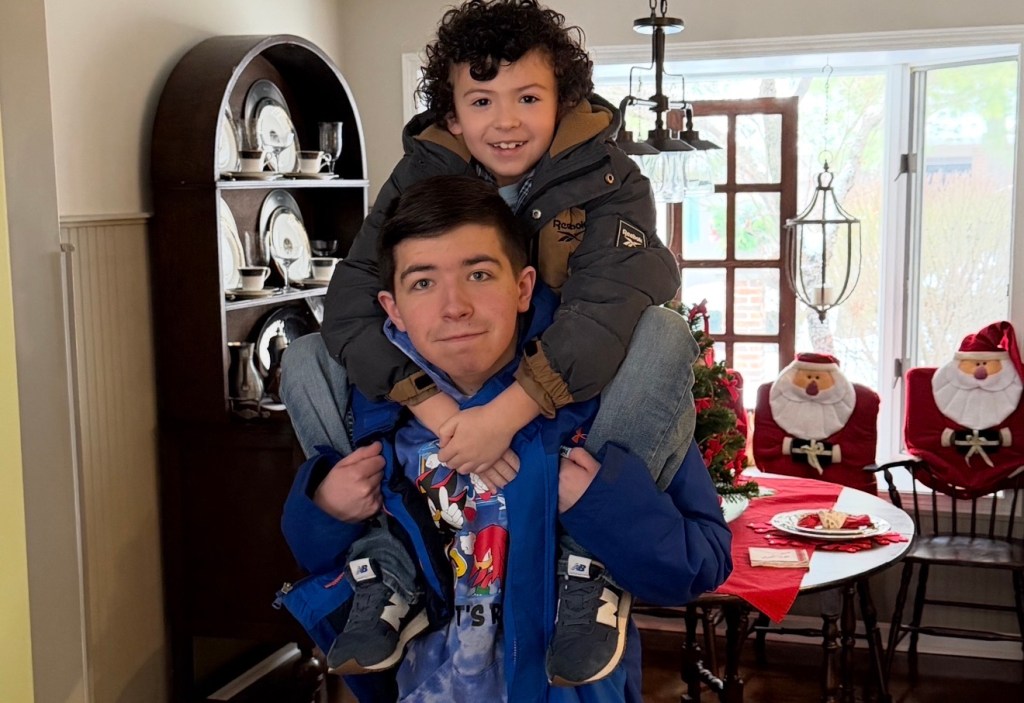
But for some reason, having an eighteen year old boy makes me feel kind of old.
Jackson turned eighteen over the past weekend and while that day may not mean as much to him as it might to a neurotypical child, it’s still pretty special to the rest of us.
The most notable thing that’s happened over the last year of Jackson’s life was related to his education.
Throughout most of his life, Jax has always attended schools made up primarily of other children on the autism spectrum.
The last couple of years, he had been at a school that seemed promising at first, but he kept disappearing between the cracks.
I take nothing away from parents of children with more severe forms of autism. I know those children are just as deserving of care and attention as one could ask for.
But the drawback for Jackson was the fact that since he was mostly so agreeable and didn’t bring a lot of attention to himself, that no one was there to push him and challenge him in ways we would want.
So, at the end of last year, the transition was made for Jackson to mainstream into a public school.
So far, it’s been a mostly positive experience.
While he is by most accounts, an eighteen year old who “should” be graduating high school with his peers, he’s been enrolled into an eighth grade class so that he can continue to not only get an education with his classmates, but go through the next four years of high school to graduate around the age of twenty-two.
But everything else with Jax is mostly status quo.
He still loves his toys and collecting as many as possible. He still gets into Legos, Funko Pops, and other assorted figurines.
He still loves movies and music.
He still loves to sing.
When he gets to spend time with his little brother, Sebastian, he’s typically very sweet and Sebastian still adores him.
And it’s so shocking to me that my “little meatball” isn’t so little anymore.
He’s a young man now, and I still have to wrap my head around that.
To Jax, we love you and hope it was a magical 18th birthday.
Here’s to another year of love, smiles, growth and evolution.
I’ve written about this many times on this site, and most recently, in reference to several of our clients who are hitting the biggest numbers when it comes to lifts.
We have a Top 5 board where we can rank the best of the best amongst our clientele. We’ve had it for around 6-7 years now and it’s always interesting to see who sets their sights on cracking into it.
Coach Mike Roder, who started off as a coach working directly under me, transitioned his position here and works exclusively with youth athletes three days a week.
Throughout that time, I’ve seen his roster grow, and despite the fact that nearly all of his clients are under the age of 18, we’ve seem some really impressive feats of strength from them.
To that, Mike started a Top 5 board of his own, shortly after he made the business transition.
There was a little bit of trash talking that was happening one day between two of my clients, one of whom had the best trapbar deadlift record in the gym, Pete T., with a personal best of 565 pounds.
Pete was giving a little bit of grief to Mitch M., whose personal best in the trapbar was well south of 565.
Pete said: Hey Mitch, why don’t you let me know when your traplift hits the puberty board over there.
And the reference towards Coach Mike’s Top 5 was the fact that there were indeed some big lifts on there but no one was topping Pete’s best.
That was, until Mike started coaching a high schooler named Alex.
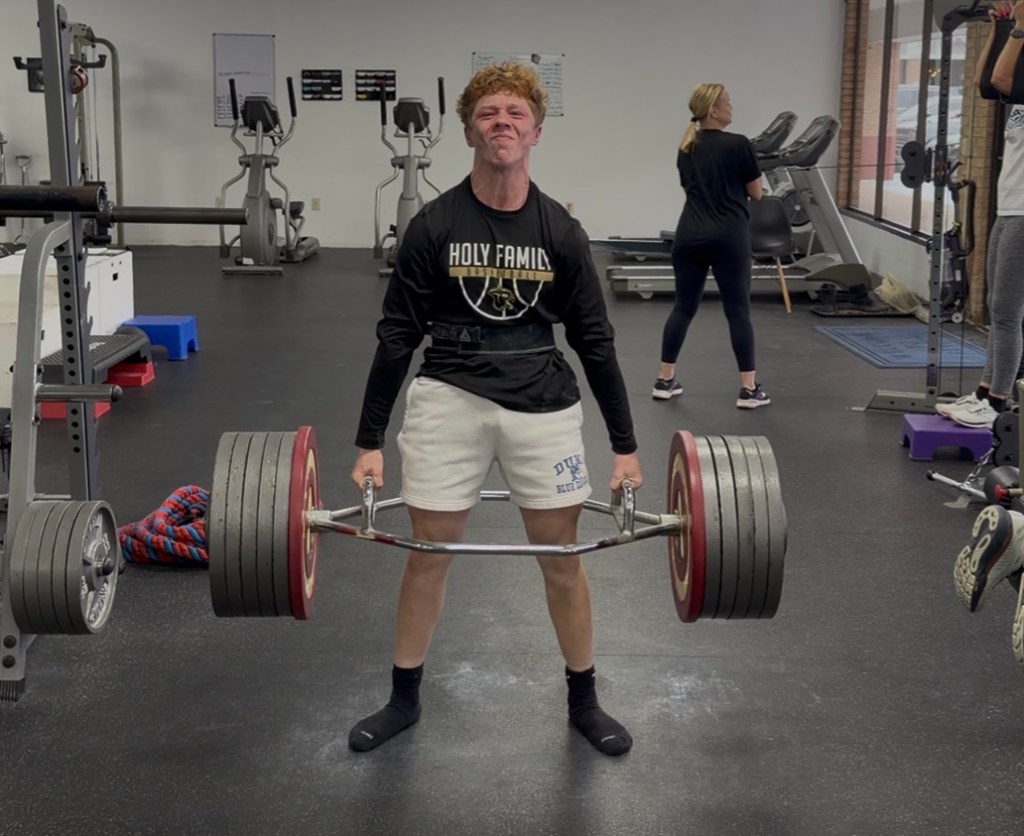
Alex not only beat 565, he finished with a colossal 615 pounds. This was right after Alex turned 18. He was a senior then.
And prior to Alex training with Mike, another athlete was putting up impressive numbers, his name is Billy.
Billy started with Mike when he was 10 years old and, even then, we knew that Mike had a shockingly strong kid on his hands.
Billy was putting up big numbers on squat, bench and in the trapbar, all while his classmates and friends were making their way in to train as well.
Sometimes, when Mike gets busy, if he’s short-handed, myself and my staff will help load and unload plates, and help spot lifts when necessary.
So, over the last few years, I’ve had plenty of time to lend a hand to Billy, amongst many others.
At the beginning of this school year, Billy told Mike that his goal in the trapbar was to hit 550 by time he became a freshman.
I had the opportunity to help Billy scale up and we saw very quickly that 550 was not only going to be an easy number to hit, he was actually going to make a run for the top.
In the meantime, one of my clients, Chris S., took the #1 spot away from Pete with 570×1; enough to take the throne on my board but not quite enough to topple Alex.
I asked Mike if he’d let me take Billy as far as I could.
The numbers kept climbing and one day, I asked Billy: Hey, how much do you weigh?
153, he said.
I looked at the Top 5 board and calculated where he needed to be for his next milestones and said to him: You know, when you hit 615 and tie Alex’s best, you’ll be the first person in the gym to hit a lift that’s 4 times your bodyweight.
Billy smiled and asked: Really?
Also, remind me how old you are?
13, he said.
Sure enough, Billy hit 615 at the beginning of this year to tie for first place and become the first lifter here to hit quadruple bodyweight in a lift.
And last week, he did one better: he hit 620 pounds to take over first place.
Let me remind you: He’s 13 years old, he’s just over halfway through 8th grade, and he pulled 620.
So, this is more of a brag on Billy and Coach Mike, than anyone else.
And also, to Billy’s parents, who despite the fact that genetics probably play a bit into his success, knew that he needed strength training to take him to the next level in his respective sports.
They weren’t wrong.
It’s credit to the time, effort, and care that Mike has put into his athletes to see them be the best they can be.
I train some youth athletes, but Mike has the majority of them, and being a small piece of Billy’s current success has been awe-inspiring.
And let me just say, this kid is going to be an absolute monster when he hits high school.
So, circling back to Pete, it may still be the puberty board, but those are big, big numbers.
Shout out to Billy, shout out to Coach Mike (who you can follow at mrodertraining on Instagram), and shout out to the RevFit fam, at large, who are not only witnessing greatness week in and week out, but competing in it, cheering it on, and finding ways to improve in ways that mean something to each individual who crosses through our doors.



 Jason Leenaarts