It’s been a while since I’ve done a cross-promoted show but this week I wanted to feature my friend and client, Shon Christy, as he premieres his entry into the podcast world. Some may remember that Shon was my first “official” guest on this show and he was also featured in my most recent book “A Revolution A Day”. Shon is a local mover-and-shaker in the social media world and we dive into a lot of what makes RevFit tick: from our community to the social media posts, content creation and more. I do hope you’ll subscribe to his podcast to learn more about the great work he does. As for us, I hope you’ll download, subscribe, share with your friends and please take a moment to leave us an Apple review.
I said those words to my therapist a few months ago and I’ve been repeating it to some of my weight loss clients as well.
It’s a difficult thing, our individual responses to stress and how we allow it to dictate what we do in our lives, our relationships, with our diets and how we treat our bodies.
Once upon a time, my only response to stress and emotional turmoil was to turn to drugs. There was rarely a shortage of them and rather than find a way UP from my rock bottom, I’d grab a shovel and keep digging (more stress = more drugs to cope with stress).
Think about that with weight loss.
When you’re stressed, what food (or drink, such as alcohol) do you turn to?
Recently, one of my clients highlighted my point perfectly:
“When I feel like shit, I eat like shit.”
Let’s break it down further.
Eating “like shit” can mean different things. It can mean “too much” of a healthy food or poorer quality food by comparison (what many term, ‘junk food’).
Drugs may be long in my rearview mirror but that doesn’t mean I don’t have counterproductive responses to stress. For me, historically, a big stress outlet is retail therapy. If I’m sad, bored, stressed, or feeling resentful about something, that dopamine rush of buying something new is a quick surge of short-lived pleasure. (Thank you, Amazon, for making that problem infinitely easier to disappear into).
If I were chronically broke and struggling to pay my bills, my accountant (Hi, Deb!) would say to me: Well, you know Jason, you did spend $XXX on Amazon last month. Don’t you think you could pull it back a bit?
Treat your food in a similar manner. If we view our eating behaviors on that kind spectrum of “this gets me closer to my goal” and “this takes me further from my goal.” That’s one perspective to take.
I always like to highlight the way my friend and fellow coach, Kelly Coffey says it: “Is this the most caring thing I can do for myself right now?”
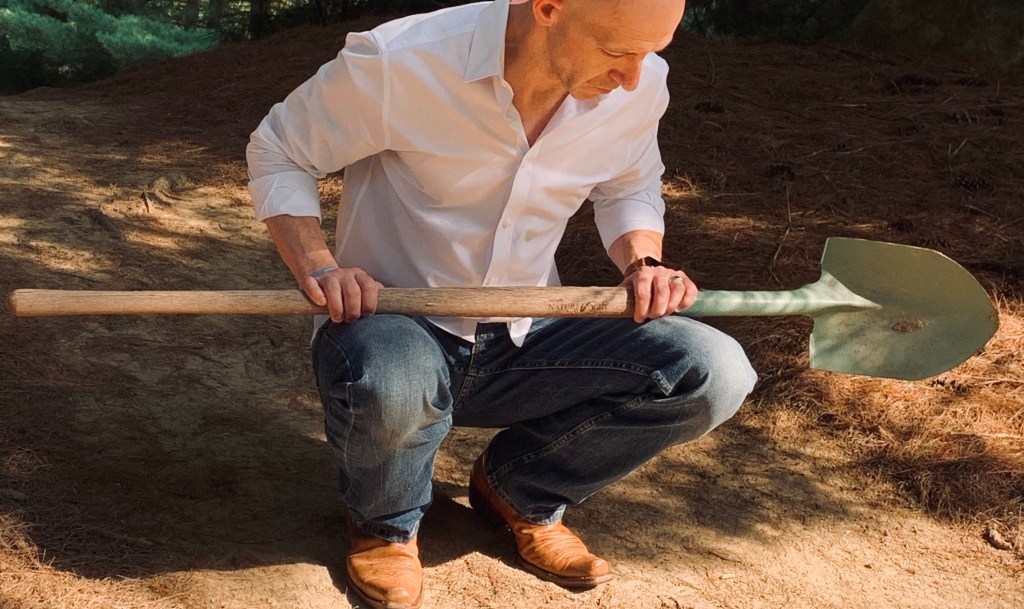
Personally, I like the visual part, hence the picture attached to this article. When you’re down, what do you do? Grab the rung of the ladder and pull up or grab the shovel and dig deeper?
The beauty of hitting “rock bottom”, whatever that looks like for you, is that you are literally one choice (one rung) away from a change of scenery and a change of outcomes.
Your stress, your response to stress, is your personal battle. If you look at your life and your weight loss progress with the view of “Well, this was a stressful day/week so I’m not stepping on the scale”. You have the data to tell you that food is your outlet for stress.
Focus on that. Put down the shovel.
Or, keep digging. Your choice.
For me, it’s never perfect. Sometimes I climb, sometimes I dig. I just know intimately what rock bottom feels like and I’ll be damned if I’ll go there again.
It’s been two years too long and Kate Galliett returns to the show. You can hear our first great conversation at Episode #123. In this episode, we talk about building unbreakable bodies, how we handle stress and learning how to make diet and exercise work into the chaos of our lives (especially in 2020). Download, subscribe, share with your friends and please take a moment to leave us an iTunes review.
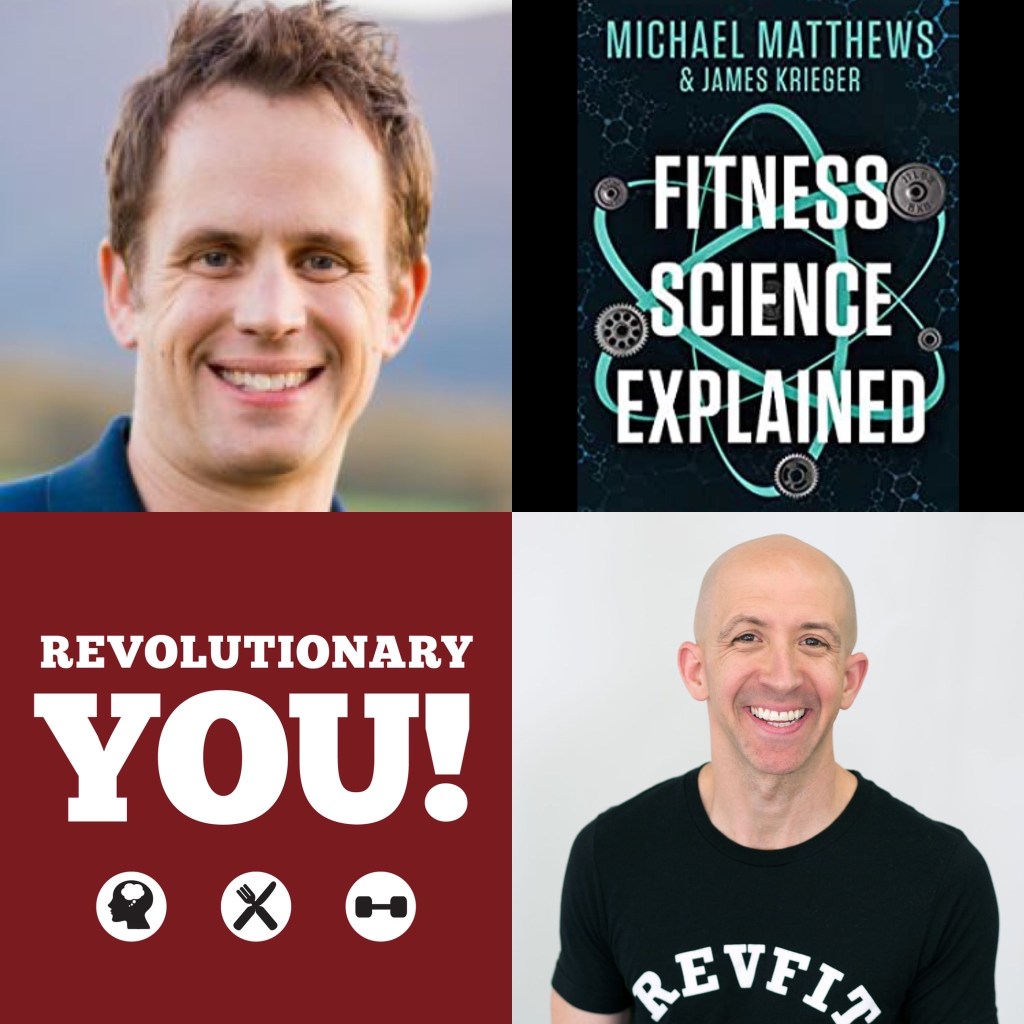
James Krieger returns for his 4th appearance on the show this week. Check out Episodes #67, #79 and #159 for more of his insight. This week, we discuss his new book, co-authored with Michael Matthews: “Fitness Science Explained”. In this episode, James and I dive into what you should consider when you’re trying to understand fitness and nutrition studies, how journalism can impact what you see both positively and negatively and how you can interpret studies better for yourself and your goals. Download, subscribe, share with your friends and please take a moment to leave us an iTunes review.
To learn more about the work of James Krieger, to subscribe to his monthly research review and to purchase your copy of the new book:
Last year, when I decided to go back into therapy, there were problems in my life that I was dealing with that I felt had a correlation to my grieving process (or lack thereof) over losing my father.
When I got through my initial appointment with my therapist where I gave him my backstory and all the things that had led to where I was up to that point, he agreed that not properly grieving for my father may have been one of the areas of concern.
He felt the major area of focus needed to be on the sexual abuse I experienced as a child.
Before I go much further with this, I’ve been speaking about this topic for over 20 years. Many times, I can do so in a way that keeps me distant from the memory. I’ve found ways to detach myself from the event and talk about it as if I were telling you a story about the weather.
Much of the work I did to process that event occurred in my late teens and early twenties. I would write poems, give speeches, talk to therapists, etc. I was even encouraged to confront my abuser, which I did do via phone when I was in college.
It didn’t come as a huge surprise that he did not remember the events the way I did. I had to give him some indisputable details of what occurred so he knew that what I was claiming indeed happened.
I was in a place in my life then that forgiveness seemed the only option. I didn’t confront him to ruin his life or his profession. I confronted him to make peace with it and give myself closure.
I write this today, a couple of months away from my 45th birthday and I still have no closure.
My therapist recognized this.
To which he offered an assignment.
Initially, he had a few books he wanted me to read. There were books he felt would help me relate to others who have been through similar events. It stands to reason that many people have experienced more occurrences than I did but we are taught not to compare.
I read the books and there were insights, often painful ones, that seemed to show a similar trajectory of life between myself and fellow survivors: theft, lying, promiscuity, infidelity, addiction, trouble with finances, trouble with relationships, etc. It outlined these areas in such stark details that not only did I no longer feel alone that I had struggled with these things, I realized I was just like the others.
It wasn’t just sexual abuse either. These patterns were apparent in children who were raised by alcoholic parents or by neglectful parents (neither of which describes my own parents). Survivors, of any type, talk about going through the “process” to heal. I’m still working through that.
My assignment, as it was, was to write two letters with the knowledge I have now. One letter to my abuser and one letter to myself.
I asked my therapist for more detail.
How should I write these?
For instance, why would I write a letter to my abuser when I’ve already confronted him?
He said: “Because more has happened since then and you may need to get it off your chest.”
And what about the letter to myself? Do I write it to myself before or after the event occurred?
“After”, he said. “Think about what you would say to yourself immediately after it happened.”
I sat on this for a while. I knew what he was asking. I also knew how difficult it would be to do. One letter was going to be significantly easier to write. The other, I wasn’t sure I’d be able to do at all.
It didn’t happen immediately but when I felt I had a clear head, I wrote the letter to my abuser. I won’t be reprinting it here. While I managed to write it with as personal of a perspective as I could offer, I simplified his name down to an initial, loaded both of my barrels and took aim. It was one of the harshest things I’ve committed to paper.
I’m writing this today, over a year after my therapist asked me to do so. It’s the first time I felt I could pull it off.
Having seen my therapist last week, I told him I believed I was ready but I thought the only way I could do it was to make it public.
I recently read a quote by author Chuck Palahniuk when referencing the writing process to which he remarked: Don’t write to be liked, write to be remembered.
I likely won’t gain any new fans for this one but that’s not my goal. This particular article won’t be comfortable to read nor has it been to write. If anything, I hope it makes more men comfortable talking about the abuse they’ve suffered with. The more it stays hidden, the more it stays stigmatized. That can’t happen anymore.
Children are sexually abused in such shocking numbers that we’ll never know the true statistics. As a father to two beautiful boys, it is my hope that no one ever lays a harmful hand on them.
This, I suppose, is just as much for their sake as it is for mine.
Coincidentally, while I was working on this article I was listening to the audiobook version of The Autobiography of Malcolm X. A quote stood out to me that I thought was somewhat serendipitous under the circumstances:
“Why am I as I am? To understand that of any person, his whole life, from Birth must be reviewed. All of our experiences fuse into our personality. Everything that ever happened to us is an ingredient.”
What you’re about to read is the best I can do at this point in my life in talking to my 5 (or 6) year old self immediately after the abuse occurred.
Jason, we need to talk.
You probably don’t recognize me but I’m you, some 40 years in the future. If that’s surprising to you, it may seem weird that you have a head full of hair now but not anymore at this age.
I wish that I had nothing but good things to tell you but that’s not why I’m here.
I’m here, first off, to tell you I’m so sorry for what just happened. I wish I could change it but I can’t. I can tell you that the choice you made was the right one. I promise you did the right thing but I know it doesn’t feel like it. No one should ever punish you for doing good. But that’s exactly how this played out.
I can promise you that he will never do it again. That’s the good news.
The bad news is that this will haunt you for all these years to come. You won’t realize that early on. It won’t make sense to you.
I am the product of what happens if you don’t tell Mom and Dad immediately about what just occurred. I’ll talk more about that later.
If you follow this path, the way I am here in front of you today, you’re going to forget a lot about this event. Many years from now, when you’re about to graduate high school, it’s all going to come flooding back and you’re not going to like where it takes you.
You’ll be hospitalized several times, you’ll try to take your life on more than one occasion, you’ll just threaten to end it on others. You’ll get addicted to drugs for a very long time, you’ll lie, cheat, steal and you’ll struggle with something that most people can’t relate to and I’ll try to explain it like this:
Imagine you walk into a store and you want some candy but you don’t have any money. A normal person will just leave and come back when they have money. But you’re not normal anymore. This experience changed that. You’ll look at that piece of candy and you’ll ask yourself, should I steal it or should I leave and come back when I have money? This is a very simple way of looking at what many areas of your life will come down to. When it’s a question of right or wrong, you’ll struggle. Sometimes, you’ll do the right thing. Sometimes, you won’t. You’ll tell yourself that you can get away with it and, sometimes you do. Sometimes you don’t.
The reason you’ll go through this all comes back to this moment. You did the right thing under the worst circumstances and you were punished. So, when it comes to something as simple as right or wrong, for you, it’s never simple. It’s always a negotiation.
I don’t want to make this all sound negative either. Because I can show you another side to this. You’re going to do a lot of good for a lot of people. It will be some of the most gratifying work of your life. You’ll do that because you know what the other side of life looks like. You’ll know what the bottom looks like. And it’s not good.
So you’ll do work that can change someone’s life because you will be making all strides to change your own. Sometimes, you’ll succeed but when you fail, you fail big. Those failures will hurt.
I can tell you that from here you will have two sons. Two wonderful boys. You’ll be married (as I am now) but you will also have gone through a divorce.
I can tell you that I remember virtually nothing about childhood. I’ve blacked nearly everything out. As a result, I see the happiness and joy in the boys that I have no idea how to associate with it. I’m like a blank slate with virtually no memory.
I can tell you at what age you’ll lose Dad. I can tell you how awful that loss will be. Mom is still with us.
I’m coming to you now because I need you to know that you have options. Remember that Disney version of a Christmas Carol where Scrooge can change the outcome of his life? It’s kind of like that.
Here’s the thing: I don’t know what the right decision is. Maybe you have three paths to take.
You tell Mom and Dad as soon as they get home. You let them make the decisions they need to make regarding who watches you when they’re not home. I have absolutely no idea how that will turn out. I don’t know if that makes your life better or worse but I can pretty much promise you it will go differently.
You keep this from them and let the timeline follow a similar place. Maybe the stories I’ve told you help you make better decisions, hurt fewer people and hurt yourself a lot less. I don’t know what you’ll do with the knowledge I just gave you. All I can hope is that some insight makes your life brighter than the path I’ve been on.
You leave everything as it is and take the good with the bad.
I wish I could give you better options than this. I wish I could say: “Just do this and it will all be better.”
I can’t.
I can’t because I don’t know what another path looks like, only what I can imagine.
I know that everyone goes through struggles in their lives. Everyone has pain and hardships. Everyone is just trying to make do and make the best of what life throws their way.
I cannot change what he just did to you. It will forever be a part of your life. Because of that that, you’ll continue to walk this line sifting through the outcomes, the great ones and the traumatic ones.
I want you to know that I love you. I’m proud of you. Despite not knowing enough about this circumstance to understand the depths of how it will change you, you made the right choice. I just really wish it didn’t come with such a heavy price.
Allow me to say again: I’m so sorry. This should never have happened. Not to you, not to “us”, not to anyone. There are good people in this world, there are bad people in this world and somewhere in between, there are good people who just don’t know any better. I don’t know where that leaves us. I just know what I’ve seen for the last 40 years since this happened.
Whatever choice you make, remember that none of this was your fault. Do good in this world and, more often than not, you’ll be better for it and so will the world around you. As hard as it may seem at times, this much I know is true.
This week, I welcome Dr. Debi Silber to the show. Dr. Silber is the founder of the Post Betrayal Transformation Institute and is a holistic psychologist, a health, mindset and personal development expert, the author of the #1 bestselling book: The Unshakable Woman: 4 Steps To Rebuilding Your Body, Mind, and Life After a Life Crisis and her newest book: Trust Again. Her recent PhD study on how we experience betrayal made 3 groundbreaking discoveries that changes how long it takes to heal. In addition to being on FOX, CBS, The Dr. Oz Show, TedX (twice) and more, she’s an award winning speaker, coach and author, dedicated to helping people move past their betrayals as well as any other blocks preventing them from the health, work, finances, relationships, confidence and happiness they want most. Download, subscribe, share with your friends and please take a moment to leave us an iTunes review.
Each week, beyond and sometimes on the training floor of RevFit, I’m having countless conversations about food. With my clients, we can get as in depth as: “How many grams of carbohydrates should I be aiming for?” to “Why can’t I stop eating after dinner?” or “Is plant protein better than whey protein?”
Of course, every client is approaching food with a completely different set of circumstances. Sure, most of my clients are with me for weight loss but each individual has their dietary preferences, intolerances, psychological relationship with food, and life stressors that further determines how food will work for them or against them with their weight loss plan.
However, if there is one common thread between the individuals I work with, regardless of age or gender, it’s the notion of a “bad” diet.
Before I delve any further, ask yourself: What makes your diet or, more specifically, your food choices bad? (You might want to write those things down).
In practice, what I hear from clients ranges from: the choice of food they ate (typically highly processed options), to the amount of food they ate (portion sizes relative to what their goals/needs are) and sometimes it delves into certain “bad” ingredients (high sodium, aspartame, etc.)
What strikes me as funny, if you will, is that what a client thinks is bad, typically isn’t. Don’t get me wrong, I have clients with a history of binge eating and while a distinct overconsumption of foods may be “bad” for the goal and “bad” for the psyche, we’ll consider binge eating somewhat beyond the scope of this conversation. My kind advice is to seek out a therapist who has a background in dealing with the psychological aspect of this and perhaps a dietitian who can help facilitate better eating behaviors as well.
I’ll offer my thoughts based on what I hear most often with my clients.
A) Choice Of Food
If I’m coaching a client with their diet, we might be talking about their fat loss progress throughout a given week. Whether the scale is up or down, there’s a good chance I’ll hear something like this from Client A: “Well, I had a pretty good week until yesterday. Yesterday I was bad.”
“Why do you say you were bad?”
“Well, because I ate something I shouldn’t have.” Client A says.
“Really? What was that?”
“Oh, I had packed a lunch to bring to work but they had pizza delivered and it smelled really good so I had a slice.” Client A mentions.
“So, what’s wrong with pizza?”
“I mean, it’s not healthy, right? And it has a lot of calories.”
“Sure. Potentially it does have a lot of calories but you only had one slice and it sounds like the rest of your day went according to plan, right?”
“Not exactly. I felt bad that I had pizza so then, when I got home that night I said “Screw it, I’ve already messed up the diet with the pizza, I might as well have that dessert I’ve been holding off on and I’ll try and get back to my diet the next day.”
And this is my big issue with shaming ourselves around food. Once we set the ball in motion that a “bad” choice was made, rather than halt the process, the snowball builds and a fairly innocuous meal turns into a day of counterproductive eating. Then the client ends the day on a low note, feeling bad about themselves and their choices and “hopes” (operative word) that next day will be better.
The effects of how we eat often have less to do with what we put in our mouths and more to do with how we treat ourselves as a result of it.
So that was an example of quality of food dictating our eating behavior. What about quantity of food?
B) Food Quantity
Recently, I was having a consultation with a weight loss client and I remarked how I had been working through a sweet tooth in the evening after dinner.
For me, I found that a cinnamon graham cracker could satisfy that little bit of sweet that I needed. Normally, the one sheet (4 small rectangles) is enough for me. (Total calories, approx 65).
My client thought that sounded like something worth trying. That night she opted for graham crackers and ended up finishing the sleeve (total calories, approx 560).
Did I shame her? Absolutely not.
All I asked her to consider was that maybe that wasn’t her ideal food. Maybe, for her, something safer would be dark chocolate. For someone else, it might be a serving of fruit.
This is where it takes some honesty with yourself and determining:
What do I feel that I need right now?
What can I tolerate in moderation?
Is it easier to abstain for the time being?
Am I actually hungry for more food or would something else suffice?
(You may want to write those things down as well).
C) Foods We Fear
For as long as we, the general public, have been reading about nutrition, we’ve had a target to take aim at and be afraid of. Sometimes, it’s eggs or butter or aspartame or high sodium foods. There can be a shred of truth to those depending on if you have a pre-existing health condition or an intolerance to a given food.
That fear then transitioned into whole food groups and people began to fear grains as a whole or fruit as a whole, vegans of course strip out all animal products (although the reasoning isn’t necessarily out of fear), while on the other end of the spectrum, you’ve got the carnivore diet that just leaves meat on the menu. Three cheers for a nation of extremes…
Which lends the “bad” choice to be anytime we consume something we were taught (even incorrectly) to fear. Imagine if someone said Oreos were cancerous!
I often find that the food many people have been led to fear are foods they were misled about and may need to reconsider the source of their information.
Here are some strategies for conquering the notion of a “bad” diet and making it better by comparison.
Remember, first and foremost, that what you eat does not dictate your value as a person. Whether you eat more or less, whether you eat “clean” or “dirty”, you are still a perfectly functional human being and your self worth goes well beyond what’s sold in a grocery store.
Reduce your exposure to social media channels, platforms, pages and people who don’t help you foster a healthier relationship with food. It’s difficult to be on social media and not get lost in comparisons. If you see a fit person who gloats about eating a cupcake and keeping their washboard stomach, it’s not that it isn’t inspirational but you don’t want resentment guiding your food choices either. They’re working with a different set of circumstances than you are and the comparisons are hardly fair (assuming the person’s image hasn’t been photoshopped beyond recognition…)
Build a food environment that breeds success. The foods that are more visible and easier to access in the home are the foods that you will likely gravitate to faster. So, if chips are out on the counter instead of fruit, you’re probably going to reach for the chips.
Alcohol changes the way the game is played. You may have the best intentions with your food for the evening but not everyone can follow the straight and narrow after the first drink. Determine where and how alcohol can be a part of your plan if you’re currently trying to diet.
“Is this the most caring thing I can do for myself right now?” This was affectionately taken from my dear friend, Kelly Coffey. Rather than attach a feeling such as good/bad, right/wrong, ask yourself if the eating behavior is what your body and mind need the most. If so, carry on without guilt. If not, choose a more “caring” option.
You can change your entire trajectory at the next meal. Regardless of what you ate, how you ate it, or how much of it you consumed, your next best opportunity to change course is at the next meal. Make a plan to do so.
Hope is for gamblers. I referenced the word “hope” earlier in this article. I constantly hear clients say “I hope I do better tomorrow”, “I hope I make the right decision with my food”. Rather than leave your food up to whim, willpower and chance, plan more effectively, develop strategies, and form healthy skills. Get the family involved. You’ll need their help. You can “hope” for a winning lottery ticket but if your food needs to be on point, don’t hope for it, plan for it.
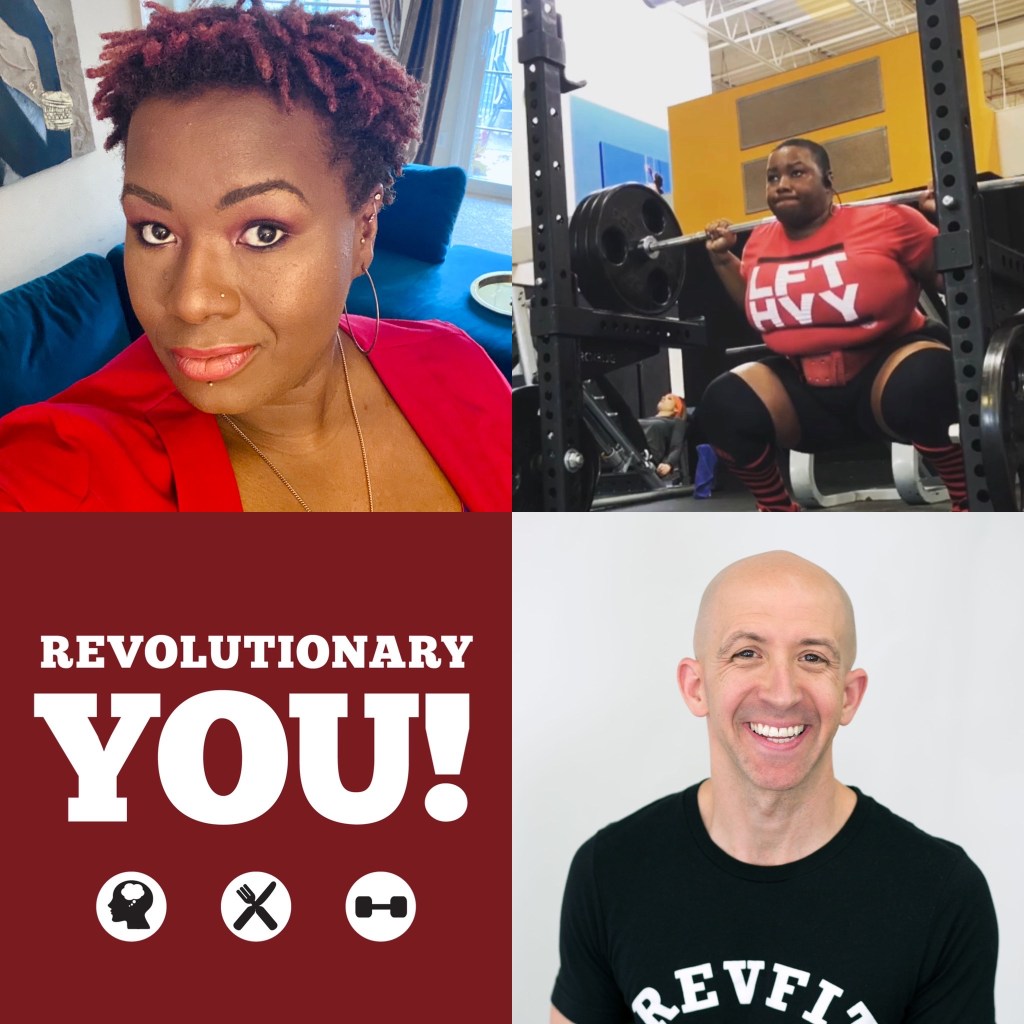
I was first connected with Storme Gray through our very own Kimberly Young who was also recently on this show. Storme joins me this week to discuss her journey into and around fitness and how she has embraced powerlifting to enhance not only her strength but her life as well. Storme has so many great takeaways in this episode as we chat about how what you do in the gym can crossover into how you approach your life. This is another HIGHLY recommended listen if you have an affinity for getting stronger and learning why it matters. Download, subscribe, share with your friends and please take a moment to leave us an iTunes review.
2020 marks 14 years since I got off drugs. For the 10 years prior, I put everything I could into my system from street drugs to pharmaceuticals (not legally prescribed, of course).
What kept me addicted to drugs for 10 years?
Well, a lot of things. But I spent the better part of those 10 years not completely convinced I had a problem.
I had a full-time job, plenty of friendships, was playing in a band, writing songs, basically having the time of my life and drugs were just there to make things better (or worse, depending on your point of view).
It didn’t matter that my loved ones were encouraging me to change. I didn’t have a problem.
It didn’t matter that I reached a point where I had to be high all day long to make it through a work shift. I didn’t have a problem.
It didn’t matter that my drug use became so pervasive that I had to deal drugs just to afford the habit (my paycheck couldn’t do it all). I didn’t have a problem.
My problem occurred when I started neglecting my mortgage to pay for my drugs. That problem eventually affected my father and his credit score because he co-signed on my house with me. THAT was my problem.
It was one thing to have a drug addiction. It was another thing for others to suffer as a result of it. When that other person became my father, I knew something had to give.
There are many beliefs associating abuse of food/drink and how it can be similar to drug use. Similar parts of the brain are affected, cravings and urges creep in, and when you have no other coping skills to help you with stress or boredom, your cope becomes the food (or drug, in my case).
If 2020 has shown us anything (and it’s shown us a lot) it’s that many of us need better coping skills and outlets for our stress.
Which makes this whole conversation about “change” really difficult.
Last year, I got back into therapy. My life, while mostly pretty fantastic, was not going the direction I felt it needed to be in. I have a lot more to write about this in the future, so I’ll take a slightly different angle on change with you today.
Recently, I was speaking with my therapist and, sometimes, when I’m at a loss speaking about my own personal problems, I just pick his brain about concepts relating to change.
You see, I’m in therapy to get better. I want a better life for myself and my own set of coping skills when I’m under stress were not helping me achieve that.
I was recently speaking about this topic on two of my more recent podcast episodes. One with one of my clients, Erin, and the other with internationally renowned coach, Dan John. I highly recommend you check both of them out so you can hear about change from the viewpoint of the client (Erin) and from the viewpoint of a coach (Dan).
This was even something I brought up recently within our closed community on Facebook.
I told my therapist that within the field of health/wellness/nutrition coaching, there is a belief that if you have a set of behaviors that you feel you need to change, you should start with the one that provides the least amount of resistance in your life. This way, you can tackle something “easy” to develop confidence and consistency with it and then stack that with the next behavior until you have the momentum and results you’re looking for.
He agreed that this certainly was a path one could travel to improve their health.
He also offered another path: that sometimes people need to tackle the most difficult behavior first. The theory being that if they can accomplish the hardest thing first, everything after is easier by comparison.
There is a common statement that I hear with weight loss clients, male and female, and I asked my therapist more pointedly how he responds when he hears this:
“I know what I need to do, I just have to do it”
He offered five reasons which I am re-purposing in my own words strictly for the goal of weight loss.
1) They don’t want to do it. Which is why change has not been implemented up to this point. The “want” is not strong enough.
2) They don’t actually know how to do it. Applied to weight loss, are you in a caloric deficit, do you know how to get in a deficit and are you doing the appropriate/right amounts of exercise?
3) There is a fear of change. Change disrupts the status quo. It disrupts friendships, marriages, social gatherings, the workplace, etc. Weight loss, done responsibly, requires a lot of change and not everyone is mentally prepared to do it.
4) There is a fear of success. I actually had to probe deeper on this. Why would someone fear success? His response: Some people fear the ability to keep up the success they’ve had. I’ll offer my client, Don, as an example. Since his weight loss has been so dramatic so far, what if he started to second guess himself and start (unconsciously) sabotaging himself because he knows a lot of eyes are on him to succeed? Some people short circuit and revert back to old behaviors.
5) They don’t give credit to their barriers. It’s easy to blame certain boogeymen for an inability to lose weight: Oh, it must be my metabolism. Oh, it must be sugar. Oh, it must be “insert demonized thingamabob here”. When the reality is things like: your food environment is out of control, you married a saboteur, your sleep habits suck, and you haven’t found more productive ways to handle your stress. Pinpoint those barriers first, THEN revel in your success.
Circling back to me and giving up drugs, I struggled with two of those factors for sure: 1) I didn’t want to give them up and 3) I had a fear of change. I had spent so many years with drugs as a part of my life, my recreation, what I felt inspired me to write better songs, and what gave me a stress outlet that I wasn’t sure how I could function without them.
Once I learned what life was like without drugs to get me through, I had something I had long forgotten how to appreciate: clarity.
Come to find out, I didn’t need drugs to sleep better, feel better, relieve stress or write songs. What I needed was a more focused mind so I could prioritize my life and my finances again. While giving up drugs was “easy” in execution, it took time to develop the self-confidence that I could actually live a normal life again.
True to the theory, giving up drugs also cost me friendships. Many of my friends at the time were still users and I had to split myself further from them socially (and geographically) so I could clean my slate with less temptation.
If you’re struggling, there’s a lot listed above that may be worth your consideration. Change comes at a cost. Not everyone is willing to pay the price.
However, marking my 14th year clean, I can promise you that change is worth it.




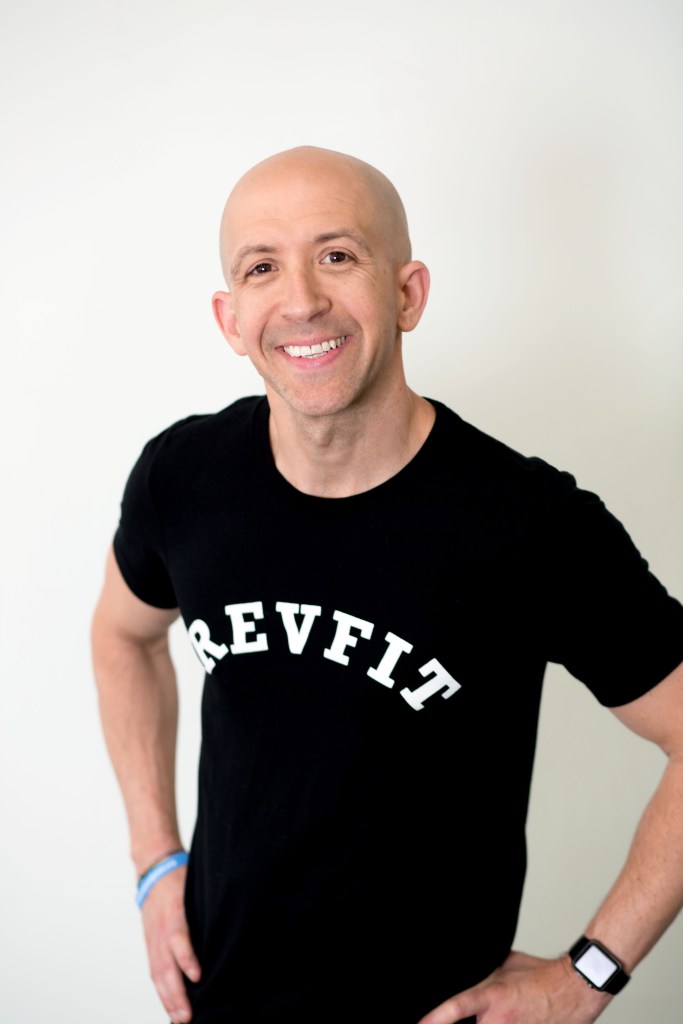
 Jason Leenaarts